Artwork
View of the Town of Gloucester, Mass.
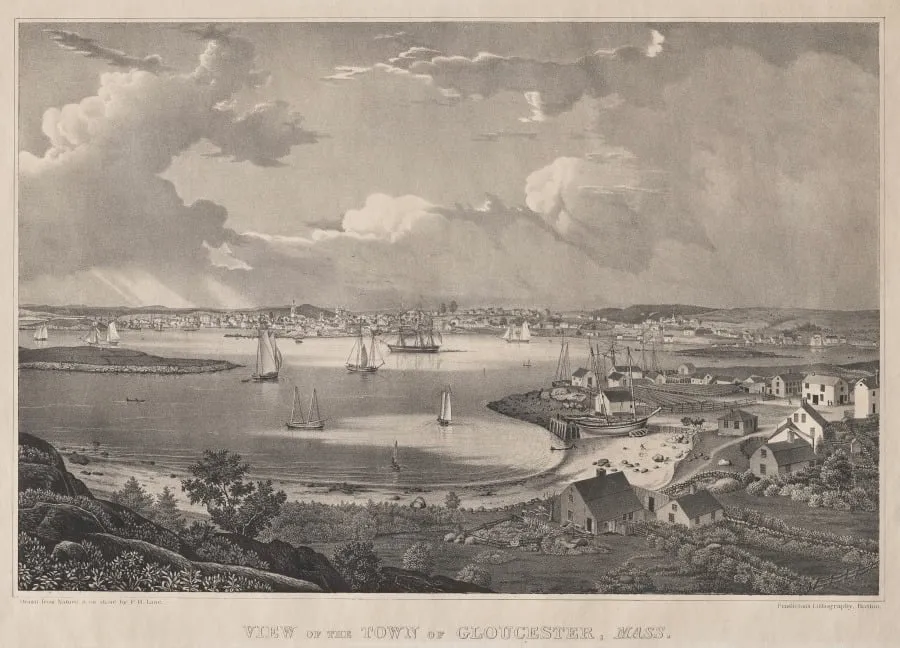
View of the Town of Gloucester, Mass. is a print by the Romanticist artist Fitz Henry Lane. It dates from 1836 and is held in the collection of the Cleveland Museum of Art.
- Accession no.
- 2019.165
- Credit line
- Gift of Stephen Dull
About this work
Overview
The scene presents a tranquil coastal landscape at dusk, with fishing vessels anchored in calm waters and the town rising gently behind.
This print captures the harbor of Gloucester, Massachusetts, rendered in fine detail by Fitz Henry Lane. The scene presents a tranquil coastal landscape at dusk, with fishing vessels anchored in calm waters and the town rising gently behind. Lane’s focus on quietude and atmospheric clarity reflects his deep personal connection to the place of his birth, transforming a local view into a meditative study of light and stillness.
Subject & Meaning
The composition centers on Gloucester’s working harbor, populated by modest fishing boats and a solitary lighthouse. No human figures are present, emphasizing the quiet rhythm of maritime life. The absence of activity suggests contemplation rather than commerce, framing the scene as a personal memorial to the town’s enduring character. It conveys not just a location, but a mood shaped by memory and familiarity.
Technique & Style
Lane employed precise brushwork and muted tonal gradations to achieve a luminous effect, characteristic of Luminism. The sky and water are rendered with subtle shifts in hue, allowing light to appear as if emanating from within the scene. Reflections on the water are minimized, enhancing the sense of stillness. Atmospheric haze softens distant forms, unifying the composition in a hushed, ethereal glow.
History & Provenance
Created in the mid-19th century, this print stems from Lane’s lifelong engagement with Gloucester’s coastline. As a native resident, he produced numerous depictions of the harbor, often based on direct observation and sketches. The work was likely issued as a lithograph or engraving for local audiences, reinforcing regional identity through visual documentation rather than grand spectacle.
Context
During this period, American artists increasingly turned to domestic landscapes as subjects worthy of serious attention. Gloucester, a thriving fishing port, offered a rich visual vocabulary of ships, weather, and light. Lane’s approach diverged from dramatic Romanticism, instead favoring quiet observation, a shift that aligned with emerging ideals of American realism and introspective naturalism.
Legacy
Lane’s treatment of light and atmosphere influenced later American landscape traditions, particularly the Luminist movement. His ability to convey stillness through precise detail and subtle tonality set a precedent for artists seeking emotional resonance in ordinary scenes. Though not widely celebrated in his lifetime, his work gained recognition in the 20th century as a foundational expression of American visual quietude.
Artist & collection
Artist
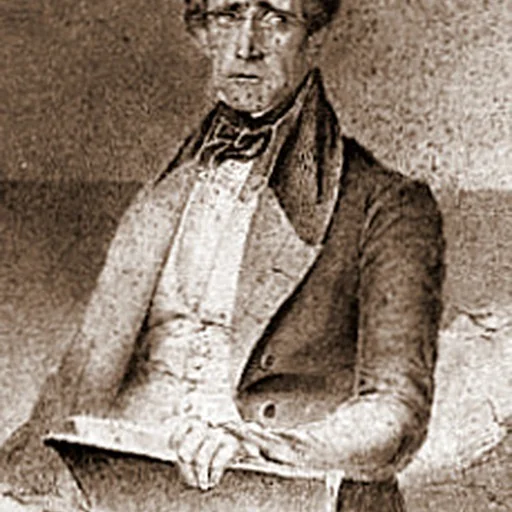
Fitz Henry Lane (born Nathaniel Rogers Lane; also formerly, mistakenly, known as Fitz Hugh Lane; December 19, 1804 – August 14, 1865) was an American painter and printmaker of a style that would later be called Luminism, for its use of…

 Baltimore from Federal Hill
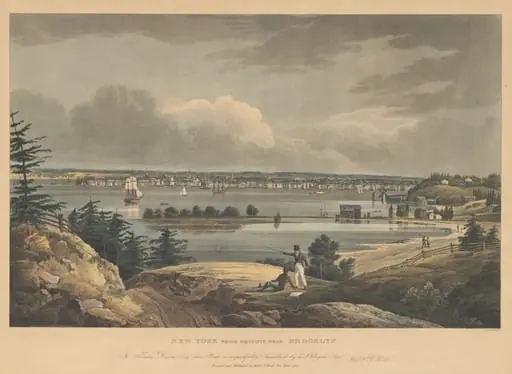 New York from Heights near Brooklyn
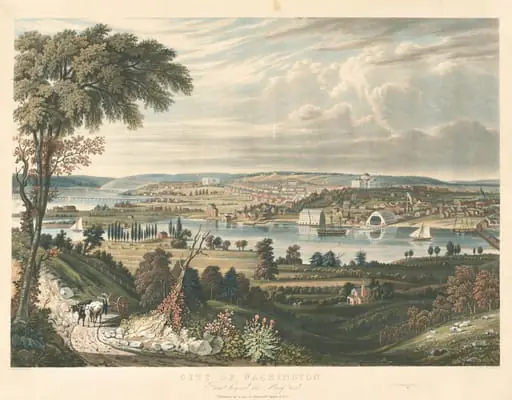 City of Washington: From beyond the Navy Yards
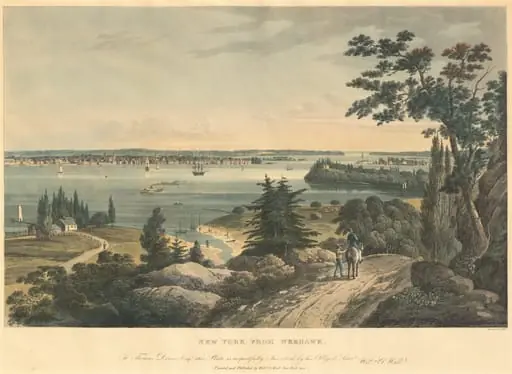 New York from Weehawk
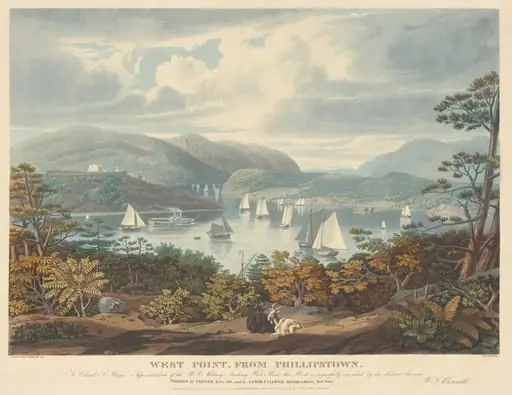 West Point, from Phillipstown
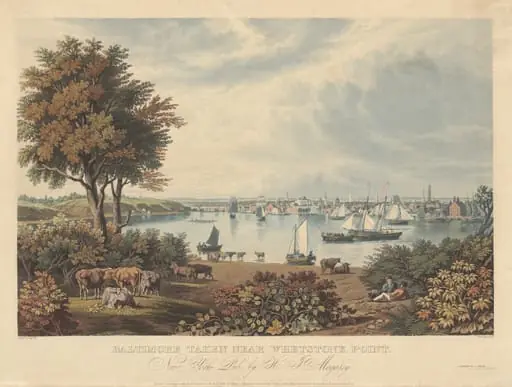 Baltimore Taken near Whetstone Point
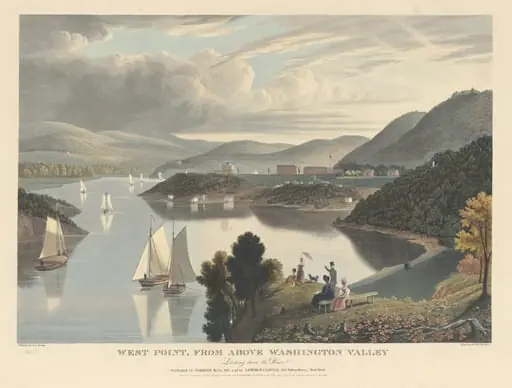 West Point, from above Washington Valley: Looking down the River
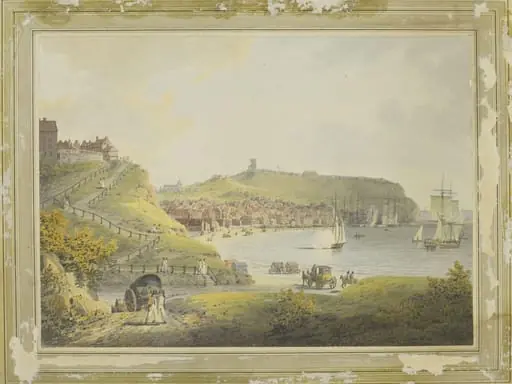 Scarborough from the South
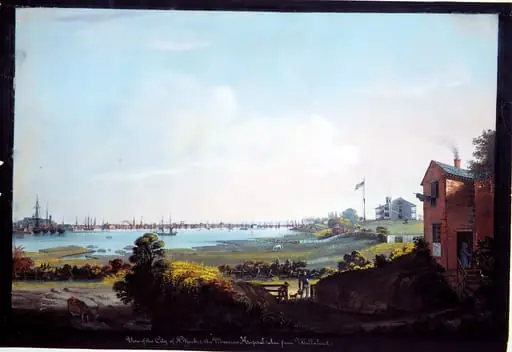 View of the City of New York and the Marine Hospital Taken from Wallabout
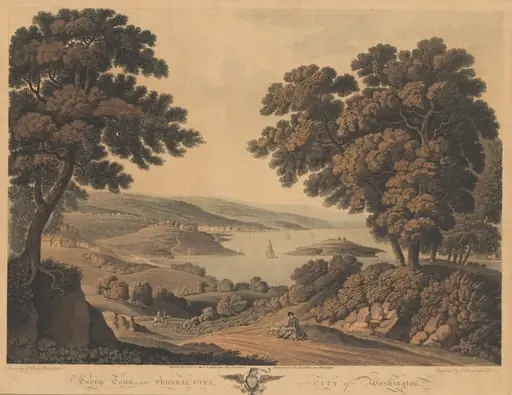 Georgetown and Federal City or City of Washington