Artwork
Le Bon Feu (The Good Fire)
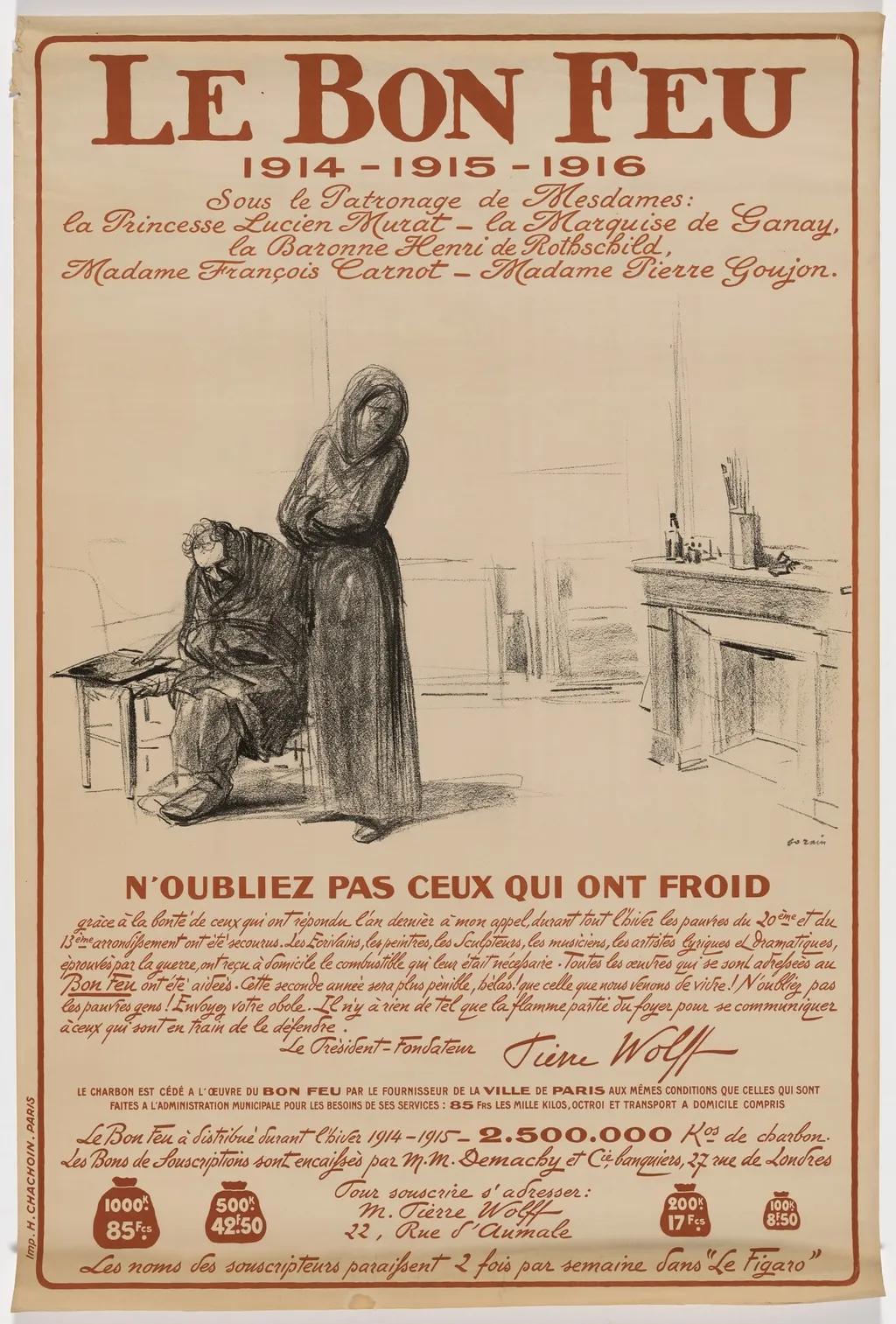
Le Bon Feu (The Good Fire) is an ink print by Jean-Louis Forain. It dates from 1916 and is held in the collection of the National Gallery of Art.
- Inscription
- Inscribed:"forain" lower right margin, black ink. "LE BON FEU / 1914 - 1915 - 1916" upper center composition, brown ink. "Imp. H. CHACHOIN. PARIS" lower left margin, brown ink.
- Markings
- Marked:"National Gallery of Art" verso, black stamped ink, (Lugt 1932d). "73"[encircled] verso, black stamped ink.
About this work
The text around her is in French, with dates 1914–1915–1916 and names of wealthy women listed at the top.
This poster shows a woman sitting alone in a dim room, wrapped in a shawl. A small fire burns in the hearth behind her, but the room looks cold. The walls are bare, and a simple wooden chair sits beside her.
The text around her is in French, with dates 1914–1915–1916 and names of wealthy women listed at the top.
The poster asks people not to forget those who are cold, likely referring to wartime hardship. The artist signed it "Forain" in the corner, and the text mentions distributing coal to the poor.
Look up lithography to see how this kind of print was made.
Overview
Le Bon Feu is a lithographic poster created by Jean-Louis Forain around 1916. Executed in black and brown ink on wove paper, it was produced as a public appeal during the First World War. Unlike Forain’s more decorative works, this piece serves a social function, combining graphic clarity with humanitarian messaging. Its modest palette and restrained composition reflect the urgency of its purpose rather than aesthetic flourish.
Subject & Meaning
The image depicts a solitary woman seated near a small hearth, wrapped in a shawl, surrounded by emptiness. The flickering fire offers little warmth, emphasizing the harshness of winter hardship. Above her, the years 1914–1916 and the names of affluent women are listed, suggesting a call for their charitable action.
The poster urges viewers to remember those suffering from cold and deprivation, explicitly linking personal comfort to collective responsibility during wartime.
Technique & Style
Forain employed lithography, a method allowing direct drawing on stone and mass reproduction. He used only two ink tones, black and brown, to create depth and mood without color. The lines are economical, the forms simplified, and the spatial recession implied rather than rendered.
The text is integrated as part of the composition, not merely an add-on, reinforcing the poster’s function as both visual and informational medium.
History & Provenance
Created during the height of World War I, the poster was likely distributed in Paris to mobilize public support for coal donations to the poor. It was not commissioned by a government body but appears to have been produced by a charitable or civic group, with Forain lending his name and artistic skill. Its survival in museum collections suggests it was preserved as a document of wartime social effort rather than as commercial advertising.
Context
In wartime France, shortages of fuel and food affected civilians severely, especially the urban poor. Artists like Forain, though not primarily activists, occasionally contributed to relief campaigns through their work. This poster aligns with a broader trend of graphic propaganda that appealed to empathy rather than patriotism, using quiet imagery to highlight vulnerability amid national conflict.
Legacy
Though Forain’s reputation as a painter waned in the decades after his death, Le Bon Feu endures as a quiet testament to the role of artists in social crises. It stands apart from his more satirical or fashionable works, revealing a moral dimension often overlooked in assessments of his career. Today, it is studied as an example of how printmaking could serve public need beyond entertainment or decoration.
Own this work as a print
Artist & collection

Artist
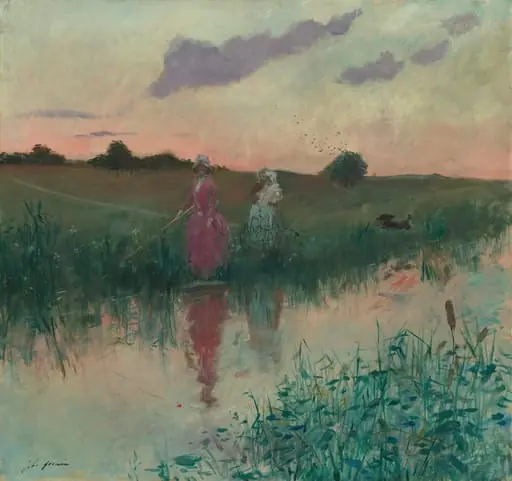
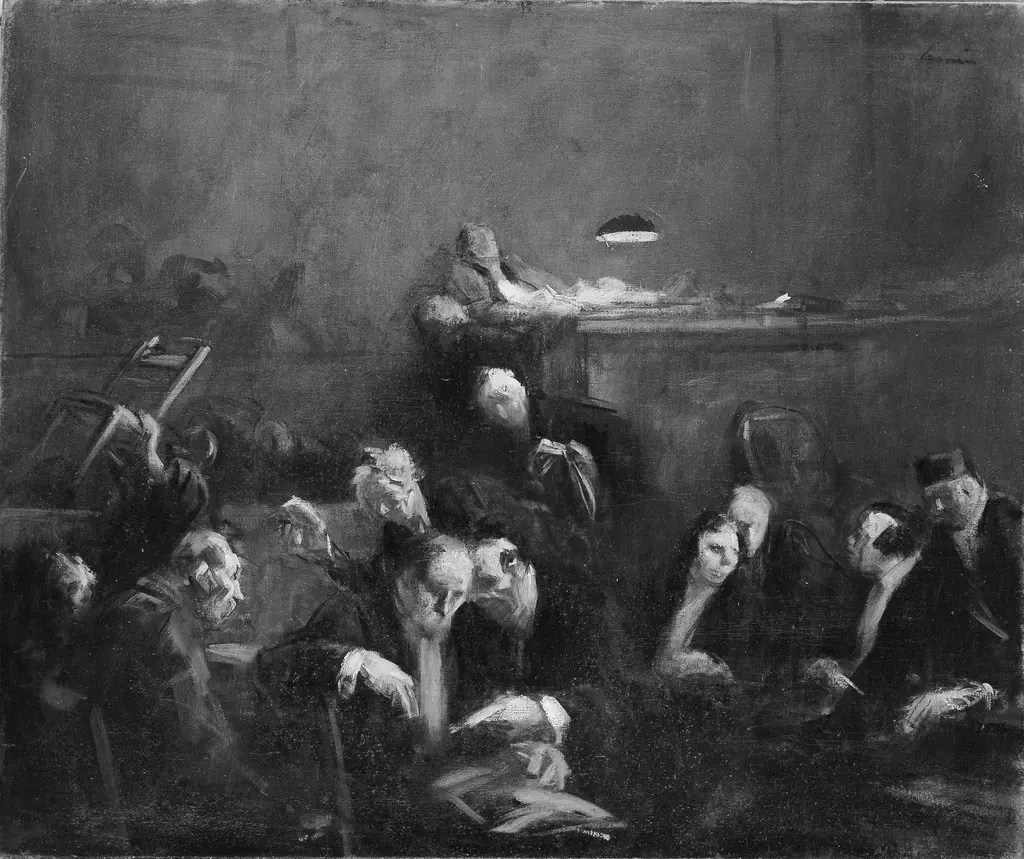
Jean-Louis Forain (French pronunciation:; 23 October 1852 – 11 July 1931) was a French Impressionist painter and printmaker, working in media including oils, watercolour, pastel, etching and lithograph.

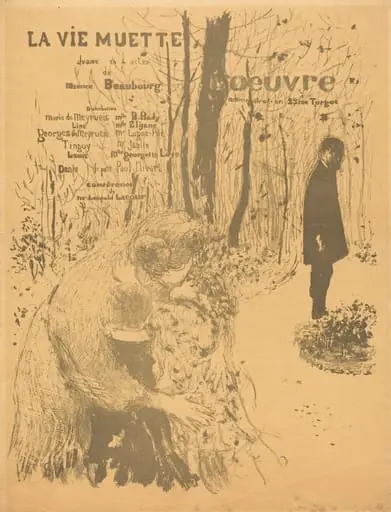
- La Vie muette
 Untitled
 Frédéric Mistral: Mémoires et Recits by Frédéric Mistral: family scene/ bust of three figures (insert after p. 48)
 La Brebis; Le Tandem
 Une Rentière
 Toujours la comète
 Monsieur le concierge, allant en soirée
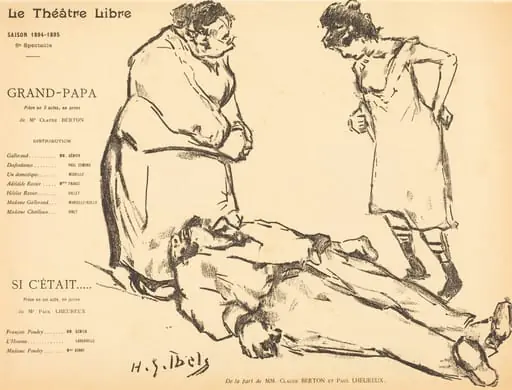 Grand-Papa; Si c'était
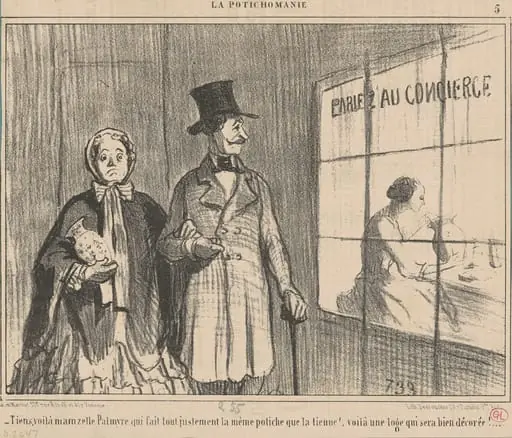 Tiens, voila mamzelle palmyre qui fait ...
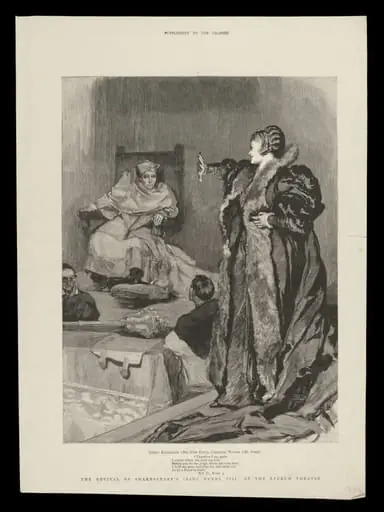 H Beard Print Collection
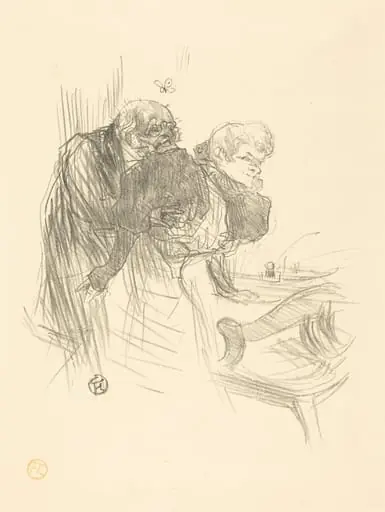 Les vieux papillons
 La répétition