Artwork
Love as Folly
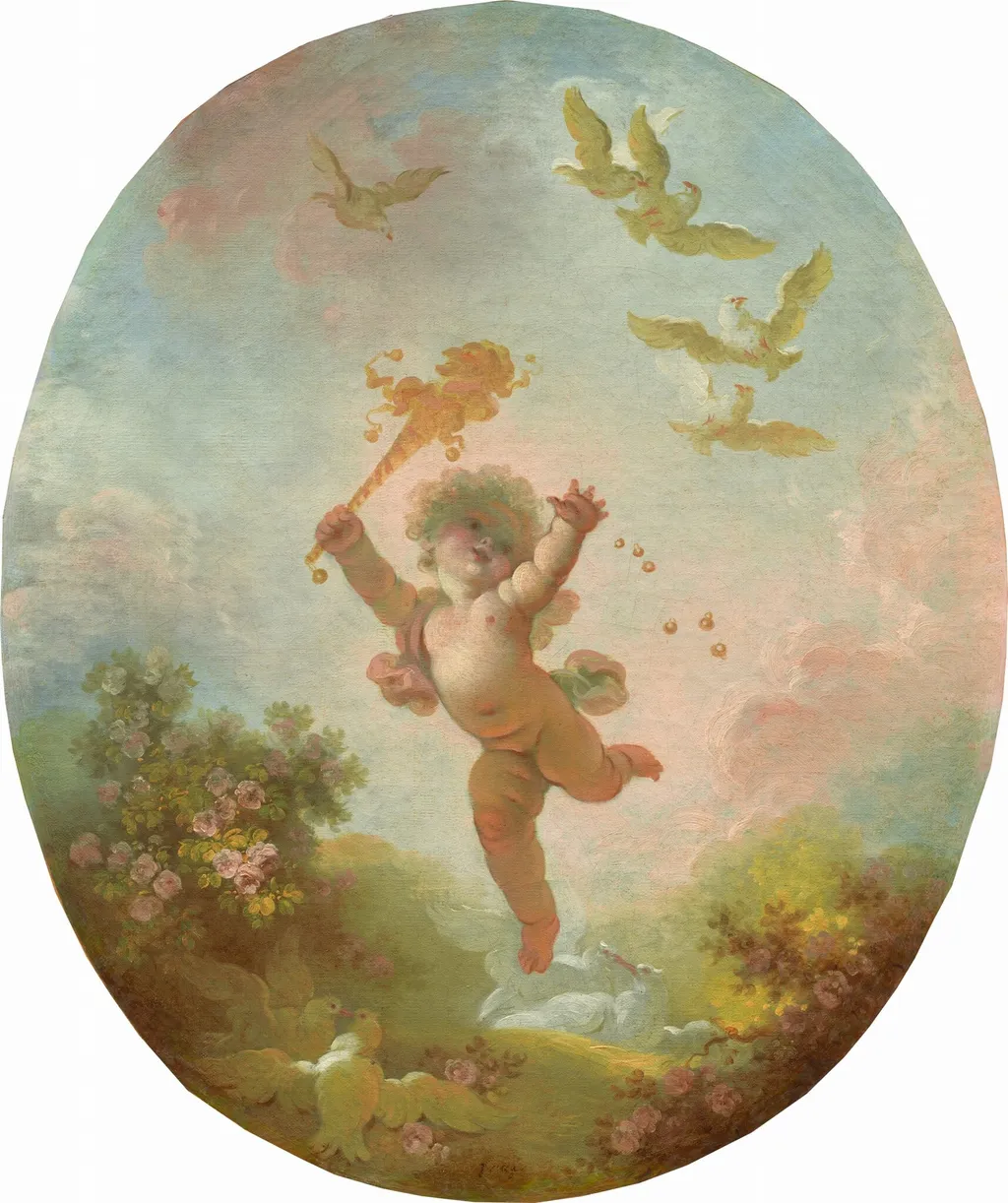
Love as Folly is an oil painting by the Rococo painting artist Jean Honoré Fragonard. It dates from 1774 and is held in the collection of the National Gallery of Art.
- Inscription
- Inscribed:lower center: frago
About this work
History & Provenance
Scholars have debated whether the piece appeared in the Véri sale of 1785 or the Dennoor sale conducted by Le Brun in Paris in April 1797.
Painted in 1773, the oil on canvas work has an uncertain early ownership history due to the existence of multiple versions. Scholars have debated whether the piece appeared in the Véri sale of 1785 or the Dennoor sale conducted by Le Brun in Paris in April 1797. The painting later entered a Rothschild collection, though records conflict regarding whether it was held by Alphonse de Rothschild at the Château de Boulogne-sur-Seine or by Arthur de Rothschild in London.
By 1934, the work was owned by Andrew W. Mellon in Pittsburgh and Washington. Upon Mellon's death, it passed to his daughter, Ailsa Mellon Bruce. Following her death in 1969, the painting was bequeathed to the National Gallery of Art in 1970.
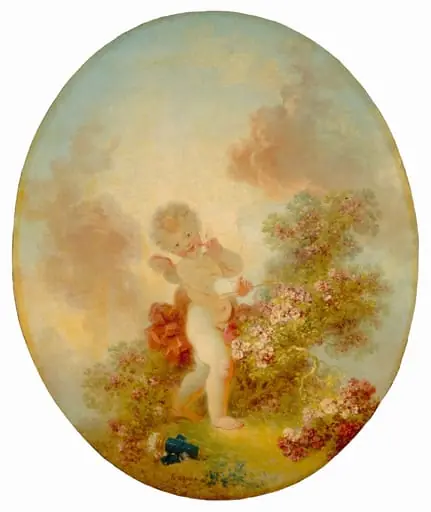
Love as Folly is an oil on canvas painting by Jean-Honoré Fragonard created in 1773. The work is part of the National Gallery of Art's collection in Washington, D.C. Its provenance traces to a possible sale at Dennoor in April 1797, subsequent ownership by the Rothschild family, Andrew W. Mellon, and inheritance through Mellon's daughter Ailsa Mellon Bruce, who bequeathed it to the gallery in 1970. Early provenance details remain uncertain due to multiple versions of the painting and its pendant, Love the Sentinel. The Rothschild connection is also unclear, with archival searches failing to confirm ownership at specific locations.
Legacy
The painting Love as Folly became part of the National Gallery of Art's collection through the bequest of Ailsa Mellon Bruce in 1970, following its inheritance from Andrew W. Mellon. Its provenance includes a possible appearance in the Dennoor sale (April 1797) and later associations with the Rothschild collections, though specific ownership details remain uncertain as noted in scholarly references. The work is cataloged as NGA 1970.17.111 and is linked to its pendant, Love the Sentinel, in the Gallery's records.
Overview
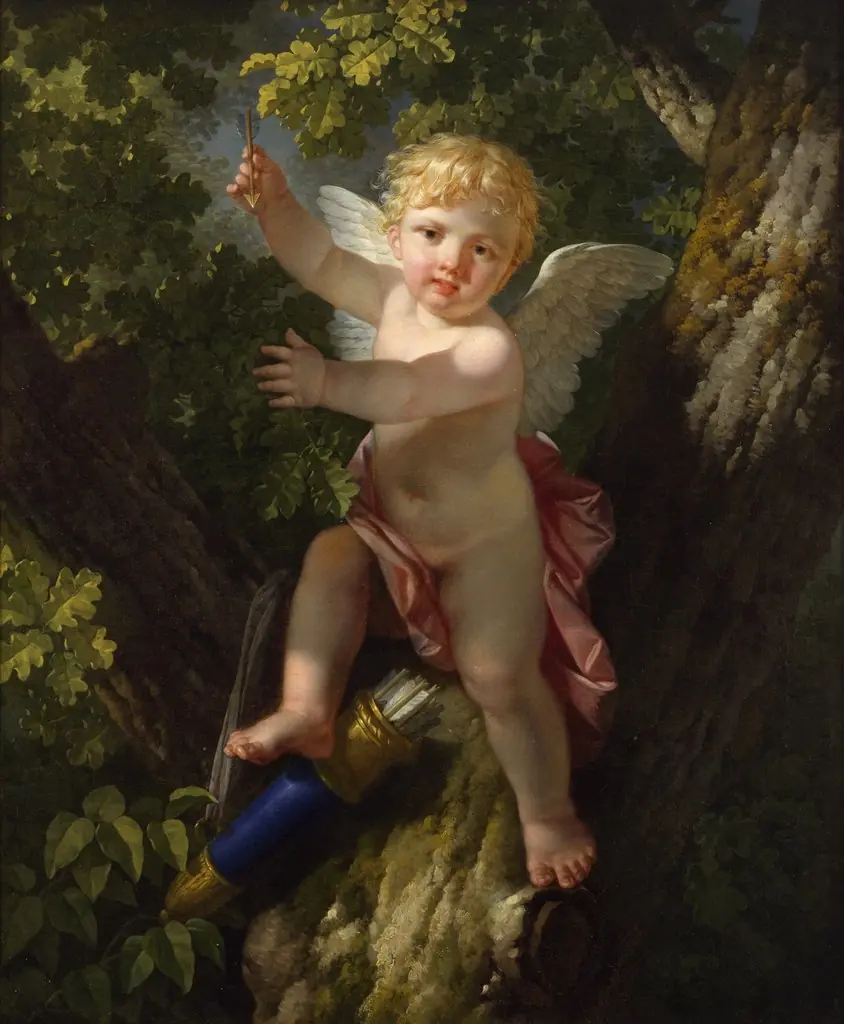
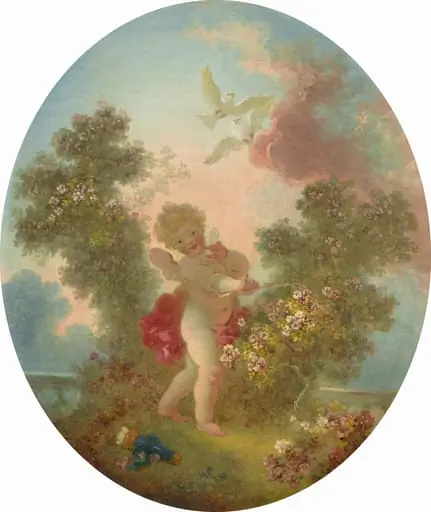
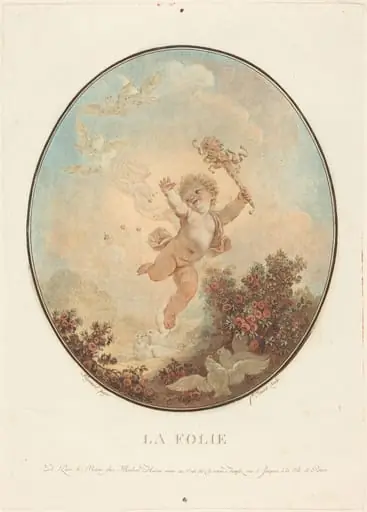
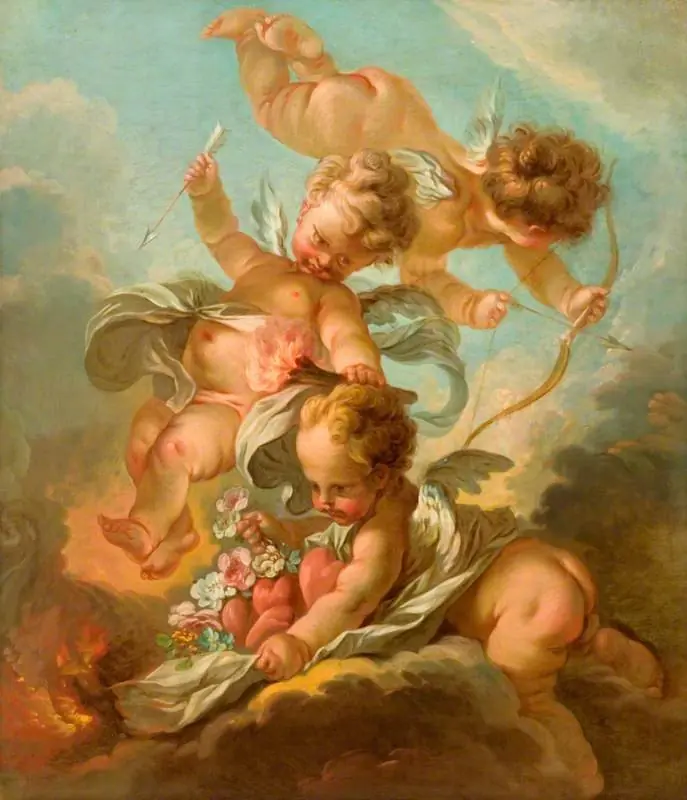
Jean‑Honoré Fragonard’s oil on canvas, Love as Folly, dates to around 1774. The composition presents a rotund, barefoot child with curly hair suspended above a garden landscape. The figure reaches upward with one hand while clutching a tall staff with the other, surrounded by diminutive winged cherubs and a scattering of blossoms on a grassy slope.
Subject & Meaning
The central child’s expression is impish, suggesting a playful teasing that aligns with the title’s suggestion of love’s irrationality. The surrounding cherubs and blooming flora create a light, dreamlike atmosphere, reinforcing the notion of love as a whimsical, fleeting fancy.
Technique & Style
Executed in oil, the work employs a pale, airy palette that evokes the warmth of early spring. Soft modeling and subtle transitions between light and shadow give the scene a gentle chiaroscuro, while the delicate rendering of the cherubs and foliage reflects Fragonard’s characteristic Rococo fluidity.
Context
Created in the latter part of Fragonard’s career, the painting illustrates the artist’s continued interest in allegorical subjects and the pleasures of the imagination. Its whimsical treatment of a mythic theme fits within the broader 18th‑century French taste for decorative, sentiment‑laden compositions.
Own this work as a print
Artist & collection

Artist
Jean-Honoré Fragonard was born on 5 April 1732 in Grasse, the son of a glover, and moved with his family to Paris in 1738.