Artwork
Love the Sentinel
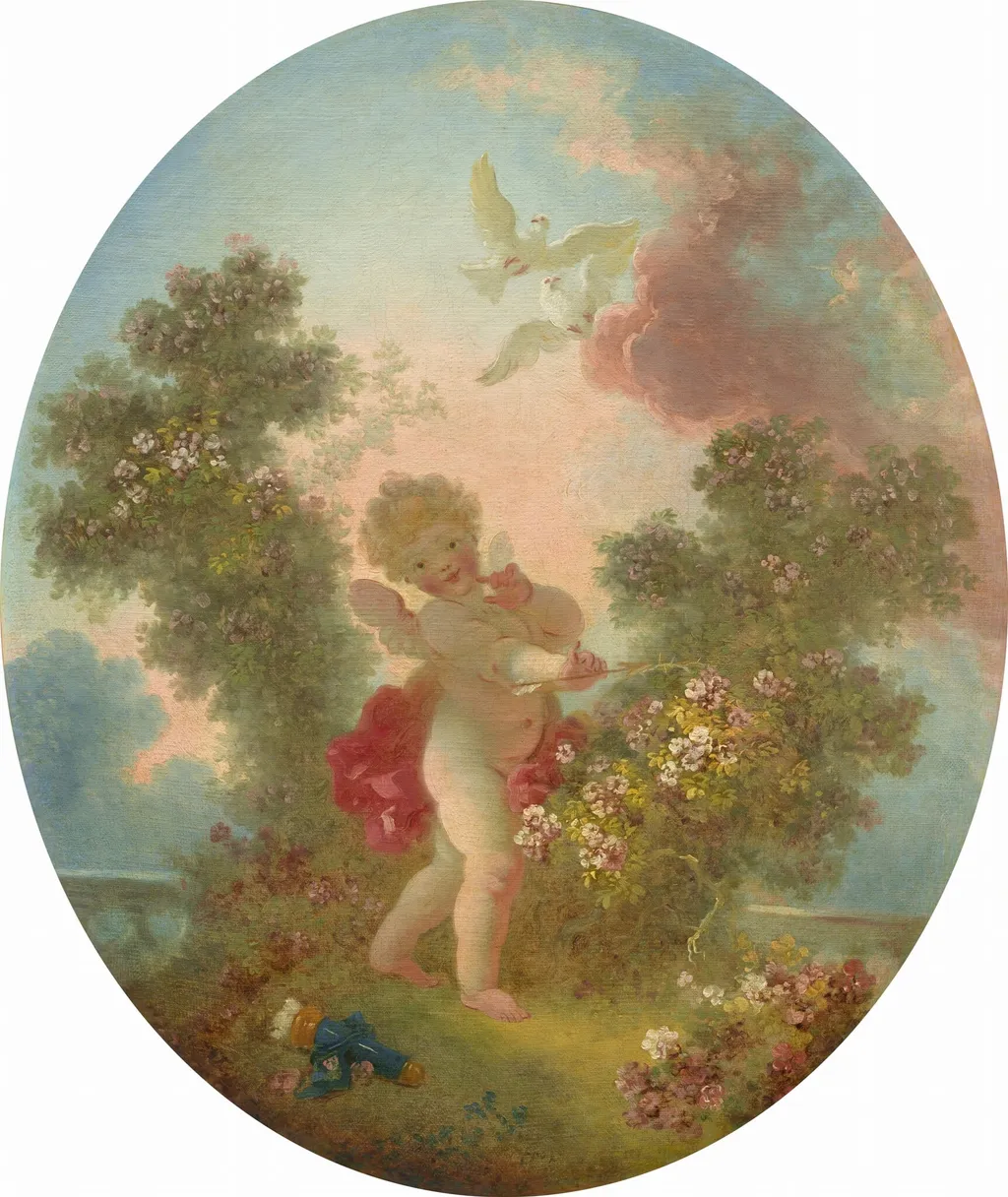
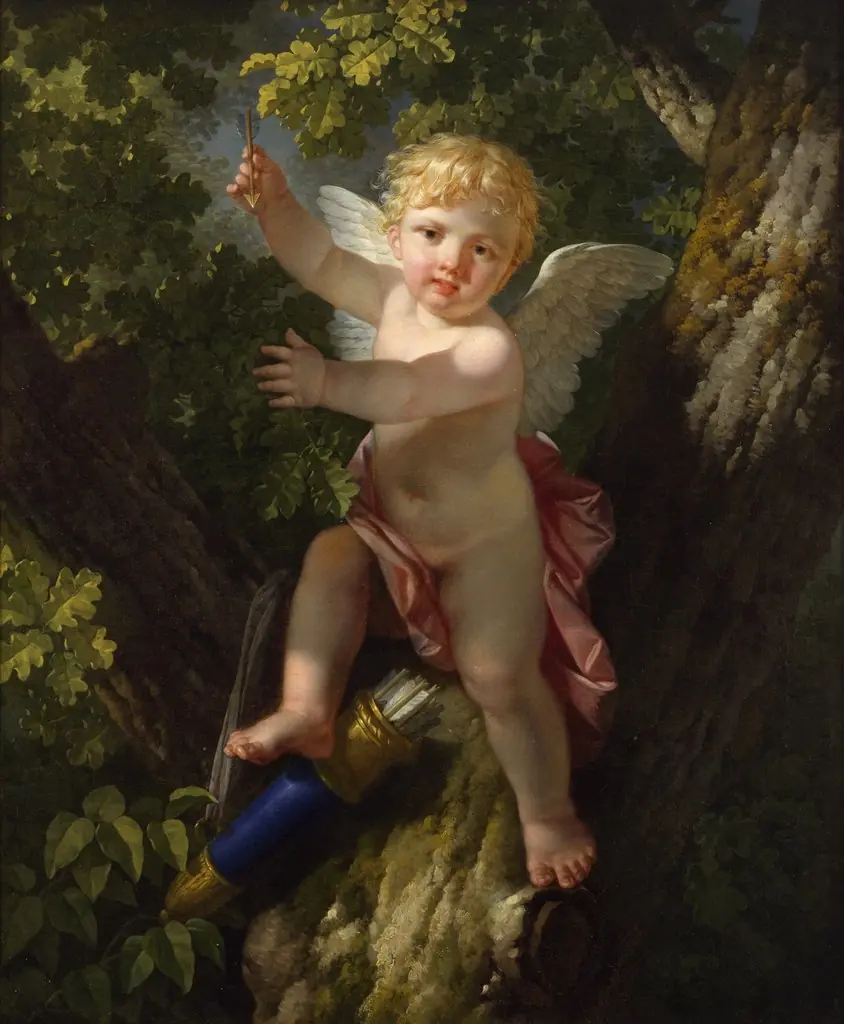
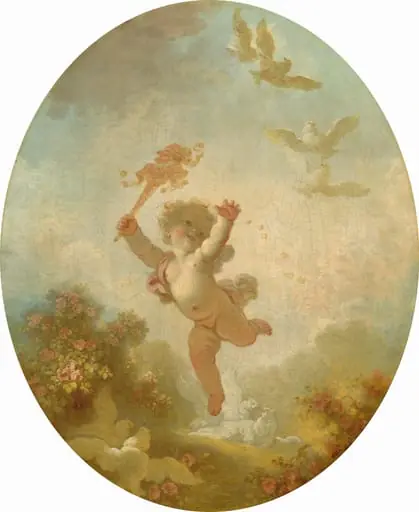
Love the Sentinel is an oil painting by the Rococo painting artist Jean Honoré Fragonard. It dates from 1774 and is held in the collection of the National Gallery of Art.
- Inscription
- Inscribed:lower center: frago
About this work
History & Provenance
Mellon of Pittsburgh and Washington, and upon his death it passed by inheritance to his daughter, Ailsa Mellon Bruce, of New York.
Jean-Honoré Fragonard created the oil painting Love the Sentinel in 1774. Its early ownership history is complicated by the existence of multiple versions and its pendant, Love as Folly. The work may have appeared in the Dennoor sale conducted by Le Brun in Paris on April 5–7, 1797, as lot 73.
It subsequently entered the Rothschild collections, though records differ regarding the specific branch, with sources associating it variously with Alphonse de Rothschild at the Château de Boulogne-sur-Seine or Arthur de Rothschild in London. By 1934 the painting was owned by Andrew W. Mellon of Pittsburgh and Washington, and upon his death it passed by inheritance to his daughter, Ailsa Mellon Bruce, of New York. She bequeathed it to the National Gallery of Art in 1970, where it is accessioned as inventory number 1970.17.112.
Context
Jean-Honoré Fragonard painted Love the Sentinel in 1774, an oil on canvas now held by the National Gallery of Art in Washington, D.C.
Scholars note the difficulty of tracing its early ownership, owing to the existence of multiple versions and a complex provenance involving the Dennoor sale of 1797 and later associations with the Rothschild collection, though the precise Rothschild ownership remains unconfirmed in archival records.
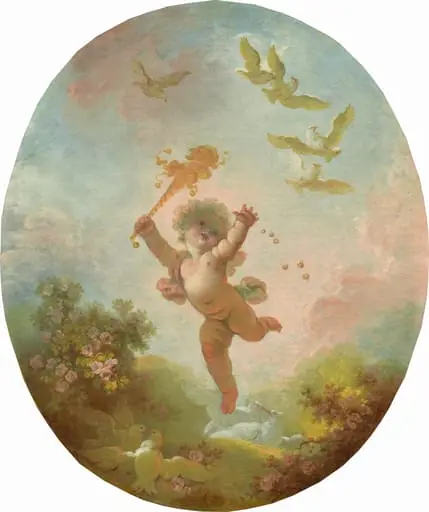
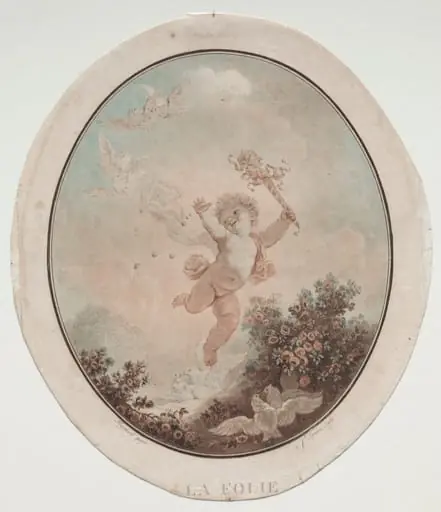
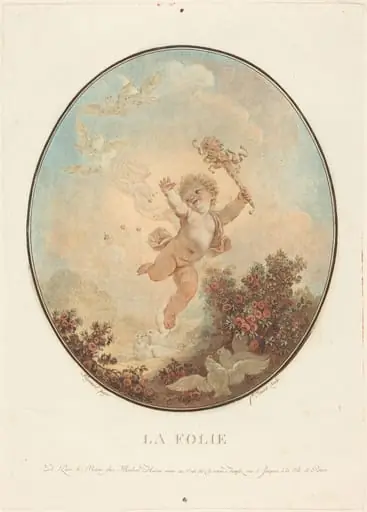
The painting is closely associated with its pendant, Love as Folly, and belongs to Fragonard's celebrated series of amorous subjects that reflect the playful Rococo aesthetic and the late-eighteenth-century French fascination with fleeting romantic sentiment.
Overview
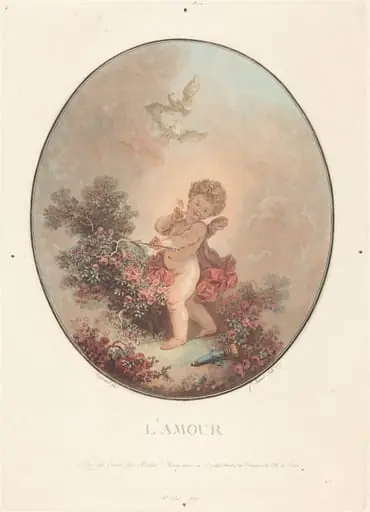
Created around 1774, "Love the Sentinel" is an oil on canvas by the French Rococo painter Jean‑Honoré Fragonard. The composition presents a youthful, unclothed figure in an idyllic garden setting, surrounded by delicate flora and a whimsical sky populated by cherubic figures. The work exemplifies the light‑hearted, decorative qualities typical of Fragonard’s late eighteenth‑century output.
Subject & Meaning
At the centre stands a plump, nude child clutching a handheld mirror in one hand and a red cloth in the other, suggesting a moment of self‑examination or playful vanity. A small dog rests nearby, while two cherubs drift above, one sounding a trumpet, adding a mythic, almost theatrical layer that blurs the boundary between innocent pastime and allegorical reflection.
Technique & Style
Fragonard employs the fluid brushwork and luminous palette characteristic of the Rococo, rendering the garden’s blossoms in soft pinks and whites against a hazy, pastel background. The handling of light on the child's skin and the delicate rendering of foliage convey a sense of immediacy, while the airy, almost translucent sky enhances the dreamlike atmosphere.
Own this work as a print
Artist & collection

Artist
Jean-Honoré Fragonard was born on 5 April 1732 in Grasse, the son of a glover, and moved with his family to Paris in 1738.