Artwork
Love as Folly
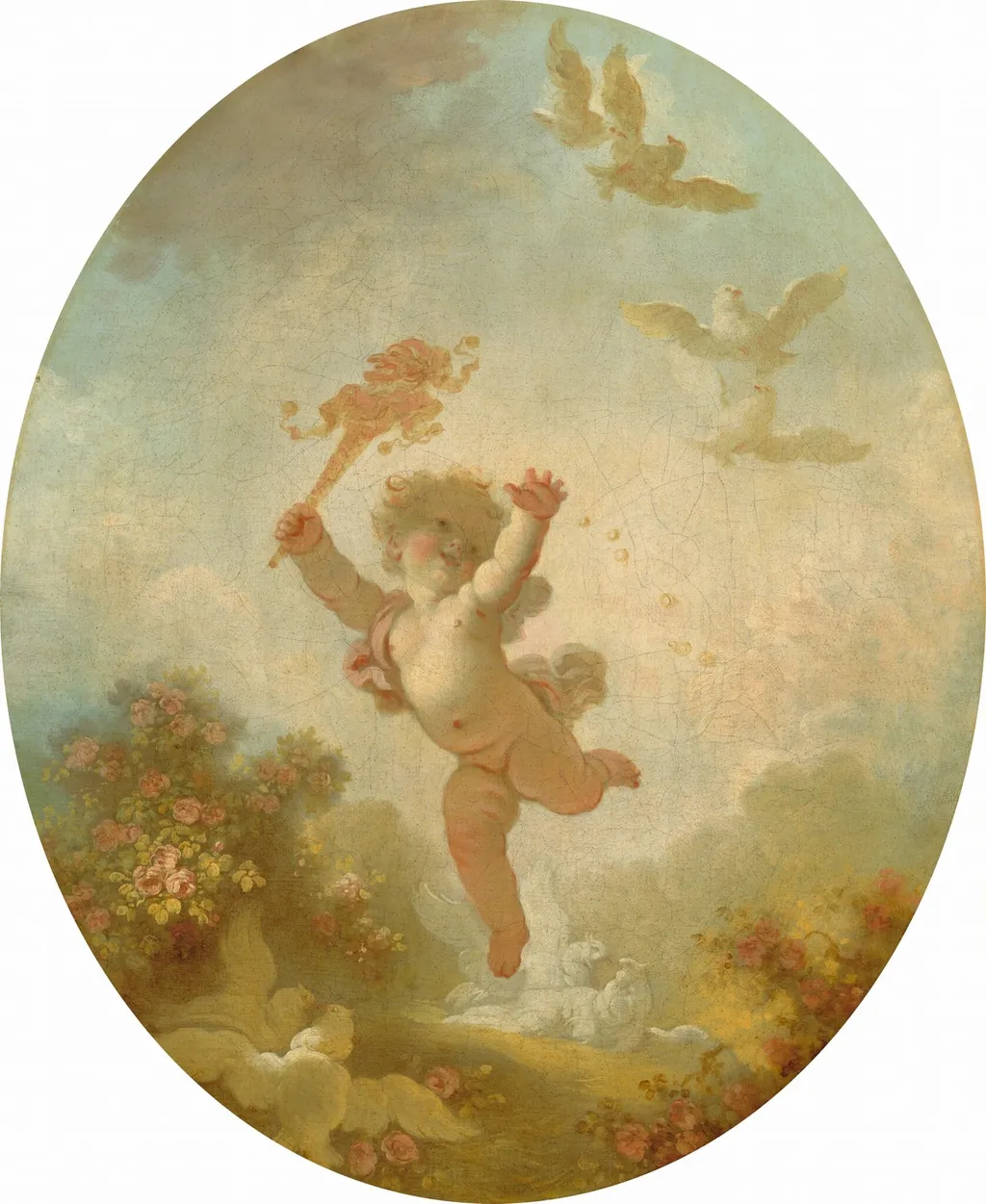
Love as Folly is an oil painting by the Rococo painting artist Jean Honoré Fragonard. It dates from 1774 and is held in the collection of the National Gallery of Art.
About this work
Subject & Meaning
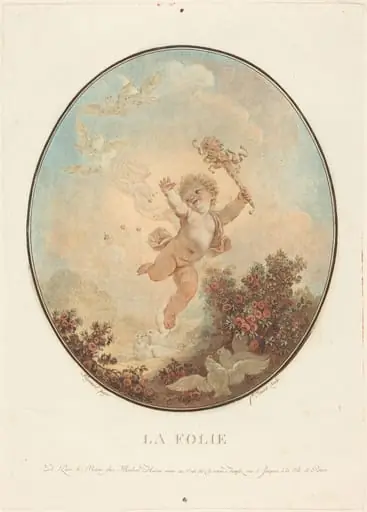
In the context of the title "Love as Folly," the image invokes the notion that love behaves irrationally, akin to a playful trick.
The painting shows Cupid, the classical deity of love, rendered as a youthful winged figure.
In the context of the title "Love as Folly," the image invokes the notion that love behaves irrationally, akin to a playful trick.
The iconography of the bow and arrow underscores the sudden, uncontrollable nature of affection, reinforcing the theme of folly; Cupid’s mischievous gesture further suggests the capriciousness associated with love’s deceptive allure. Together, these elements convey love as a whimsical force that can ensnare even the most rational mind.
Technique & Style
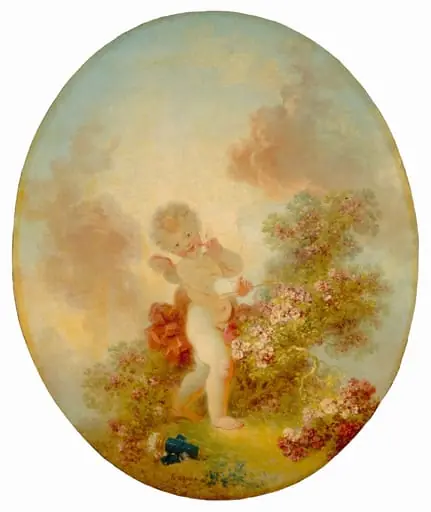
Love as Folly is executed in oil on canvas, a medium consistent with Fragonard's standard practice for his late Rococo cabinet pictures. The work is classified as a painting and depicts Cupid, the mythological subject rendered with the playful, allegorical sensibility typical of Fragonard's mature style. The canvas bears "CA" numbers on its stretcher, indicating its history of consignment through the New York dealers Knoedler & Co., and it was treated as a pendant to Love the Sentinel, sharing the same prospectus for the pair.
The painting's oil technique and canvas support have allowed it to survive through multiple ownerships, from its probable eighteenth-century French provenance to its 1947 gift to the National Gallery of Art.
History & Provenance
Painted in 1774, Love as Folly is one of two pendant works by Jean-Honoré Fragonard depicting Cupid, conceived as a pair with Love the Sentinel. The earliest documented owners were the marquis des Isnards, whose family tradition held that the pair had remained with them since their creation. The paintings later entered the Paris art trade through Wildenstein and passed via Ernest Gimpel to John Woodruff Simpson in New York.
After Simpson's death in 1920 the work passed to his widow, Katherine Seney Simpson, and then to their daughter, Jean W. Simpson, who donated it to the National Gallery of Art, Washington, in 1947, where it is held as accession 1947.2.1. The painting was exhibited in the Gallery's 1948 Fragonard exhibition (cat. no. 10) and again in 1981 in "French Painting from the National Gallery of Art" (cat. no. 17).
Overview
Jean Honoré Fragonard's "Love as Folly," an oil on canvas created around 1774, presents a characteristic example of the artist's approach to mythological subjects. This painting features Cupid, the Roman god of love, rendered with the lightheartedness and decorative elegance typical of the Rococo period. Its soft colors and fluid brushwork contribute to the overall whimsical atmosphere, reflecting the artistic trends of its time.
Context
Created in the mid-1770s, "Love as Folly" fits within Jean Honoré Fragonard's extensive body of work, which frequently explored themes of love, romance, and human interaction with a distinctive playfulness. The piece reflects the prevailing Rococo sensibilities of the late 18th century, a period that favored decorative art, intimate domestic scenes, and a departure from the more serious and grand themes of the Baroque era.
Own this work as a print
Artist & collection

Artist
Jean-Honoré Fragonard was born on 5 April 1732 in Grasse, the son of a glover, and moved with his family to Paris in 1738.



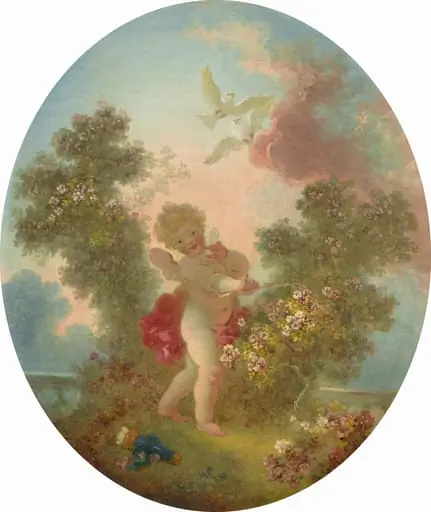 Love the Sentinel
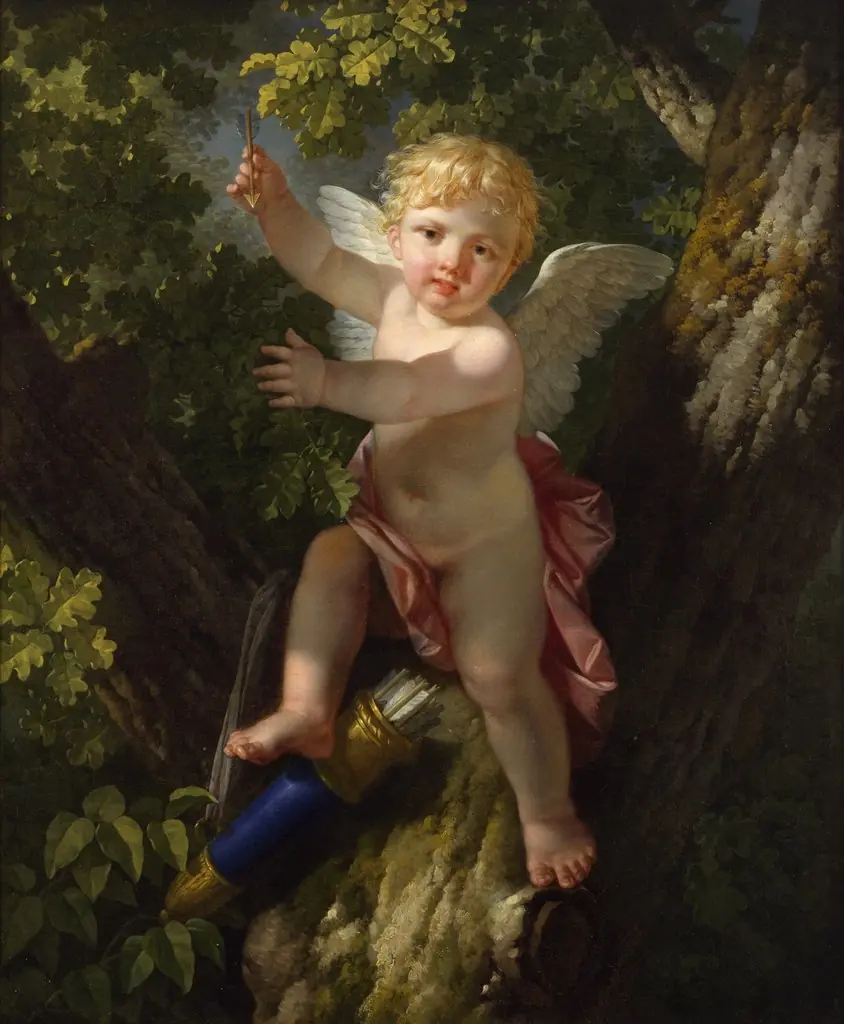 Cupid in a Tree
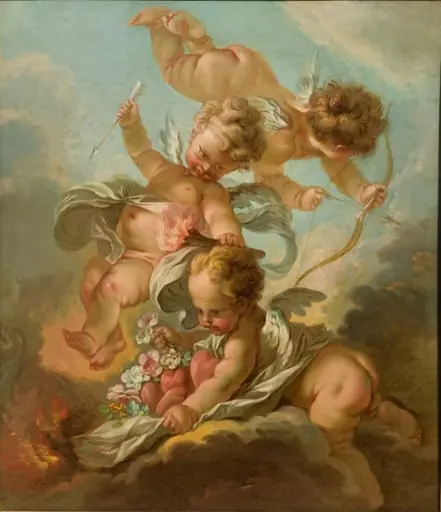 Allegory of Fire
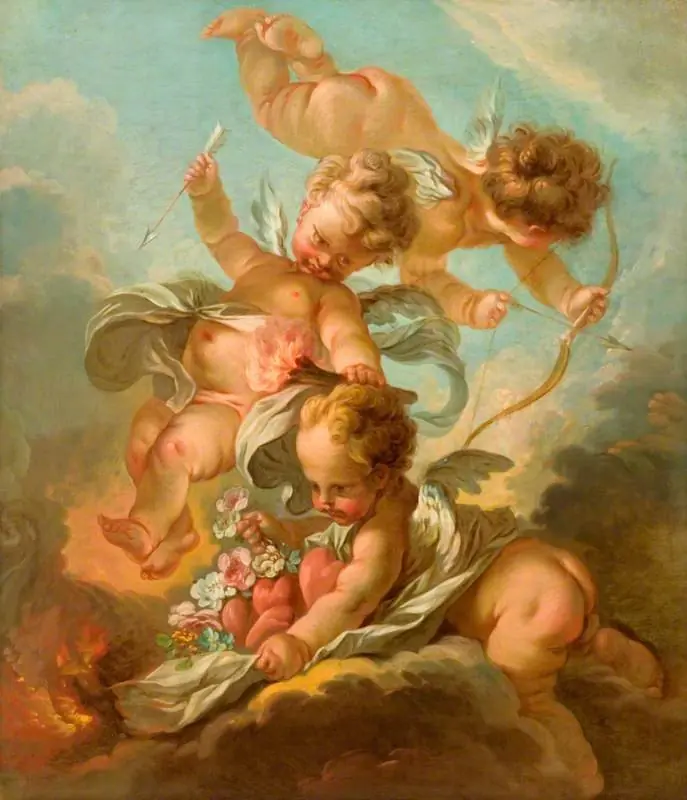 Fire: Three Putti Holding a Bow and Arrow, a Burning Torch, and a Mantle Containing Hearts and Flowers
 La folie
 Love the Sentinel
 Three Cupids Playing Instruments
 Tumbling Putti with Flowers
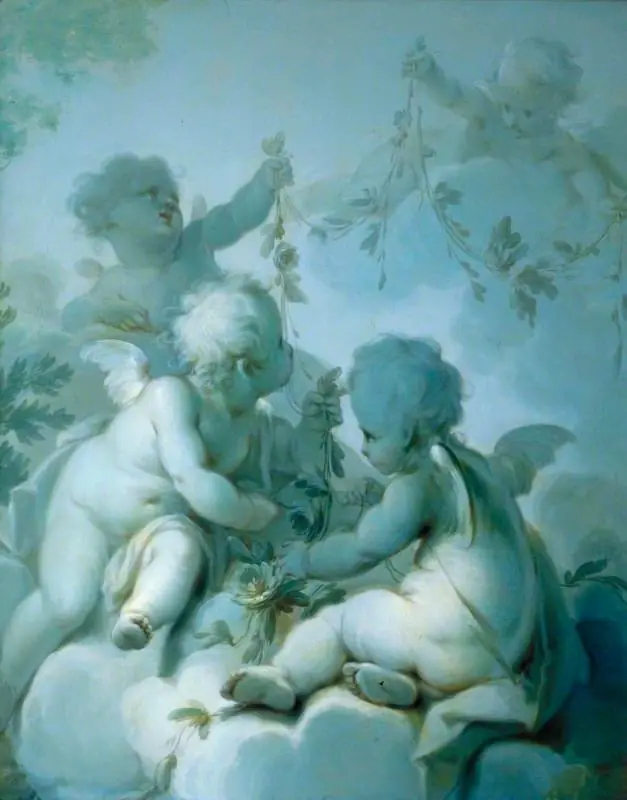 Four Cupids Holding Festoons of Flowers and Foliage
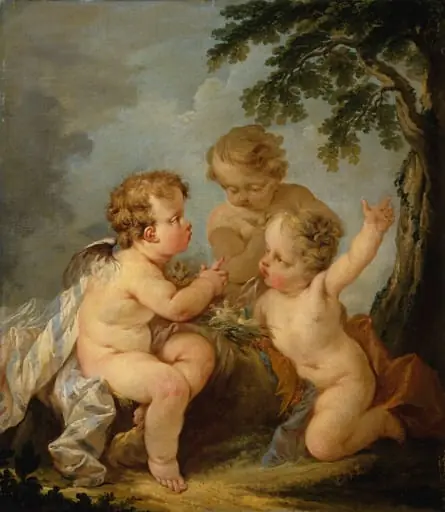 Kolme linnunpesällä leikkivää amoriinia