Artwork
Venus and Adonis
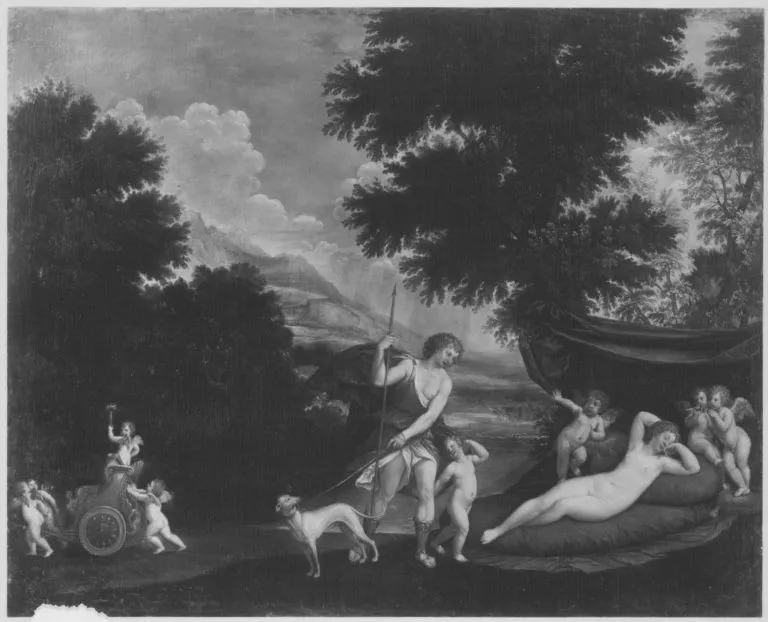
Venus and Adonis is an unspecified painting by the Early Baroque Italian artist Francesco Albani. It dates from 1619 and is held in the collection of the Bavarian State Painting Collections.
About this work
Subject & Meaning
By focusing on these two specific characters, the composition explores themes of desire and the interaction between divine and mortal realms.
Francesco Albani's 1619 painting depicts the mythological figures Venus and Adonis, centering on their romantic narrative within the genre of mythological painting. The work illustrates the classical story of the goddess of love and the mortal hunter, a subject drawn from ancient mythology. By focusing on these two specific characters, the composition explores themes of desire and the interaction between divine and mortal realms.
The artwork serves as a visual representation of this enduring myth, capturing a moment from the legendary tale.
Technique & Style
Venus and Adonis is an oil painting on canvas created by Francesco Albani in 1619. Executed in the classical Baroque style, the composition emphasizes idealized figures and delicate coloration, reflecting the mythological subject of Venus and Adonis. The work measures 76.4 cm in height and 96 cm in width, supporting its large-scale presentation in the Alte Pinakothek, where it remains part of the Bavarian State Painting Collections.
The painting's handling demonstrates Albani's characteristic smooth brushwork and refined attention to anatomical precision, contributing to its graceful, lyrical quality. Its condition is well-preserved, retaining much of the original surface integrity despite centuries of aging. These formal qualities align with the mythological genre and underscore the artwork's significance within the artist's mature oeuvre.
History & Provenance
The painting Venus and Adonis by Francesco Albani is dated to 1619, marking its creation during the artist’s early career in Bologna.
It entered the Bavarian State Painting Collections and is now held in the Alte Pinakothek, Munich. The work’s provenance traces to the formation of the state collection, where it remains as part of the institutional holdings dedicated to Italian Baroque painting.
Venus and Adonis is held by the Alte Pinakothek in Munich, catalogued under inventory number 276. The work has been part of several exhibitions, including the 1975 Bavarian State Painting Collections retrospective and the 2005 European Baroque Masterpieces showcase, both of which featured the painting alongside other mythological works.
Context
Francesco Albani's 1619 mythological painting Venus and Adonis, depicting the titular lovers, is housed in the Alte Pinakothek in Munich as part of the Bavarian State Painting Collections. The work exemplifies Bolognese classicism with its idealized forms and harmonious composition, reflecting the influence of Annibale Carracci while contributing to the development of 17th-century mythological painting. Its enduring scholarly interest stems from its refined treatment of the subject and significance within Albani's oeuvre as a key example of the era's artistic engagement with classical antiquity.
Legacy
The mythological scene depicting Venus and Adonis by Francesco Albani, painted in 1619, has been part of the Bavarian State Painting Collections since its acquisition, influencing interpretations of the myth through its compositional balance and sensual portrayal. Its presence in the Alte Pinakothek has contributed to scholarly discussions of Baroque representations of classical themes, reinforcing the narrative's enduring resonance in art historical discourse.
Overview
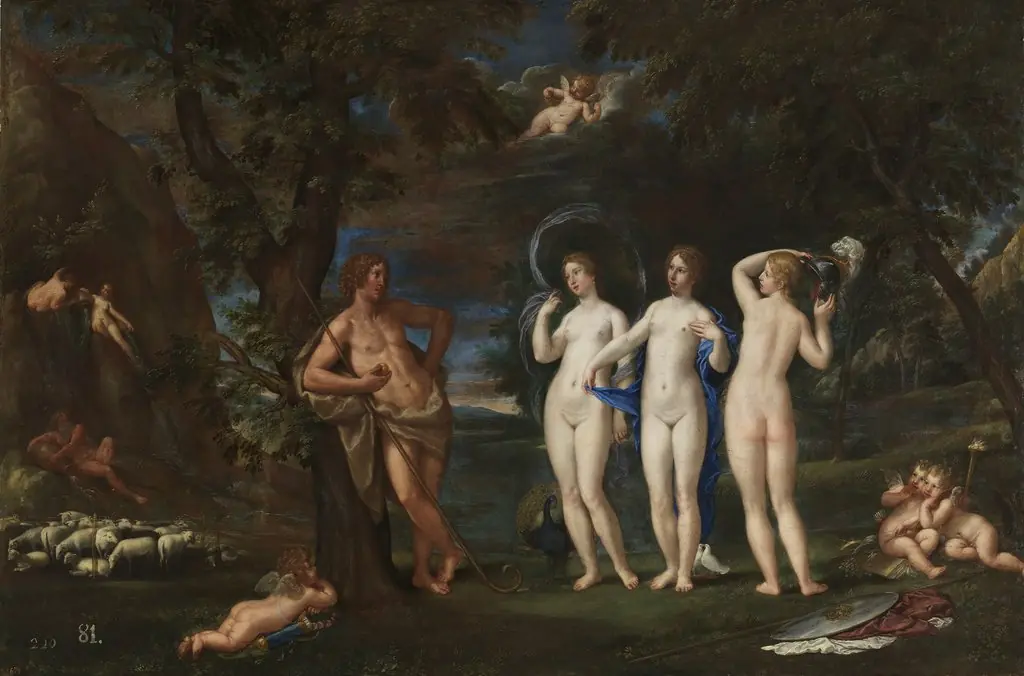
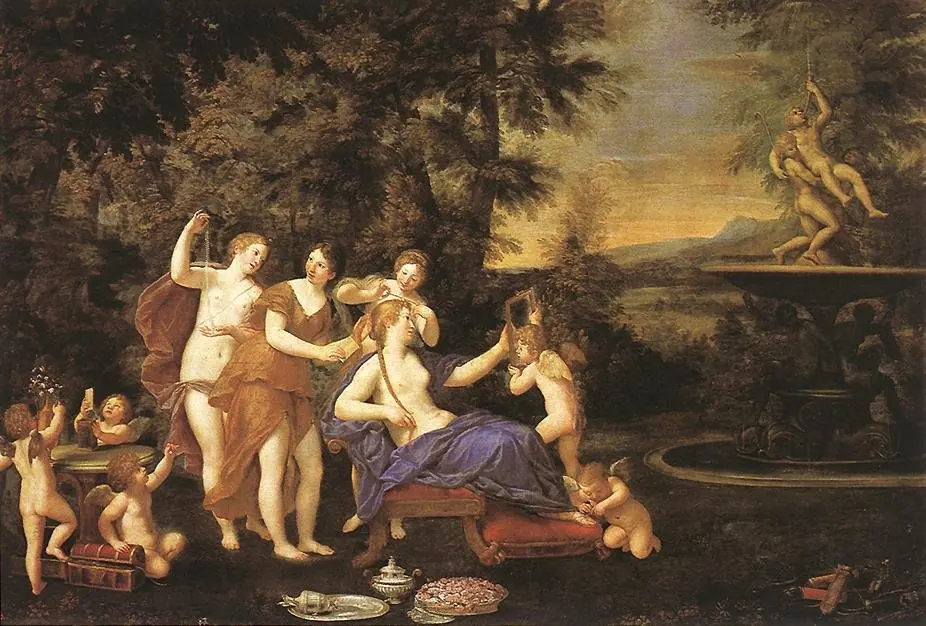
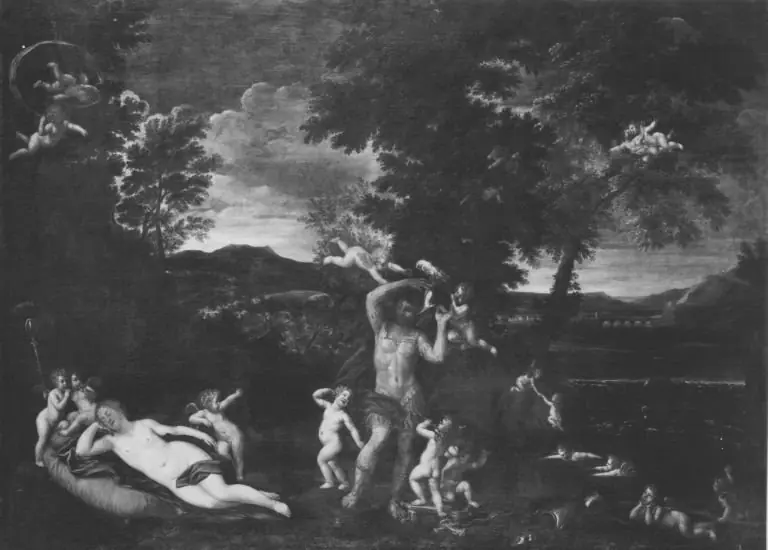
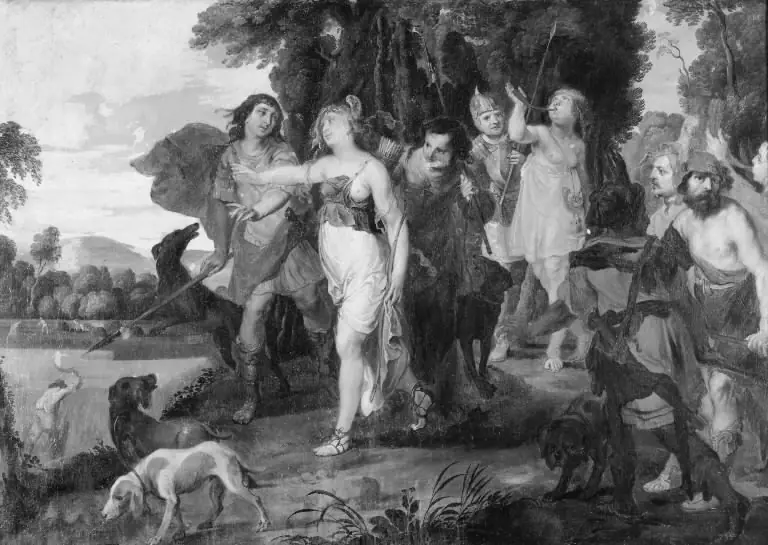
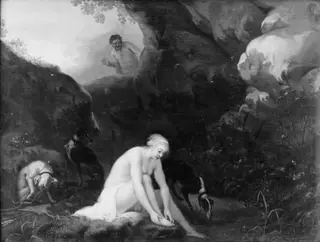
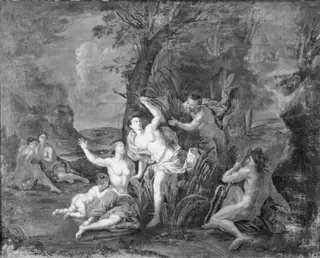
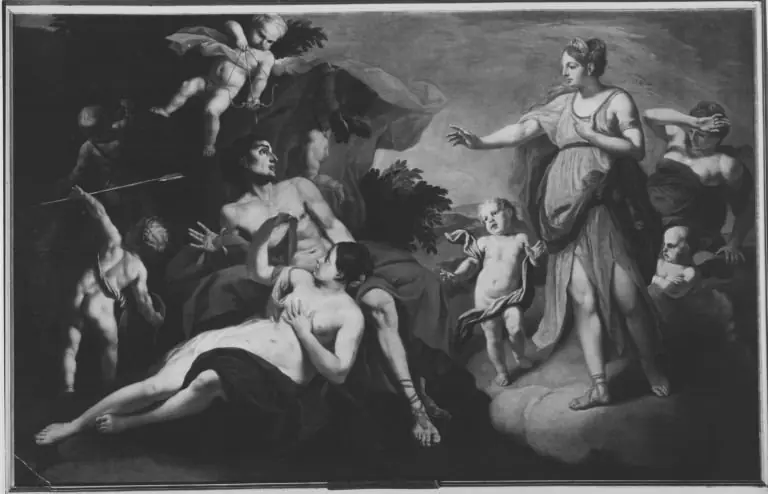
Francesco Albani’s 1619 oil painting titled Venus and Adonis presents a quiet woodland tableau in which the goddess Venus lies reclined while the mortal hunter Adonis strides forward, spear in hand, accompanied by a dog. The composition is anchored by a distant chariot drawn by a winged figure, and three small children gather around Venus, completing the narrative scene.
Artist & collection

Artist
Francesco Albani or Albano was an Italian Baroque painter of Albanian descent who was active in Bologna, Rome, Viterbo (1609–1610), Mantua (1621–1622) and Florence (1633).