Artwork
Leda and the Swan
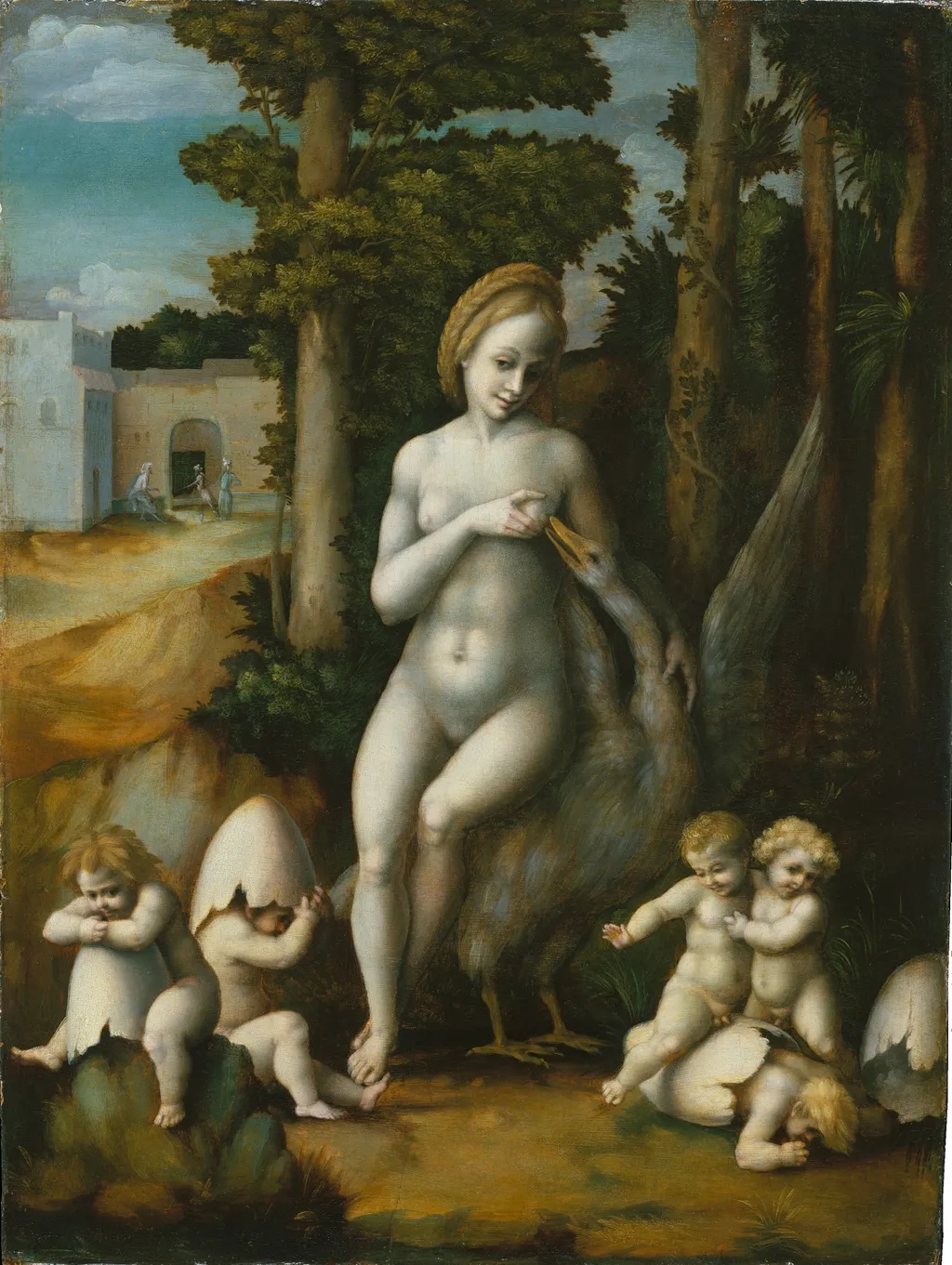
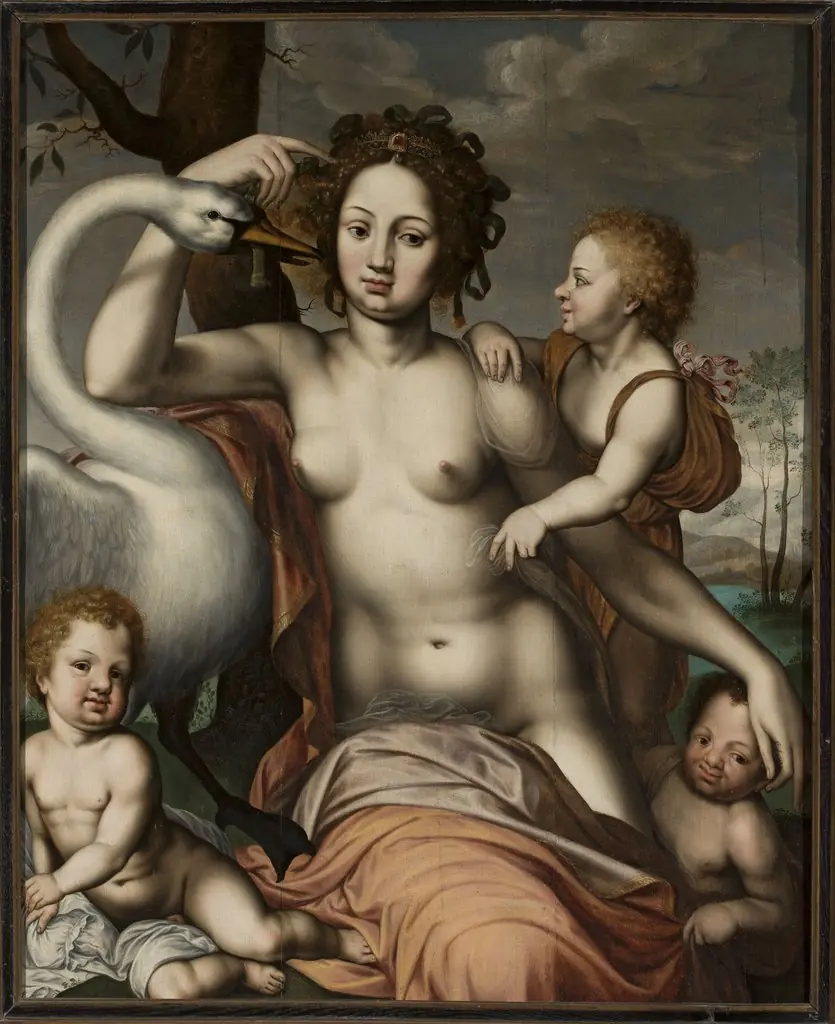
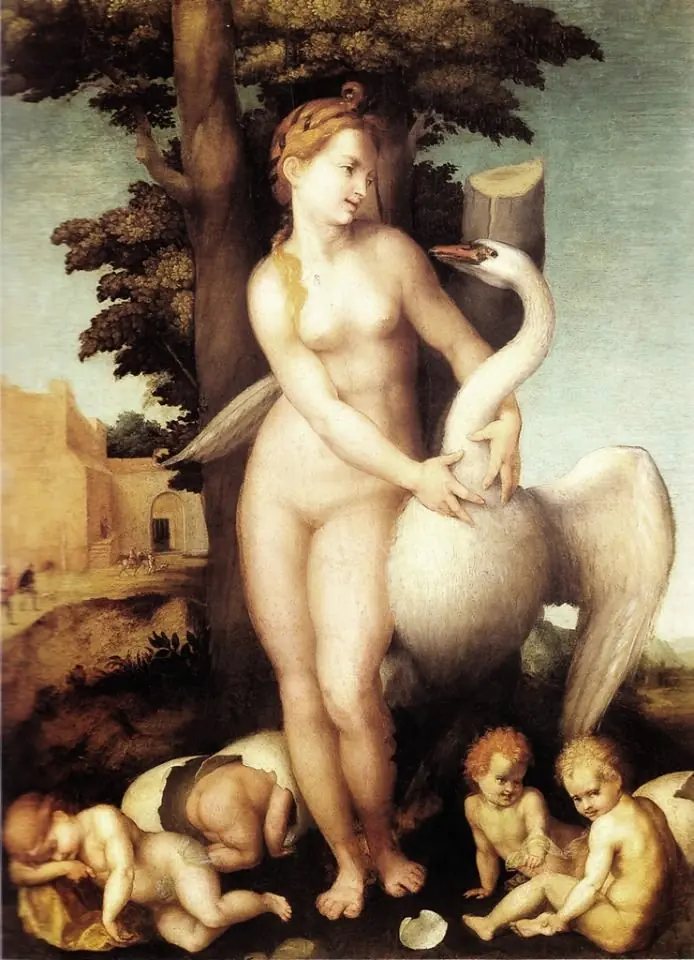
Leda and the Swan is an oil painting by the Mannerist artist Francesco Bacchiacca. It dates from 1550 and is held in the collection of the Metropolitan Museum of Art.
About this work
Subject & Meaning
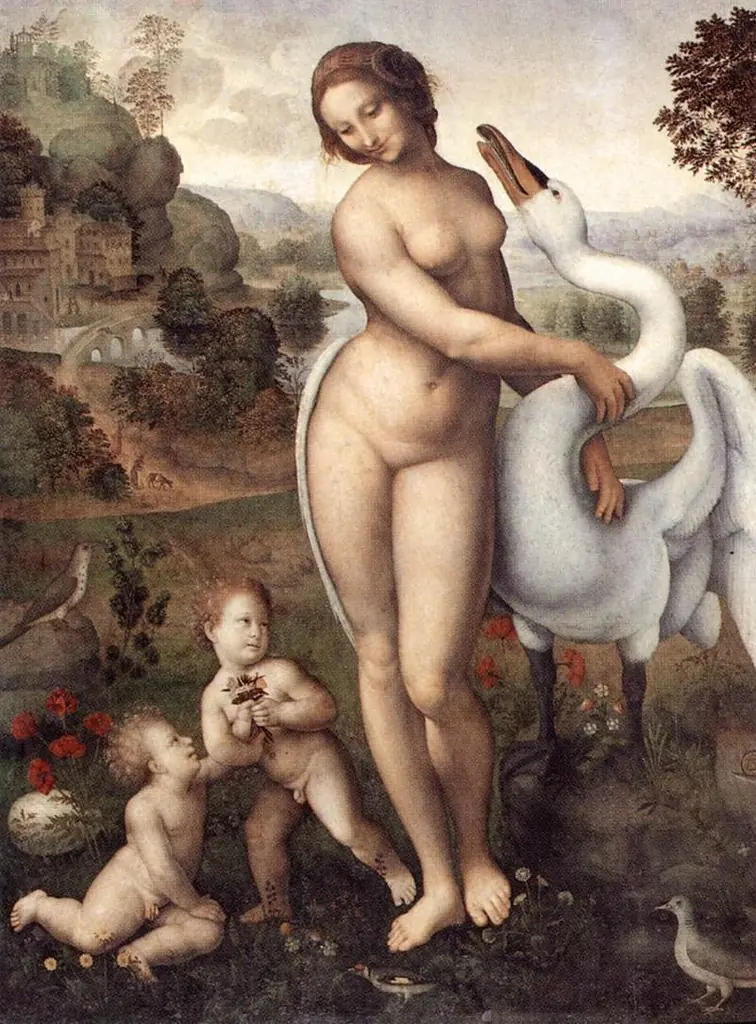
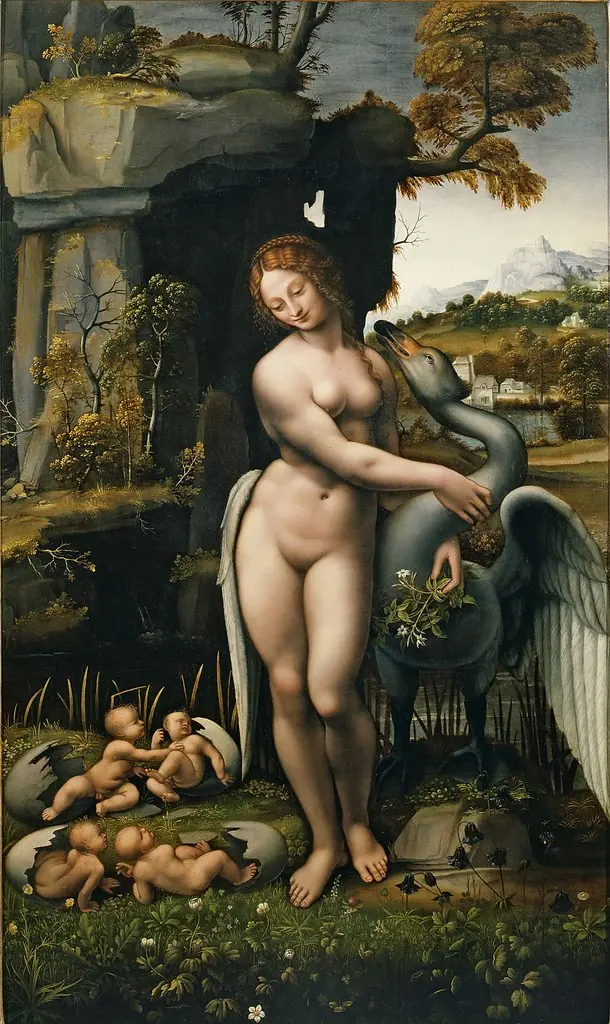
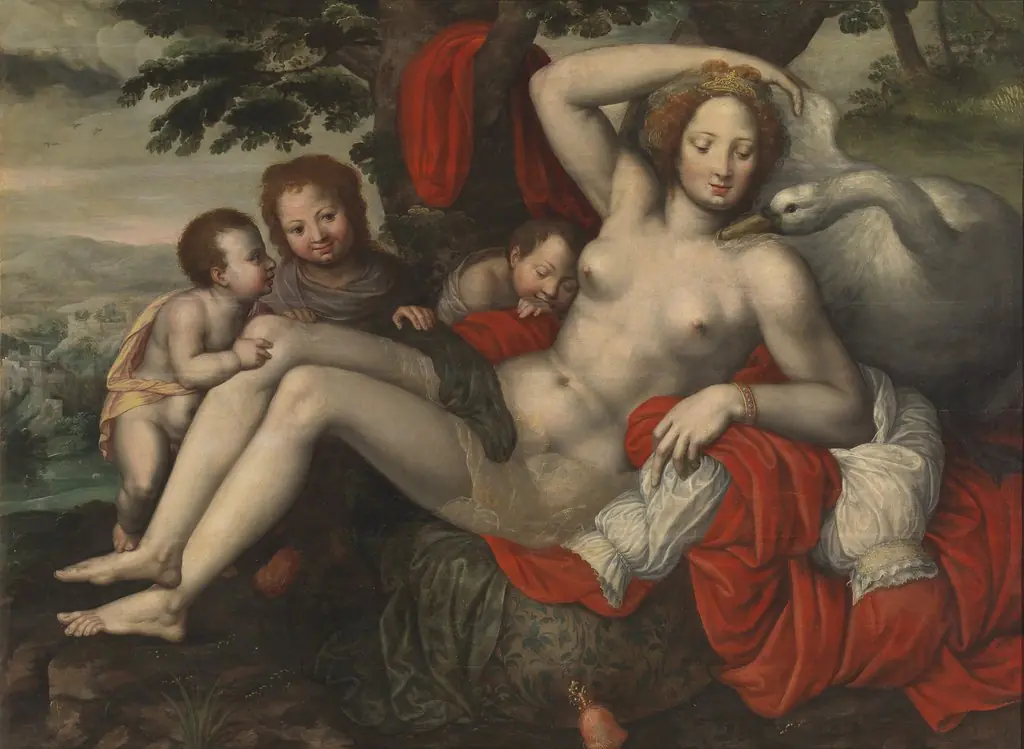
The subject of Francesco Bacchiacca's Leda and the Swan (1550) belongs to a broader tradition in Renaissance art of representing the mythological episode from Ovid's Metamorphoses, in which the god Jupiter, in swan form, seduces Leda, queen of Sparta. Bacchiacca's rendering emphasizes the central figures, Leda, the swan, and the offspring that result from their union, symbolizing divine intervention and the origins of the Spartan royal line. The inclusion of an egg may allude to the myth's variant accounts, in which Leda's union with the swan produces eggs from which Helen of Troy and the Dioscuri (Castor and Pollux) hatch.
The work's iconography aligns with contemporaneous representations of this myth, conveying themes of fate, transformation, and the interplay between human and divine spheres.
Technique & Style
Francesco Bacchiacca's Leda and the Swan is executed in oil paint on a wooden panel, measuring approximately 42 × 32 cm.
Francesco Bacchiacca's Leda and the Swan is executed in oil paint on a wooden panel, measuring approximately 42 × 32 cm. The work belongs to the mythological painting tradition, presenting the Leda and the Swan narrative with a focus on the nude figure, the swan, and associated symbols such as an egg and an infant. The paint handling is typical of mid-sixteenth-century Florentine panel work, though specific details of brushwork or surface condition are not recorded in the sources.
History & Provenance
Leda and the Swan was executed in 1550 by Francesco Bacchiacca (Francesco d'Ubertino Verdi) as an oil on panel, measuring 41.9 cm by 31.8 cm. It portrays the nude figure of Leda with a swan, an egg, and an infant, reflecting the classical narrative. The painting is held in the collection of the Metropolitan Museum of Art in New York, where it remains part of the permanent holdings. The available records do not provide a specific accession number.
Legacy
Leda and the Swan by Francesco Bacchiacca, executed in oil around 1550, is a mythological work held in the Metropolitan Museum of Art. Its inclusion in a major museum collection underscores its place within the Renaissance tradition of depicting the Leda myth. As part of Bacchiacca's documented oeuvre, the piece contributes to scholarly understanding of how sixteenth-century artists interpreted classical narratives.
Overview
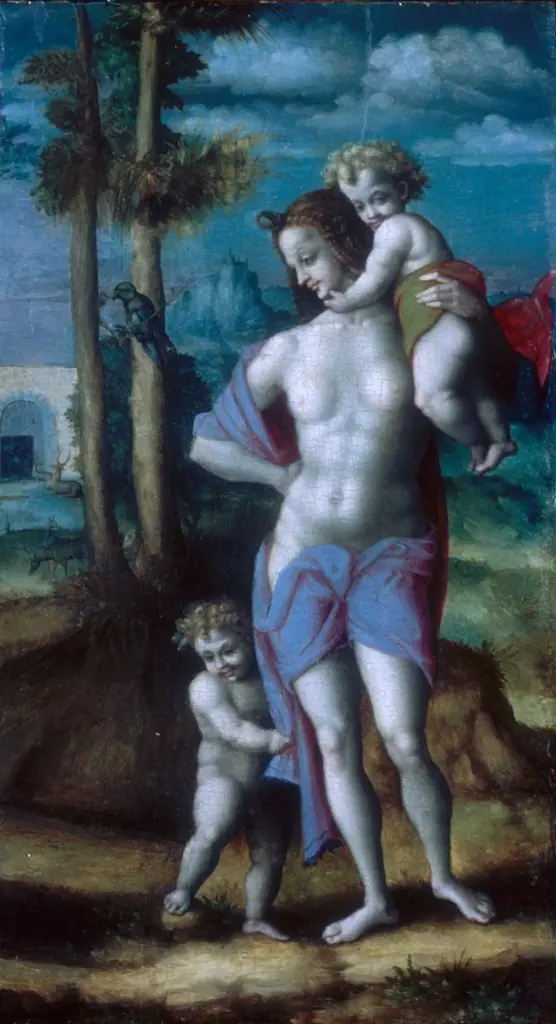
This oil painting, titled Leda and the Swan, presents a unique interpretation of the classical myth. It depicts a woman, Leda, standing barefoot in a lush garden setting, accompanied by a swan and four young children. The scene unfolds with a sense of tranquility, contrasting with traditional, more dramatic portrayals of the subject.
The artist utilizes oil paint to render the figures and their natural surroundings, including a distant building with arched doors.
Own this work as a print
Artist & collection
Artist
Francesco d'Ubertino Verdi, called Bachiacca (say "bah ki ah cka"). He is also known as Francesco Ubertini, il Bacchiacca (1494–1557). He was an Italian painter of the Renaissance whose work is characteristic of the…