Artwork
The Crucifixion, Noli Me Tangere
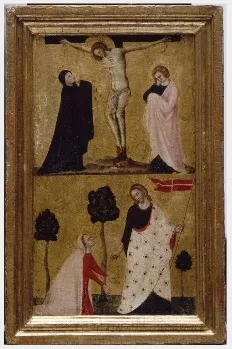
The Crucifixion, Noli Me Tangere is an unspecified painting by the Italo Byzantine artist Francesco da Rimini. It is held in the collection of the National Gallery of Ireland.
About this work
Overview
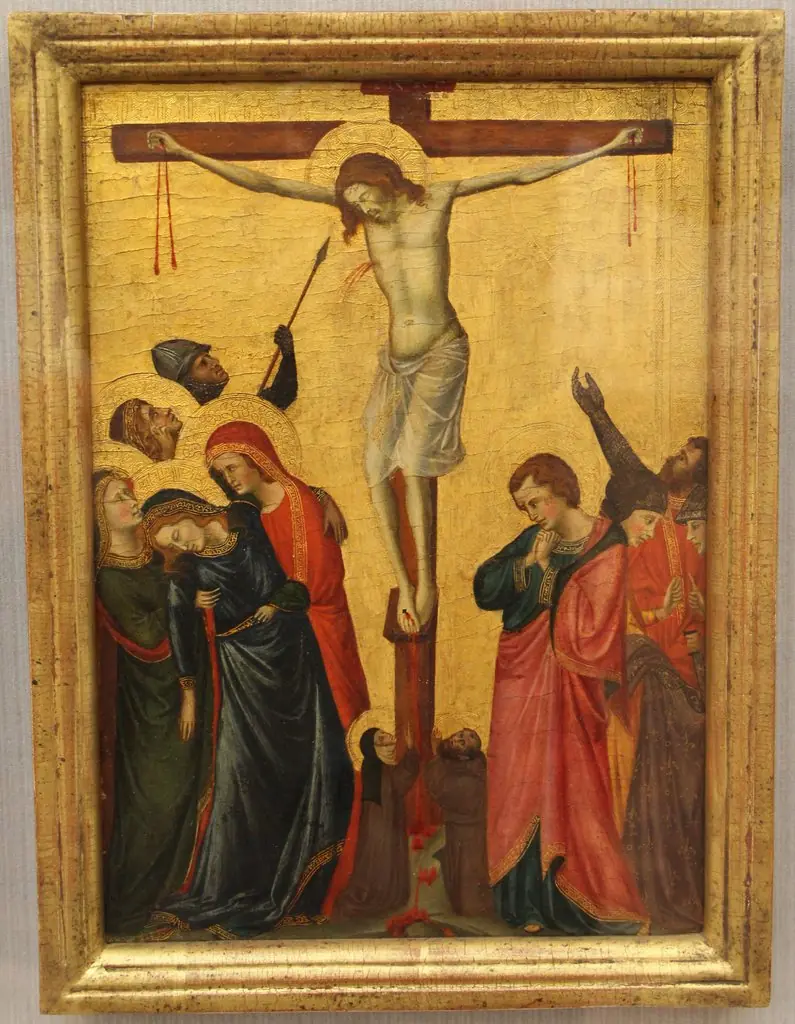
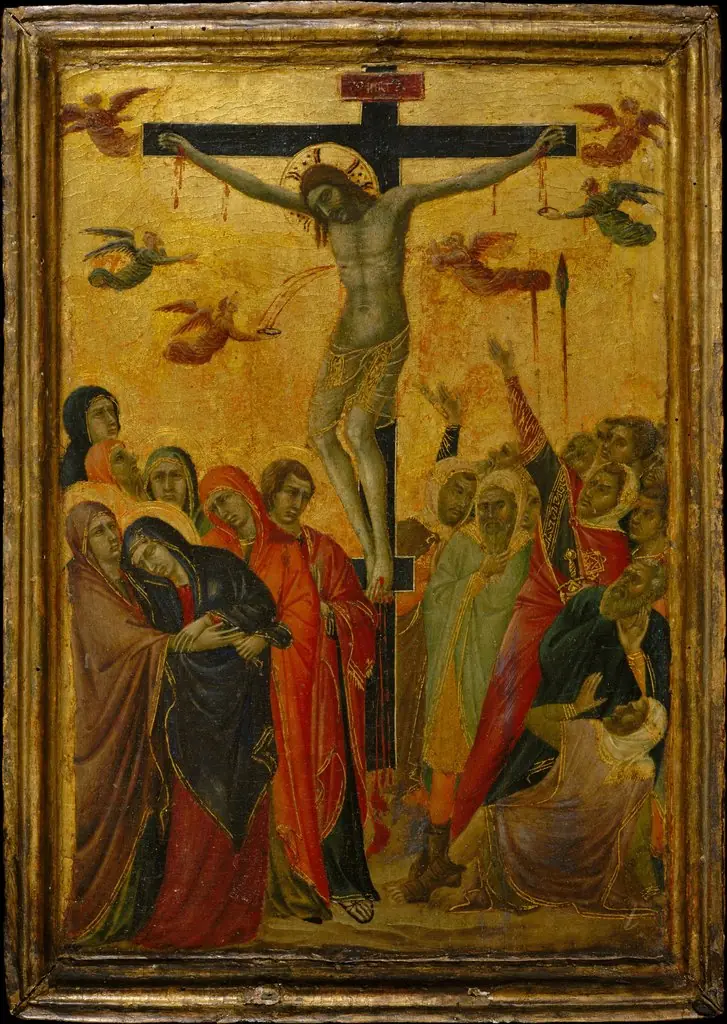
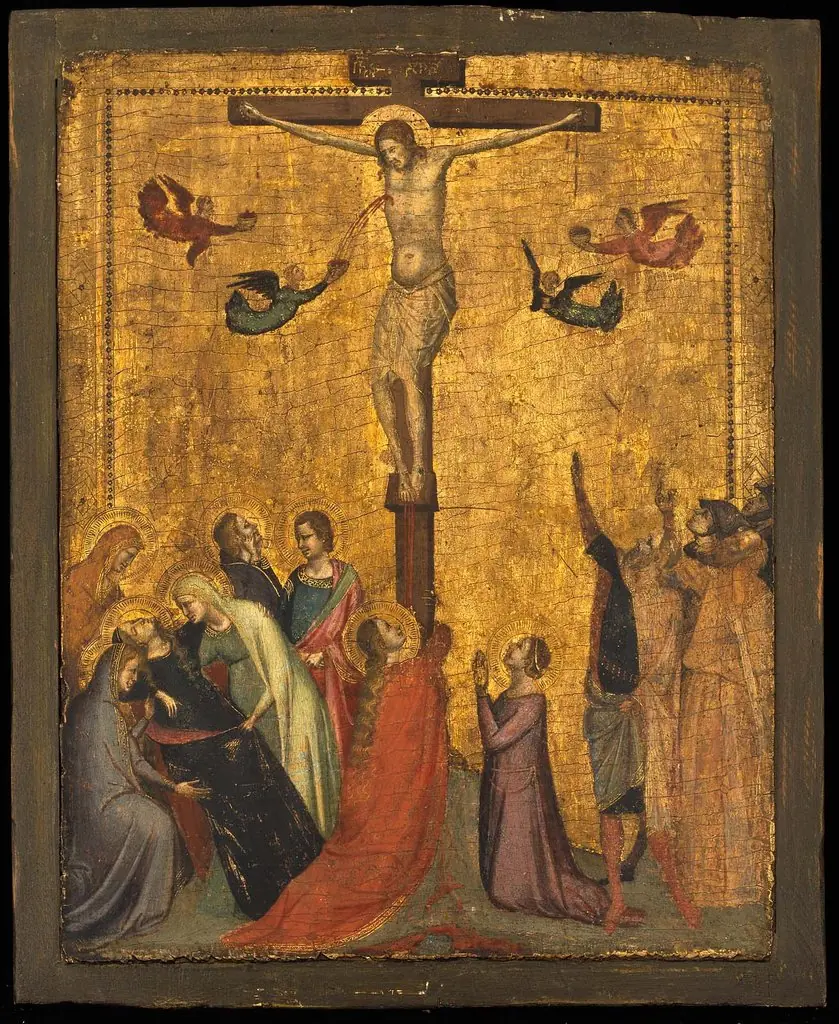
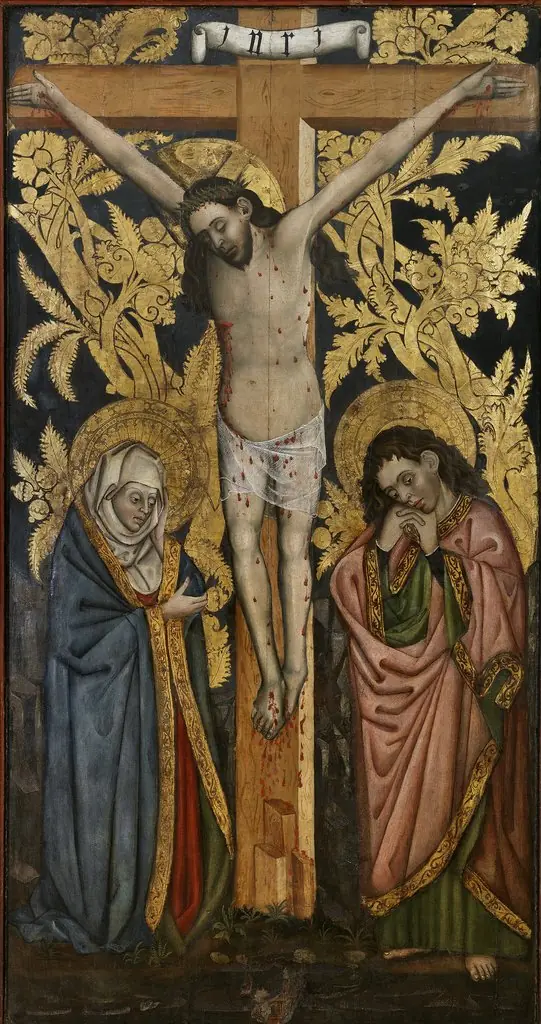
Francesco da Rimini’s work titled The Crucifixion, Noli Me Tangere is a religious composition currently displayed in the National Gallery of Ireland. The canvas is organized into two distinct registers: an upper scene of the crucifixion and a lower vignette of women in a garden, both set against a luminous golden ground.
Subject & Meaning
The upper register presents the crucified Christ flanked by two figures, one clad in black and the other in a pink garment, suggesting contrasting roles or identities. The lower register shows three women in a garden, one extending her hand toward another, evoking the post‑resurrection encounter implied by the phrase “Noli me tangere” (do not touch me).
Technique & Style
The painter employs a warm, golden background that unifies the two scenes while creating spatial depth. Darker tones on the surrounding figures enhance the dramatic contrast with the central luminous figures, and the careful arrangement of gestures guides the viewer’s eye through the narrative layers.
History & Provenance
Created by the early 15th‑century Italian artist Francesco da Rimini, the painting entered the collection of the National Gallery of Ireland, where it remains on public view. Its provenance traces back to the artist’s workshop, though earlier ownership details are not recorded in the surviving documentation.
Artist & collection
Artist
Francesco da Rimini painted religious scenes in 14th-century Italy. In this set you’ll find two works: The Crucifixion and Noli Me Tangere, both full of dramatic gold backgrounds and quiet emotion. Look for the way the…