Artwork
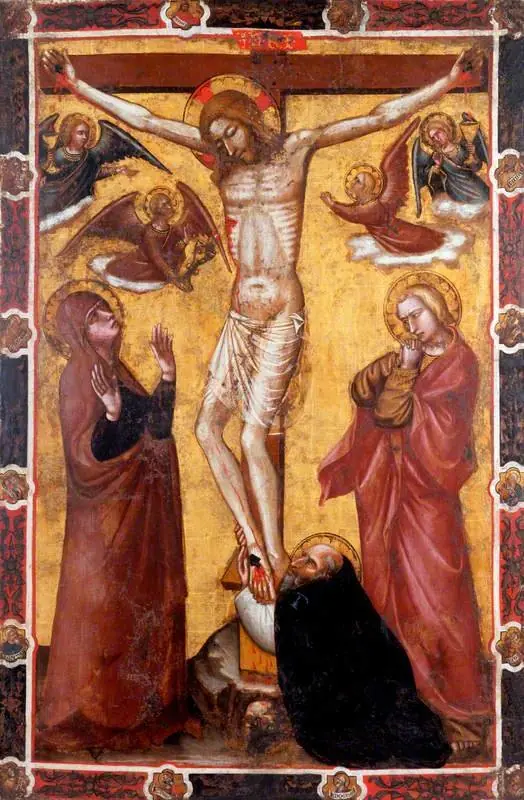
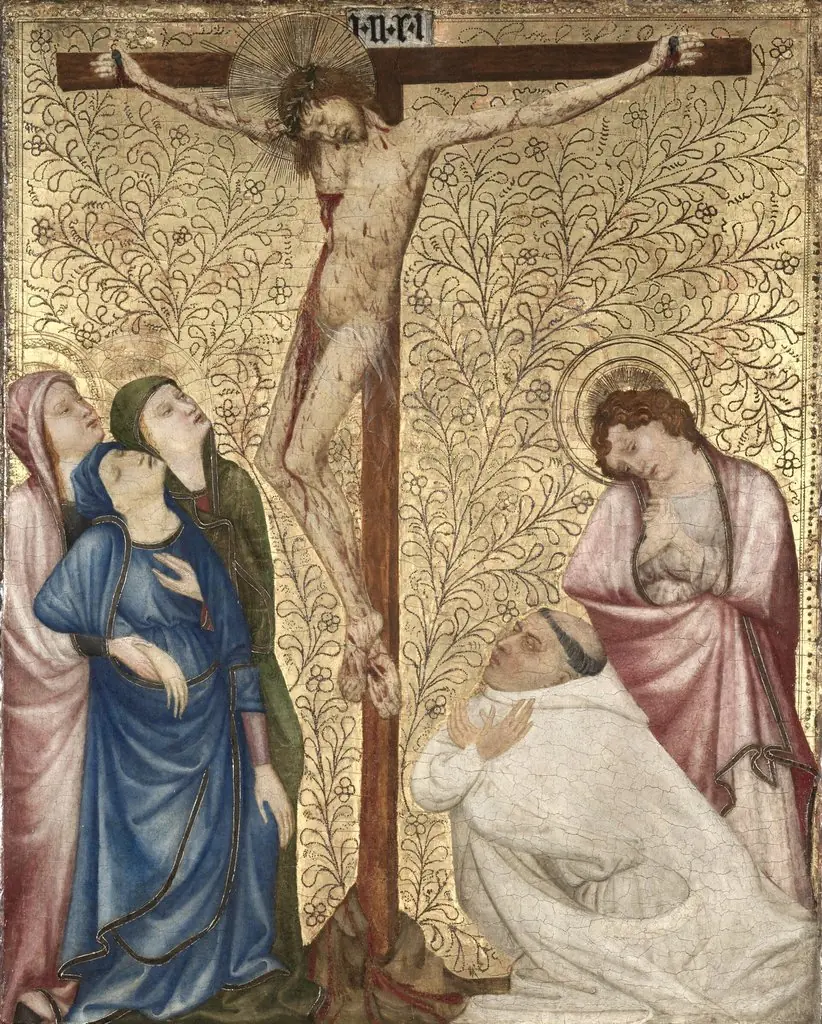
Calvary with a Carthusian Monk
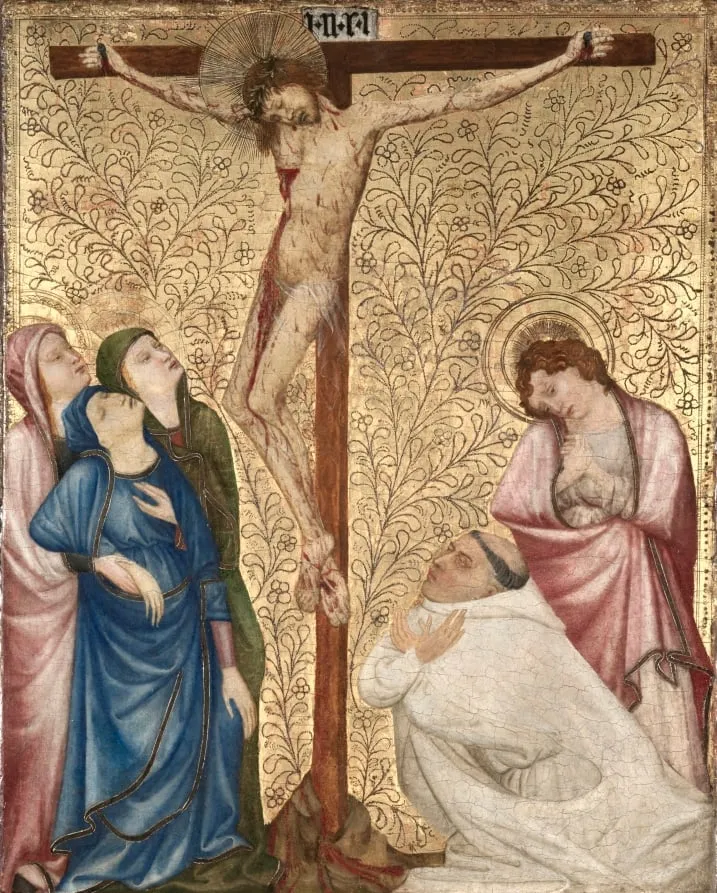
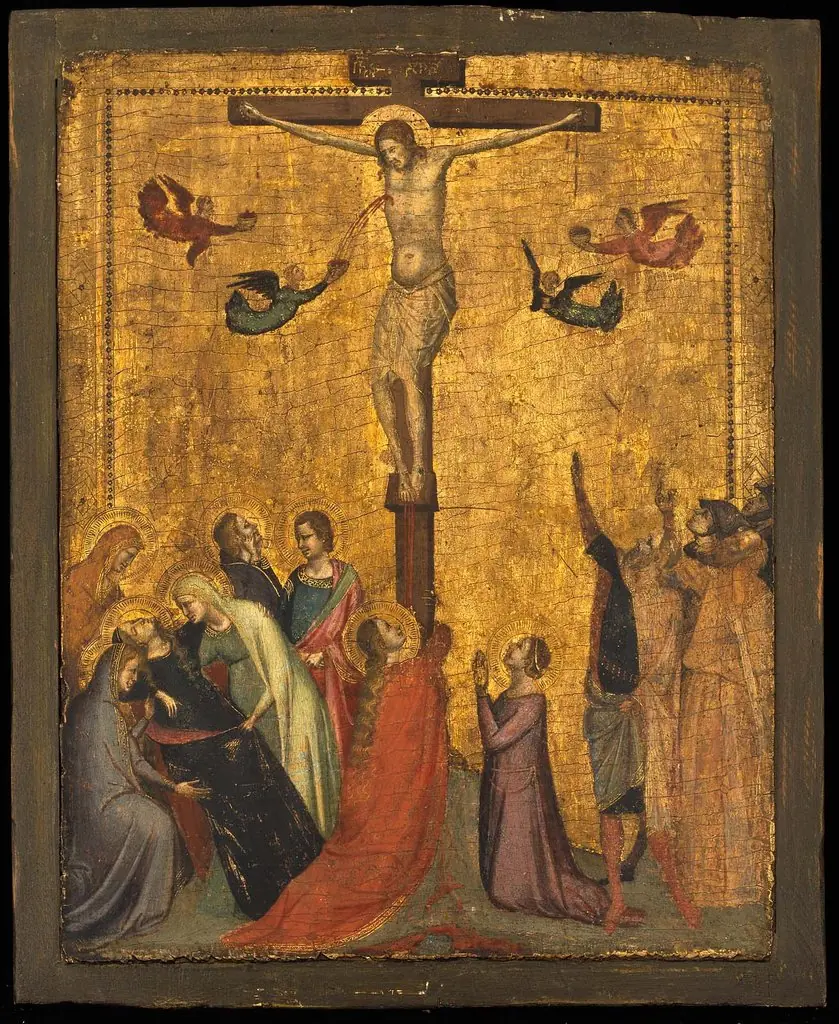
Calvary with a Carthusian Monk is an unspecified painting by the Byzantine icon painting artist Jean de Beaumetz. It dates from 1392 and is held in the collection of the Cleveland Museum of Art.
- Accession no.
- 1964.454
- Credit line
- Leonard C. Hanna Jr. Fund
About this work
Overview
This small panel painting, Calvary with a Carthusian Monk, was created between 1389 and 1395 by Jean de Beaumetz, court painter to Philip the Bold, Duke of Burgundy. It is one of only two surviving examples from a set of 26 devotional paintings made for the Chartreuse de Champmol.
Subject & Meaning
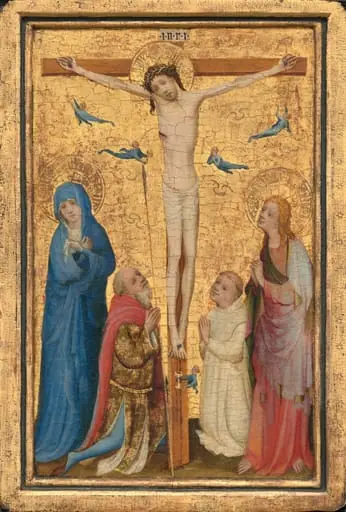
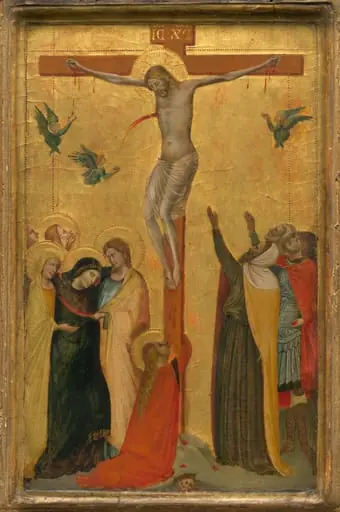
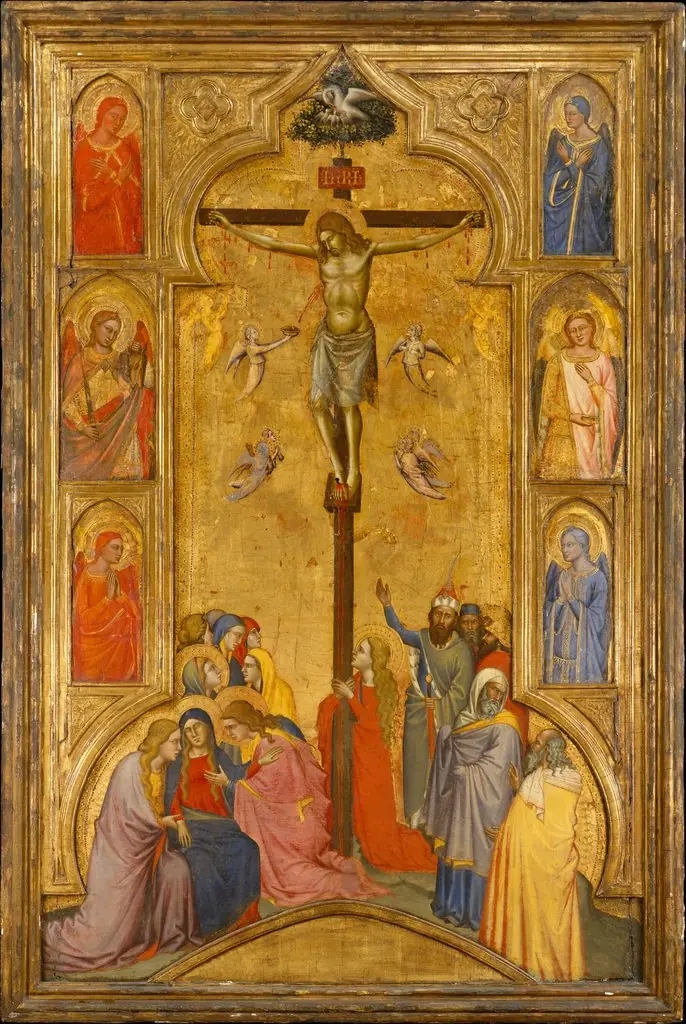
The painting depicts a crucifixion scene with Christ, two thieves, soldiers, and mourners, including the fainting Virgin supported by the two Marys and Saint John the Evangelist. A kneeling Carthusian monk is shown at the foot of the cross, emphasizing the personal and empathetic connection between the monk and Christ's sacrifice.
Technique & Style
The painting features a gold background with punched decoration representing the Trees of Life and Knowledge, highlighting the biblical connection between Adam and Christ. The use of bold, bright strokes to depict Christ's blood is notable, creating a vivid and intense image.
Context
The Carthusian order, known for their intense devotion to the Passion of Christ, prayed in isolation for hours. The painting was designed for a monk's private cell, intended to facilitate personal contemplation and emotional connection with the scene.
Artist & collection

Artist
Jean de Beaumetz is recorded to have been "painter and valet" to Philip the Bold, for whom he painted numerous works, and decorated, among other chapels, that of the Castle of Argilli, in Burgundy.