Artwork
The Horrors of War: Title Page - Sad Forebodings of What is Going to Happen
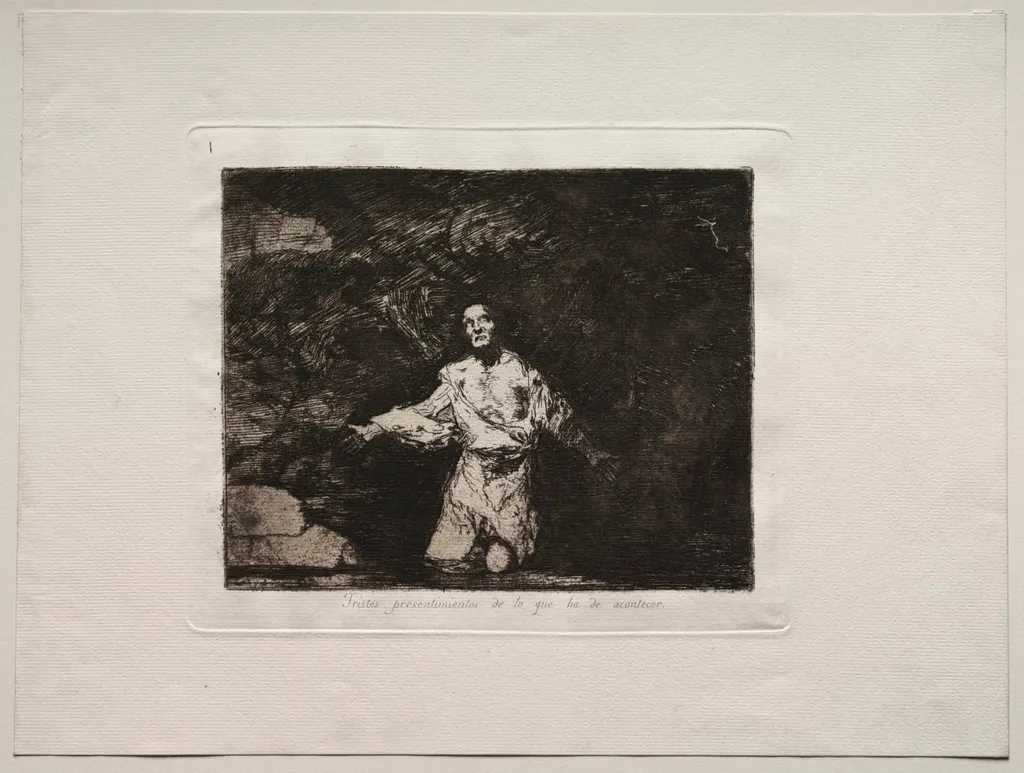
The Horrors of War: Title Page - Sad Forebodings of What is Going to Happen is a print by the Romanticist artist Francisco de Goya. It dates from 1815 and is held in the collection of the Cleveland Museum of Art.
- Accession no.
- 1922.362
- Credit line
- Dudley P. Allen Fund
About this work
Overview
This print, dated around 1815, is the title page of Francisco de Goya’s series depicting the brutality of war. Executed as an etching with aquatint, it introduces a somber tone for the collection. The image is not a narrative scene but a symbolic prelude, conveying dread through atmosphere rather than action. It is held in the collection of The Cleveland Museum of Art.
Subject & Meaning
A solitary figure stands beneath a turbulent sky, clutching a sheet of paper or cloth, gazing upward in apprehension.
A solitary figure stands beneath a turbulent sky, clutching a sheet of paper or cloth, gazing upward in apprehension. The figure’s identity is ambiguous, serving as a universal witness to impending violence. The Spanish inscription below translates to 'Sad forebodings of what is to happen,' framing the image as an omen. It reflects Goya’s preoccupation with the psychological weight of conflict before its full devastation unfolds.
Technique & Style
Goya employed etching and aquatint to achieve deep shadows and atmospheric texture. The sky is rendered with dense, swirling lines that suggest chaos and unease, while the ground recedes into near-absence, isolating the figure. The contrast between the figure’s stillness and the violent sky heightens emotional tension. The technique avoids detail in favor of mood, aligning with Romantic sensibilities that prioritize feeling over realism.
History & Provenance
Created shortly after the Peninsular War, the print was part of Goya’s series Los Desastres de la Guerra, though not published until decades later. It was likely made between 1810 and 1820, reflecting his personal response to the violence he witnessed. The work entered The Cleveland Museum of Art’s collection in the 20th century, where it remains as part of a larger archive of Goya’s graphic works.
Context
Goya produced this work amid political instability in Spain following Napoleon’s invasion and the restoration of the monarchy. The series was never officially released during his lifetime, likely due to its subversive critique of war and authority. As such, the print functions as both personal testimony and quiet resistance, emerging from a culture of censorship and trauma.
Legacy
This image helped redefine the role of printmaking in political commentary, influencing later artists who used visual symbolism to convey social anguish. Its emotional intensity and avoidance of literal violence set a precedent for modern war imagery. Though not widely seen in its time, it now stands as a foundational work in the visual language of psychological warfare.
Artist & collection
Artist
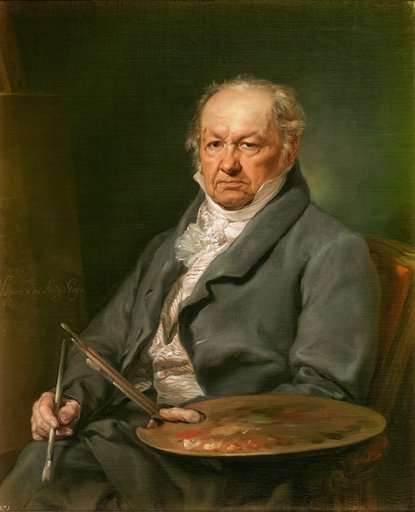
Francisco José de Goya y Lucientes was a Spanish romantic painter and printmaker.

- The Horrors of War: They Do Not Arrive In Time
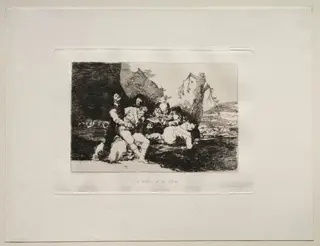 The Horrors of War: Get them Well and On to the Next
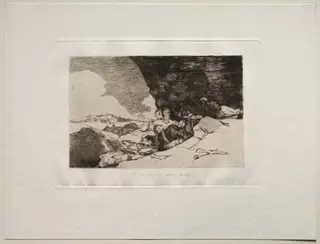 The Horrors of War: The Same Elsewhere
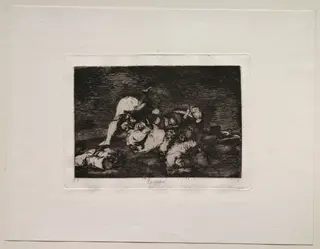 The Horrors of War: Nor (Do These) Either
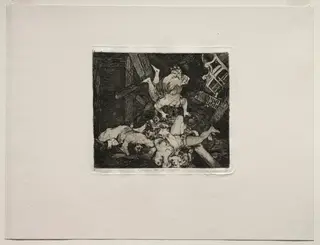 The Horrors of War: Ravages of War
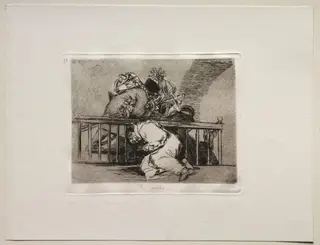 The Horrors of War: This is How it Happened
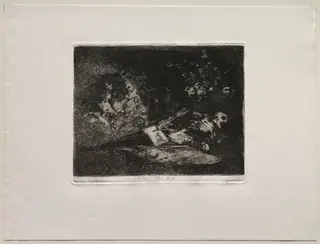 The Horrors of War: Nothing. The Event Will Tell
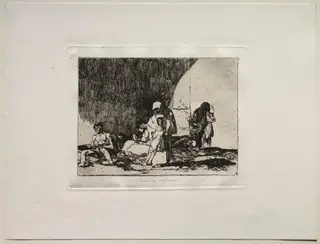 The Horrors of War: The Healthy and the Sick
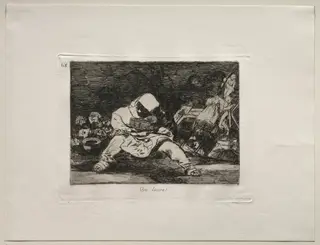 The Horrors of War: What Madness!
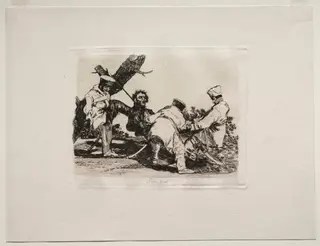 The Horrors of War: Why?
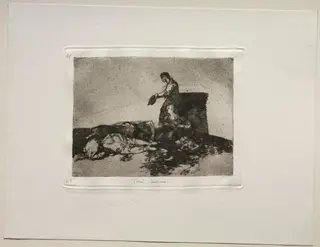 The Horrors of War: Cruel Tale of Woe
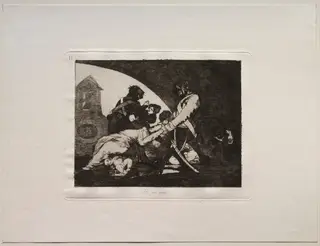 The Horrors of War: Neither Do These