Artwork
The Proverbs: If Marion Will Dance, Then She Has to Take the Consequences
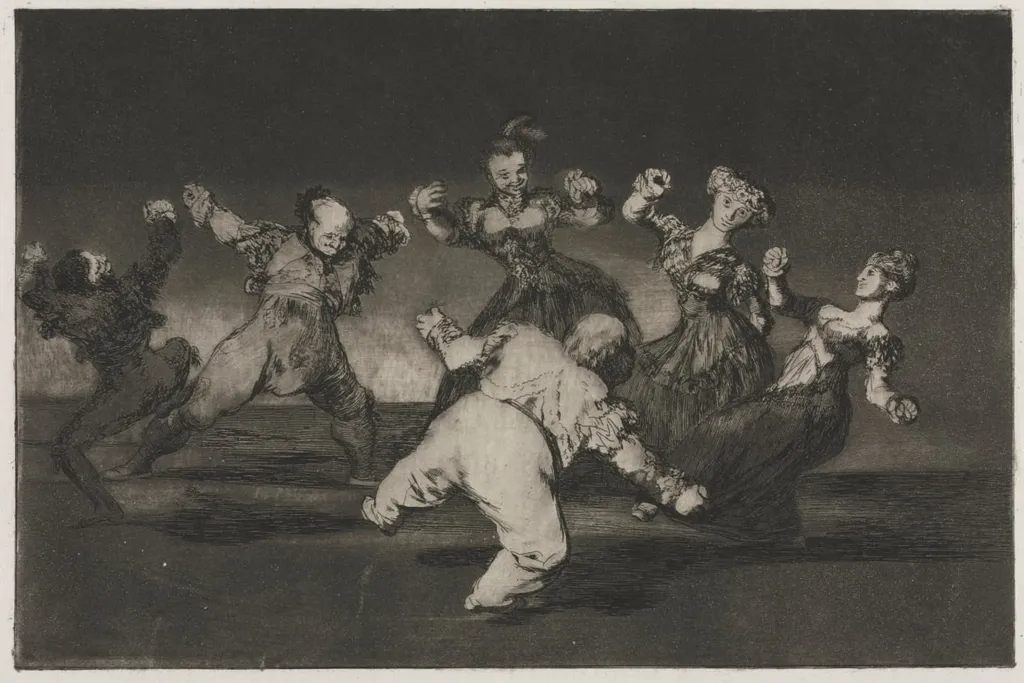
The Proverbs: If Marion Will Dance, Then She Has to Take the Consequences is a print by the Impressionist artist Francisco de Goya. It is held in the collection of the Cleveland Museum of Art.
- Accession no.
- 1928.102.12
- Credit line
- Gift of Grover Higgins
About this work
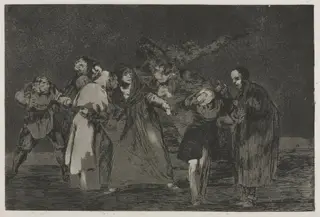
A crowd dances in a dark room. Flickering light catches bare arms and bright skirts. A man claps castanets, wooden shells strapped to his fingers.
You can almost hear the sharp clack over the music. Goya painted this scene late in life, when his eyesight failed. The dancers don’t care about rules. They just spin, lost in the moment.
Look next at Francisco de Goya (Spanish, 1746–1828).
Overview
The Proverbs: If Marion Will Dance, Then She Has to Take the Consequences is a print by Francisco de Goya, created during a period when the artist's eyesight was failing.
Subject & Meaning
The scene depicts a lively dance in a dark setting, with dancers lost in the moment, their movements accompanied by the sharp sound of castanets. The dance is associated with erotic connotations, referencing the saraband, a folk dance with a history of being considered disreputable.
Technique & Style
Goya's use of flickering light highlights the dancers' bare arms and bright skirts, creating a dynamic atmosphere. The print showcases Goya's ability to convey energy and emotion through visual elements, despite his failing eyesight.
Context
The saraband, a dance referenced in the print, had evolved over time, from a fast and disreputable folk dance in 16th-century Spain to a slow and serious processional dance in 17th-century France. Goya's depiction alludes to the dance's earlier, more erotic origins.
Artist & collection
Artist
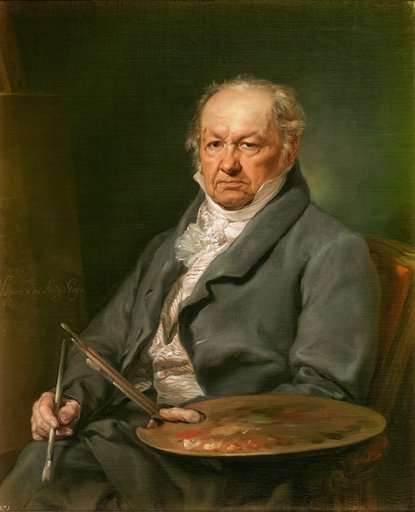
Francisco José de Goya y Lucientes was a Spanish romantic painter and printmaker.

- Disparate allegre (Merry Folly)
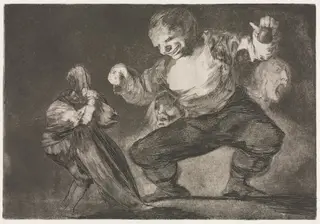 The Proverbs: Simpleton
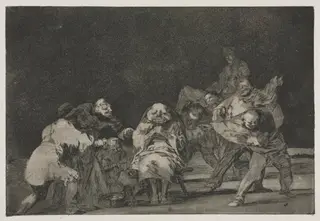 The Proverbs: Loyalty
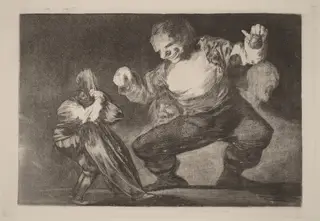 Bobalicon (Simpleton)
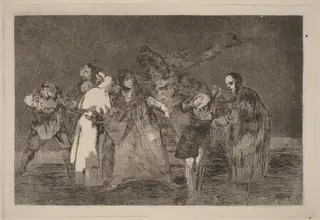 Sanan cuchilladas mas no malas palabras (Wounds Heal Quicker than Hasty Words)
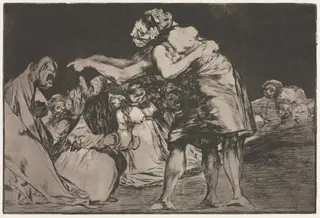 The Proverbs: Matrimonial Folly
 Disparate de Carnabal (Carnival Folly)
 The Proverbs: Carnival Folly
 The Proverbs: Poor Folly
 It is Time, Plate 80
 The Proverbs: Wounds Heal Quicker Than Hasty Words
 The Proverbs: Two Heads are Better than One or Poor Folly