Artwork
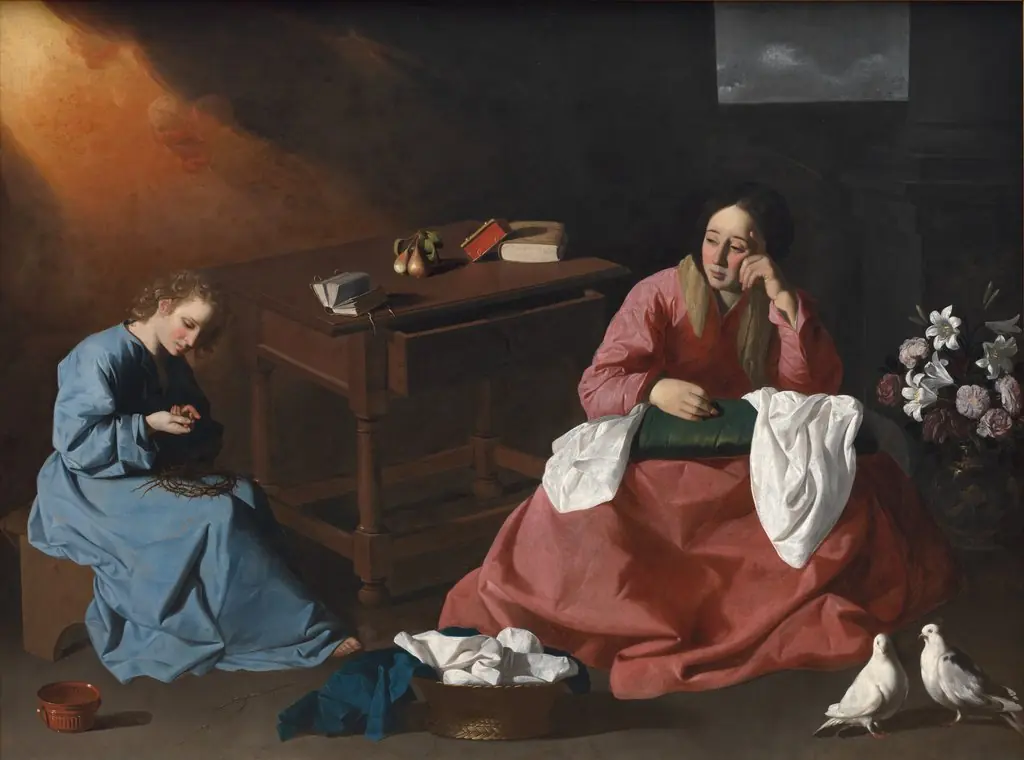
Childhood of the Virgin
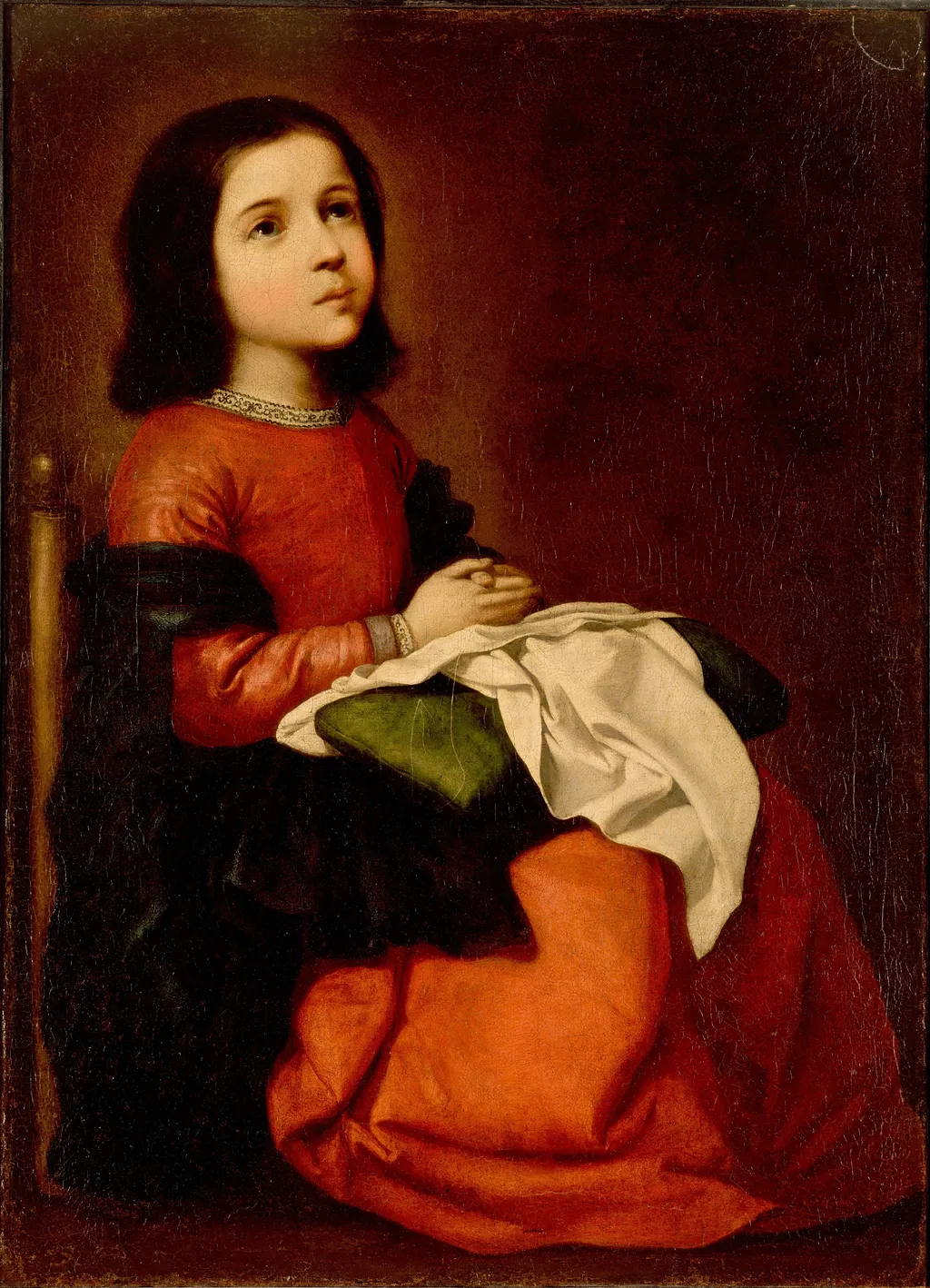
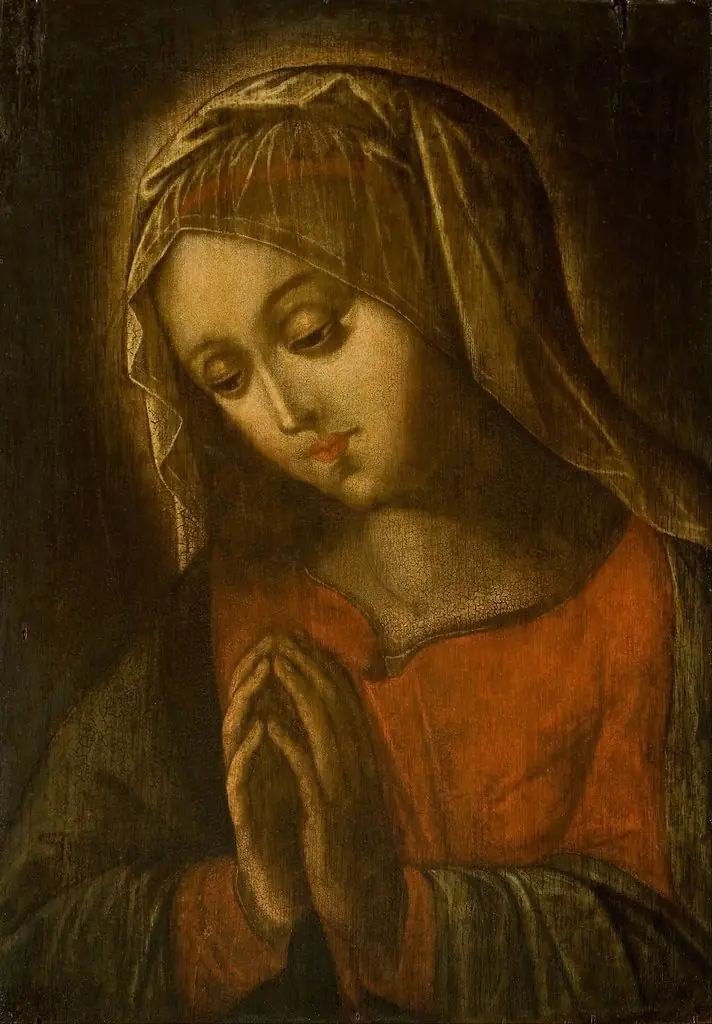
Childhood of the Virgin is an oil painting by the Spanish Baroque Tenebrist artist Francisco de Zurbarán. It dates from 1658 and is held in the collection of the Hermitage Museum.
About this work
Overview
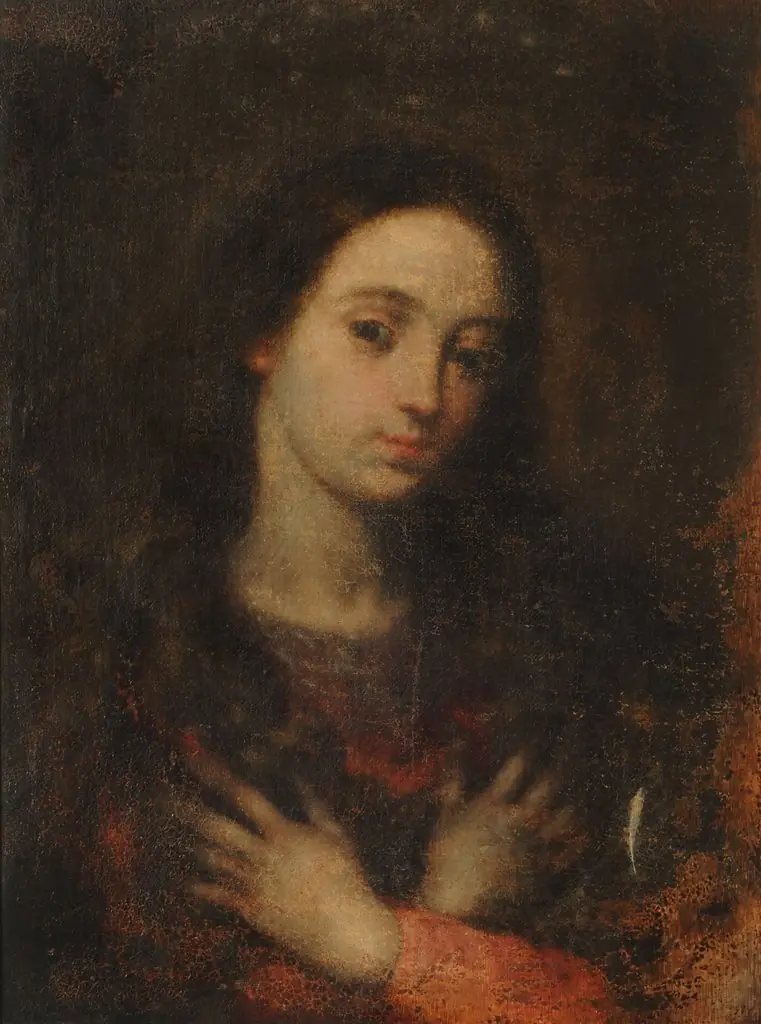
Francisco de Zurbarán’s oil painting titled Childhood of the Virgin was executed between 1658 and 1660. The work portrays a youthful Virgin Mary in a moment of prayer, rendered with the restrained realism characteristic of the Spanish Baroque. Today the canvas belongs to the collection of the Hermitage Museum in St. Petersburg.
Subject & Meaning
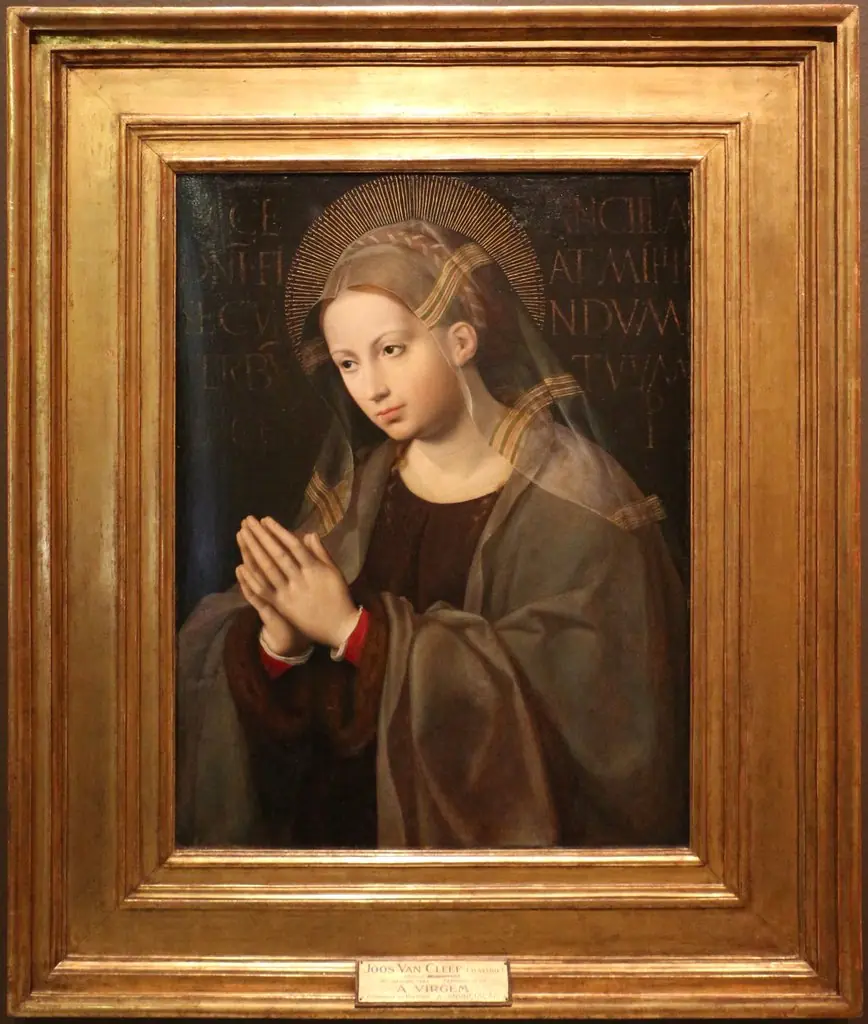
The composition focuses on the infant Mary, depicted kneeling with hands clasped in devotion. By emphasizing her piety from an early age, Zurbarán underscores the theological notion of innate sanctity, aligning the child’s quiet reverence with the later role she would assume as the mother of Christ.
Technique & Style
Zurbarán employs a subdued palette and meticulous modeling of light, achieved through layered glazing that deepens tonal richness. The smooth surface and careful handling of drapery reflect the artist’s mastery of chiaroscuro, creating a contemplative atmosphere that draws the viewer into the figure’s inner devotion.
History & Provenance
Completed in Madrid shortly before Zurbarán’s death, the painting entered the Russian imperial collection in the 19th century and has remained in the Hermitage Museum since. Its provenance traces a path from the artist’s workshop to the European aristocratic market, illustrating the wide appeal of his religious subjects.
Context
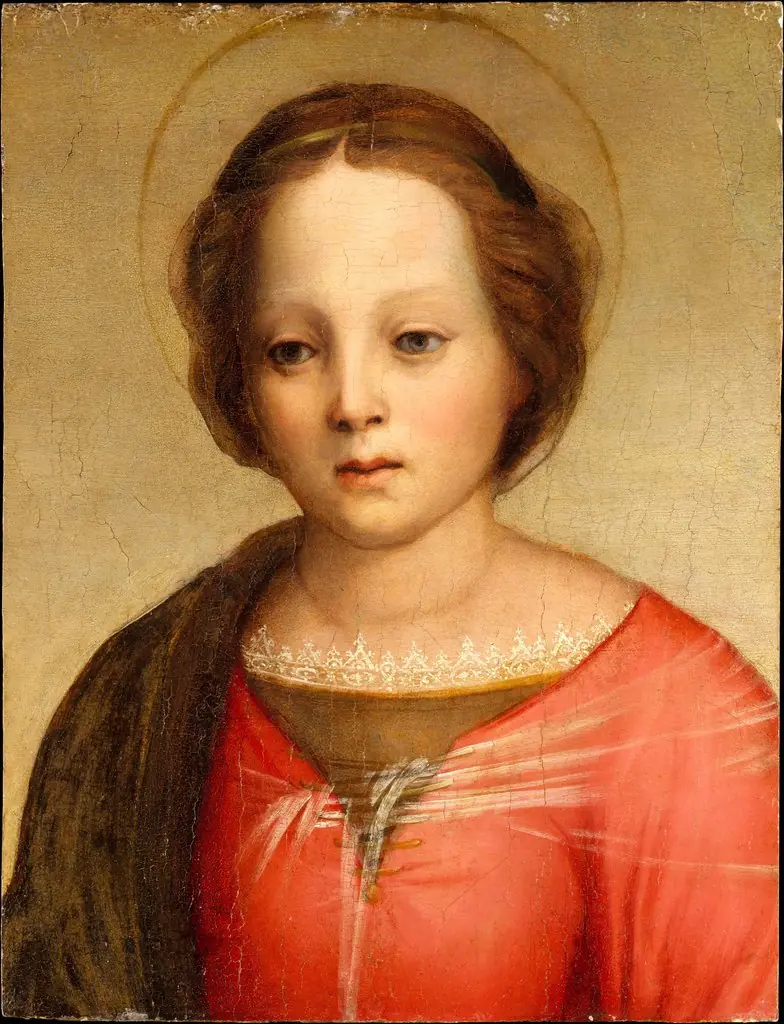
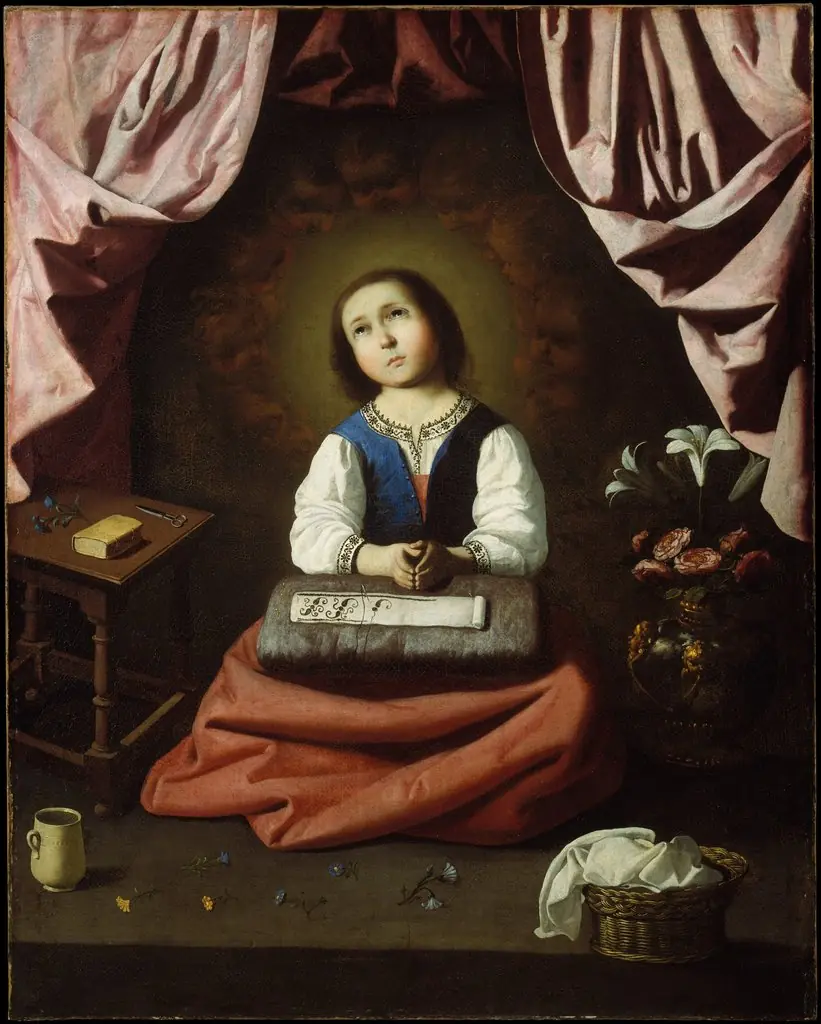
The work belongs to a series of Marian images Zurbarán produced in his later years, echoing the theme of his earlier The Young Virgin now housed in New York’s Metropolitan Museum. These paintings reflect Counter‑Reformation interests in promoting models of personal piety and the sanctified childhood of holy figures.
Own this work as a print
Artist & collection
Artist
Francisco de Zurbarán was a Spanish Baroque painter. He is known primarily for his religious paintings depicting monks, nuns, and martyrs, and for his still-lifes. Zurbarán gained the nickname "Spanish Caravaggio",…