Artwork
Card Players
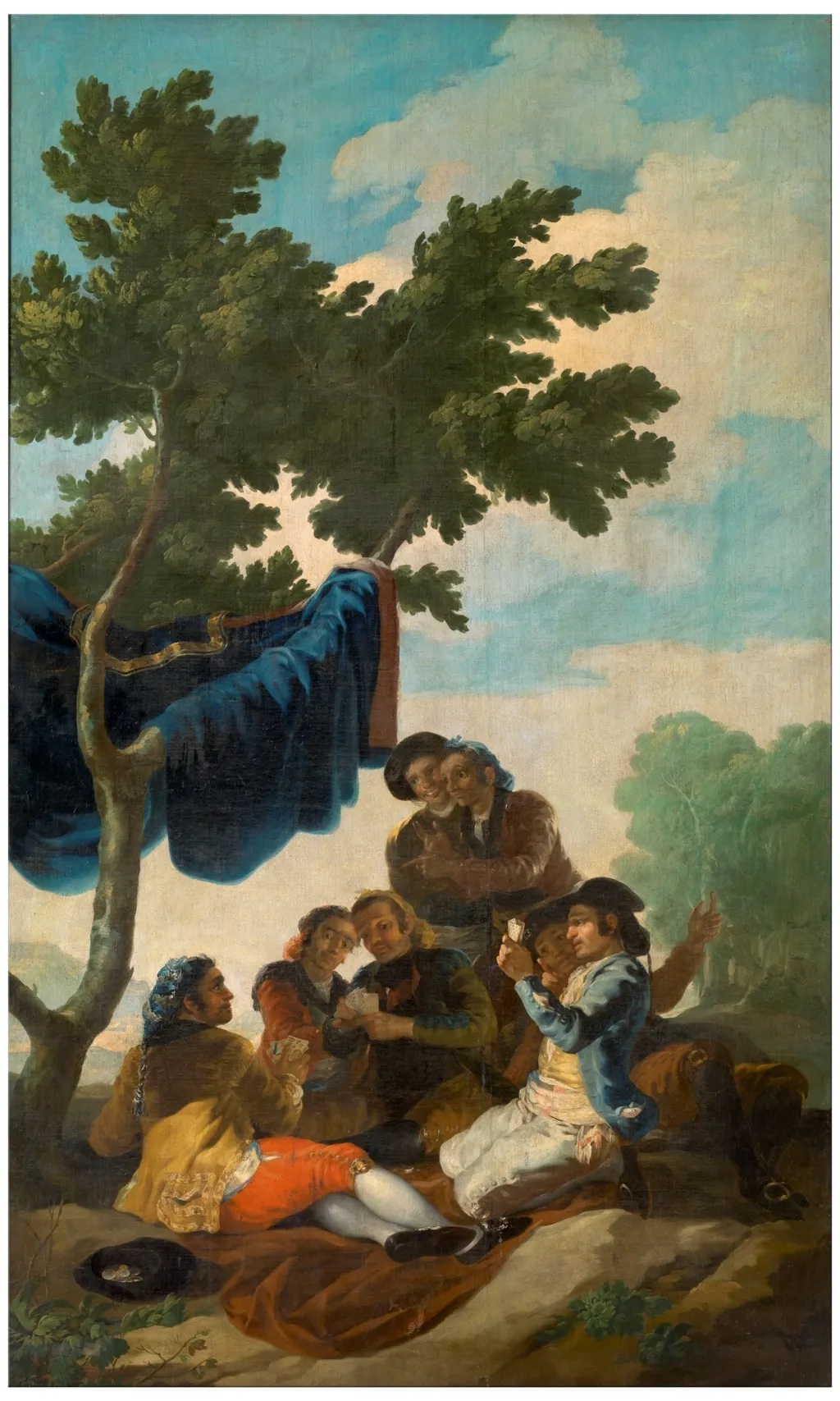
Card Players is an oil painting by the Rococo painting artist Francisco de Goya. It dates from 1789 and is held in the collection of the Museo del Prado.
About this work
Subject & Meaning
The painting depicts a group of majos, young men from Madrid’s lower nobility, engaged in a card game beneath a tree.
The painting depicts a group of majos, young men from Madrid’s lower nobility, engaged in a card game beneath a tree. One figure stands behind a seated player, signaling covertly to a partner, signaling a card-sharping scheme. The trope of the cheat was a familiar moralizing motif in eighteenth-century genre imagery, and Goya adapts it with heightened realism and psychological tension. Goya drew direct inspiration from Caravaggio’s *The Cardsharps* (c. 1595), adopting its staged deception and viewer-involving composition. By placing the sharper in the foreground and using sharp contrasts of light and shadow, Goya underscores the tension between honesty and deceit, aligning the scene with Enlightenment-era critiques of vice and folly.
Technique & Style
Executed in oil paint on canvas, this work measures 270 cm by 167 cm. Goya employed a loose brushwork technique that maintains an appearance of extreme detail upon closer inspection. The composition utilizes a classical pyramidal structure to arrange the figures within a natural outdoor setting, creating a balanced spatial dynamic.
The artist applied strong contrasts of light and shadow to heighten the realism of the scene and accentuate the vivid colors. This handling of illumination draws the viewer into the narrative of the card game. The painting reflects Goya's mastery in depicting eighteenth-century iconography through a style that merges naturalism with dramatic lighting effects.
History & Provenance
The work was commissioned in 1777 as part of a second series of tapestry cartoons intended for the dining room of the Prince of Asturias, later Charles IV, and his wife María Luisa of Parma at El Pardo Palace. It was delivered to the Royal Tapestry Factory on 25 January 1778 and inventoried as a tapestry cartoon. After being considered lost, the canvas was rediscovered in 1869 in the basement of the Royal Palace of Madrid by Gregorio Cruzada Villaamil. It was subsequently transferred to the Museo del Prado by decrees of 19 January and 9 February 1870 and has been on display in Room 85 since then. The painting is held in the collection of the Museo del Prado in Madrid, where it is displayed in Room 85. Although created in 1777 for the Royal Tapestry Factory and delivered on January 25, 1778, the work was considered lost until its rediscovery in 1869 in the basement of the Royal Palace of Madrid by Gregorio Cruzada Villaamil. Following decrees issued on January 19 and February 9, 1870, the canvas was transferred to the museum and first appeared in its catalog in 1876. Originally designed as a tapestry cartoon for the dining room of the Prince of Asturias at the El Pardo Palace, the piece was part of a specific series intended for Charles IV and Maria Luisa of Parma. Goya received 5,000 reales for this commission.
Context
The painting exemplifies Goya's engagement with the everyday customs of the Spanish aristocracy during the late 18th century, reflecting the social milieu of the majos that he increasingly depicted. It is part of the second series of tapestry cartoons commissioned for the dining room of the Prince of Asturias at the El Pardo Palace, a project tied to the royal court's cultural patronage. The work was delivered to the Royal Tapestry Factory on January 25, 1778, and remained in private royal spaces until its rediscovery in 1869 by Gregorio Cruzada Villaamil, after which it entered the Museo del Prado collection in 1870. Its composition draws on Caravaggio's The Cardsharps (1595), reinterpreting the theme of cheating through a pyramidal arrangement of figures, dramatic chiaroscuro, and naturalistic detail. Goya's brushwork balances loose application with intricate surface detail, emphasizing spatial harmony and emotional tension. The painting's provenance, including its cataloging in 1876 and display in Room 85, underscores its significance within Goya's broader oeuvre and the development of his career in the Spanish court.
Artist & collection
Artist
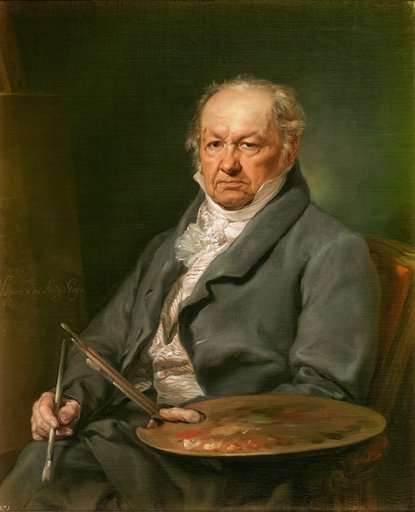
Francisco José de Goya y Lucientes was a Spanish romantic painter and printmaker.