Artwork
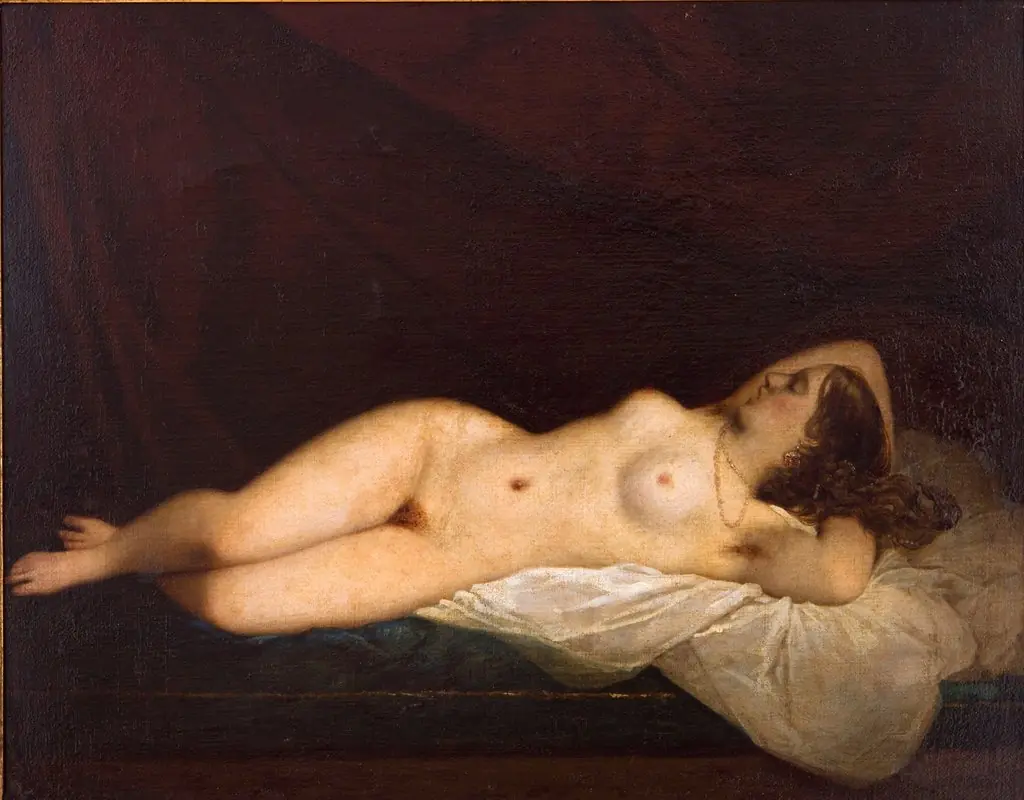
La maja desnuda
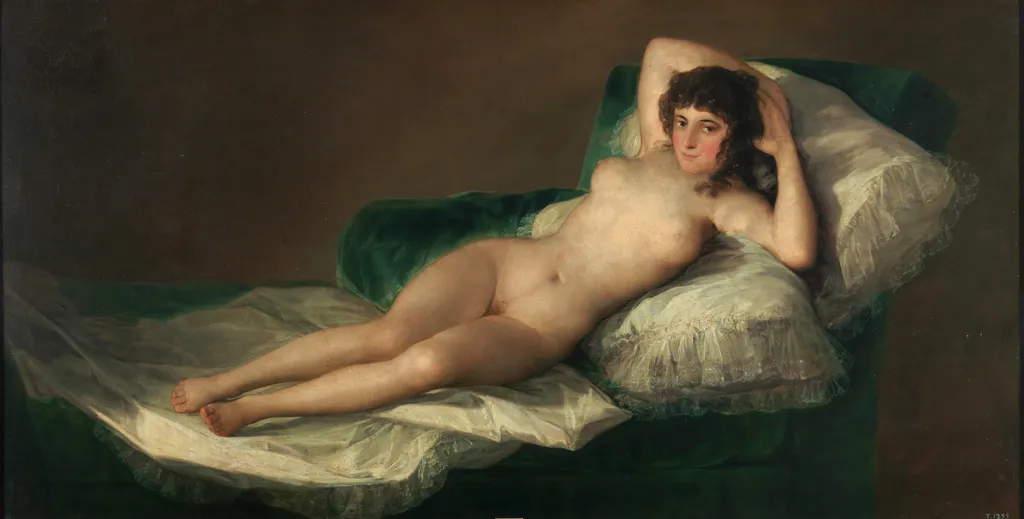
La maja desnuda is an oil painting by the Early Baroque Italian artist Francisco de Goya. It dates from 1798 and is held in the collection of the Museo del Prado.
About this work
Subject & Meaning
The sitter is identified as a maja, the feminine form of majo, denoting a fashionable woman of the lower classes in 18th- and 19th-century Madrid.
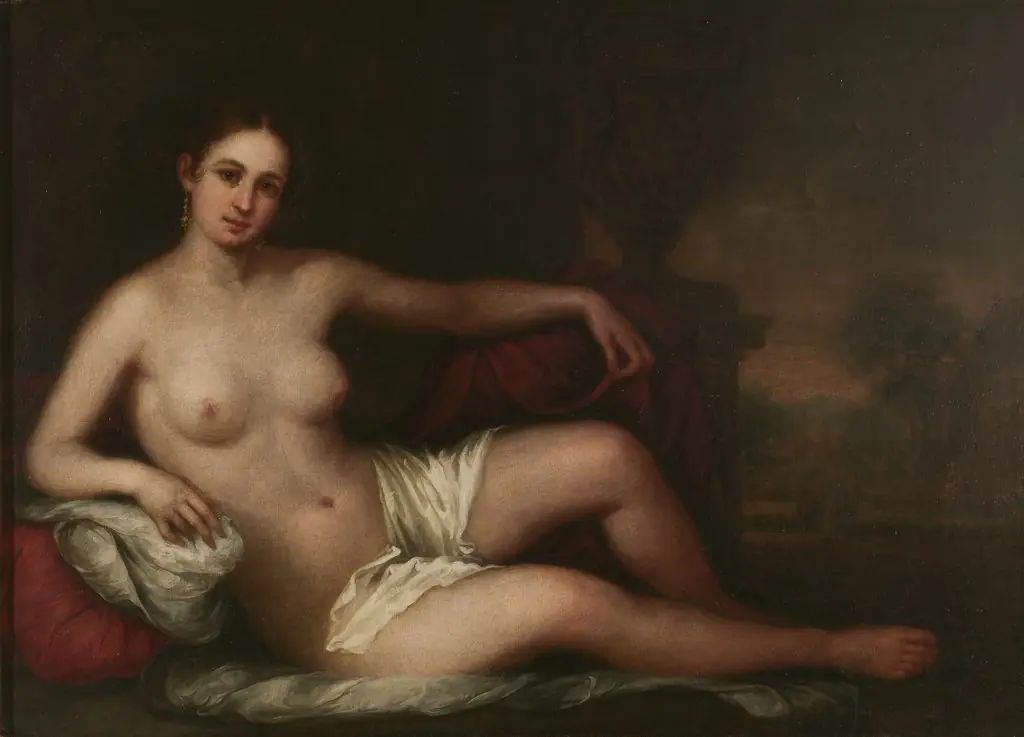
La maja desnuda portrays a nude woman reclining on a bed of pillows, gazing directly and boldly at the viewer. The sitter is identified as a maja, the feminine form of majo, denoting a fashionable woman of the lower classes in 18th- and 19th-century Madrid. The identity of the model remains unresolved: candidates include Pepita Tudó, the young mistress of Prime Minister Manuel Godoy, and the 13th Duchess of Alba, María del Pilar Teresa Cayetana de Silva y Álvarez de Toledo, with whom Goya is rumored to have had a romantic relationship; some scholars suggest the figure may be a composite of several models.
The painting is widely regarded as one of the first life-size profane female nudes in Western art without mythological or allegorical pretext. Unlike Velázquez's Rokeby Venus, which shows its subject from the back and disguises the nude as a goddess, Goya depicts a contemporary Spanish woman in full frontal view, with no classical idealization. The pendant La maja vestida, showing the same woman clothed, makes it explicit that the subject is a real maja rather than a mythological figure.
The work is also noted as one of the earliest depictions of female pubic hair without negative connotations.
Technique & Style
La maja desnuda is an oil-on-canvas painting created around 1797–1800 by Francisco Goya, executed in oil paint on canvas and classified as a portrait. The work measures 98 cm in height by 191 cm in width and depicts a nude woman reclining on a bed of pillows, identified as a maja, a fashionable lower‑class Madrid woman. Goya rendered the figure in a short, angular style with a bold, direct gaze, contrasting with the elongated, curved figures of earlier nudes such as Velázquez’s Rokeby Venus.
The composition employs richly coloured satin fabric against stark white cloths, emphasizing the figure’s flesh and creating a luminous effect. The painting is part of a pendant pair with La maja vestida, sharing the same size and pose but differing in dress; together they were first recorded in the inventory of Prime Minister Manuel Godoy in 1800 and have remained in the Museo del Prado since 1901.
History & Provenance
Created between 1797 and 1800, La maja desnuda was likely commissioned by Prime Minister Manuel Godoy for a private cabinet dedicated to nude paintings. The work first appears in a 1800 inventory of Godoy's collection, where it was displayed alongside its pendant, La maja vestida. In 1808, Spanish Inquisition investigators discovered the painting in Godoy's residence, labeling it indecent and confiscating it.
Following Godoy's fall, the Inquisition summoned Goya in 1815 to explain the commission, though he avoided prosecution by citing artistic tradition. The painting remained in storage at the Real Academia de Bellas Artes de San Fernando until 1901, when it entered the Museo del Prado.
La maja desnuda is held in the Museo del Prado in Madrid, where it has been part of the permanent collection since 1901. Prior to this transfer, the work was sequestered by the Spanish Inquisition and subsequently kept in the storage magazines of the Royal Academy of Fine Arts of San Fernando in Madrid. The painting was originally recorded in 1800 within the private collection of Prime Minister Manuel Godoy, in a cabinet reserved for nude paintings, and was confiscated from him in 1808.
The work was first publicly exhibited around 1900, and in 1930 the Spanish Postal Authority issued a set of four postage stamps featuring the painting, which sparked international protest.
Context
La maja desnuda occupies a pivotal place in European art as one of the first large-scale female nudes to reject mythological framing, depicting instead a contemporary Spanish woman in a frank, full-frontal pose. Its bold gaze and unidealized realism broke decisively with academic conventions epitomized by Velázquez’s Rokeby Venus, which shows only the model’s back. The Inquisition’s 1808 investigation of Manuel Godoy’s cabinet, where the work was hidden, underscored its transgressive status, yet Goya avoided prosecution by invoking precedents from Titian and Velázquez, whose nudes had long been tolerated in Spain.
Scholarship emphasizes the painting’s secular character and its challenge to the allegorical alibi that had justified earlier nudes. Art historians such as Fred Licht and Sabine Poeschel describe it as the first fully profane, life-size female nude in Western art, noting the unprecedented depiction of pubic hair without negative connotation. Its pendant La maja vestida, likely added later, frames the nude as a deliberate visual provocation rather than an emblem of mythological virtue.
Legacy
La maja desnuda is recognized as one of the first Western artworks to depict female pubic hair without mythological allegory or negative connotations. Following its confiscation by the Inquisition in 1808, the painting remained hidden in storage for nearly a century, largely unknown to the public until its presentation around 1900. This prolonged secrecy distinguishes its historical trajectory from later works it influenced, such as Édouard Manet's Olympia, which some scholars argue alludes to Goya's masterpiece.
The work's cultural legacy expanded in the 20th century through various media. The image appeared on Spanish postage stamps in 1930, sparking protests from Catholic groups and foreign nations. The painting also inspired a 1959 novel by Samuel Edwards and a subsequent international film adaptation, cementing its status beyond the realm of fine art.
Overview
Created circa 1797–1800, this oil-on-canvas work by Francisco de Goya depicts a reclining female figure on a cushion-laden surface. The painting has been part of the Museo del Prado’s collection in Madrid since the early twentieth century, arriving there in 1901.
Artist & collection
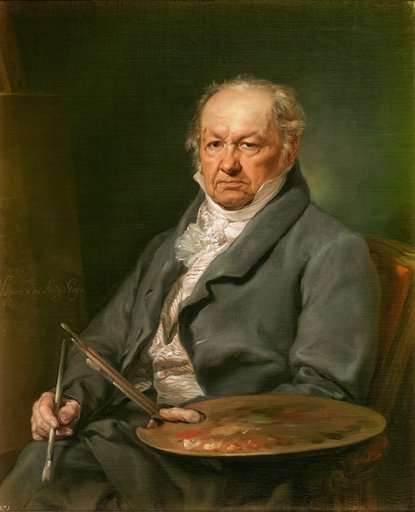
Artist
Francisco José de Goya y Lucientes was a Spanish romantic painter and printmaker.