Artwork
Riña en el Mesón del Gallo
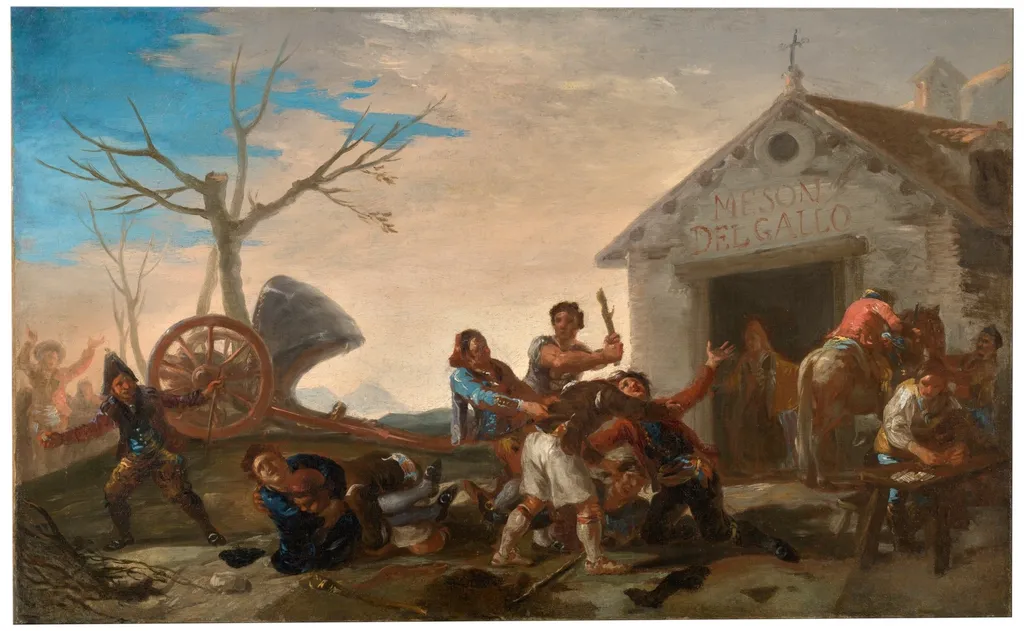
Riña en el Mesón del Gallo is an oil painting by the Rococo painting artist Francisco de Goya. It dates from 1789 and is held in the collection of the Museo del Prado.
About this work
Subject & Meaning
Francisco Goya portrayed the combatants as individuals from various Spanish provinces, dressing them in regionally accurate attire to reflect this diversity.
The work depicts a violent brawl occurring at an inn on the outskirts of Madrid, specifically situated near the Guadarrama mountains. Francisco Goya portrayed the combatants as individuals from various Spanish provinces, dressing them in regionally accurate attire to reflect this diversity. The central action features a man from Murcia throwing punches, while a table to the right suggests a recent card game and the innkeeper collecting money. A mounted police officer enters the scene with a drawn pistol, signaling the arrival of authority. Although the composition captures raw, naturalistic conflict, the painting also functions as a preparatory sketch, or 'borroncillo,' intended for a larger tapestry design. The work was originally conceived for the dining room of the Prince of Asturias at the Pardo Palace, intended to illustrate scenes of popular life.
Technique & Style
Riña en el Mesón del Gallo is painted in oil on canvas, employing a fluid handling typical of Goya’s early cartoons for tapestry designs.
The composition is organized around a central brawl rendered with vivid immediacy, flanked by anecdotal details such as a card-playing table and an innkeeper collecting money. Goya’s palette is lively, with sharp contrasts and rapid, descriptive brushwork that conveys the scene’s spontaneity. Figures are individualized by regional dress, notably a Murcian man throwing punches, and the background hints at the Guadarrama sierra, situating the episode near Madrid’s northern outskirts.
History & Provenance
Created in 1777, *Riña en el Mesón del Gallo* is an oil sketch prepared by Francisco de Goya for the second series of tapestry cartoons intended for the dining room of the Prince of Asturias at the Pardo Palace. Although designed as a preparatory model for a tapestry, this specific work was never woven and remained a finished oil painting on canvas. The painting was originally listed in the 1828 inventory of Goya's estate, known as the Brugada Inventory, where it was described as a small sketch. It subsequently entered the collection of Charles Yriarte, who featured it in his 1867 monograph on the artist. After passing through various private hands, the work was acquired by the Museo del Prado in November 2002 from a private collection, joining its companion piece, *Riña en la Venta Nueva*, in the museum's permanent display.
Riña en el Mesón del Gallo is held by the Museo del Prado in Madrid. The work entered the museum's collection in November 2002 following an acquisition from a private collection, where it had resided since the early 20th century after passing through the hands of Charles Yriarte. Prior to this permanent accession, the painting was exhibited at the Museo del Prado in 1993 as part of the exhibition "Goya: el Capricho y la Invención," for which it underwent restoration. The work is now displayed in the museum's Goya gallery alongside its companion piece, Riña en la venta Nueva.
Context
The painting was created as a preparatory sketch for a tapestry series intended for the dining room of the Prince of Asturias at the Palacio del Pardo, a project that never resulted in woven textiles and thus remains an unfinished cartoon. Contemporary accounts describe Goya's 'borroncillos' as independent cabinet paintings that were both gifted and sold, and the present work was later owned by Charles Yriarte, who reproduced it in his pioneering monograph; it entered the Museo del Prado collection in November 2002 after private ownership and prior display in the 1993 exhibition 'Goya: el Capricho y la Invención'. The scene depicts a tavern altercation on the northern outskirts of Madrid, identified by the distant Guadarrama mountains, with figures dressed in regional attire and a mounted constable visible in the background, rendered with vivid colour and swift brushwork characteristic of Goya's style.
Scholarship situates the piece within Goya's early court period and his experimentation with genre scenes that blend realism and caricature, reflecting broader Enlightenment interests in social behaviour and the customs of different Spanish provinces. Its significance is underscored by its inclusion in major bibliographies such as those by Arnaiz, Tomlinson, and Bozal, and by its physical display alongside its companion cartoon 'Riña en la venta Nueva' in the Prado's Goya gallery.
Legacy
The preparatory sketch for *Riña en el Mesón del Gallo* achieved significant success as an independent work, circulating effectively as a "cabinet picture" during Goya's lifetime. Some of these sketches were sold, while others were gifted, establishing their value beyond their function as tapestry designs. The specific sketch was acquired by Charles Yriarte, the author of the first monograph on Goya, who reproduced it in his 1867 biography with a high-quality woodcut, cementing its early scholarly recognition.
In the modern era, the work's reputation was further solidified through major exhibitions and institutional acquisition. It was restored and displayed in the 1993 exhibition "Goya: el Capricho y la Invención" before entering the permanent collection of the Museo del Prado in November 2002. There, it is exhibited alongside its related tapestry cartoon, *Riña en la venta Nueva*, allowing for a direct comparison of the artist's process.
Artist & collection
Artist
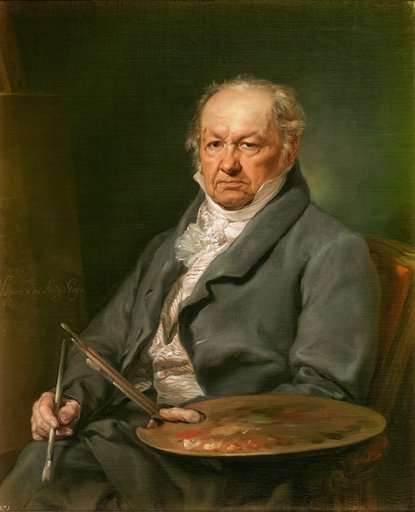
Francisco José de Goya y Lucientes was a Spanish romantic painter and printmaker.

- Hunters by a Tavern
 Meeting between David and Abigail
 The Death of Regulus
 Gypsy Camp in a Roman Ruin
 Peasants Dancing
 Scene from Ancient History
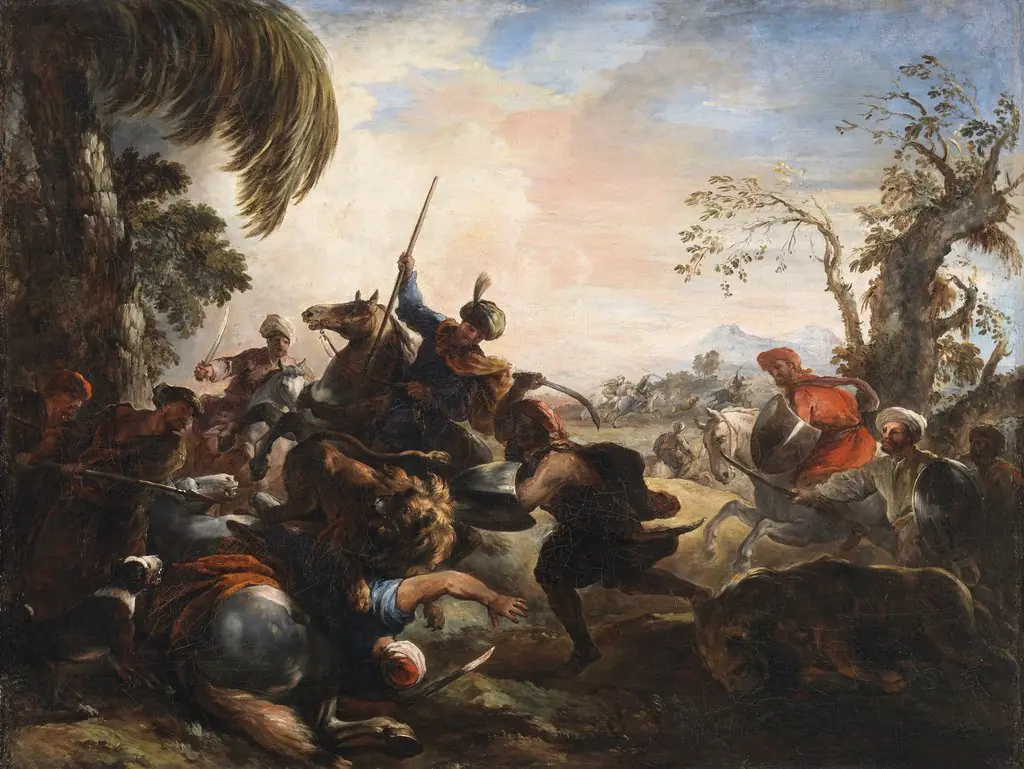 Lion Hunt
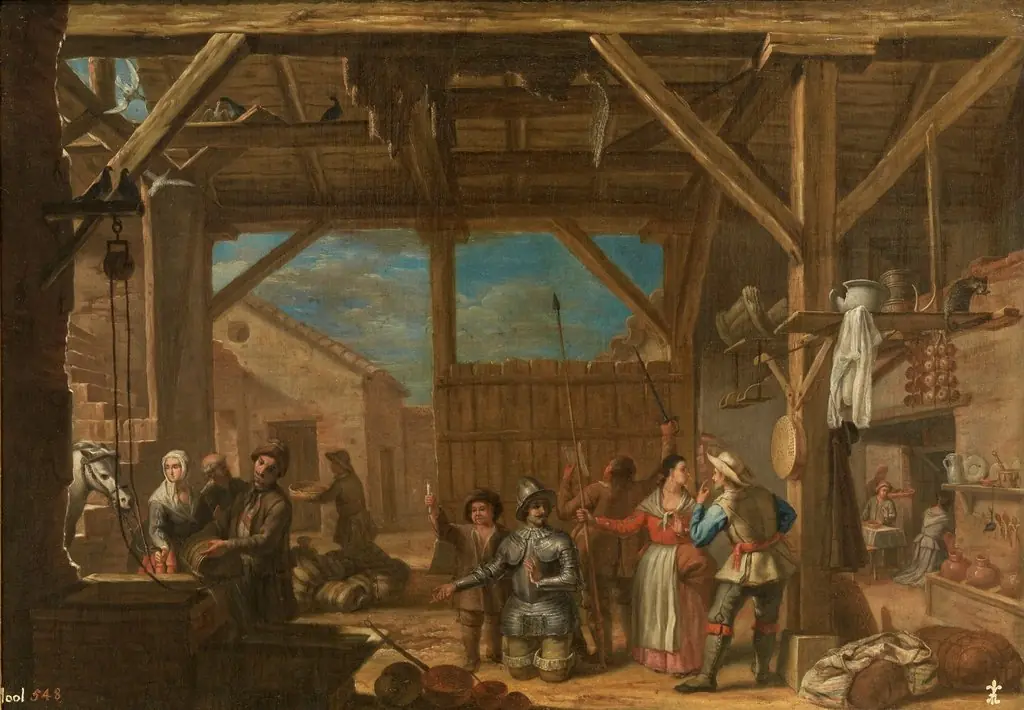 Don Quixote Dubbed a Knight
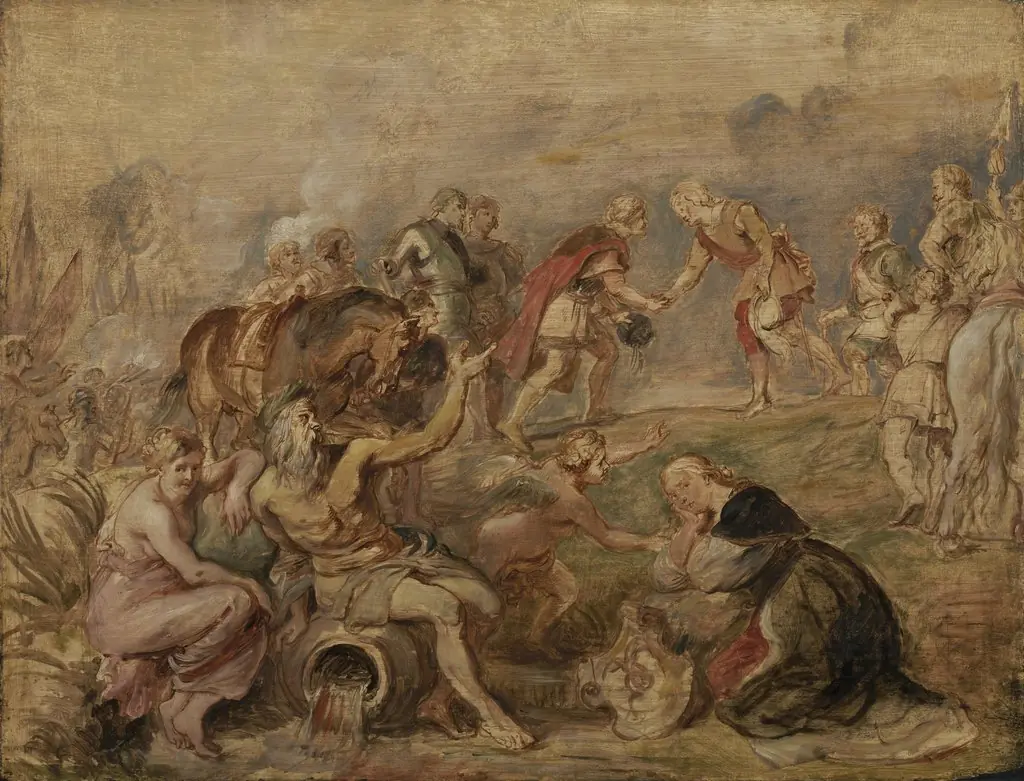 Meeting of King Ferdinand of Hungary and the Cardinal-Infante Ferdinand of Spain at Nördlingen
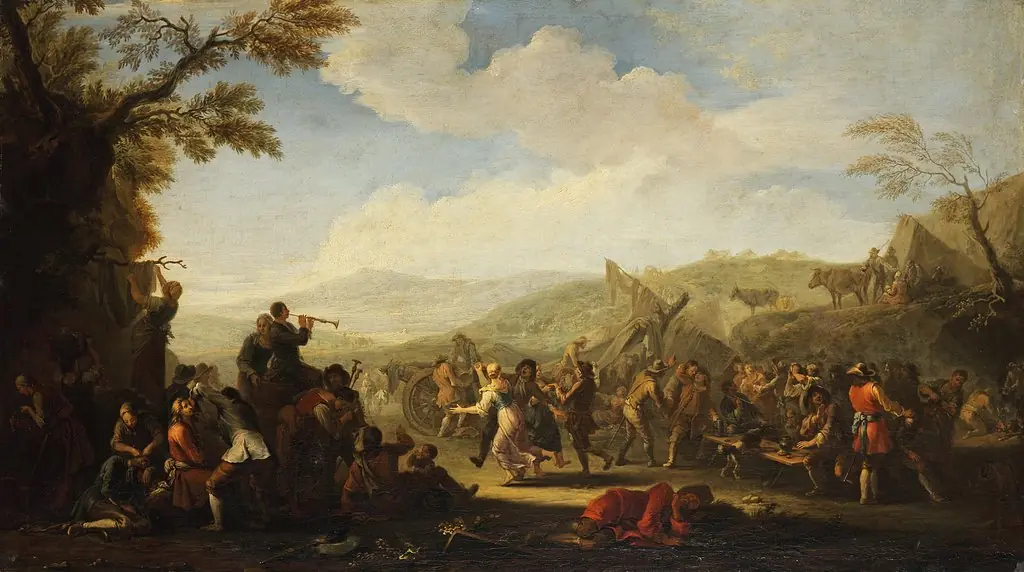 Amusement in the Field Camp
 Hunter at Rest
 Death is Fierce and Quick