Artwork
The Colossus
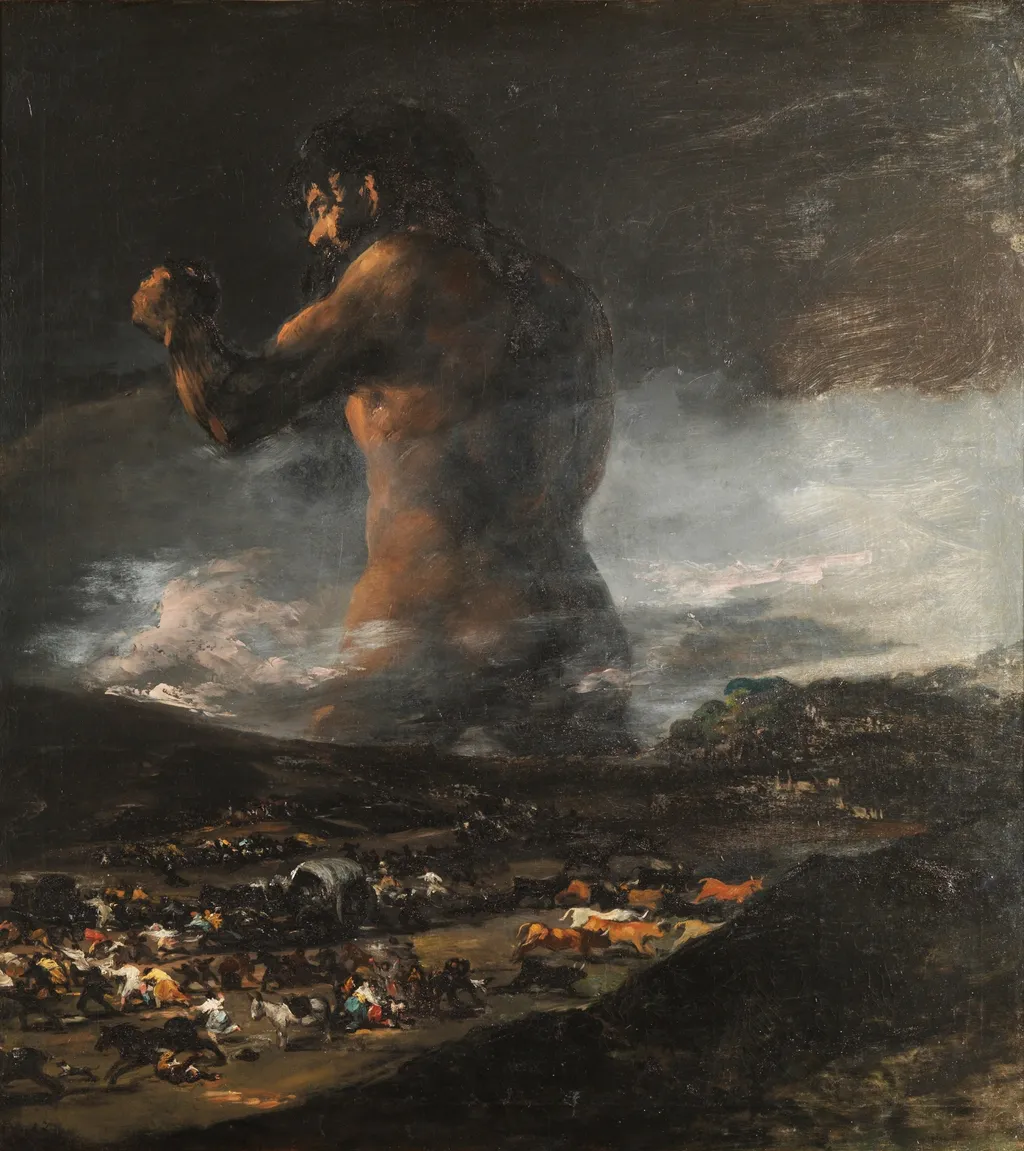
The Colossus is an oil painting by the Romanticist artist Francisco de Goya. It dates from 1818 and is held in the collection of the Museo del Prado.
About this work
Subject & Meaning
The work is widely analyzed as an allegory of the Peninsular War, though interpretations of the giant's role diverge.
The painting depicts a colossal, nude giant rising above a mountainous landscape, with clouds obscuring his thighs and his fists clenched in an aggressive or defensive posture. Below, a dark valley is filled with people, cattle, and horses fleeing in chaotic disarray, while a solitary donkey remains stationary, interpreted by some scholars as a symbol of ignorance or incomprehension amidst the horror. The work is widely analyzed as an allegory of the Peninsular War, though interpretations of the giant's role diverge. One view, supported by Nigel Glendinning, links the figure to Juan Bautista Arriaza's patriotic poem 'Pyrenean Prophecy,' suggesting the giant represents the Spanish people rising to oppose Napoleonic invasion. Conversely, other analyses propose the figure embodies the threat of war itself, potentially representing Napoleon or blind violence, given his menacing expression and closed eyes.
Technique & Style
The Colossus is executed in oil on canvas, measuring 116 × 105 cm, and is held by the Museo del Prado in Madrid. Its technique has been compared to that of Goya's Black Paintings, originally executed on the walls of the Quinta del Sordo, with small figures in the lower valley rendered in quick, loose strokes akin to those in The Meadow of San Isidro (1788). Stylistically, Nigel Glendinning traces its features, the oversized threatening figure and the agitated crowd, back to plates in Los Caprichos (1799), notably numbers 3 and 52, as well as to drawings in Goya's sketchbooks. The composition is organized around a Romantic, organic dispersal of fleeing figures rather than the rational, axial geometry of Neoclassicism. A crepuscular, raking light, interrupted by mountain masses, isolates the clouds girdling the colossus and heightens the sense of imbalance. A Prado-commissioned technical study nevertheless identified weaknesses, coarse musculature, an insecure handling, and an unphysical falling horseman, judged inconsistent with Goya's manner, leading some experts to attribute the work to his pupil Asensio Juliá, though the museum ultimately reclassified it as by an indeterminate "follower of Goya," later reattributing it to Goya in 2021.
History & Provenance
The Colossus is traditionally attributed to Francisco de Goya and is thought to have been painted around 1808, at the onset of the Peninsular War, though its exact execution date remains unknown. The first documented reference appears in the 1812 inventory of the estate of Goya's wife Josefa Bayeu, which describes a painting of "a giant" with measurements matching The Colossus and is marked with an X (for Javier Goya) and the number 18. That same year, the painting became the property of Goya's son, Javier Goya. It subsequently passed to Miguel Fernández Durán, Marquis of Perales, and after his death in 1833 was inherited by his great-grandson Pedro Fernández Durán. The work is recorded in the 1877 estate of Paula Bernaldo de Quirós, Marchioness of Perales, valued at 1,500 pesetas. In 1931, Pedro Fernández Durán bequeathed the painting to the Museo del Prado in Madrid, where it has remained ever since.
The Colossus has been held in the collection of the Museo del Prado in Madrid since 1931. The painting entered the museum's holdings through a bequest from Pedro Fernández Durán, who had previously acquired the work following its ownership by Goya's son, Javier Goya, and the Marquis of Perales. Historical records indicate the painting was listed in the estate of Paula Bernaldo de Quirós in 1877 before passing to Durán.
Regarding its exhibition history, the Museo del Prado notably excluded the painting from its major exhibition titled "Goya in wartime." This decision accompanied the museum's temporary re-attribution of the work to Asensio Juliá based on technical analysis. The painting continues to be displayed within the museum's nineteenth-century galleries, where its official attribution was reinstated to Francisco Goya in 2021.
Context
The Colossus has long been entangled in debates over authorship and meaning, reflecting broader uncertainties about Goya’s late works. A 2008 technical study commissioned by the Museo del Prado identified stylistic and material anomalies inconsistent with Goya’s practice and detected the monogram “AJ,” suggesting authorship by his pupil Asensio Julià; however, the museum ultimately concluded the painting was by an unidentified follower of Goya, leaving the attribution unresolved. Scholars such as Nigel Glendinning contested this reattribution, arguing that stylistic features align with Goya’s oeuvre and that alleged “AJ” marks were later inventory numbers.
The painting’s iconography has been read alternately as a warning of Napoleonic aggression or as a symbol of Spanish resistance. Interpretations link it to Juan Bautista Arriaza’s 1810 poem Pyrenean Prophecy, which depicts a giant rising from the Pyrenees to oppose French invasion, a patriotic theme resonant with wartime experience. Goya’s contemporaneous Disasters of War etchings and the Black Paintings share the work’s dramatic, fragmented composition and psychological intensity, situating The Colossus within the broader arc of his late Romantic allegories.
Legacy
The Colossus has been repeatedly cited as a seminal Antikriegsbild (anti-war image) in art-historical discourse, anchoring early Romantic-era debates about art’s capacity to represent collective trauma. Its unsettling composition, where a towering, blindly furious figure looms above a panicked multitude, has been repeatedly interpreted as a visual metaphor for Spain’s resistance to Napoleonic invasion, most directly through its alignment with Juan Bautista Arriaza’s patriotic poem *Profecía del Pirineo*. Later reception has oscillated between attributions to Goya and to his pupil Asensio Julià, with the Prado’s 2008-2009 technical report initially questioning Goya’s hand before reinstating his authorship in 2021 after reinstallation of the museum’s nineteenth-century holdings. Despite these controversies, the painting entered the Prado’s permanent display in 1931 and remains a touchstone in discussions of Goya’s late style and Romantic allegory. Contemporary filmmakers such as Guillermo del Toro have acknowledged its influence on cinematic representations of monstrous scale and catastrophic conflict.
Own this work as a print
Artist & collection
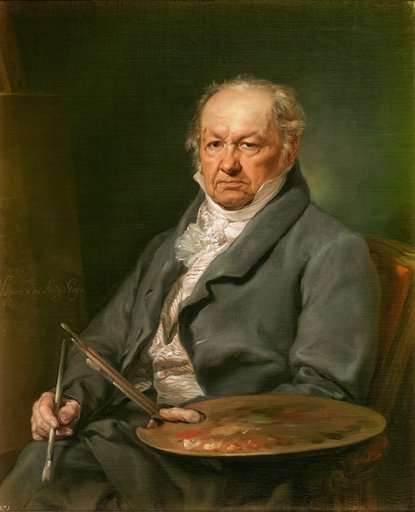
Artist
Francisco José de Goya y Lucientes was a Spanish romantic painter and printmaker.

- Ymir Suckling the Cow Audhumla
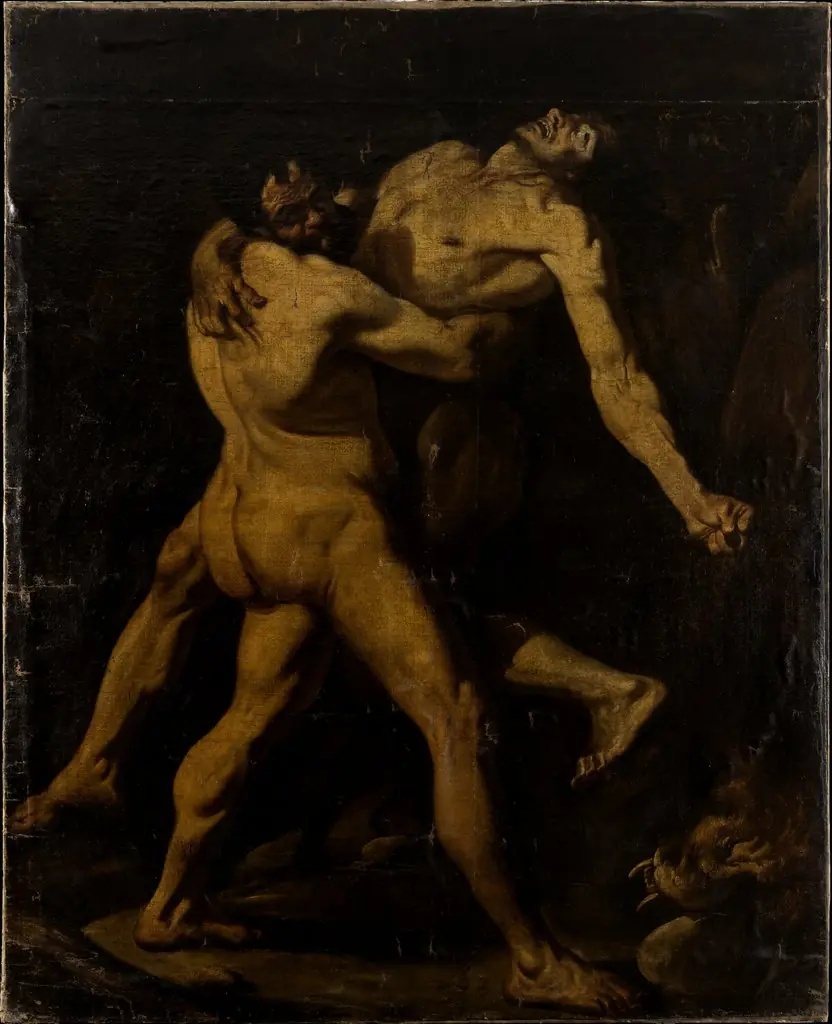 Hercules and Antaeus
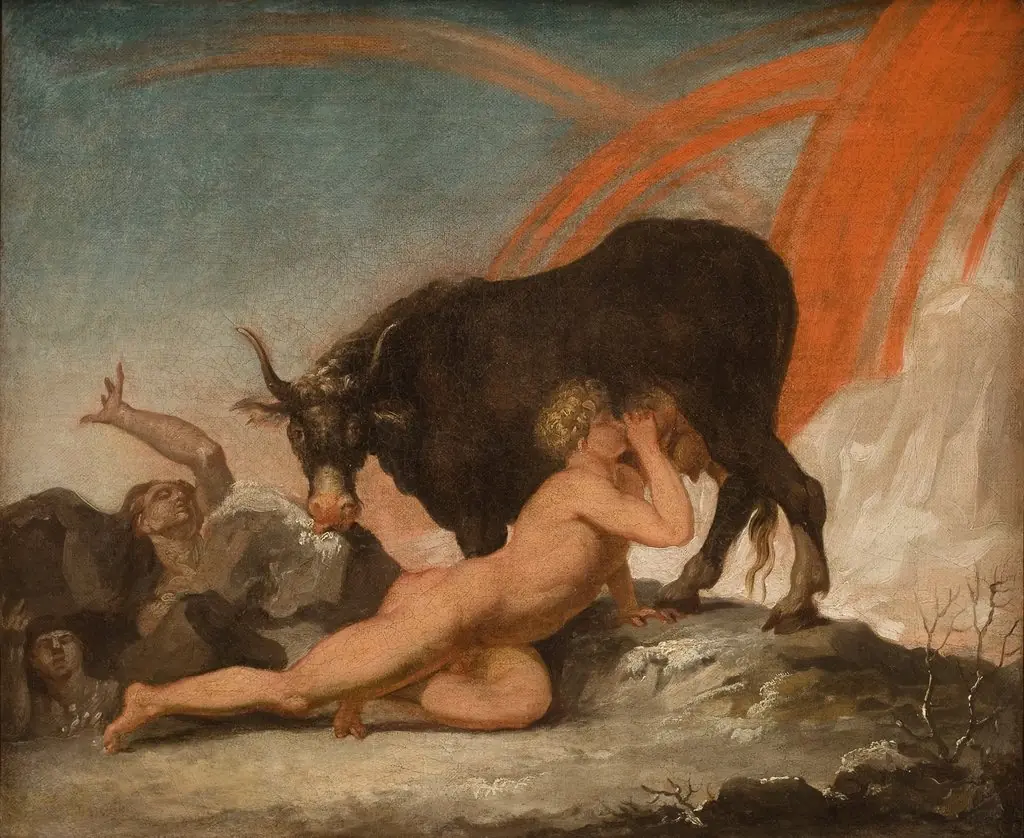 Ymir Suckling the Cow Audhumla
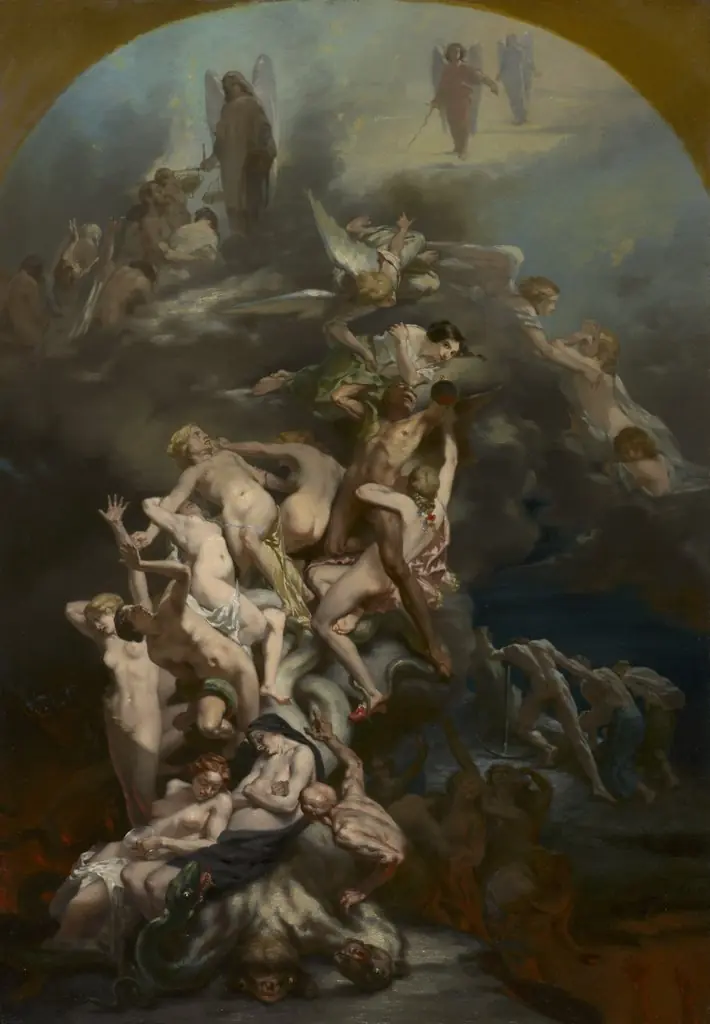 Heaven and Hell
 Heaven and Hell
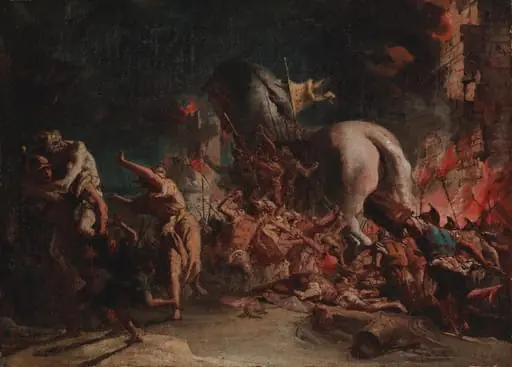 Kreikkalaiset hyökkäävät Troijaan
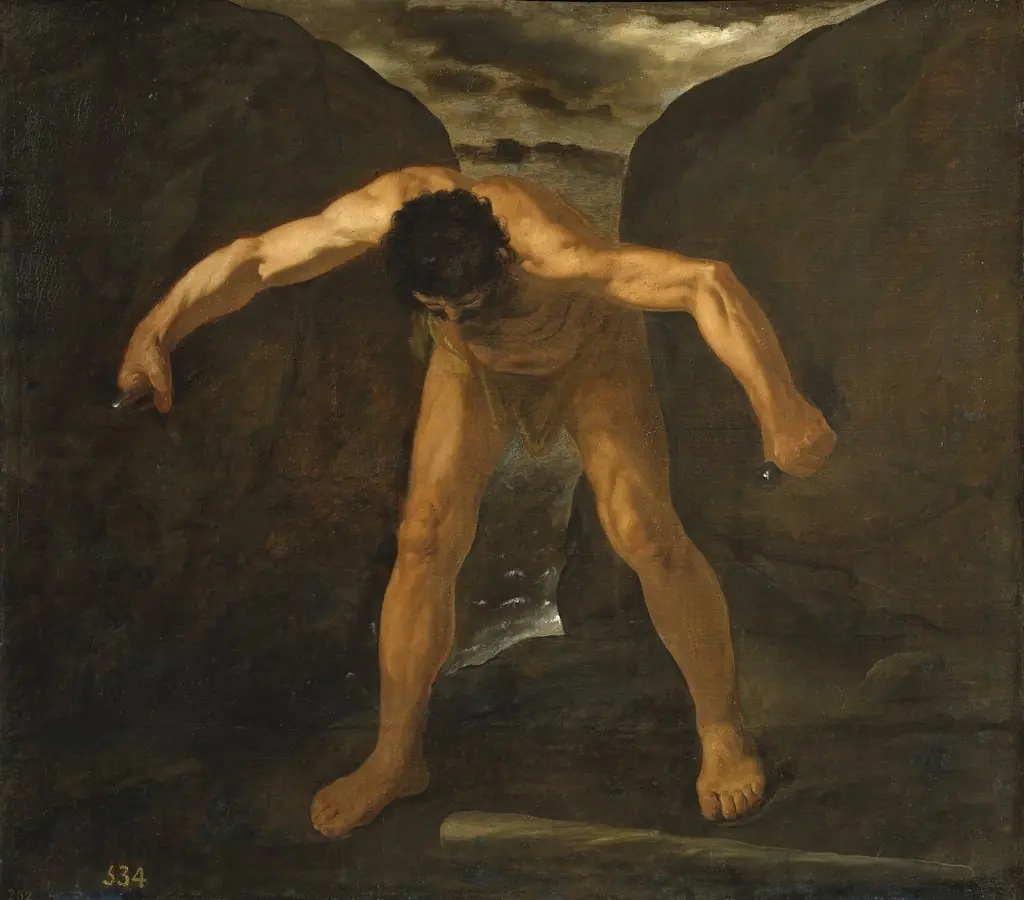 Hercules Separates Mounts Calpe and Abylla
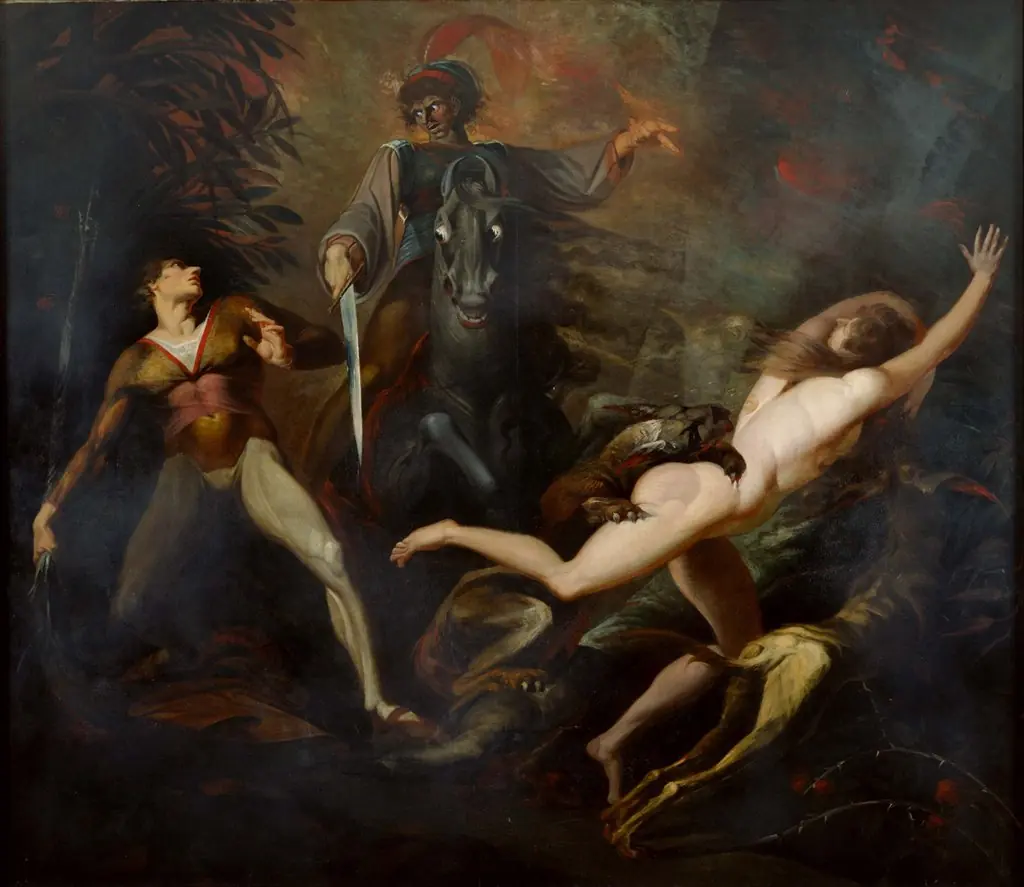 Theodore Meets in the Wood the Spectre of His Ancestor Guido Cavalcanti
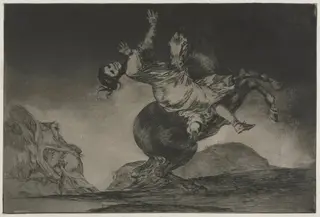 The Proverbs: The Horse-Abductor
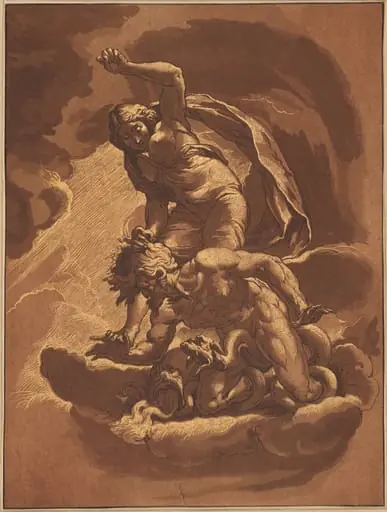 The Triumph of Truth Over Envy
 Tityus
 El caballo raptor (The Horse-Abductor)