Artwork
El caballo raptor (The Horse-Abductor)
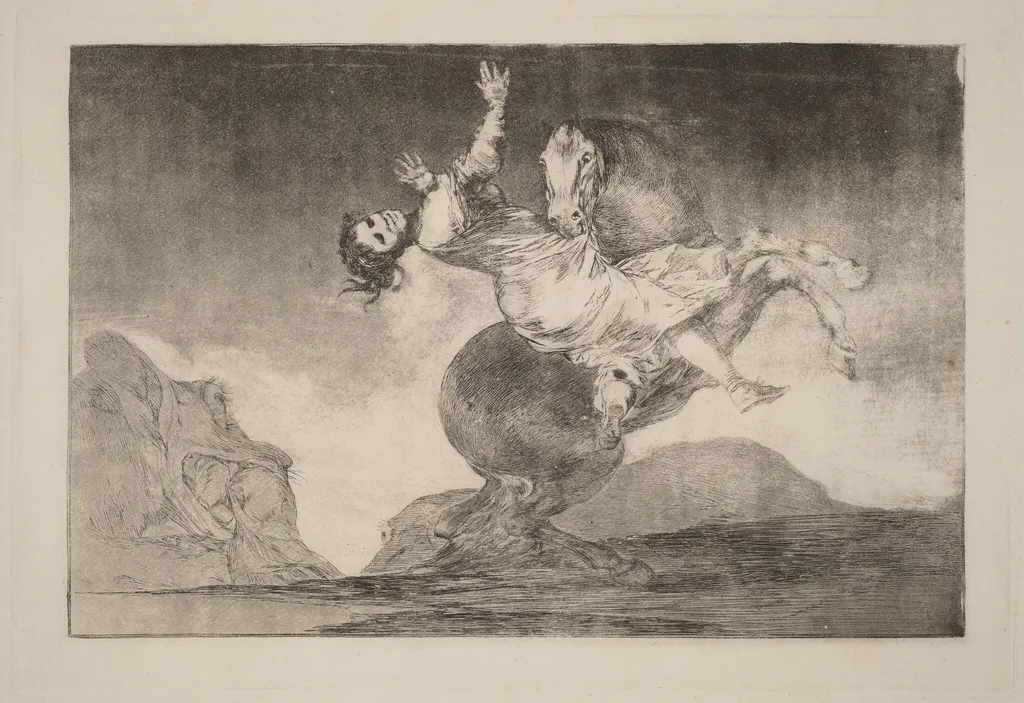
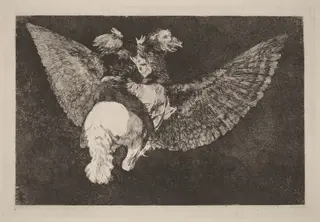
El caballo raptor (The Horse-Abductor) is an ink print by the Romanticist artist Francisco de Goya. It dates from 1816 and is held in the collection of the National Gallery of Art.
About this work
Overview
El caballo raptor (The Horse-Abductor) is a print created by Francisco Goya using etching, burnished aquatint, and drypoint techniques. A trial proof was printed posthumously between 1854 and 1863.
Subject & Meaning
The print depicts a chaotic scene of a man being swept away by a galloping horse, conveying intense drama and energy. The man's contorted face and outstretched arms suggest fear and despair, while the horse's dynamic pose emphasizes its power.
Technique & Style
Goya employed bold lines and dark shading to create depth and texture, drawing the viewer's eye into the heart of the action. The use of burnished aquatint adds to the overall dark, ominous tone of the image.
History & Provenance
Created in 1816, El caballo raptor is part of Goya's oeuvre that explored human conflict and emotion, bridging the Old Masters and modern art movements.
Own this work as a print
Artist & collection
Artist
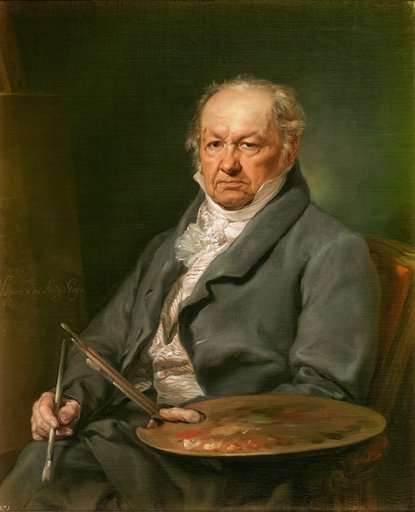
Francisco José de Goya y Lucientes was a Spanish romantic painter and printmaker.

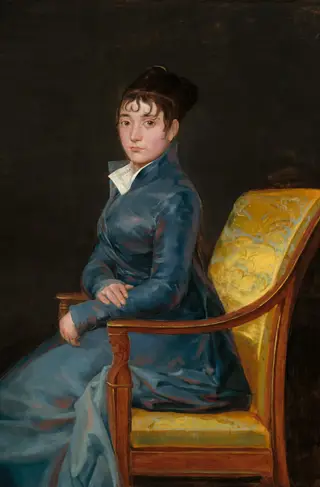
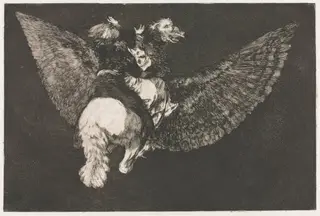 The Proverbs: Flying Folly
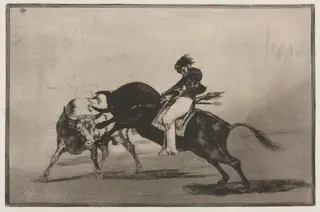 Bullfights: The Same Ceballos Mounted on Another Bull Breaks Short Spears in the Ring at Madrid
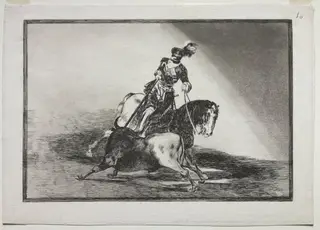 Charles V Spearing a Bull in the Ring at Valladolid
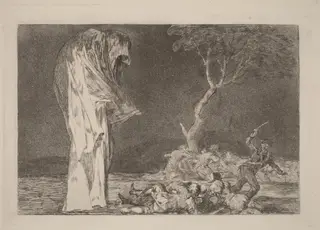 Disparate de miedo (Folly of Fear)
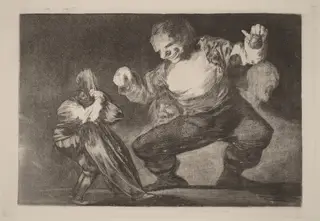 Bobalicon (Simpleton)
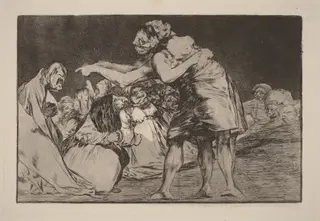 Disparate desordenado (Disorderly Folly)
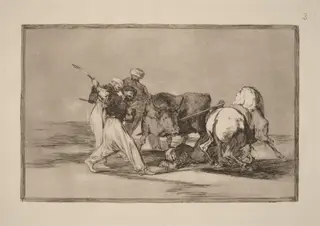 Los moros establecidos en Espana, prescindiendo de las supersticiones de su Alcoran, adoptaron esta caza y arte, y lancean un toro en el campo (The Moors Settled in Spain, Giving up the Superstitions of the Koran, Adopted This Art of Hunting, and Spear a Bull in the Open)
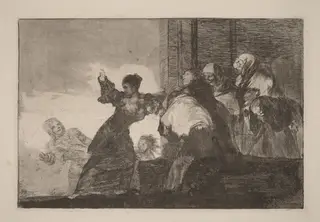 Disparate pobre (Poor Folly)
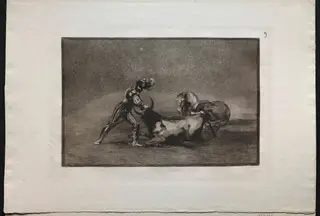 Bullfights: A Spanish Knight Kills the Bull After Having Lost His Horse
 Disparate volante (Flying Folly)