Artwork
Hercules Separates Mounts Calpe and Abylla
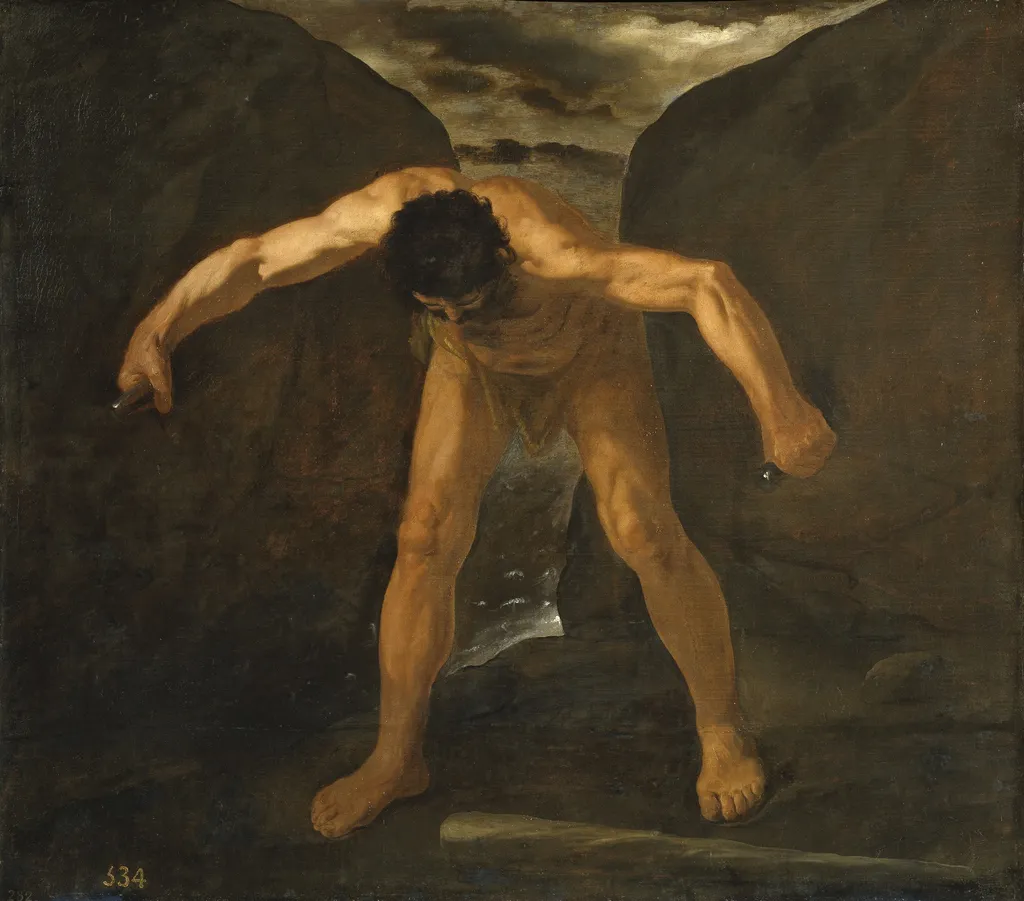
Hercules Separates Mounts Calpe and Abylla is an oil painting by the Early Baroque Italian artist Francisco de Zurbarán. It dates from 1634 and is held in the collection of the Museo del Prado.
About this work
Technique & Style
The composition is centrally focused on the hero's exertion, utilizing a difficult foreshortening perspective designed for viewing from below.
Created in 1634, the work is an oil painting executed on canvas. The composition is centrally focused on the hero's exertion, utilizing a difficult foreshortening perspective designed for viewing from below. Zurbarán employs varied paint densities across Hercules's body to articulate anatomical coherence within this challenging angle.
In contrast to the detailed figure, the rocky formations and the distant sea are rendered with simpler, more rapid brushwork. The background maritime zone features thicker, impasto-like strokes, while the rocks are sketched with a lighter touch. This hierarchical handling of paint texture directs attention to the mythological protagonist while establishing the surrounding landscape.
History & Provenance
Francisco de Zurbarán executed this oil painting in 1634 as part of a ten-work series depicting the Labors of Hercules. The cycle was commissioned by Philip IV of Spain specifically to decorate the Hall of Realms within the Buen Retiro Palace. Although the artist originally produced ten canvases for the twelve traditional labors due to spatial constraints, the works were initially inventoried without attribution.
Consequently, full authorship was not confirmed until 1945, when archival documentation surfaced recording payment to Zurbarán for the ten Hercules paintings. The work subsequently entered the Royal Collection and was housed at the Buen Retiro Palace before becoming part of the holdings at the Museo del Prado.
The painting is held in the collection of the Museo del Prado in Madrid, where it is currently displayed in room 26a. It measures 136 by 167 centimeters and originates from the former Royal Collection housed at the Buen Retiro Palace. The work was part of a ten-piece series commissioned by Philip IV of Spain to decorate the Hall of Realms, though it was historically inventoried without an attributed author until documentation surfaced in 1945 confirming payment to Zurbarán.
Earlier records, such as the estate inventory of Charles II, mistakenly described the subject matter as Hercules supporting the celestial vault. The entire series remains conserved within the Prado's holdings.
Context
Painted in 1634, this work belongs to a ten-canvas series depicting the Labors of Hercules, commissioned by Philip IV of Spain for the Hall of Realms at the Buen Retiro Palace. Although the series was inventoried without attribution for centuries, documentation regarding payments to the artist confirmed Zurbarán's authorship in 1945. Scholarly interpretation of the specific mythological episode has evolved; while Elías Tormo identified the scene in 1911 as the separation of Mounts Calpe and Abyla, later researcher Rosa López Torrijos challenged this view.
Torrijos noted the episode's rarity in classical literature and suggested the composition might instead allude to the unification of territories, reflecting the Spanish monarchy's role as a cohesive force. Conversely, other historical accounts cite Baltasar de Vitoria's earlier references to the separation narrative, linking the imagery to the Habsburg motto and the geopolitical significance of the Pillars of Hercules for Spain.
Overview
Created in 1634, this oil on canvas by Spanish painter Francisco de Zurbarán portrays a scene from classical mythology in which the hero Hercules is shown separating the two promontories known as Calpe and Abyla. The work is part of the collection of the Museo del Prado in Madrid and exemplifies the artist’s interest in dramatic narrative subjects.
Subject & Meaning
The central figure is a robust, barefoot Hercules, his dark hair framing a focused expression as he lifts a massive stone with his right hand while clutching a smaller one in his left. The composition captures the moment of Herculean effort required to drive apart the twin pillars that frame the Strait of Gibraltar, symbolising the triumph of human strength over natural obstacles.
Own this work as a print
Artist & collection
Artist
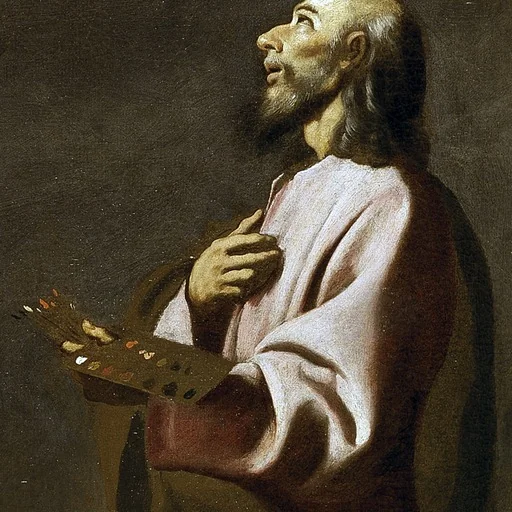
Francisco de Zurbarán was a Spanish Baroque painter. He is known primarily for his religious paintings depicting monks, nuns, and martyrs, and for his still-lifes. Zurbarán gained the nickname "Spanish Caravaggio",…

 Sisyphus
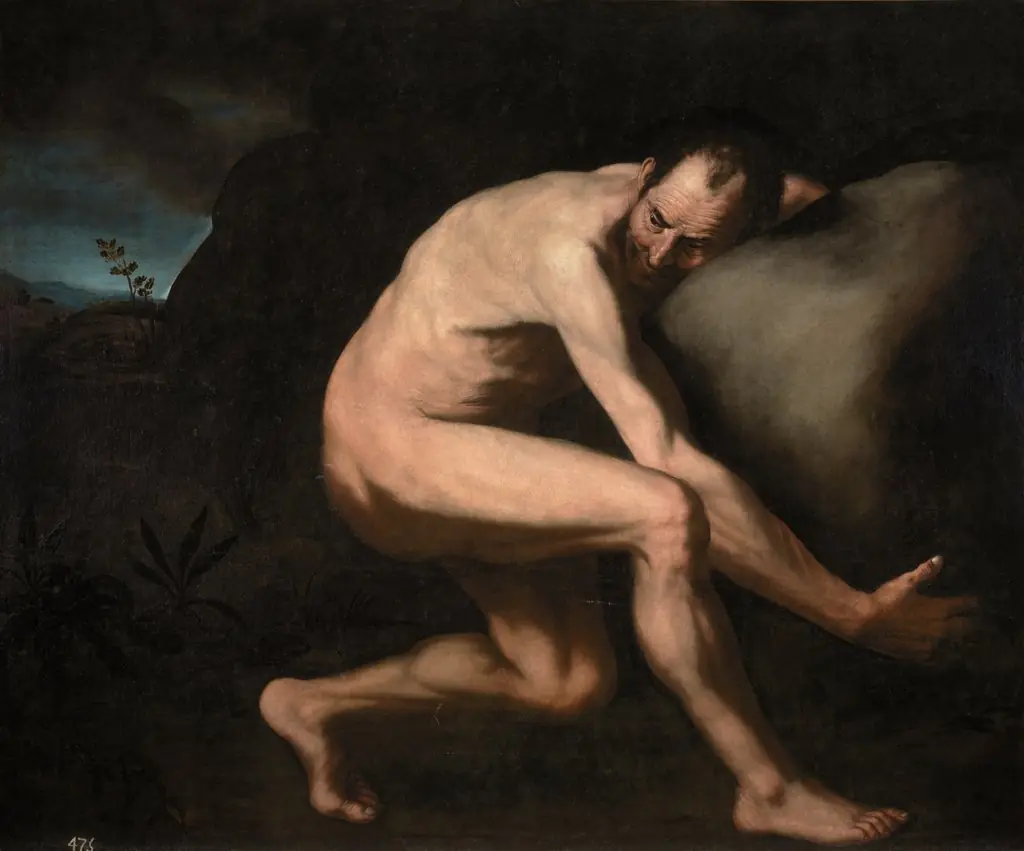 Sísifo
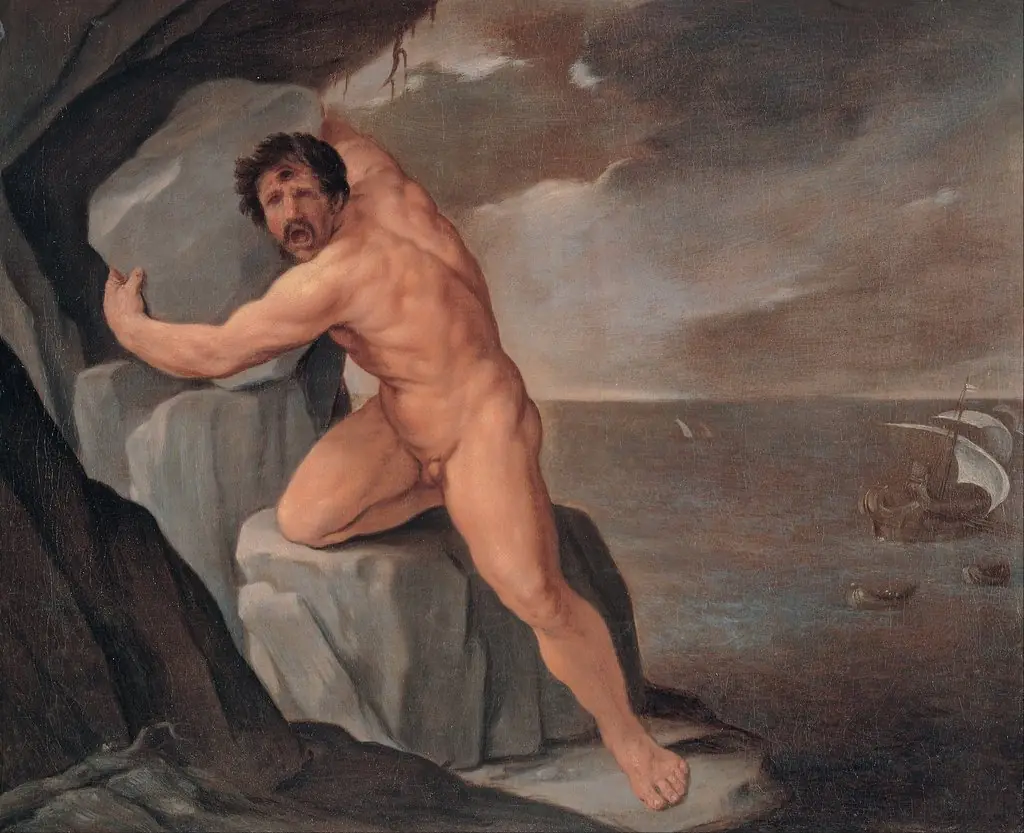 Polyphemus
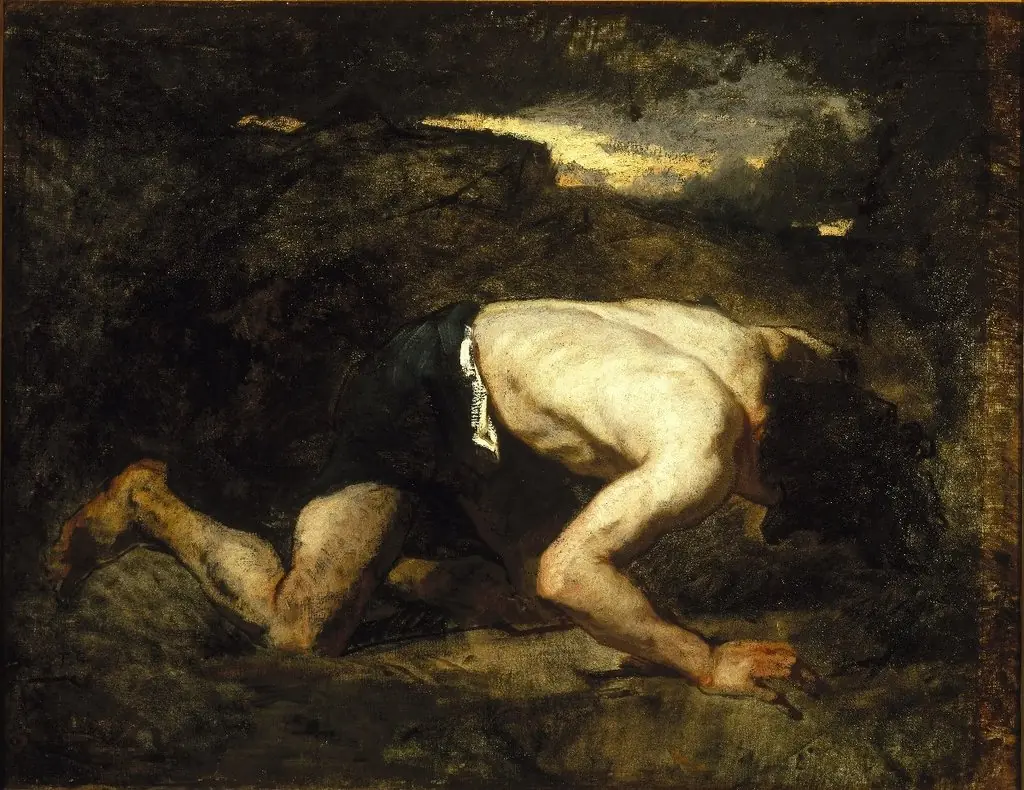 The Fugitive, Study for Timon of Athens
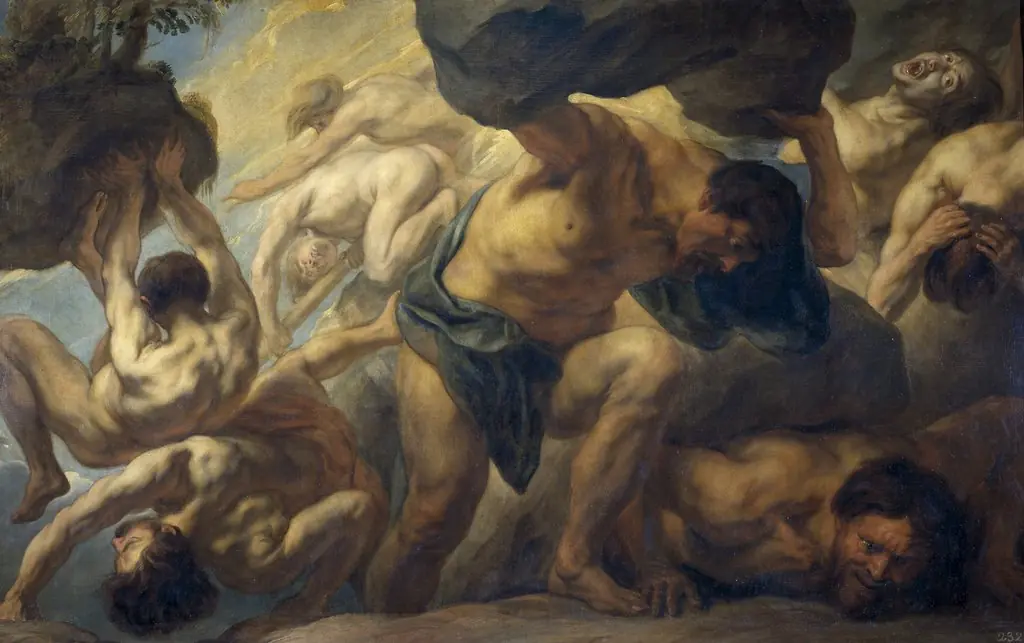 The Fall of the Giants
 Nude Warrior with a Spear
 The Criminal. 'The Mark of the Crime'
 Ung italiensk mandsfigur i klippelandskab
 Hercules tötet den Riesen Cacus und raubt die Rinder des Geryoneus
 Tityos
 Ung italiensk mandsfigur i klippelandskab
- Hercules and Antaeus