Artwork
The Meadow of San Isidro
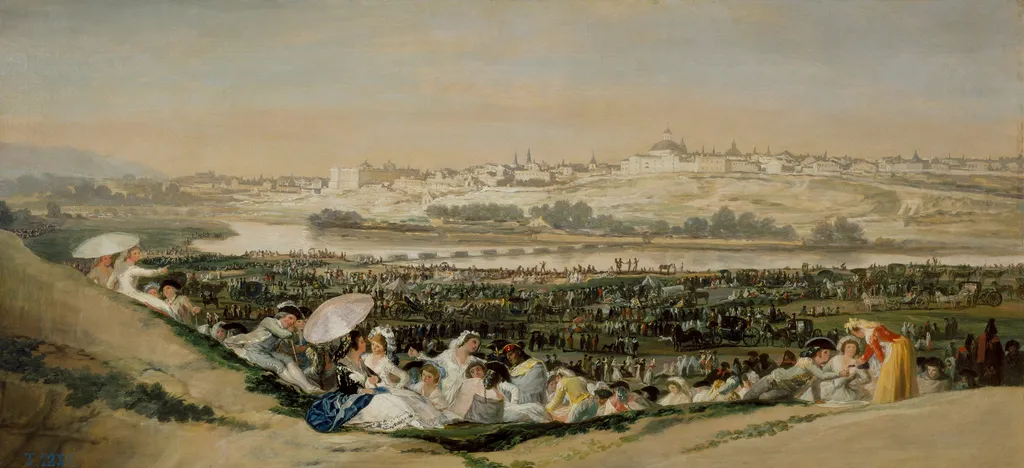
The Meadow of San Isidro is an oil painting by the Rococo painting artist Francisco de Goya. It dates from 1794 and is held in the collection of the Museo del Prado.
About this work
Subject & Meaning
The painting depicts a panoramic view of Madrid seen from the meadow beside the hermitage of San Isidro, patron saint of the city, on the day of his annual pilgrimage. As Goya himself described it in a letter to his friend Martín Zapater, the subject is "the Meadow of San Isidro, the same day of the Saint with all the commotion that there usually is in this Court." After the traditional mass, crowds spread across the gentle slopes to enjoy a day of leisure, and Goya captures the festive bustle with a great mass of people gathered along the Manzanares river. The composition operates on several symbolic levels. As a genre scene, the mingling of majos, majas, fairgoers, vendors, and finely dressed figures in French-style coats embodies the harmonious blending of social classes favored by the Enlightened monarchy for whom the tapestry cartoon was intended. In the middle ground, two majos and two majas dance silhouetted against the pale river, while in the distance the dome of San Francisco el Grande and the bulk of the new Royal Palace anchor the view of Madrid. The realistic topography, including the pontoon bridge, the Calle de Toledo descending to its bridge, and the Puente de Segovia, is unusual for Goya, who typically left backgrounds vague to keep focus on the central subject.
Technique & Style
The result is a palette dominated by Venetian golds, pearl whites, greys and pinks, punctuated by occasional red touches in the costumes of the small figures.
The Meadow of San Isidro is an oil sketch executed on canvas in 1788, measuring 41.9 × 90.8 cm. It functions as a preparatory modello for a tapestry cartoon intended for the Infantas' bedroom at the Palace of El Pardo, but the full-scale tapestry was never completed due to the death of Charles III. Goya broke with the warm red-earth ("tierra de Sevilla") ground he had absorbed in José Luzán's workshop and instead applied a cool-toned priming. The result is a palette dominated by Venetian golds, pearl whites, greys and pinks, punctuated by occasional red touches in the costumes of the small figures. The middle ground, by contrast, is resolved in dark tones that funnel the eye toward the distant view of Madrid across the Manzanares. Stylistically, the handling is loose and proto-impressionistic, with figures diminishing rapidly into the landscape. Goya arranges the foreground socially elevated figures as parenthetical brackets, directing centripetal movement across the canvas, while deliberately enlarging four dancing majos and majas beyond naturalistic scale and casting them in shadow for heightened tonal contrast. The meticulously observed topography, identifiable bridges and the riverside, marks an unusual departure from his habitual practice of leaving backgrounds vague.
History & Provenance
The Meadow of San Isidro was painted by Francisco Goya in 1788 as a preparatory oil sketch for a tapestry destined for the bedroom of the Infantes at the El Pardo Palace. Commissioned under Charles III, the series aimed to depict rustic entertainments and open-air leisure, though the project remained unfinished after the king’s death in 1788. The work entered the collection of the Dukes of Osuna in 1799 and remained with them until 1896, when the Spanish state acquired it for the Museo del Prado. The painting was first recorded in the Prado’s holdings in 1876 after its rediscovery in the basement of the Royal Palace in 1869.
The Meadow of San Isidro is held in the collection of the Museo del Prado in Madrid. The work entered the museum's holdings after being acquired by the Spanish State in 1896, having previously belonged to the Dukes of Osuna since 1799. Prior to its acquisition, the painting was considered lost until its discovery in 1869 within the basement of the Royal Palace of Madrid by Gregorio Cruzada Villaamil. It was formally transferred to the Prado under royal ordinances issued on January 19 and February 9, 1870. The painting is currently exhibited in Room 93 of the museum. It was first listed in the official Prado catalogue in 1876.
Context
Created in 1788 as a sketch for a tapestry cartoon intended for the Infantas' bedroom at the Pardo Palace, *The Meadow of San Isidro* remains one of Francisco Goya's most discussed and esteemed works. Although the project was abandoned following the death of Charles III, leaving the intended seven-and-a-half-meter composition unfinished, the small-scale oil sketch has become the definitive iconographic model for Goya's Madrid. Art historical analysis highlights the painting's unique departure from the artist's usual practice, as it features a rigorously realistic topography of the Manzanares River and surrounding bridges, contrasting with the typically vague backgrounds of his other landscapes. Scholars note that Goya employed a cool white ground and a dispersed composition that defies Neoclassical unity, prioritizing the depiction of a harmonious social mix across classes for the enlightened monarchy. The work's complex tonal contrasts and impressionistic technique reportedly caused significant difficulty for the Royal Tapestry Factory, a challenge the artist himself acknowledged to his friend Martín Zapater.
Artist & collection
Artist
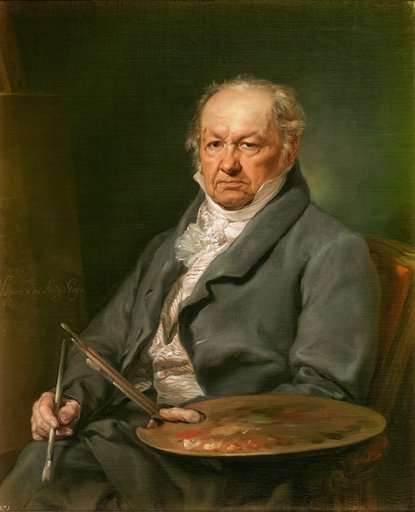
Francisco José de Goya y Lucientes was a Spanish romantic painter and printmaker.






- Fashionable Figures on the Beach
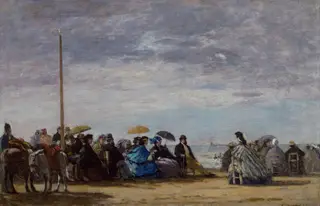 The beach
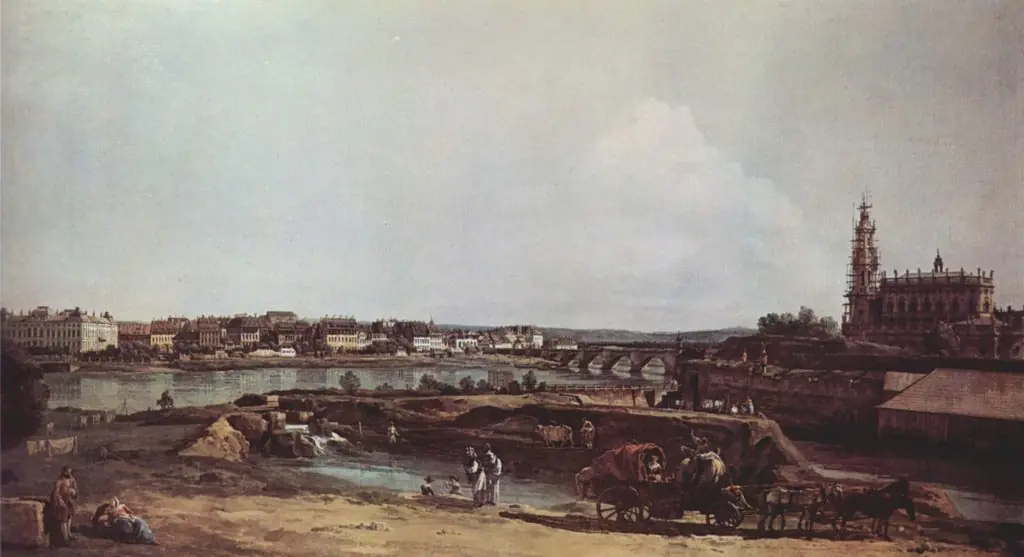 Dresden from the Left Bank of the Elbe, below the Fortifications
 Vista de Zaragoza en 1647
 Oxford from Iffley
 Race Course at Longchamps
 Pferderennen bei Nymphenburg
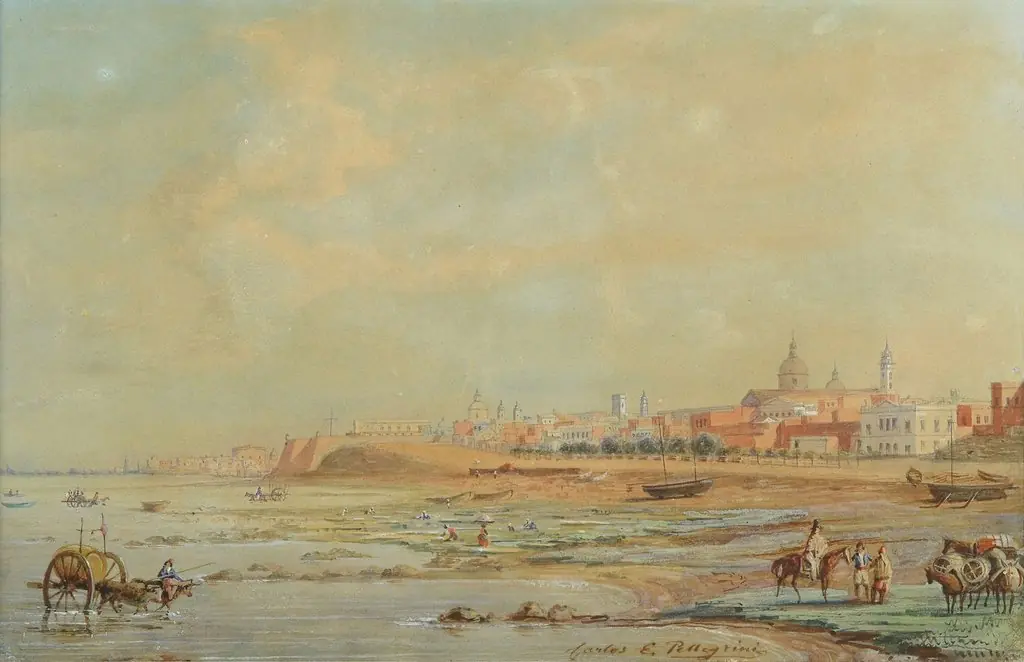 View of Buenos Aires
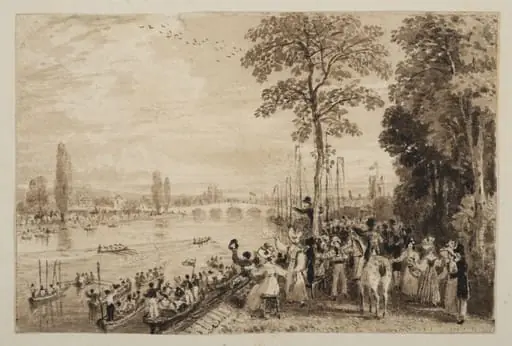 The Oxford and Cambridge Rowing Match at Henley-on-Thames
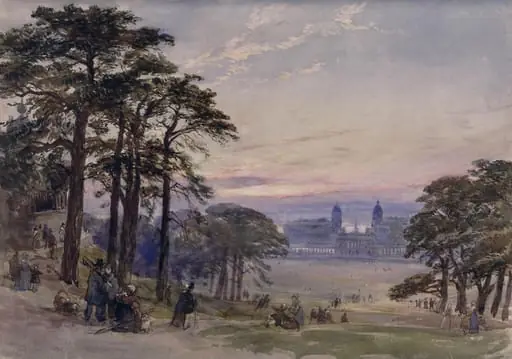 Greenwich Hospital from the Observatory
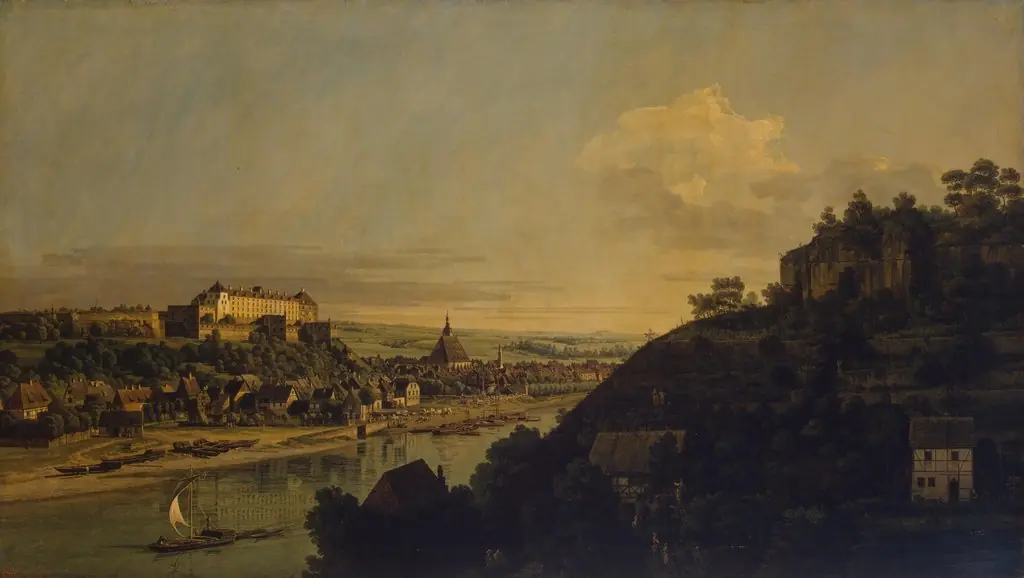 View of Pirna from the Right Bank of the Elba above the Town
 Concert at the Casino of Deauville