Artwork
The soldier and the lady
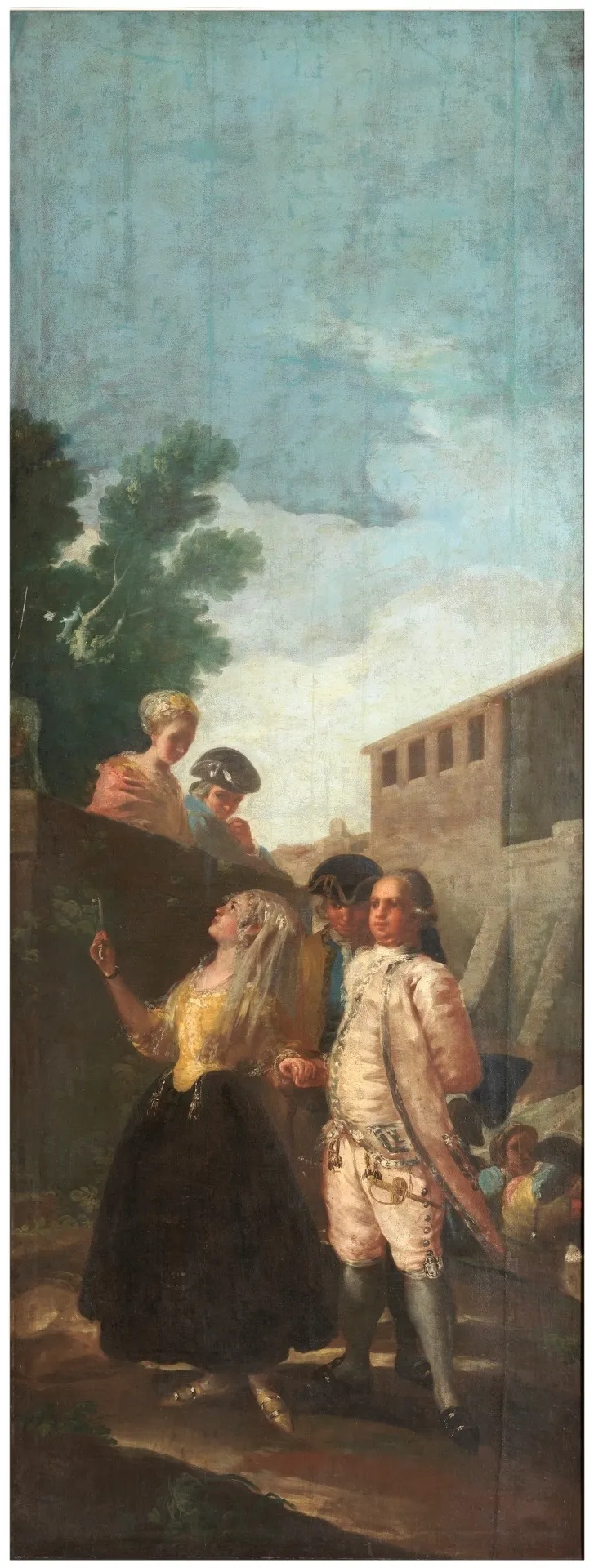
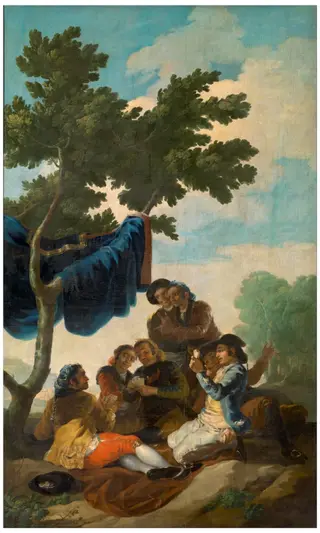
The soldier and the lady is an oil painting by the Rococo painting artist Francisco de Goya. It dates from 1790 and is held in the collection of the Museo del Prado.
About this work
Subject & Meaning
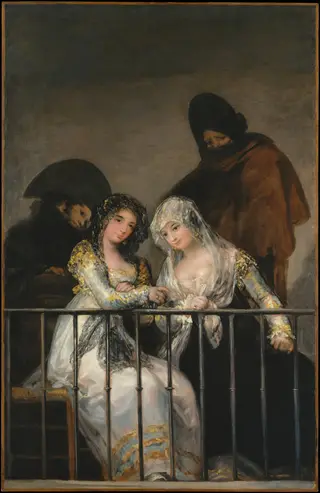
The painting depicts a flirtation between a lady and a soldier, a courtship theme Goya had earlier explored in works such as El ciego de la guitarra.
The painting depicts a flirtation between a lady and a soldier, a courtship theme Goya had earlier explored in works such as El ciego de la guitarra. A fashionable woman (petimetra) leans over a wall looking toward her suitor, known in the period as a cortejo, while a soldier and a third enigmatic figure stand behind, and an additional couple fills the background. The narrow, tall format of the composition suggests the work functioned as an over-door or window insert in the antechamber of the Prince of Asturias at the Royal Palace of El Pardo.
Among the depicted objects are a hat and a hand fan, the latter being a conventional attribute of feminine flirtation in eighteenth-century Spanish genre imagery. The bright palette, lively brushwork, and airy architectural backdrop reinforce the rococo spirit of the piece, with light concentrated on the principal figures to direct the viewer's attention through the scene.
Technique & Style
The Soldier and the Lady is painted in oil on canvas in a vertical format measuring 259 cm in height and 100 cm in width. The composition employs a Rococo palette of lively colors and relies on quick, fluid brushstrokes typical of the style. Figures are arranged within a shallow architectural setting that directs the viewer’s gaze into depth, while light is concentrated on the principal pair to emphasize their interaction. The narrow proportions suggest the work may have functioned as a door or window overdoor within the Prince of Asturias’s antechamber at El Pardo.
History & Provenance
Francisco Goya executed this oil painting in 1779 as a cartoon for the third series of tapestries intended for the bedroom of the Prince of Asturias at the Palace of El Pardo. The work was delivered to the Royal Tapestry Factory on January 6, 1779. Following its creation, the canvas was considered lost until 1869, when Gregorio Cruzada Villaamil discovered it in the basement of the Royal Palace of Madrid. By royal decree issued on January 19 and February 9, 1870, the piece was transferred to the Museo del Prado, where it entered the collection and was first recorded in the museum's catalogue in 1876.
The soldier and the lady is held in the collection of the Museo del Prado in Madrid. It entered the museum’s holdings in 1870, following royal decrees dated 19 January and 9 February 1870, and was first listed in the institution’s catalogue in 1876. The work is a cartoon for a tapestry painted in 1779 by Francisco de Goya, created for the bedroom of the Prince of Asturias at the Palace of the Pardo, and measures 259 cm in height by 100 cm in width.
Context
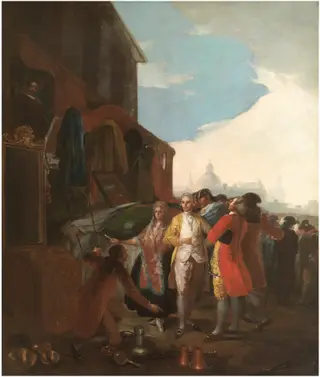
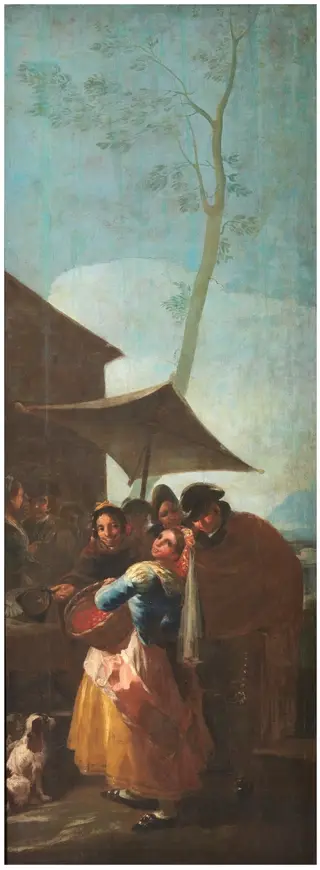
The work belongs to Goya's third series of cartoons created for the bedroom of the Prince of Asturias at the Palacio del Pardo, intended as decorative panels for royal tapestries. It was delivered to the Royal Tapestry Factory on 6 January 1779, rediscovered in 1869 in the basement of the Royal Palace of Madrid by Gregorio Cruzada Villaamil, and entered the Museo del Prado collection in 1870, where it remains on display in Room 92; its first museum cataloguing occurred in 1876. Scholarship identifies the piece as part of a group of tapestry designs that also includes La Feria de Madrid, El Cacharrero, La Acerolera, Muchachos jugando a soldados, Niños del carretón and El Juego de pelota a pala, reflecting Goya's early court career and his engagement with Rococo spatial techniques and coloristic vibrancy, while the narrow format suggests possible overdoor or narrow wall placement. Critical reception emphasizes the flirtatious interaction between the lady and the soldier, situating it within Goya's broader exploration of courtship motifs and linking it stylistically to La Acerolera, and the composition's architectural framing and luminous focus on central figures exemplify the Rococo aesthetic adapted to a neoclassical context.
Artist & collection
Artist
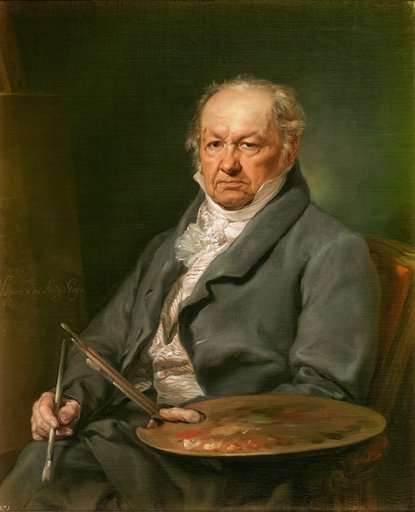
Francisco José de Goya y Lucientes was a Spanish romantic painter and printmaker.