Artwork
The Swing
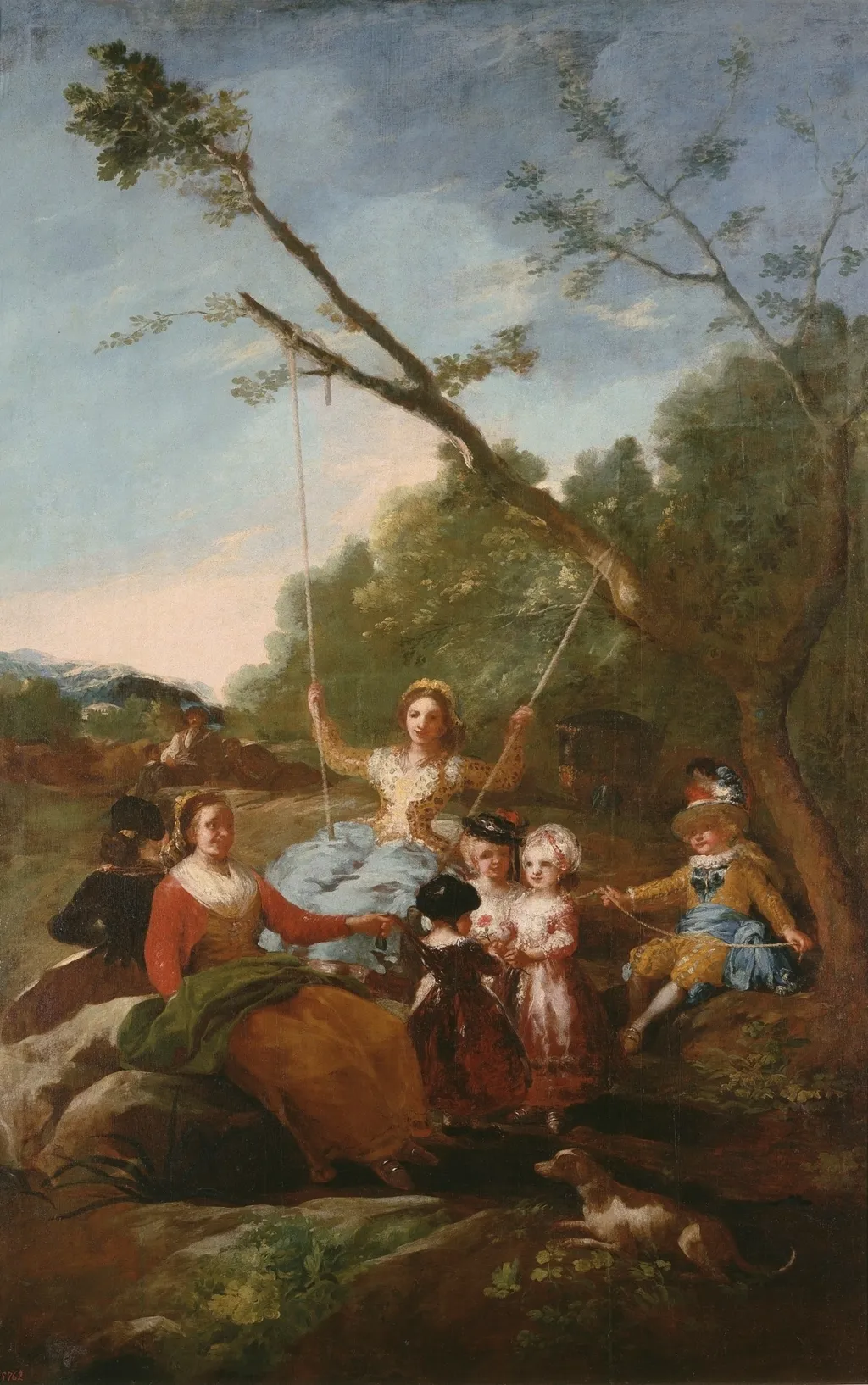
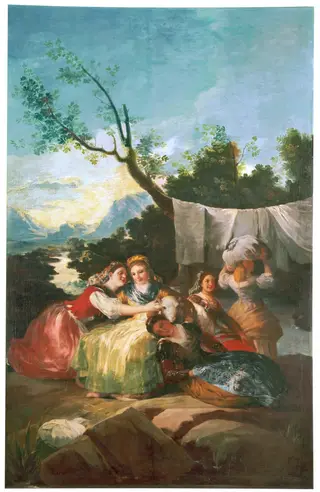
The Swing is an oil painting by the Rococo painting artist Francisco de Goya. It dates from 1790 and is held in the collection of the Museo del Prado.
About this work
This painting started as a design for a royal bedroom tapestry. Francisco Goya painted it in oil on canvas around 1779. It was meant to hang in the Palace of El Pardo.
Goya worked out the scene first, then painted it big. The piece was a decoration, not a stand-alone artwork. It shows a moment of light play and movement.
Check out Francisco Goya next.
Subject & Meaning
The scene is illuminated by twilight, emphasizing the children and their garments, and Goya uses rapid brushstrokes that later informed his Black Paintings.
The Swing depicts aristocratic children in an idyllic countryside setting, their lavish clothing marking them as members of the elite. Three maids attend them, one swinging a child while another holds the youngest, while a carriage appears as blurred shapes in the background and three shepherds with their flocks complete the landscape. The scene is illuminated by twilight, emphasizing the children and their garments, and Goya uses rapid brushstrokes that later informed his Black Paintings. Influences from Rembrandt and Velázquez are noted, and the woman restraining the girl is portrayed not as a servant but as a courtesan, possibly a wealthy aristocrat dressed in the fashion of a maja. Contemporary descriptions frame the work as a family outing in the countryside, and some scholars interpret it as an allegory of the three ages of life, childhood, youth, and old age, while others see an ambiguous rendezvous between nurses and shepherds reflected in the figures' gazes.
Technique & Style
The Swing is an oil painting on canvas, classified as a genre scene and functioning as a tapestry cartoon. It measures 260 cm in height by 165 cm in width. Goya applied rapid, stain-like brushwork, with twilight illumination concentrated on the children's garments to heighten the blot-like effect, a handling that prefigures his later Black Paintings. The background carriage is rendered through blurred, loosely defined touches, while the overall atmosphere remains calm and serene. Stylistically, the work draws on the Rococo tradition of Boucher and Fragonard, whose swing motif typically carried erotic overtones, but Goya stripped those connotations away in favor of a peaceful, domestic scene. His acknowledged masters, Rembrandt and Velázquez, exerted the strongest stylistic influence on the composition.
History & Provenance
Francisco de Goya painted *The Swing* in 1779 as part of his third series of tapestry cartoons, commissioned for the bedroom of the Princes of Asturias, later Charles IV and Marie Louise of Parma, in the Palace of El Pardo. The work was delivered to the Royal Tapestry Factory on 21 July 1779, where it served as a design for a tapestry intended to decorate the antichamber of the royal residence. The painting was considered lost until 1869, when it was rediscovered in the basement of the Royal Palace of Madrid by Gregorio Cruzada Villaamil. It entered the Museo del Prado in 1870 under royal decrees issued on 19 January and 9 February of that year, where it has remained in the collection since its first appearance in the museum’s 1876 catalogue. The Swing (El columpio) is held in the Museo del Prado, Madrid, with accession number P00749. It entered the museum in 1870 following its rediscovery in the basement of the Royal Palace of Madrid by Gregorio Cruzada Villaamil and transfer by royal decree on 19 January and 9 February 1870. The work was first listed in the Prado’s catalog in 1876 and is currently displayed in gallery 91.
Context
The Swing is recognized as a pivotal work within Goya's tapestry cartoon series, designed for the bedroom of the Princes of Asturias at the Palace of El Pardo and painted in 1779 (SOURCE 1, SOURCE 2, SOURCE 3, SOURCE 4, SOURCE 5). Scholarship emphasizes its role as the first of thirteen cartoons commissioned for tapestry production, reflecting Goya's engagement with Rococo traditions while subverting their erotic conventions; the painting transforms a potentially suggestive subject into a serene, aristocratic domestic scene, with illumination focused on children's lavish attire as markers of social status (SOURCE 3, SOURCE 4, SOURCE 5). Its stylistic innovations, such as rapid brushwork creating a 'stain-like' effect that prefigured the Black Paintings, and its clear influences from Rembrandt and Velázquez, 'his masters', underscore its significance in the transition toward modern art (SOURCE 3). Art historical analysis situates it within Goya's broader context of courtly patronage and tapestry design, highlighting its ambiguous symbolism, including possible allegorical interpretations of the three ages of life or a rendezvous between nursemaids and shepherds, as well as its reflection of contemporary Spanish aristocratic dress like the 'maja' (SOURCE 3, SOURCE 4, SOURCE 5).
Legacy
The rapid brushstroke and stain-like effect Goya employed in the painting later served as the genesis for his Black Paintings. Initially considered lost, the canvas was rediscovered in the basement of the Royal Palace of Madrid in 1869 by Gregorio Cruzada Villaamil. Following its rediscovery, it was transferred to the Museo del Prado in 1870, where it was officially cataloged starting in 1876 and remains exhibited today.
Own this work as a print
Artist & collection
Artist
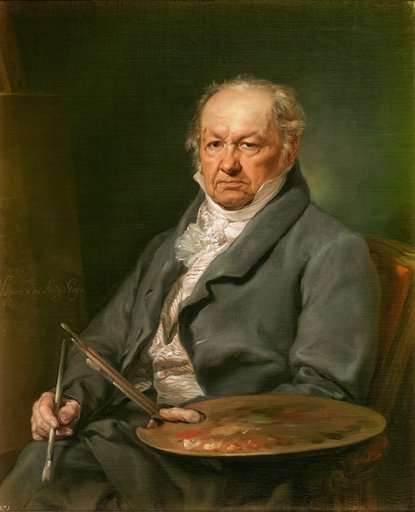
Francisco José de Goya y Lucientes was a Spanish romantic painter and printmaker.