Artwork
Mercury and Battus
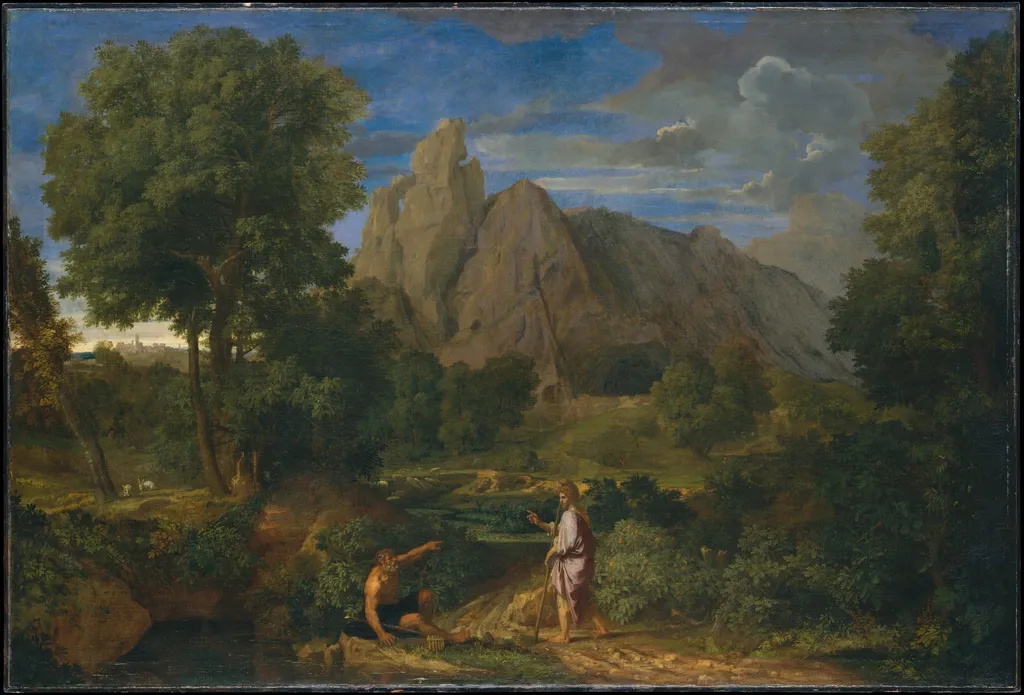
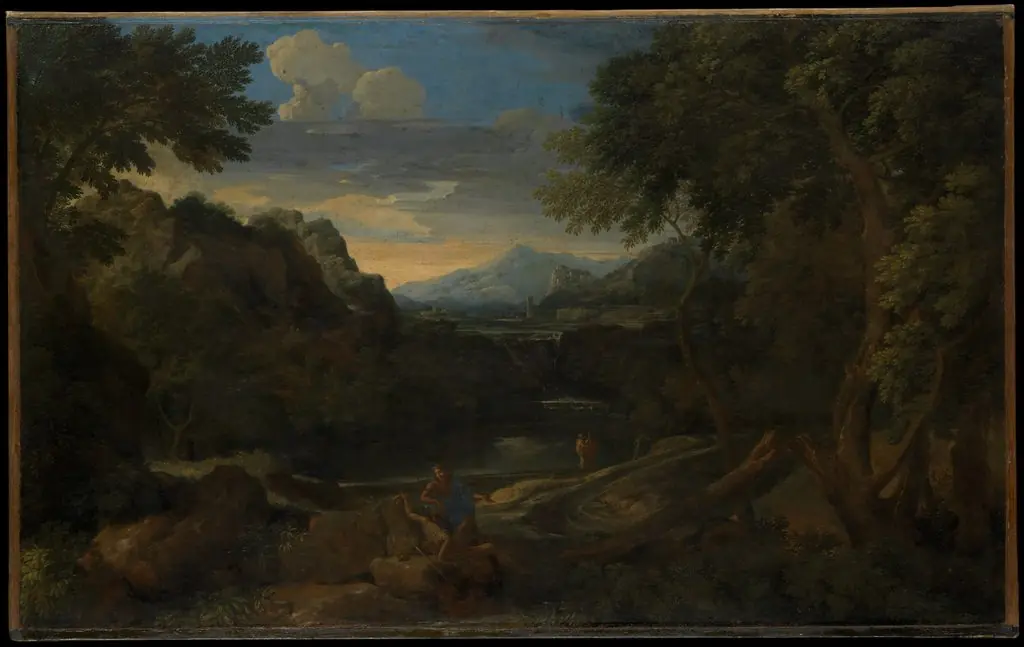
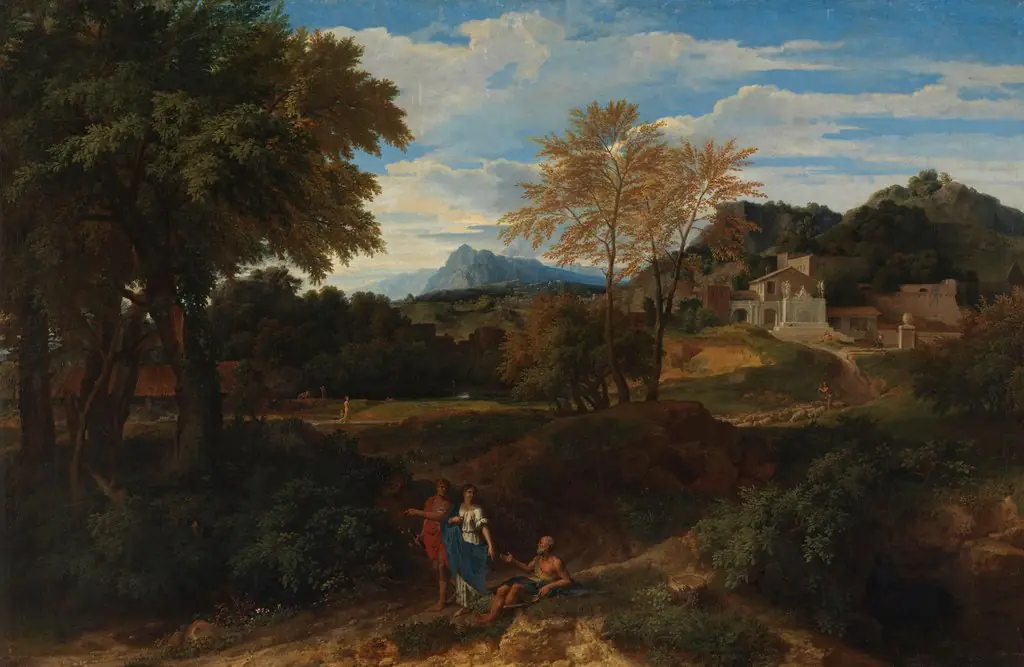
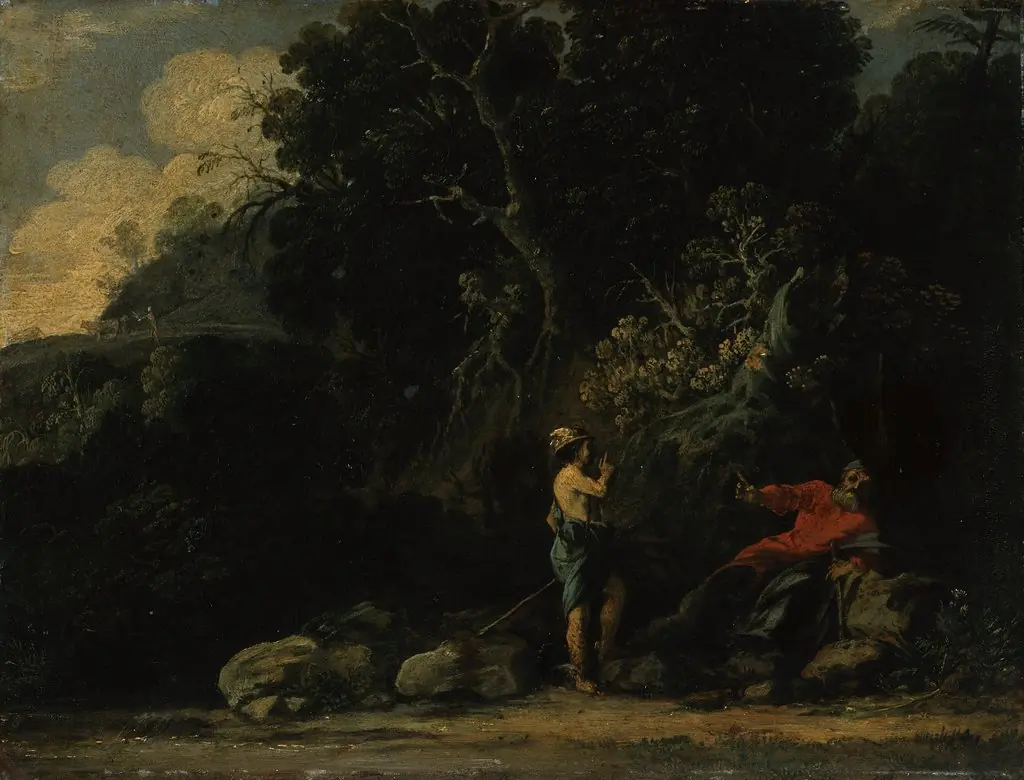
Mercury and Battus is an oil painting by the French Classical Baroque artist Francisque Millet. It dates from 1670 and is held in the collection of the Metropolitan Museum of Art.
About this work
Subject & Meaning
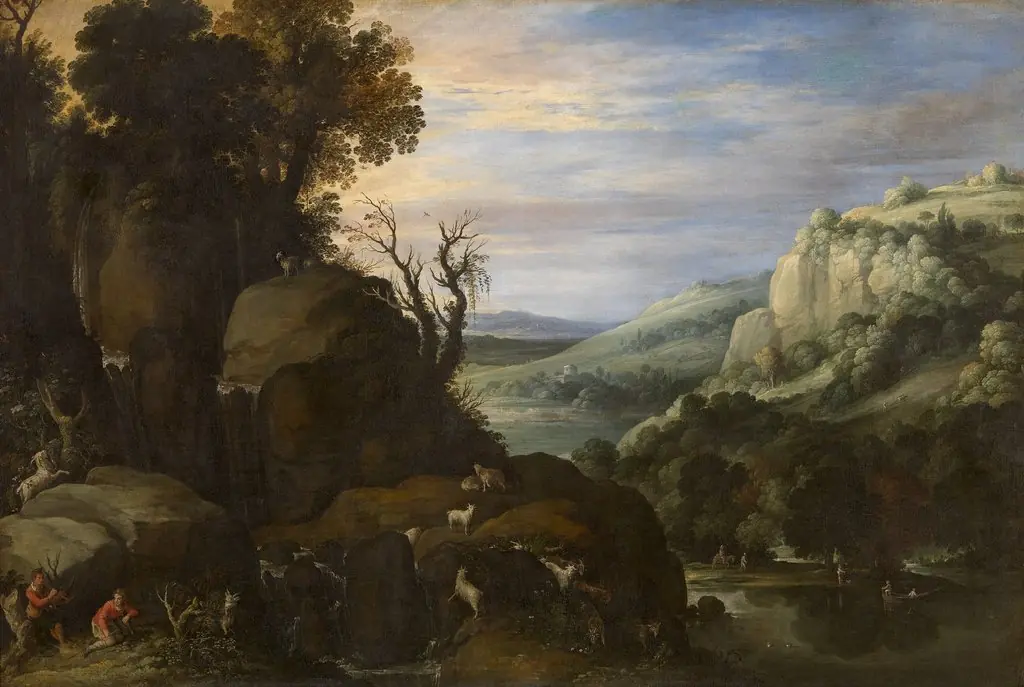
Set within a broad landscape, the composition includes trees and a mountainous backdrop, situating the narrative in a pastoral environment.
The painting illustrates the mythological encounter between the god Mercury and the shepherd Battus, as indicated by the title and the depiction of a male figure identified as Mercury alongside another man. Set within a broad landscape, the composition includes trees and a mountainous backdrop, situating the narrative in a pastoral environment. The natural elements, tree and mountain, evoke the rustic setting appropriate to Battus’s role as a herdsman, while the presence of Mercury introduces themes of divine intervention and communication.
Together, these visual components convey the story’s focus on secrecy, betrayal, and the interplay between the divine and the mortal world within an idealized countryside.
Technique & Style
The painting is executed in oil on canvas, a medium typical of seventeenth-century European practice. The handling shows a layered, glazed application that builds luminous passages, especially in the sky and foliage, while the figures are modeled with firm contours and subtle chiaroscuro. Mercury and Battus is composed within a broad landscape format, with the protagonists placed against a backdrop of rolling hills and verdant trees that recede through atmospheric recession.
The brushwork remains restrained, favoring smooth transitions rather than visible impasto, and the palette is anchored in earthy greens and ochres, enlivened by cooler sky tones and warm accents in the drapery.
History & Provenance
Francisque Millet created the oil-on-canvas painting Mercury and Battus in 1670. The work, measuring 119.4 by 177.8 centimeters, depicts a landscape scene featuring the mythological figures Mercury and Battus alongside mountains and trees. Historical records indicate that the painting was once part of the collection of Louisine Havemeyer before entering the permanent holdings of the Metropolitan Museum of Art.
As a landscape painting from the late seventeenth century, the piece reflects Millet's artistic output during that specific period. The work remains a documented example of Millet's landscape genre, characterized by its specific dimensions and mythological subject matter.
The painting is held in the collection of the Metropolitan Museum of Art, New York, where it is inventoried as accession 2012.117 (formerly associated with Louisine Havemeyer’s holdings). It was first recorded in modern collections under Louisine Havemeyer, whose holdings were later dispersed, leading to the work’s acquisition by the museum. The painting has not been displayed in major traveling exhibitions since its accessioning; its exhibition history is limited to permanent display within the museum’s European Paintings galleries.
Context
Critical reception of Francisque Millet’s Mercury and Battus has been modest, with scholarly attention focused on its role within the artist’s limited oeuvre of mythological landscapes. The work, dated 1670 and executed in oil on canvas, is categorized as a landscape painting and is noted for its depiction of the god Mercury within a rugged terrain that includes a tree and a distant mountain. Its inclusion in the Metropolitan Museum of Art, formerly owned by collector Louisine Havemeyer, situates it within the broader narrative of 17th‑century French painting’s transition toward naturalistic scenery infused with allegorical subject matter. Scholars cite the piece as an example of how Millet blended classical narrative with emerging landscape conventions.
Overview
This oil painting, titled Mercury and Battus, depicts a dramatic natural setting. In the foreground, two male figures engage by a flowing stream, framed by dense foliage. Behind them, a rugged mountain range rises under a dynamic, partly clouded sky.
The artist employs a realistic approach to render the scene, inviting viewers to observe the interaction and the detailed environment.
Own this work as a print
Artist & collection
Artist
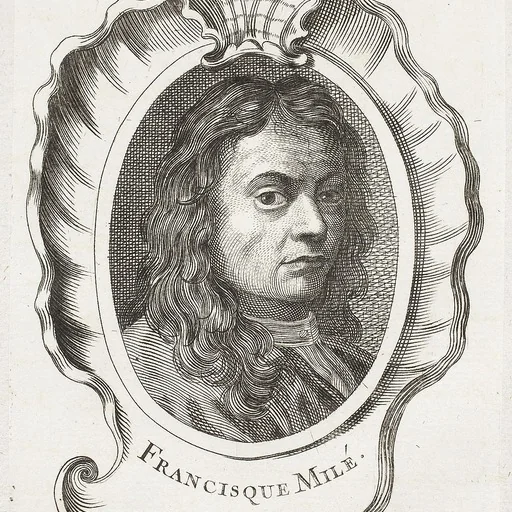
Francisque Millet (27 April 1642, in Antwerp – 3 June 1679, in Paris), also known as Jean-François Milée or Millet I, was a Flemish-French landscape painter of the Baroque era.