Artwork
Ecce Homo
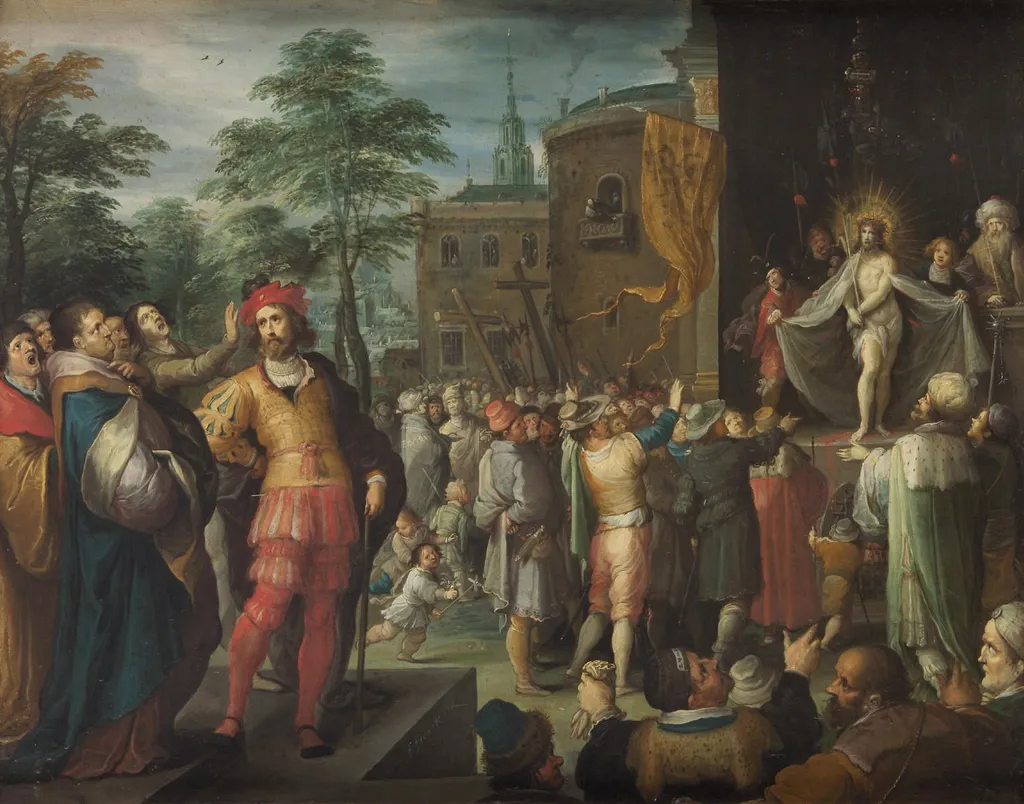
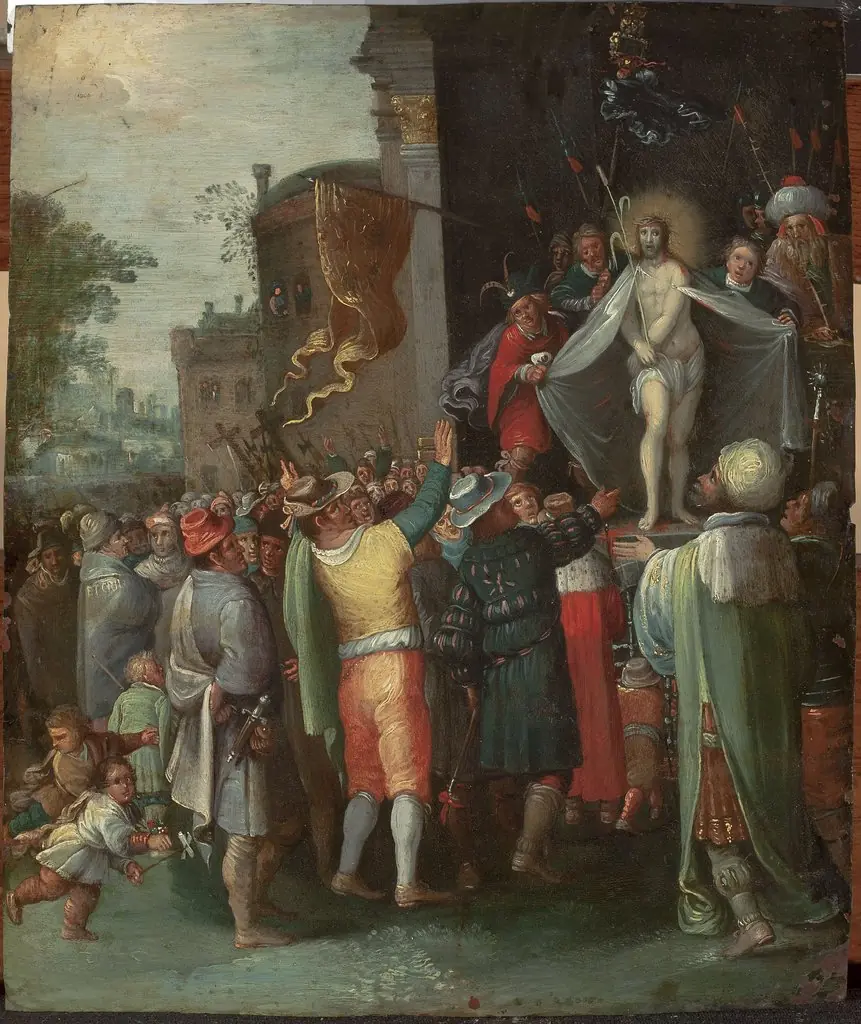
Ecce Homo is an oil painting by the Flemish Baroque painting artist Frans Francken the Younger. It dates from 1612 and is held in the collection of the Kunsthistorisches Museum.
About this work
Subject & Meaning
The composition centers on Christ’s suffering and the immediate moment of judgment, emphasizing both his humanity and the impending sacrifice.
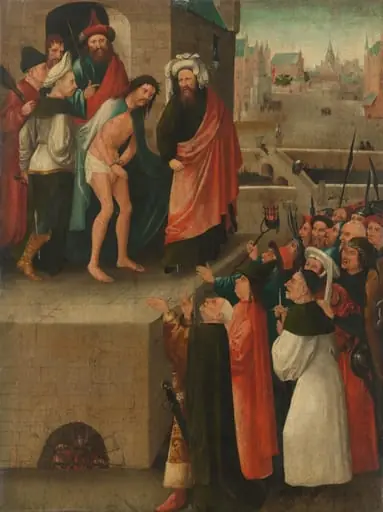
The work depicts the Ecce Homo episode, showing the crowned Christ presented to the crowd by Pontius Pilate. In this moment from John 19:5, the half-length figure of Jesus, bound and wearing the crown of thorns, is shown to the onlookers with the words “Ecce Homo” (“Behold the Man”) inscribed above him. The composition centers on Christ’s suffering and the immediate moment of judgment, emphasizing both his humanity and the impending sacrifice. The small scale and refined execution on copper support the intimate, devotional character of the scene.
Technique & Style
Executed in 1612, this religious painting by Frans Francken the Younger utilizes oil paint applied to a copper support. The work measures 34.5 cm in height and 45 cm in width. The choice of copper as a substrate allows for the fine detail characteristic of the artist's style, particularly suited to the intricate depiction of the Ecce Homo subject featuring Jesus Christ.
History & Provenance
The work titled Ecce Homo was painted by Frans Francken the Younger in 1612 on copper. It depicts Jesus Christ and belongs to the religious genre. The painting measures 34.5 cm in height and 45 cm in width.
It is part of the collection of the Kunsthistorisches Museum, where it has been located since its creation.
Context
Created in 1612, this small oil painting on copper depicts the moment of Christ's condemnation, titled Ecce Homo. It was produced by Frans Francken the Younger, a prominent Antwerp painter active in the early 17th century, and is now held in the Kunsthistorisches Museum in Vienna. The work engages with Counter-Reformation themes of suffering and sacrifice, reflecting the religious intensity of its period.
Scholarship emphasizes its technical precision and devotional function within the artist's broader output of Counter-Reformation imagery, situating it within the broader context of Baroque religious painting in the Southern Netherlands.
Overview
Frans Francken the Younger executed Ecce Homo in 1612, a work characteristic of Flemish Baroque painting. Unlike his frequent collaborations with specialists in landscape or still life, this composition appears to be entirely his own. Painted on copper, the panel reflects the period’s preference for smooth, luminous surfaces that enhance fine detail. The painting resides in the Kunsthistorisches Museum, Vienna.
Artist & collection
Artist
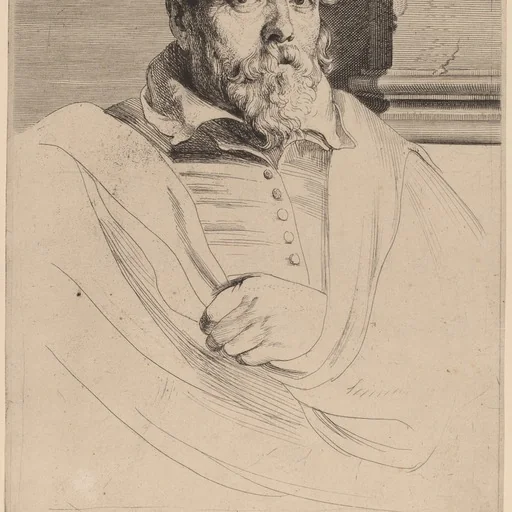
Frans Francken the Younger (1581, Antwerp – 6 May 1642, Antwerp) was a Flemish painter and the best-known and most prolific member of the large Francken family of artists.