Artwork
Portrait of a Woman
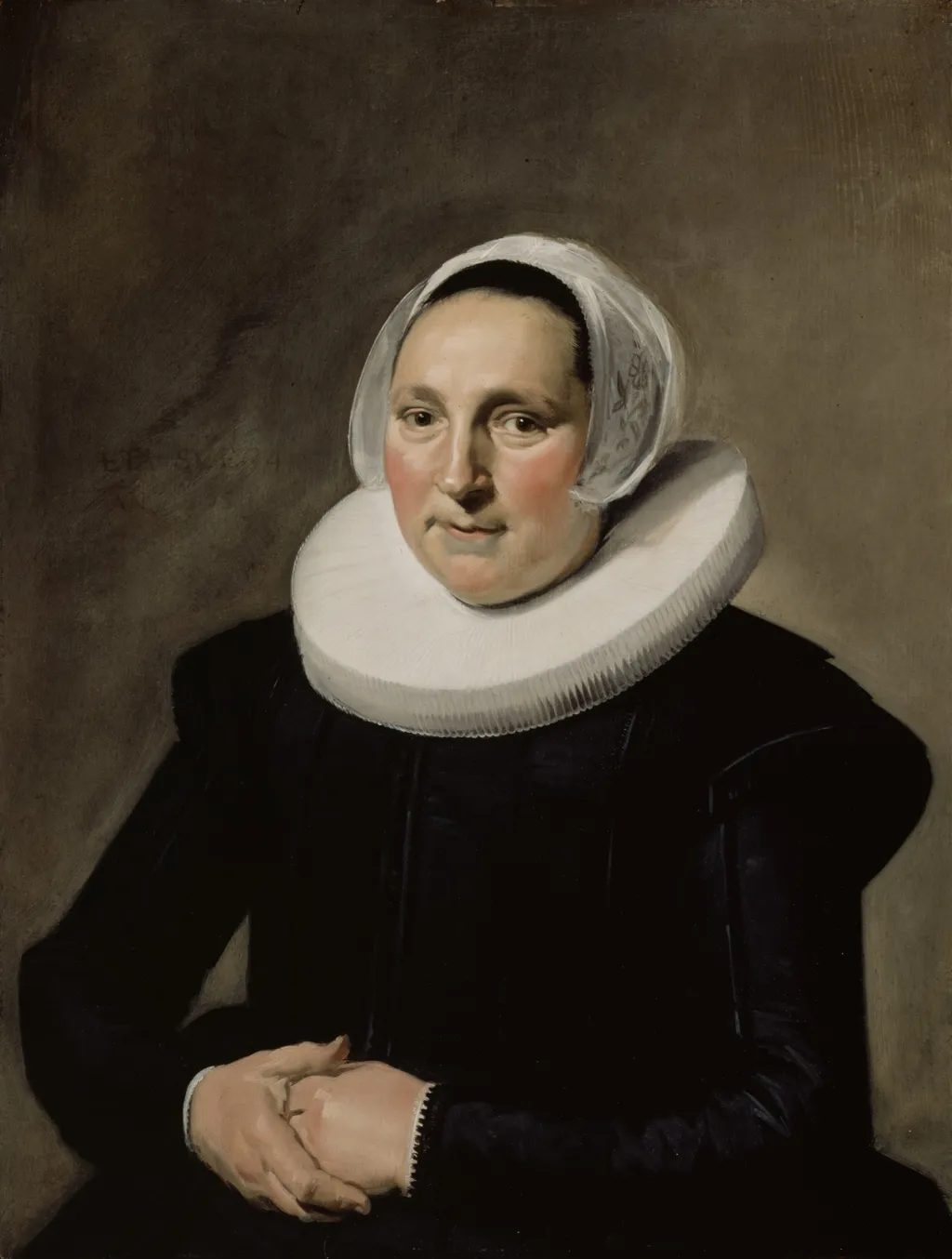
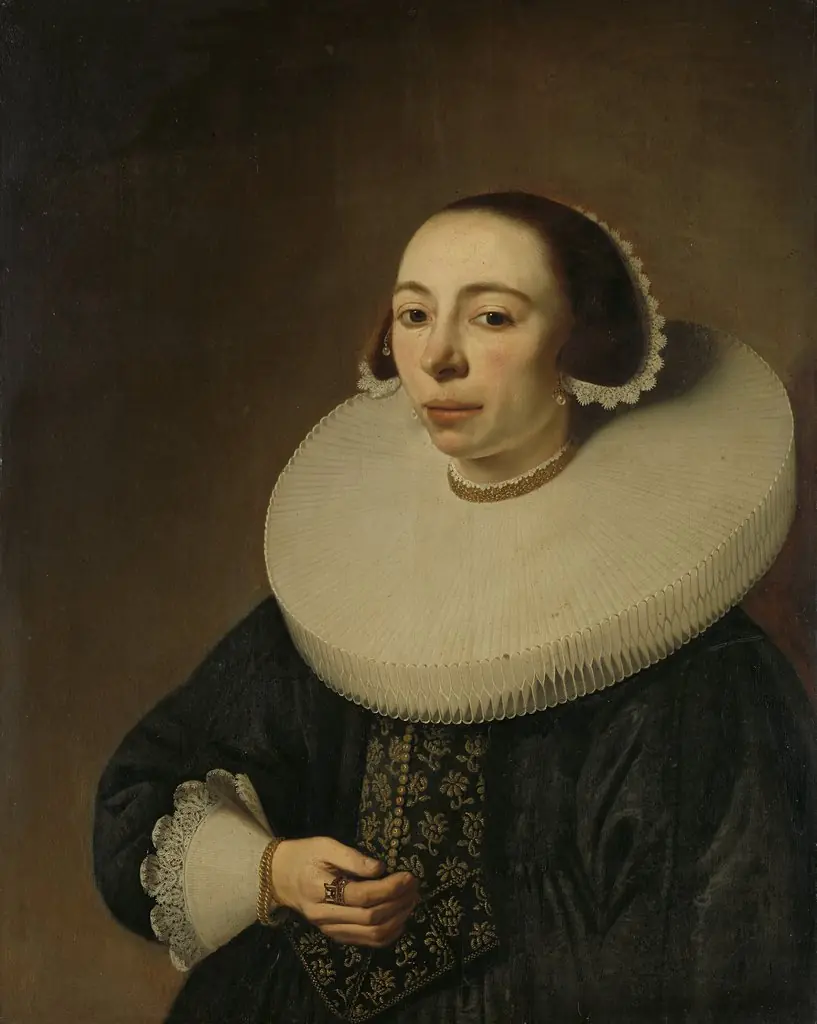
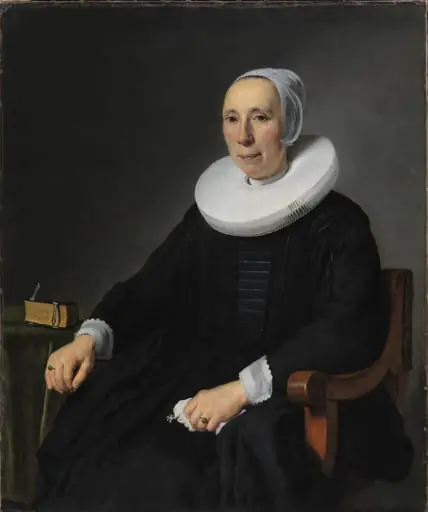
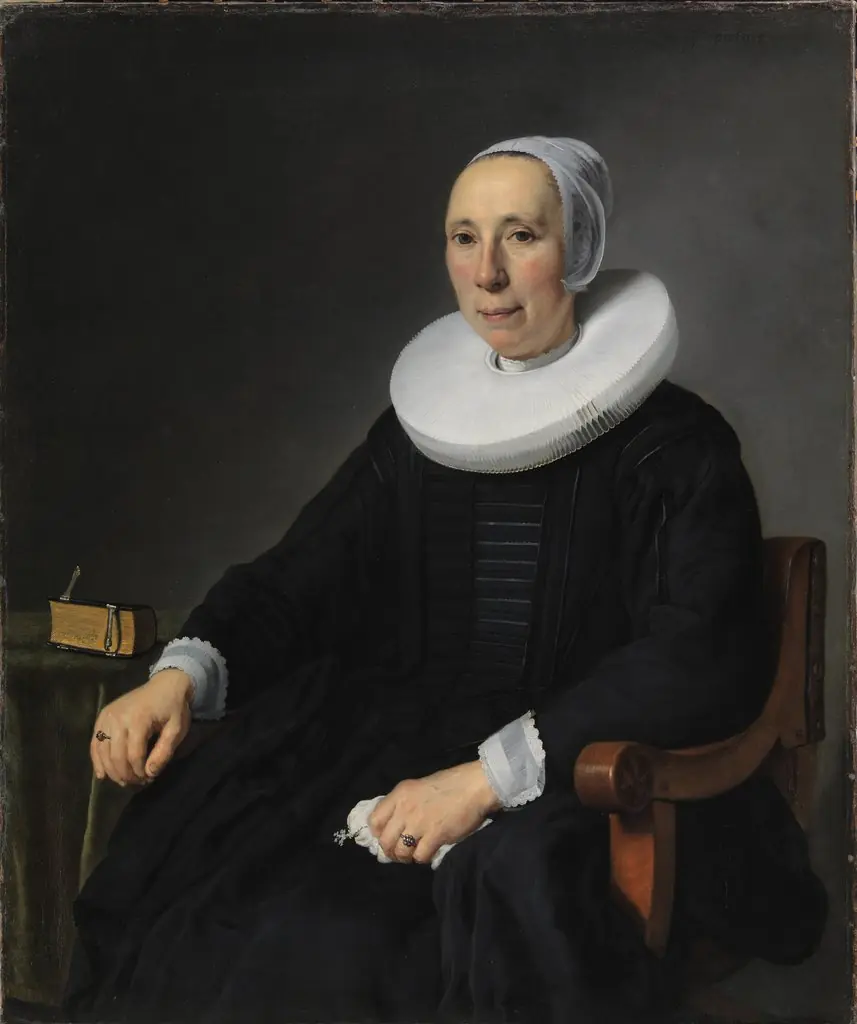
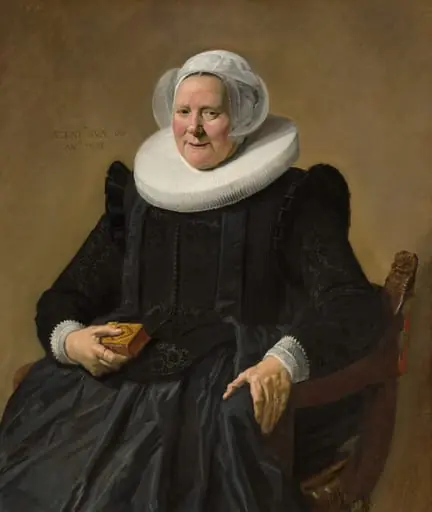
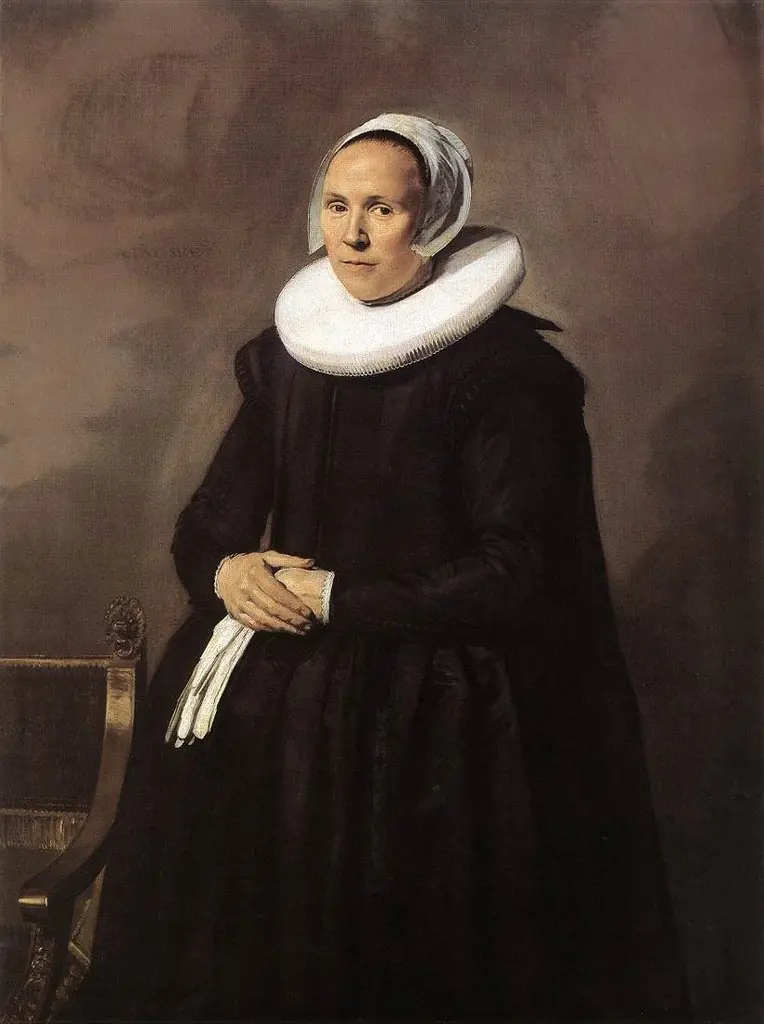
Portrait of a Woman is an oil painting by the Dutch Golden Age artist Frans Hals. It dates from 1634 and is held in the collection of the Detroit Institute of Arts.
About this work
Subject & Meaning
The sitter is portrayed as an urban woman of the Dutch Republic’s prosperous merchant or civic class, indicated by the starched white linen mob cap and the white pleated ruff that frame her face and shoulders. The cap’s modest, starched form and the ruff’s crisp geometry emphasize decorum and status rather than individuality, aligning with contemporary ideals of respectable femininity in Haarlem portraiture.
In the absence of attributes such as jewels or books, the restrained costume signals civic virtue and marital respectability rather than wealth display, a convention common in Hals’s commissioned portraits of middle-class sitters during the 1630s.
Technique & Style
Stylistically, the painting depicts a woman wearing a mob cap and a ruff, characteristic of portraiture from Haarlem during that period.
Created in 1634, Portrait of a Woman by Frans Hals is executed in oil paint on an oak panel support. The work measures 73 cm in height and 56.2 cm in width. Stylistically, the painting depicts a woman wearing a mob cap and a ruff, characteristic of portraiture from Haarlem during that period.
The medium and material choices align with Hals' established practice of using oil on wood for intimate portraits of the era.
History & Provenance
Frans Hals executed this oil-on-oak-panel portrait in Haarlem during 1634. The work depicts a woman wearing a mob cap and ruff. At some point following its creation, the painting entered the collection of Albert von Oppenheim. It is currently held by the Detroit Institute of Arts.
The painting is held in the collection of the Detroit Institute of Arts in Detroit. Created in 1634 by Frans Hals, the work was previously owned by Albert von Oppenheim. The piece is executed in oil paint on an oak panel.
No specific inventory number or detailed exhibition history for this work is provided in the available sources.
Context
The portrait demonstrates Hals' characteristic loose brushwork and psychological immediacy within Dutch Golden Age portraiture, though its restrained composition contrasts with his more dynamic group scenes. Art historians note its significance as an early example of individual female portraiture in Dutch art, reflecting evolving social attitudes toward women in the 17th century. The work's provenance through Albert von Oppenheim highlights the collecting networks that preserved Hals' legacy before the Detroit Institute of Arts acquired it for its collection of Northern Renaissance masterpieces.
Scholarly analysis emphasizes the painting's technical innovation in rendering fabric textures and facial expression through layered glazes, influencing later portraitists who sought greater emotional depth in representation.
Overview
Frans Hals the Elder, a leading figure of the Dutch Golden Age, painted Portrait of a Woman in 1634 with oil on canvas. The work is part of the Detroit Institute of Arts’ collection and exemplifies Hals’s focus on individual likenesses rendered with a lively, direct approach.
Own this work as a print
Artist & collection
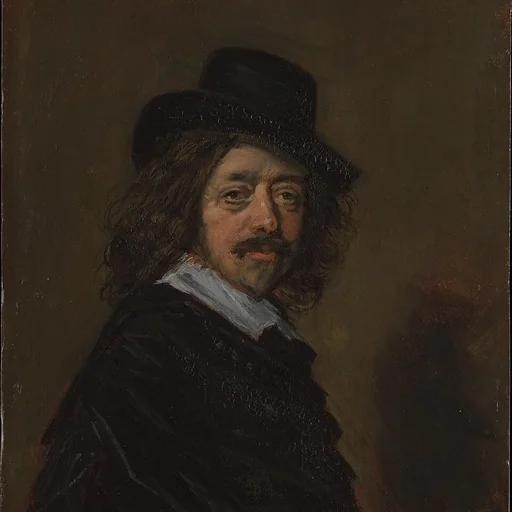
Artist
Frans Hals the Elder (UK: US:; Dutch:; c. 1582 – 26 August 1666) was a Dutch Golden Age painter. He lived and worked in Haarlem, a city in which the local authority of the day frowned on religious painting in places of…