Artwork
Young Man and Woman in an Inn
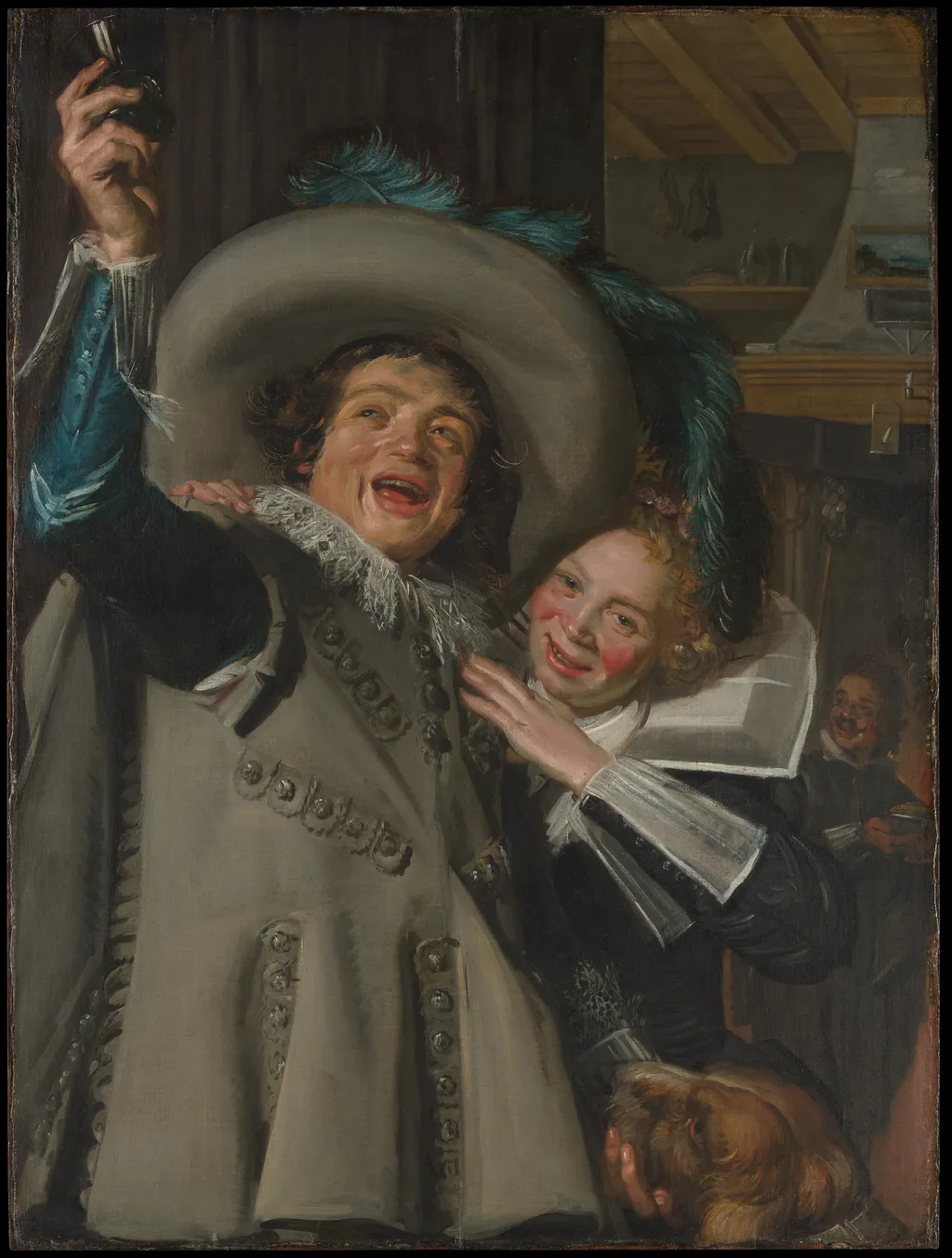
Young Man and Woman in an Inn is an oil painting by the Dutch Golden Age artist Frans Hals. It dates from 1623 and is held in the collection of the Metropolitan Museum of Art.
About this work
Frans Hals set a young man and woman together in an inn in 1623. The work has carried other names, Yonker Ramp and His Sweetheart and Portrait of Pieter Ramp, which suggests the two may be real people rather than invented figures.
Subject & Meaning
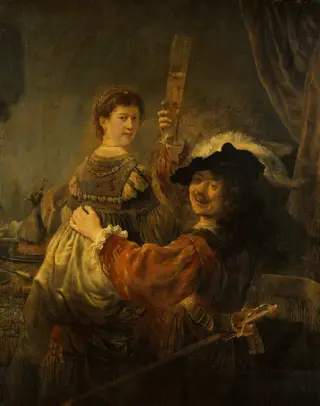
The work shows a smiling woman leaning against a young cavalier who holds a flask aloft, while he grasps the head of a dog; a partially open curtain reveals a bustling interior with a man carrying a dish and a lit fireplace. The couple's attire, the dog, and the flask serve as symbols of youthful revelry and possible allusion to the Prodigal Son parable, suggesting themes of companionship, indulgence, and moral ambiguity. Art historians have linked the composition to genre scenes of the 1620s, noting the presence of a dog, hat, and feather as emblematic of mirth and transience, and they interpret the scene as a secular celebration rather than a formal portrait.
Technique & Style
The work is executed in oil paint on a canvas that is mounted on a wooden panel (canvas on panel), measuring approximately 105.
The work is executed in oil paint on a canvas that is mounted on a wooden panel (canvas on panel), measuring approximately 105.4 cm in height and 79.4 cm in width. It is signed and dated "F. Hals 1623" on the edge of the chimney-piece. Hals treats the scene as a genre piece rather than a portrait, depicting a smiling woman leaning against a young cavalier who raises a flask above his head while holding a dog's head; behind them a partially opened curtain reveals a room with a smiling figure, a fireplace, and additional pictures.
The painting is noted as the only dated genre work by Hals, and its composition follows his frequent arrangement of a principal figure accompanied by an accomplice.
History & Provenance
Painted in 1623 in Haarlem, this oil work by Frans Hals bears a signature on the chimney-piece within the composition. Historically misidentified as a portrait of Pieter Ramp, it is now classified as a genre scene, potentially depicting the Prodigal Son or figures from Hals's immediate circle. The documented ownership chain begins with a 1791 sale in Leiden involving J. A. Versijden van Varick, followed by an 1880 Amsterdam auction of the Copes van Hasselt collection.
Subsequent holders included the Pourtalès collection in Paris and the London dealer Duveen Galleries, after which the work entered the collection of Benjamin Altman in New York before its accession by the Metropolitan Museum of Art.
The work is housed in the Metropolitan Museum of Art in New York. It has not been included in any traveling Frans Hals retrospectives because the museum does not lend it; it was, however, referenced in the 1989 catalogue of the International Frans Hals Exhibition, which noted its status as the only dated genre painting by Hals.
Context
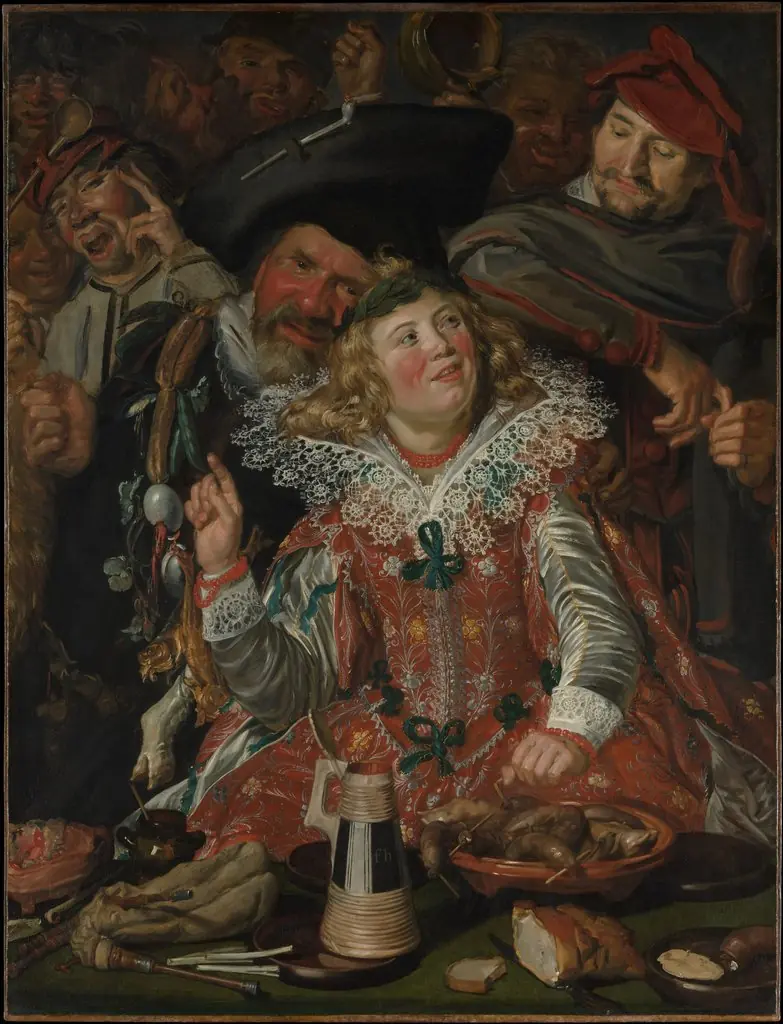
Scholarship on this 1623 work has evolved from identifying the sitters as a specific ensign, Pieter Ramp, to classifying the piece as a genre scene. Early catalogs by Hofstede de Groot recorded a London copy and detailed provenance, while modern consensus rejects the portrait theory due to the woman's resemblance to the figure in Hals's Shrovetide Revellers. Seymour Slive highlighted the painting's unique status as the only dated genre work by the artist, though he also proposed a potential allegorical link to the biblical Prodigal Son.
Conversely, Claus Grimm challenged the work's authenticity in 1989, suggesting it was a copy of a lost original. The composition, featuring a central figure accompanied by an accomplice, is recognized as a recurring motif in Hals's output during the 1620s, situating the piece within his broader exploration of merrymaking and social interaction.
Legacy
The painting's contested attribution and its status as the only securely dated genre work by Hals have shaped scholarly narratives about his development and the emergence of genre painting, a point highlighted in Slive's catalogue. Its exclusion from traveling exhibitions, because it can never be lent out, has reinforced its reputation as a cornerstone work, and its frequent citation in studies of the Prodigal Son theme further demonstrates its lasting impact on interpretations of Hals's biblical and genre motifs.
Overview
Frans Hals's "Young Man and Woman in an Inn," an oil painting created in 1623, captures two figures within an interior setting. This work is a notable example of the Dutch Golden Age master's output and is housed in the collection of the Metropolitan Museum of Art in New York City. It offers insight into the period's genre painting, or potentially a specific portrait, through its depiction of an intimate interaction.
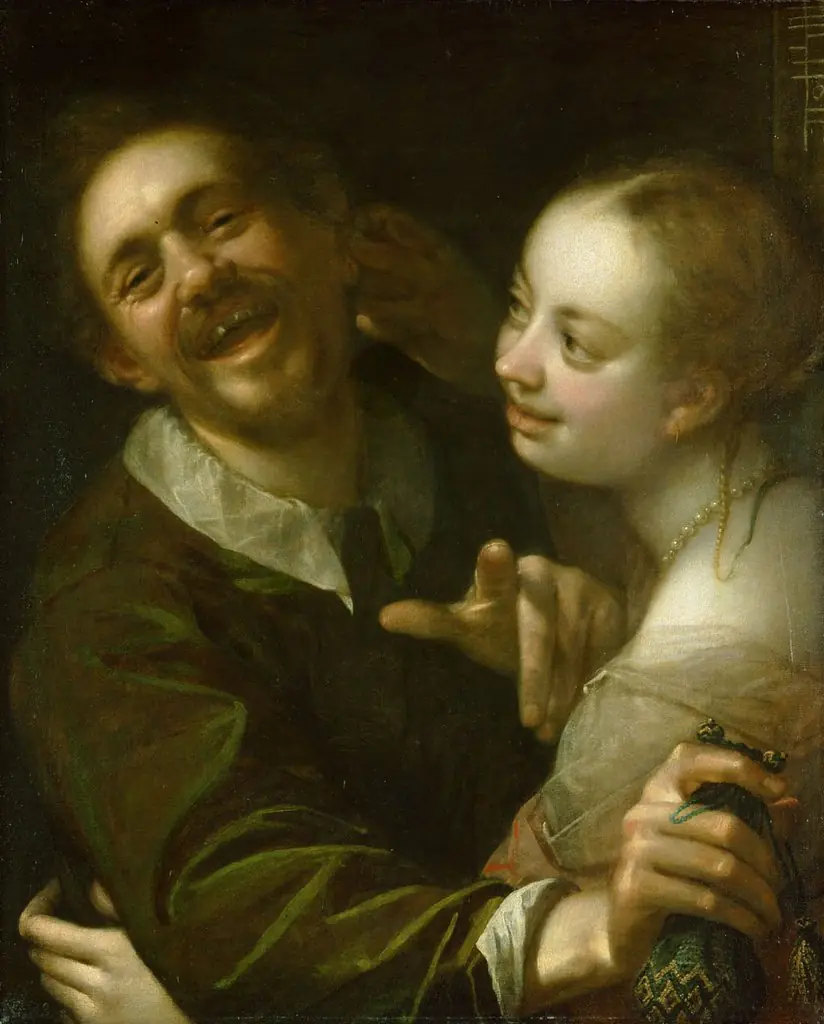
Own this work as a print
Artist & collection
Artist
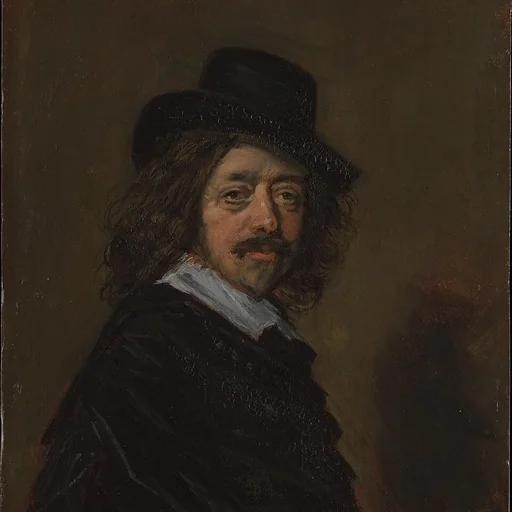
Frans Hals the Elder (UK: US:; Dutch:; c. 1582 – 26 August 1666) was a Dutch Golden Age painter. He lived and worked in Haarlem, a city in which the local authority of the day frowned on religious painting in places of…

 Studied in the Portraiture Across Time course