Artwork
Portrait of Feyntje van Steenkiste
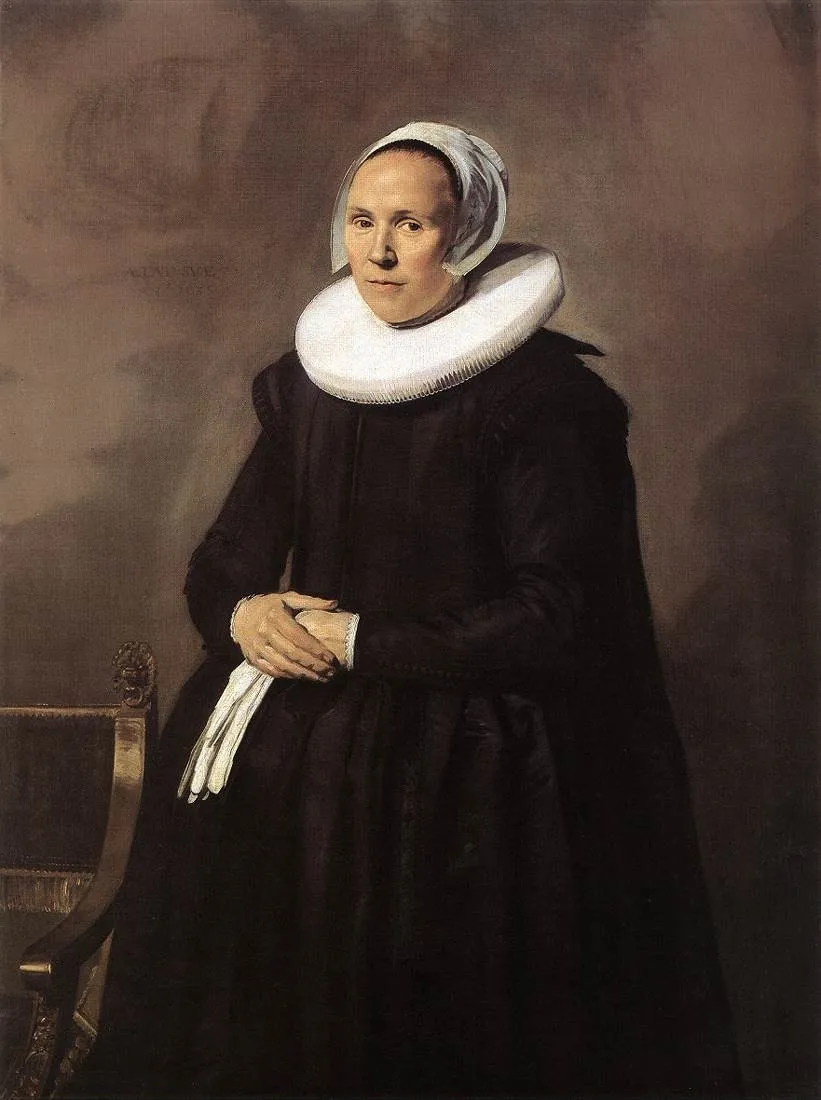
Portrait of Feyntje van Steenkiste is an oil painting by the Dutch Golden Age artist Frans Hals. It dates from 1635 and is held in the collection of the Rijksmuseum.
About this work
Subject & Meaning
The portrait depicts Feyntje van Steenkiste, a Mennonite potash merchant’s daughter from Haarlem who married Lucas de Clercq in 1622 at age eighteen.
The portrait depicts Feyntje van Steenkiste, a Mennonite potash merchant’s daughter from Haarlem who married Lucas de Clercq in 1622 at age eighteen. Painted in 1635 when she was thirty-one, the work forms a pendant to her husband’s portrait by Frans Hals, reflecting their married status.
Feyntje’s attire signals Mennonite piety and social standing: a sober black dress with pleated edges and numerous buttons, a tightly folded millstone collar, and a winged diadem cap trimmed with lace. The absence of jewelry underscores Mennonite modesty, while the fine cut of her dress indicates her family’s prosperity. Her clasped gloves and composed gaze convey propriety and marital virtue, aligning with contemporary ideals of respectable Dutch burgher women.
Technique & Style
The portrait is an oil-on-canvas work painted by Frans Hals around 1635. It measures 123 cm in height and 93 cm in width and depicts Feyntje van Steenkiste. Her attire is a sober Mennonite dress with many buttons and pleated edges, indicating the expense of the fabric, and she wears a winged diadem cap edged with lace; no jewelry is present.
The painting is executed in oil paint on canvas and retains a finely rendered, naturalistic style characteristic of Hals’ portraiture, with broad and accurate handling of the hands and subtle coloration similar to other works of the period.
History & Provenance
The painting was commissioned as a pendant to the portrait of Feyntje van Steenkiste's husband, Lucas de Clercq, a Mennonite potash merchant from Haarlem. The couple became engaged on 8 January 1622. The work is dated 1635 based on the inscription “AETAT SVAE 31.
ANo 1635” and was painted nine years after their marriage. It remained in the De Clercq family for generations, passing through Lucas de Clercq, Gijsbert de Clercq, and Pieter de Clercq. In 1891, the De Clercq family gave the painting to the city of Amsterdam, and it has been on loan to the Rijksmuseum since that year, where it is now in the permanent collection.
The painting is held in the Rijksmuseum, Amsterdam, with inventory number SK-C-189.
Its exhibition history began in 1891, when it was lent from the De Clercq family to the city of Amsterdam. It entered the Rijksmuseum’s collection in 1907, where it has been catalogued as number 1087. Since 1891 the work has been exhibited on loan, reflecting its continuous display within the museum’s holdings.
Context
Painted around 1635 by Frans Hals, the Portrait of Feyntje van Steenkiste is recognized as a pendant to the portrait of her husband, Lucas de Clercq. Early scholarship by Hofstede de Groot in 1910 documented the work, noting its dimensions and the exceptional breadth of the hands. In 1974, Seymour Slive reaffirmed the pendant relationship while observing that Feyntje's headdress aligns with the styles worn by women in the 1630s.
The painting is situated within the Dutch Golden Age tradition, specifically depicting a Mennonite bride whose sober attire contrasts with Hals's more ornate wedding portraits through the absence of lace collars and jewelry. It resides in the Rijksmuseum in Amsterdam, having been a gift from the De Clercq family to the city of Amsterdam in 1891.
Legacy
Portrait of Feyntje van Steenkiste was painted around 1635 and has been part of the Rijksmuseum collection since 1891, when it was donated by the De Clercq family; the work is regarded as a pendant to the portrait of her husband Lucas de Clercq and is frequently cited in scholarly discussions of 1630s Mennonite portraiture in Haarlem, influencing later representations of bourgeois domestic subjects in Dutch art
The painting's composition, particularly its modest dress and intricate hand gestures, was noted by Hofstede de Groot in 1910 and later by Seymour Slive in 1974, who highlighted its role in shaping pendant portrait conventions and its subtle commentary on marital status within the Mennonite community, cementing its reputation as a key example of Frans Hals's late portraiture and securing its place in art‑historical narratives of the Dutch Golden Age
Overview
Frans Hals created this oil-on-canvas portrait of Feyntje van Steenkiste around 1635. The work is part of the Rijksmuseum’s collection in Amsterdam and is traditionally paired with a companion portrait of her husband, Lucas de Clercq, forming a marital pendant set.
Artist & collection
Artist
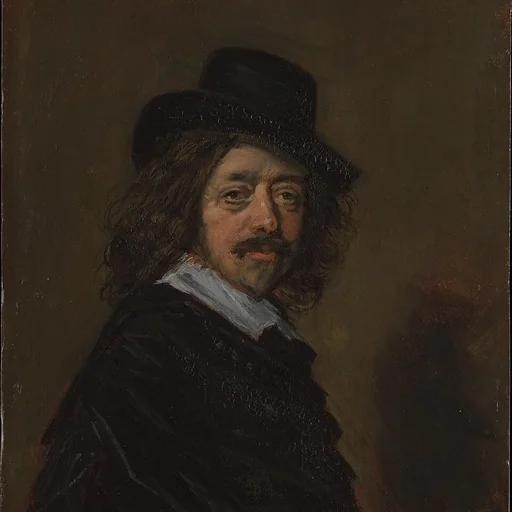
Frans Hals the Elder (UK: US:; Dutch:; c. 1582 – 26 August 1666) was a Dutch Golden Age painter. He lived and worked in Haarlem, a city in which the local authority of the day frowned on religious painting in places of…

- Portrait of a Lady
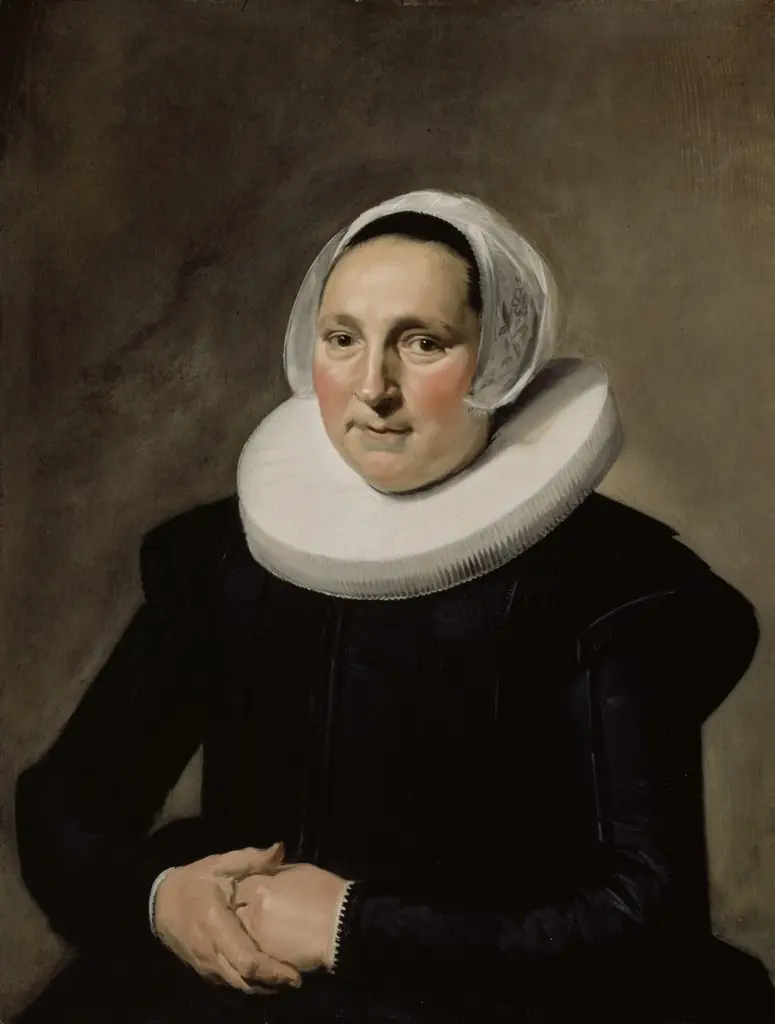 Portrait of a Woman
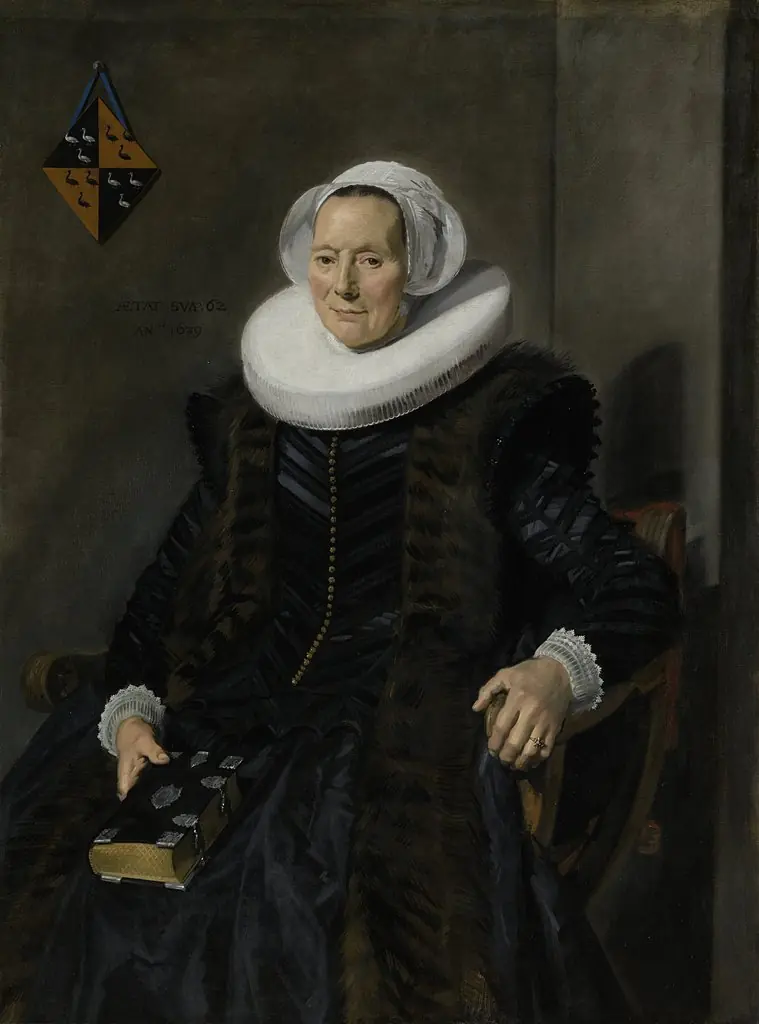 Portrait of Maritge Claesdr Vooght (....-1644)
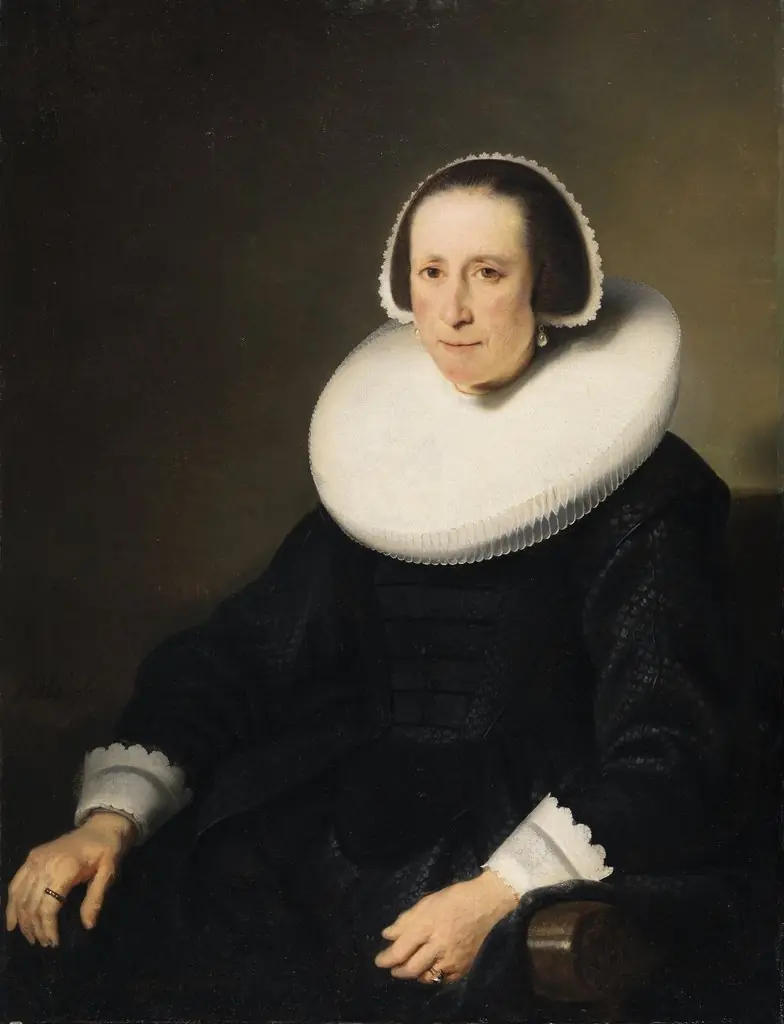 Portrait of a Lady
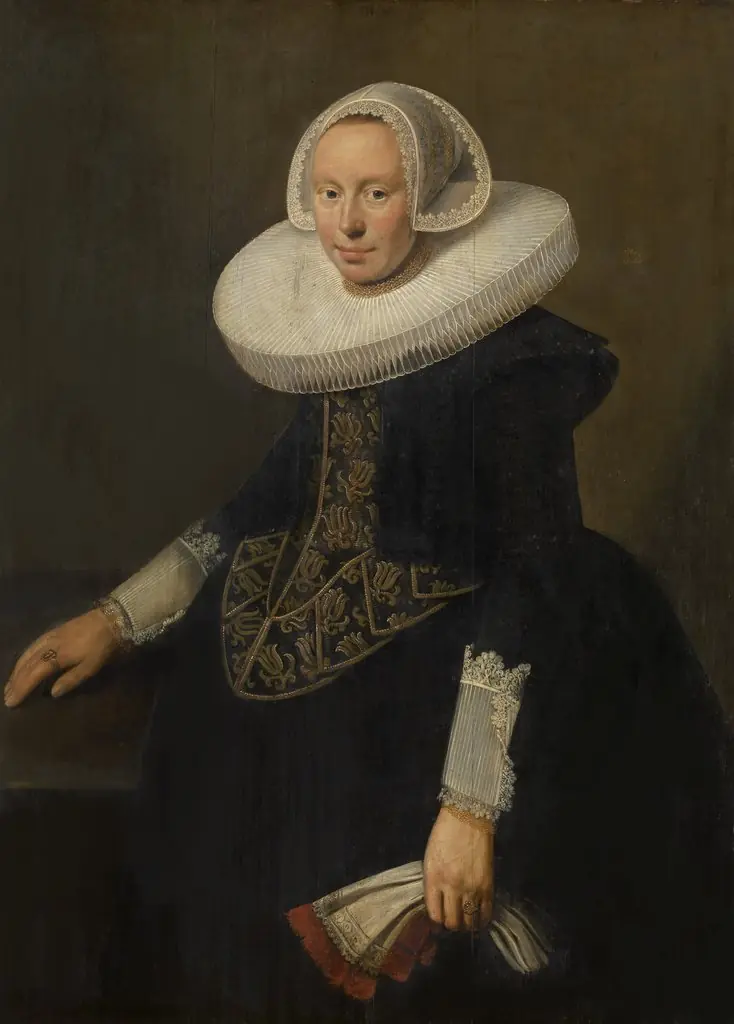 Portrait of a Woman
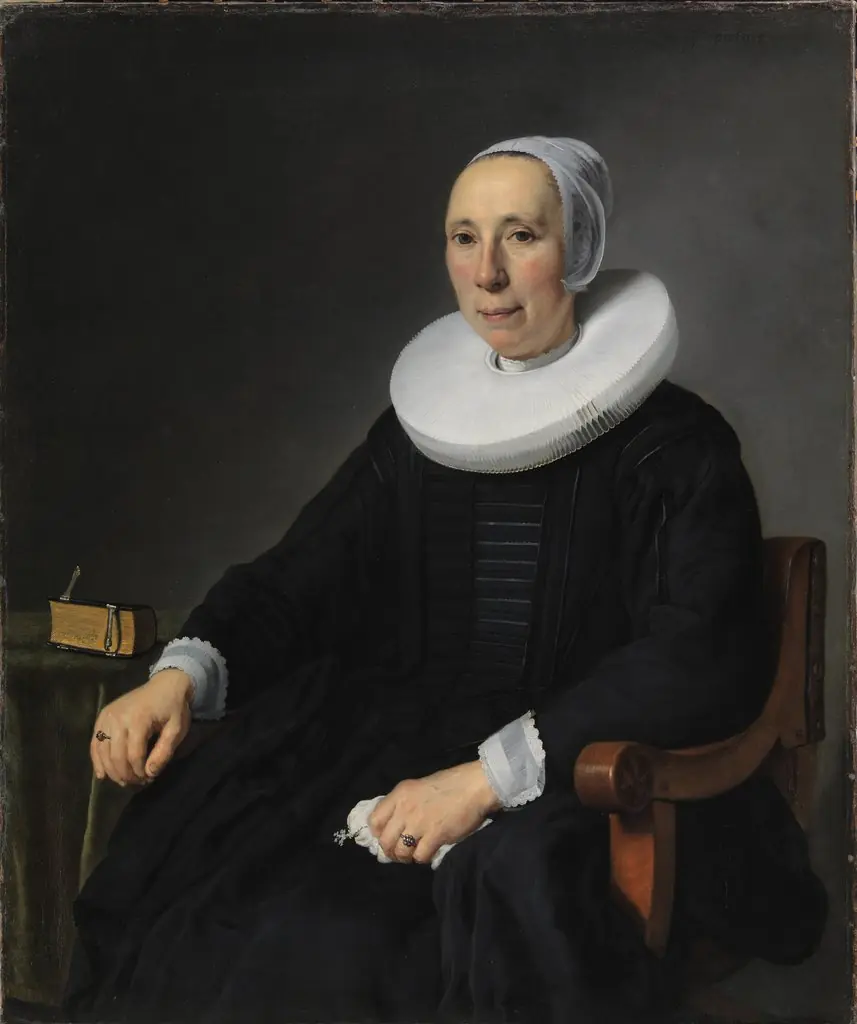 Portrait of a Lady
 Untitled
 Portrait of Catharina Jansdr. Tengnagel, wife of Andries Bicker
 Portrait of a Woman
 Portrait of a Woman holding Gloves
 Portrait of a seated woman with a book
 Portrait of a Woman Aged Sixty