Artwork
Merrymakers at Shrovetide
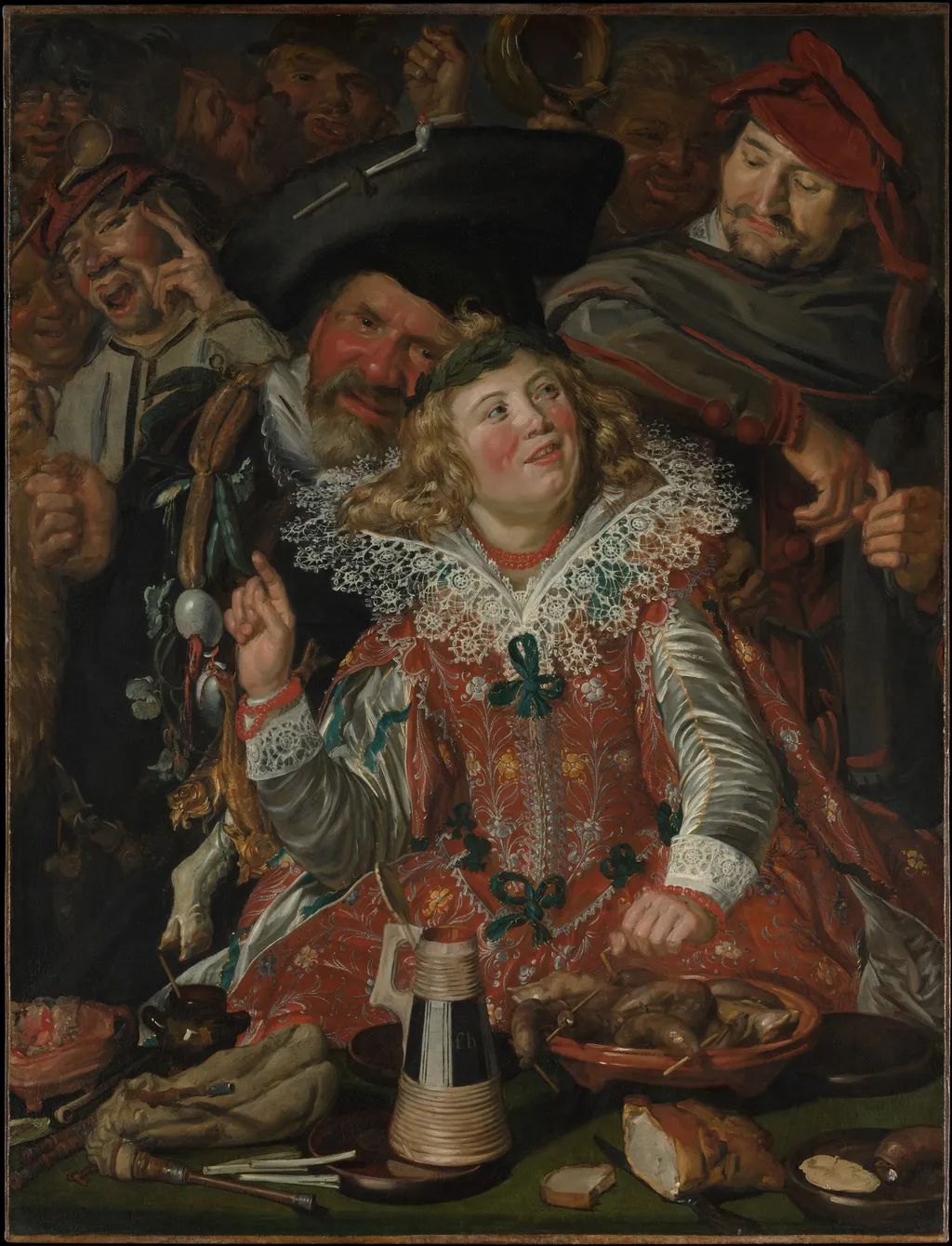
Merrymakers at Shrovetide is an oil painting by the Dutch Golden Age artist Frans Hals. It dates from 1610 and is held in the collection of the Metropolitan Museum of Art.
About this work
At a crowded Shrovetide tavern, a man draped in herring, eggs, and a pig's trotter leans in to whisper to a laughing figure in laurel and bright costume, a sausage dangling from a companion's cap. Frans Hals painted the raucous Dutch carnival around 1616, packing the canvas with flushed, overlapping figures and the licensed excess of the days before Lent.
Subject & Meaning
The painting depicts the festivities of Shrovetide (Carnaval), an annual carnival of food and jollity preceding the Christian fasting season of Lent.
The painting depicts the festivities of Shrovetide (Carnaval), an annual carnival of food and jollity preceding the Christian fasting season of Lent. At the center, an elegantly dressed, smiling woman raises her right finger to make a point, while a man grabs her shoulder to whisper in her ear. He wears a necklace of herring, eggs, and mussels, along with a pig's trotter and a fox tail, which respectively symbolize gluttony and foolishness.
Another amused man, wearing a wurst hanging from his cap, leans on the first man's shoulder to listen. Some scholars identify these male figures as the Baroque theatre characters Peeckelhaeringh and Hans Wurst. In the background, additional figures talk and laugh.
A flagon on the table bears the initials "fh". Art historian Seymour Slive cited the work to demonstrate Hals's "love of life".
Technique & Style
Executed in oil on canvas, this work dates to around 1610 and is considered one of Hals's earliest surviving pieces. The composition features a brightly colored female figure, distinct from Hals's other sitters, interacting with male figures adorned with symbolic props, herring, eggs, and a fox tail representing gluttony and foolishness. A flagon bearing the initials "fh" appears within the scene.
Stylistically, the painting is characterized by lively banter and expressive gestures, reflecting what scholars describe as a "love of life." While traditionally attributed to Hals, art historian Claus Grimm challenged this in 1989, proposing the extant version is a copy of a lost original. Conservation in 1951 revealed six background heads that had previously been painted over, altering the original spatial depth.
History & Provenance
Frans Hals painted Merrymakers at Shrovetide around 1610 in Haarlem, making it one of his earliest surviving works. The artwork was first documented by Wilhelm von Bode in 1883, though an Amsterdam sale entry from 1765 mentions a genre work of Vasten-Avond (Shrove Tuesday), and a period drawing by Mathys van den Bergh is also known. Subsequent to Bode's record, the painting appeared in most Hals catalogs, including those by Ernst Wilhelm Moes (1909), Hofstede de Groot (1910), W. R. Valentiner (1923), and Gerrit David Gratama (1946).
In 1907, Benjamin Altman acquired the painting from a Monsieur Cocret, and upon his death in 1913 it was bequeathed to the Metropolitan Museum of Art, where it has since remained, now in Gallery 637. A 1951 cleaning uncovered six background heads that had previously been painted over. In 1989, art historian Claus Grimm rejected the attribution to Hals, arguing it was likely a copy of a lost original; because the work can never be lent out, it could not be physically included in that year's international Frans Hals exhibition organized by Seymour Slive, though a full-color photograph appeared in the exhibition catalog.
Context
Merrymakers at Shrovetide (c. 1610) is regarded as one of Frans Hals's earliest surviving paintings, a lively genre scene of Shrovetide festivities that may include the Baroque theatre figures Peeckelhaeringh and Hans Wurst. It was first documented by Wilhelm von Bode in 1883 and subsequently appeared in the major Hals catalogs of Moes (1909), Hofstede de Groot (1910), Valentiner (1923) and Gratama (1946). In 1989 Seymour Slive featured a colour reproduction to illustrate Hals's "love of life," while Claus Grimm the same year disputed the Hals attribution, proposing the work might be a copy after a lost original.
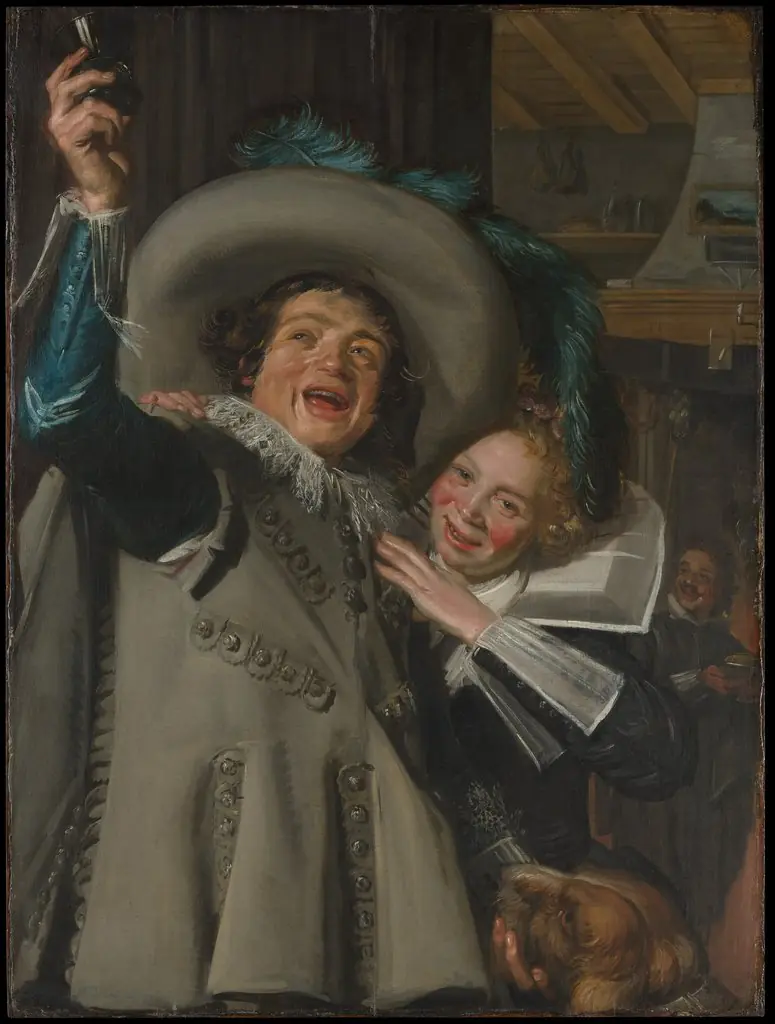
A 1951 cleaning revealed six overpainted heads in the background. The painting's bright costume and facial type link it to Hals's Yonker Ramp and His Sweetheart, situating it within Dutch Golden Age celebrations of carnival and contributing to the study of his artistic development.
Legacy
Merrymakers at Shrovetide is recognized as one of Frans Hals's earliest surviving works, and art historian Seymour Slive used it to exemplify the painter's "love of life" in his 1989 international Frans Hals exhibition catalog. The painting itself could not be included in that exhibition because it can never be lent out. Its attribution has been contested; in 1989, Claus Grimm rejected the work as an original by Hals, arguing instead that it is a copy of a lost original.
The painting has been documented in major catalogs of Hals's works by Wilhelm von Bode, Ernst Wilhelm Moes, Hofstede de Groot, W.R. Valentiner, and Gerrit David Gratama. It has been held by the Metropolitan Museum of Art since 1913.
Overview
Frans Hals's "Merrymakers at Shrovetide," created around 1616–17, is an oil painting depicting a lively carnival scene from the Dutch Golden Age. This work captures the boisterous spirit of Shrovetide, the festive period preceding the Christian observance of Lent. It stands as one of the earliest known surviving examples from the artist's developing career, showcasing his emerging style in genre painting.
Own this work as a print
Artist & collection
Artist
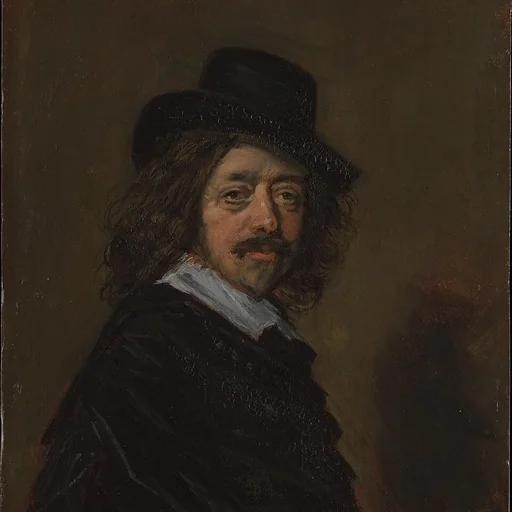
Frans Hals the Elder (UK: US:; Dutch:; c. 1582 – 26 August 1666) was a Dutch Golden Age painter. He lived and worked in Haarlem, a city in which the local authority of the day frowned on religious painting in places of…

 Studied in the Portraiture Across Time course