Artwork
The Smoker, or Three Heads
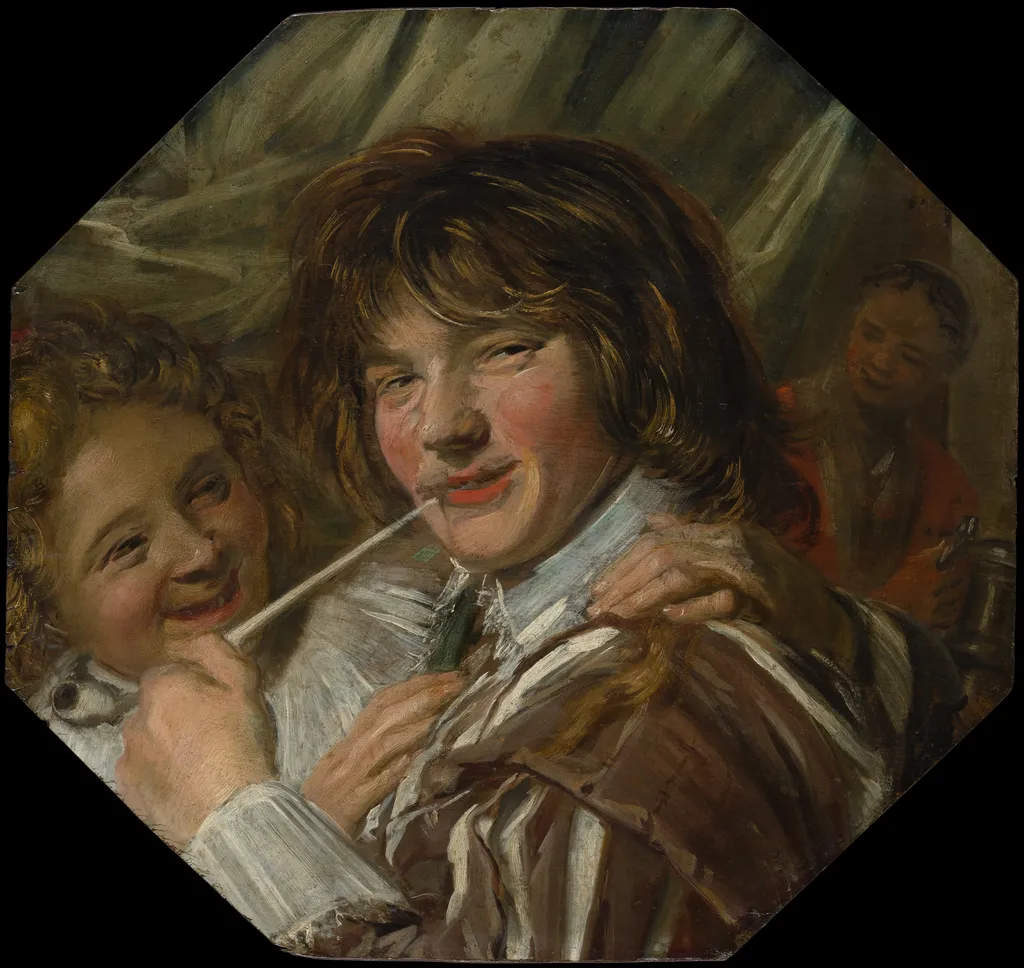
The Smoker, or Three Heads is an oil painting by the Dutch Golden Age artist Frans Hals. It dates from 1626 and is held in the collection of the Metropolitan Museum of Art.
About this work
The painting is called The Smoker, or Three Heads, by Frans Hals. It was painted in 1626, a time when Dutch art was flourishing. The artist, Frans Hals, was known for his work during this period, and this painting is one of his notable pieces. You can learn more about this type of art by looking up The Metropolitan Museum of Art.
Subject & Meaning
The composition follows a pattern Hals used repeatedly in the 1620s, in which a principal figure is paired with a secondary "accomplice.
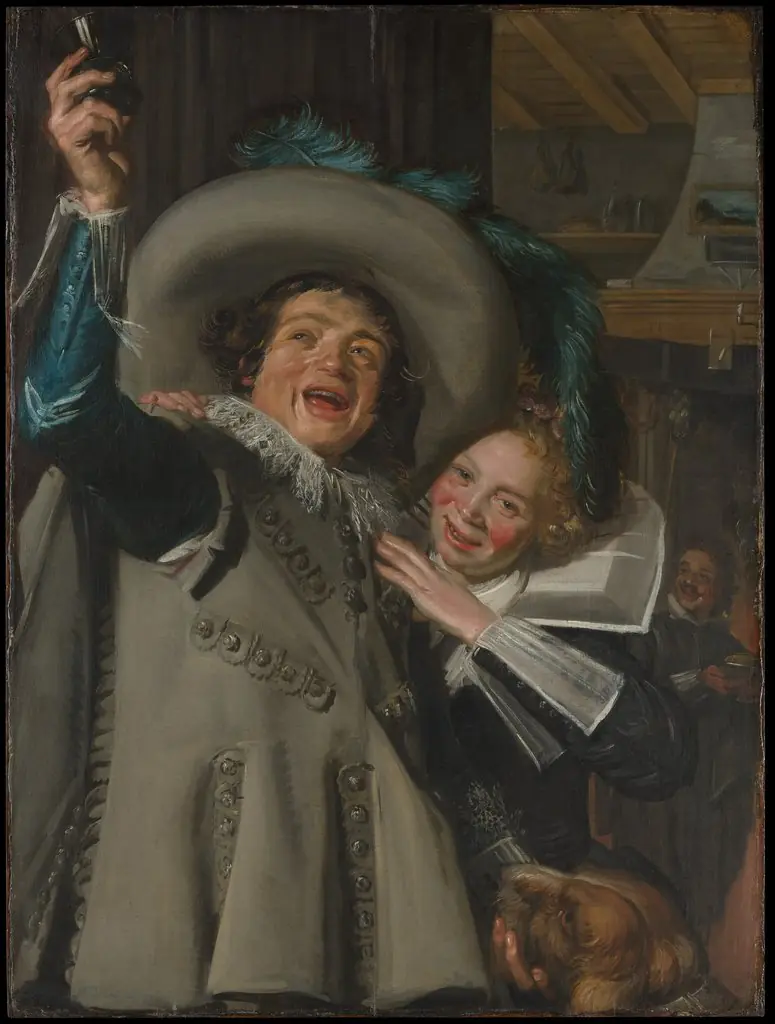
The painting, also known as Three Heads, is a genre scene depicting three figures arranged in close proximity. At the center, a youth wearing a tassel collar faces the viewer almost full-face while puffing on a long Dutch clay pipe. A second youngster in a wide collar embraces him from behind, resting a hand on his shoulder, and a woman wearing a kerchief appears in the background holding a tin can or metal jug.
The composition follows a pattern Hals used repeatedly in the 1620s, in which a principal figure is paired with a secondary "accomplice." The work has been linked to Hals's pendants at Schwerin, where a boy wears a similar split-sleeve jacket; that pair has long been associated with a series on the five senses, in which a flute-playing boy symbolizes hearing and a drinking boy symbolizes taste, suggesting the smoker may belong to a comparable allegorical tradition of sensory representation.
Technique & Style
Frans Hals executed The Smoker, or Three Heads, in 1626 using oil paint on a wooden panel. The Metropolitan Museum of Art's version is an octagonal replica measuring 17.5 by 18.5 inches, derived from an original circular panel 14 inches in diameter. Stylistically, the work is very expressive and broadly painted, characteristic of Hals's 1620s output which frequently positioned a major figure alongside an accomplice.
The composition features a centrally placed youth wearing a split-sleeve jacket and tassel collar, accompanied by a girl in a wide collar and an old woman in a kerchief sketched in light green. A curtain is painted behind the main figures. Regarding condition, the work was assessed in 1910 as being in excellent preservation, though the smoker's head was deemed more skillfully rendered than the other two.
History & Provenance
Frans Hals painted The Smoker, also known as Three Heads, in 1626 in Haarlem as an oil-on-panel work. According to Hofstede de Groot's 1910 catalogue, the Metropolitan Museum's octagonal panel is a replica of an earlier circular version dated by Bode to about 1625. The provenance traced by de Groot begins with the Von Hippel collection, from which the work was transferred to the Königsberg Municipal Museum in 1837 through Regierungs-president Von Hippel of Bromberg, where it appeared as catalogue no. 75 in 1894.
The panel was subsequently shown at the Royal Academy Winter Exhibition in London in 1887 as no. 95, while in the collection of R. G. Wilberforce in London. It then entered the New York collection of Henry G. Marquand, who presented it to the Metropolitan Museum of Art in 1888, where it was recorded as no. 234 in the 1905 catalogue.
The Smoker, or Three Heads, an oil-on-panel work by Frans Hals dated 1626, is held by the Metropolitan Museum of Art in New York. It appears in the museum's 1905 catalogue as No. 234. According to Hofstede de Groot's 1910 catalog, the panel was exhibited at the Royal Academy Winter Exhibition in London in 1887 (No. 95), at which time it belonged to R. G. Wilberforce in London.
It subsequently entered the collection of Henry G. Marquand in New York, who presented it to the Metropolitan Museum in 1888.
Context
Created in 1626, The Smoker, or Three Heads, is a genre scene by Frans Hals that reflects his characteristic compositional strategies of the 1620s, specifically the arrangement of a primary figure accompanied by an 'accomplice.' Early scholarship by Hofstede de Groot, in his 1910 catalog, questioned the work's autograph status, labeling it a copy of a lost circular original and noting that while the smoker's head is worthy of Hals, the other figures are less accomplished. The painting is frequently contextualized within Hals's exploration of the five senses, potentially linking it to the Schwerin pendants where similar figures symbolize hearing and taste.
This grouping places the work within the broader Dutch Golden Age tradition of genre art, depicting a boy smoking a clay pipe alongside a laughing girl and a woman in the background.
Overview
The Smoker, or Three Heads, is a 1626 oil painting by the Dutch Golden Age master Frans Hals. The work presents a close-up, bust-length view of three distinct male heads arranged in a tight, overlapping composition against a dark, neutral background. The central figure, a young man, is depicted in the act of smoking a long clay pipe, his gaze directed outward with a casual, engaging expression.
Flanking him are two other heads: an older man on the left and a younger, possibly intoxicated figure on the right, each displaying unique facial characteristics and expressions. Hals employs his characteristic loose, energetic brushwork to render the textures of skin, hair, and fabric, capturing the immediacy of the moment with remarkable vitality. Created during the early phase of Hals' mature career in Haarlem, the painting exemplifies the Dutch genre tradition of depicting everyday life and character studies.
It reflects the artist's innovative approach to portraiture, moving away from formal stiffness toward a dynamic realism that influenced subsequent generations of painters. The work stands as a significant example of Hals' ability to convey personality and social interaction through subtle gestures and expressive faces.
Own this work as a print
Artist & collection
Artist
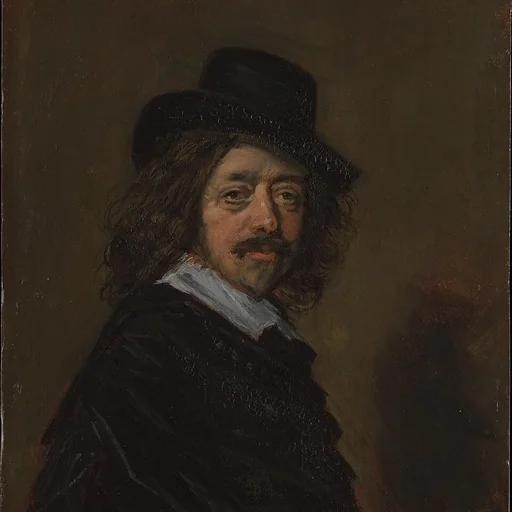
Frans Hals the Elder (UK: US:; Dutch:; c. 1582 – 26 August 1666) was a Dutch Golden Age painter. He lived and worked in Haarlem, a city in which the local authority of the day frowned on religious painting in places of…