Artwork
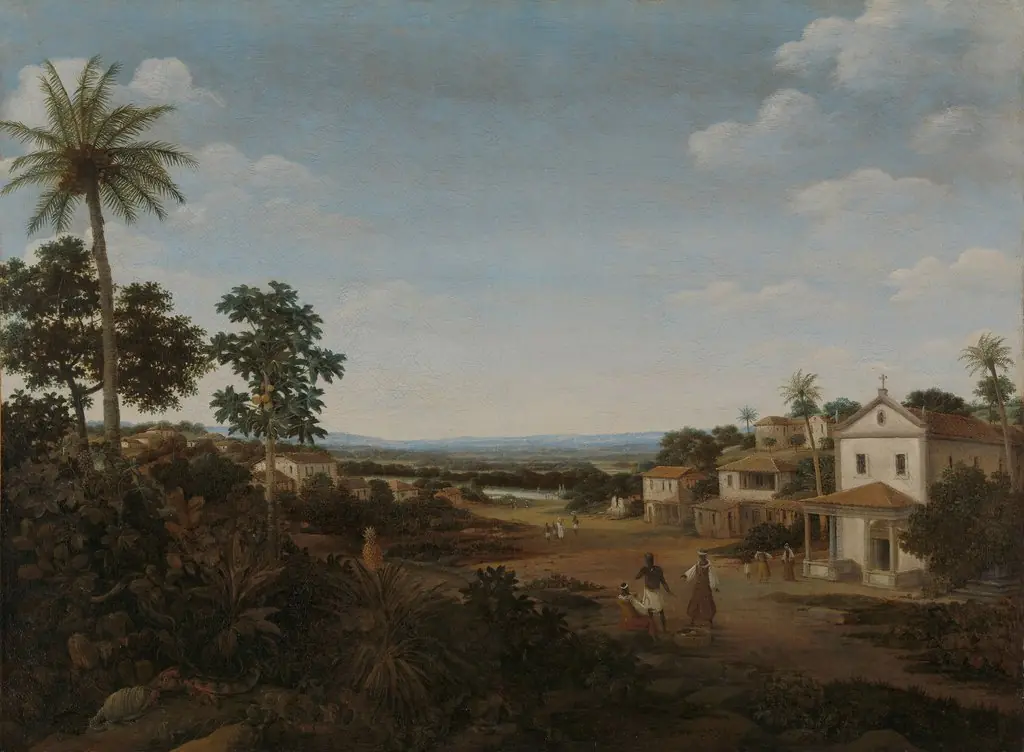
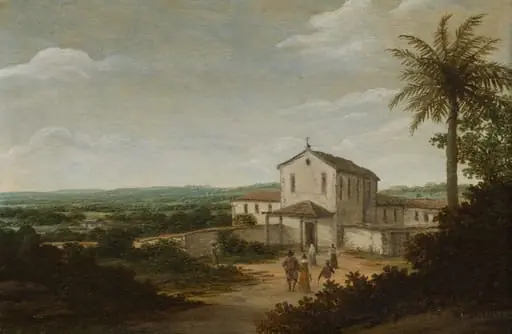
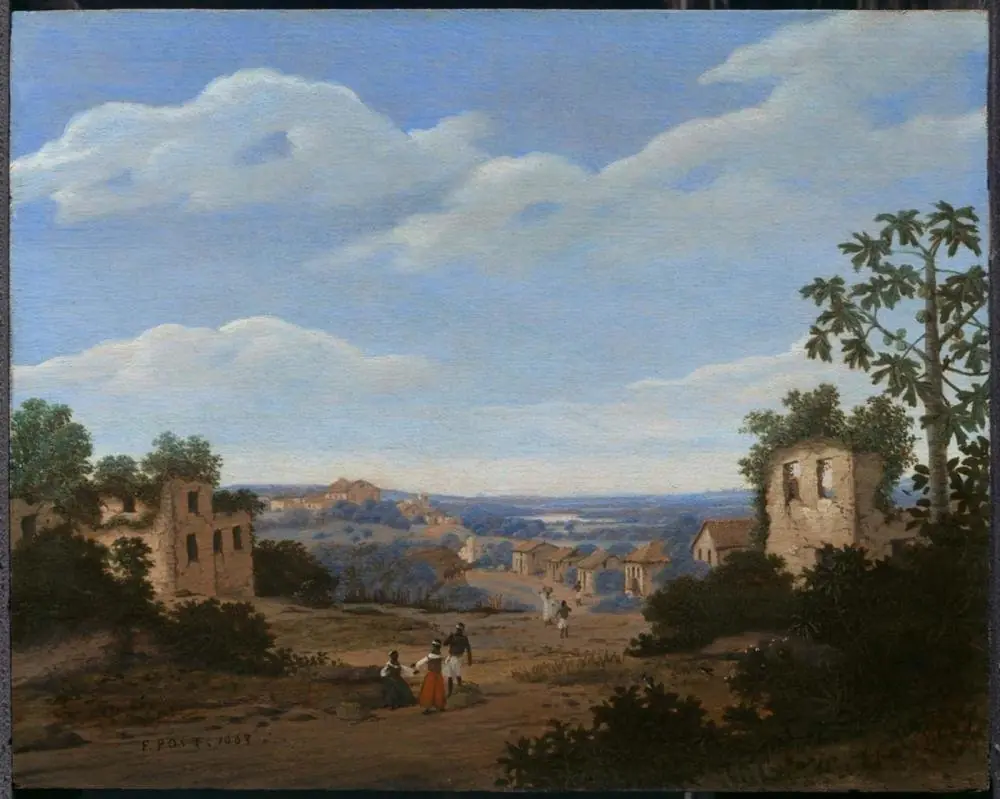
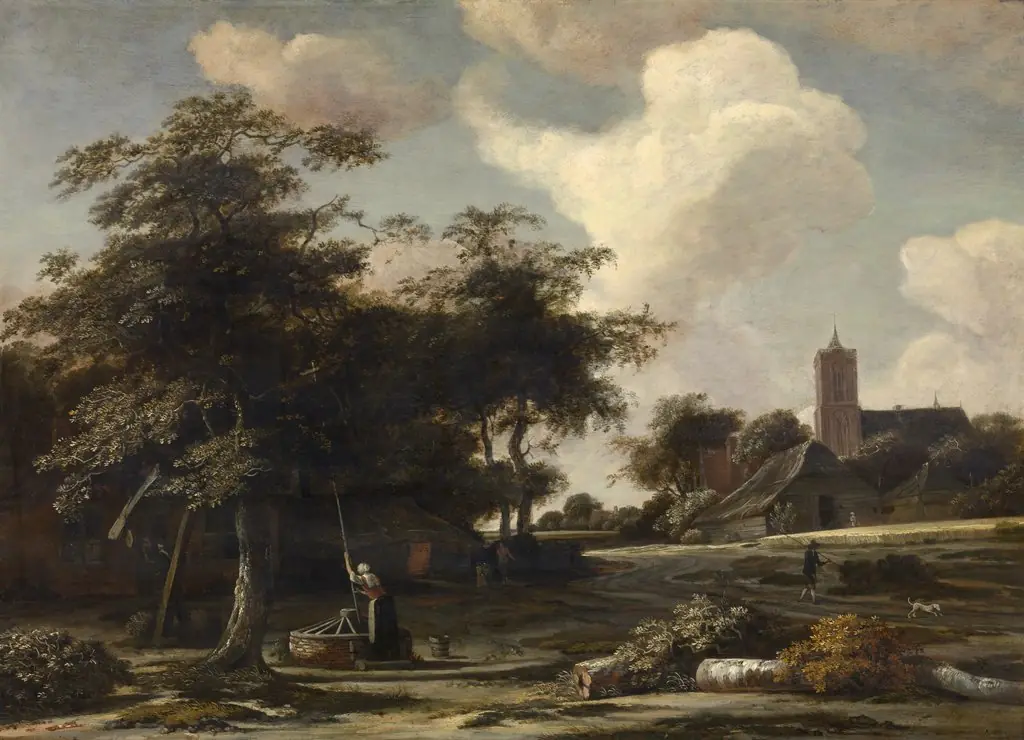
Brazilian landscape with the village of Igaraçú. To the left the church of Sts Cosmas and Damian
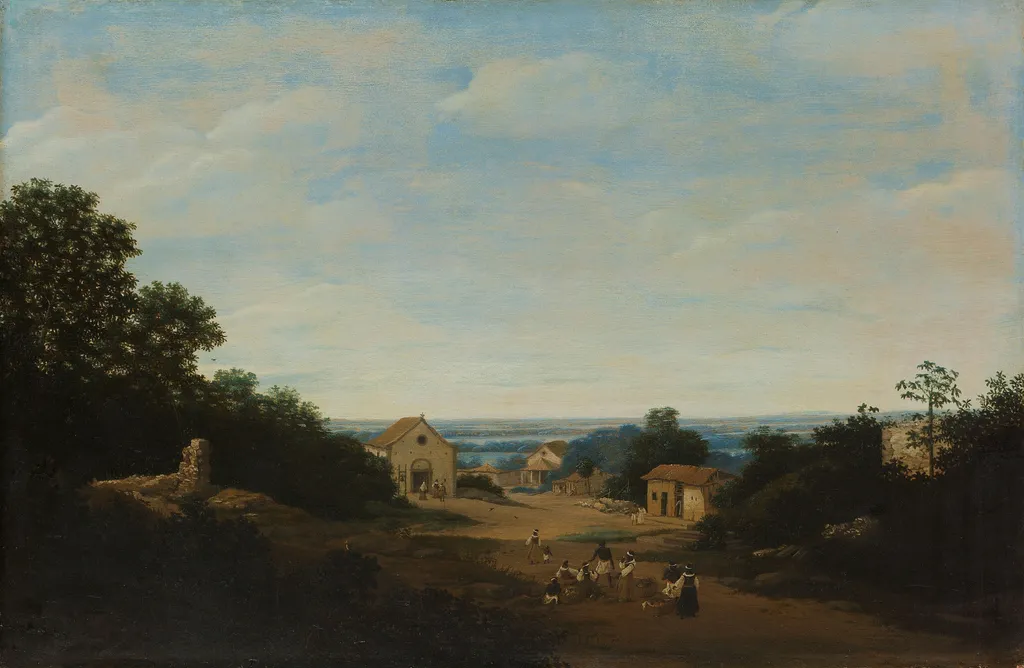
Brazilian landscape with the village of Igaraçú. To the left the church of Sts Cosmas and Damian is an oil painting by the Dutch Golden Age artist Frans Post. It dates from 1659 and is held in the collection of the Rijksmuseum.
About this work
Technique & Style
The work is executed in oil paint on panel, a support typical of seventeenth-century Dutch cabinet pictures and well suited to the crisp, miniaturist detail that characterizes Frans Post's Brazilian views. The painting measures 40 by 61 centimeters, an intimate horizontal format that allows a panoramic sweep of the village of Igaraçú while reserving space for the church of Sts Cosmas and Damian on the left.
Stylistically, the composition follows Post's established approach to New World landscapes: a low horizon, atmospheric blue-green distance, and carefully observed local architecture and figures rendered with the precise, even handling of a Dutch-trained artist working in oil on a smooth wooden ground.
History & Provenance
It was commissioned as part of his series of Brazilian landscapes produced during his stay in Dutch Brazil.
The work titled Brazilian landscape with the village of Igaraçú. To the left the church of Sts Cosmas and Damian was created by Frans Post in 1659 as an oil painting. It was commissioned as part of his series of Brazilian landscapes produced during his stay in Dutch Brazil.
The painting entered the collection of the Rijksmuseum, where it remains in the museum's holdings. Its dimensions are 40 cm by 61 cm.
Overview
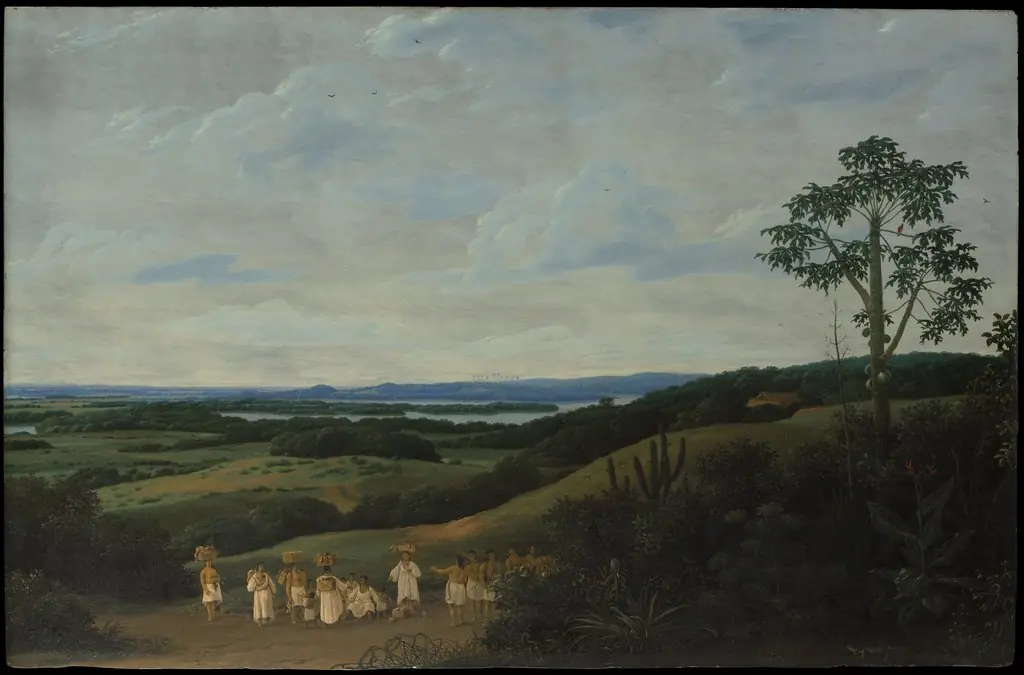
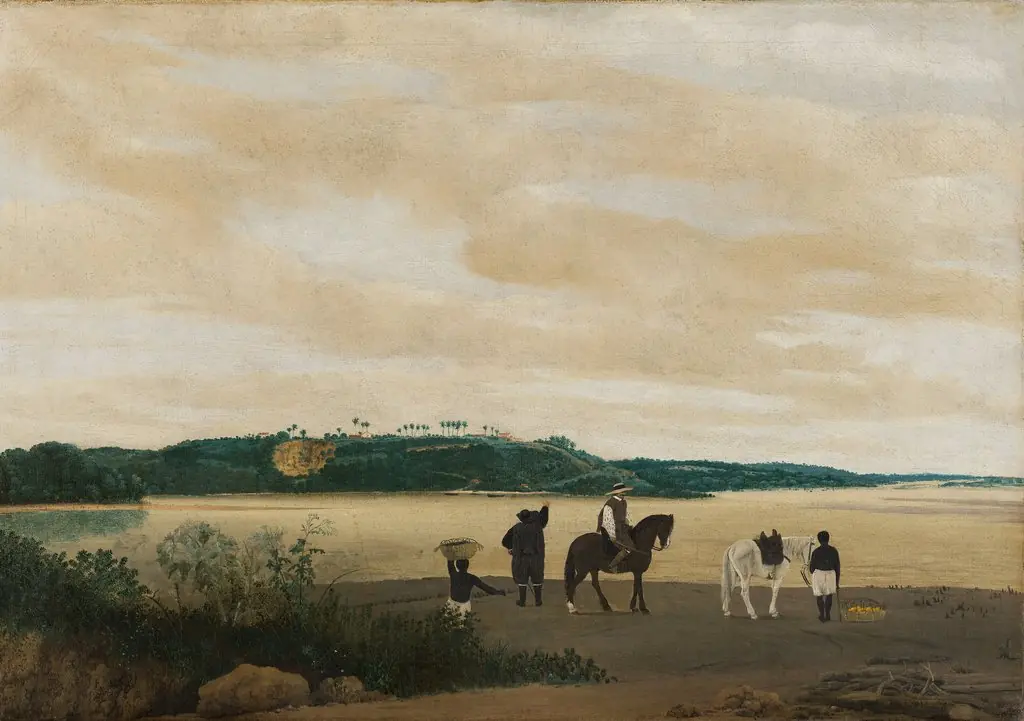
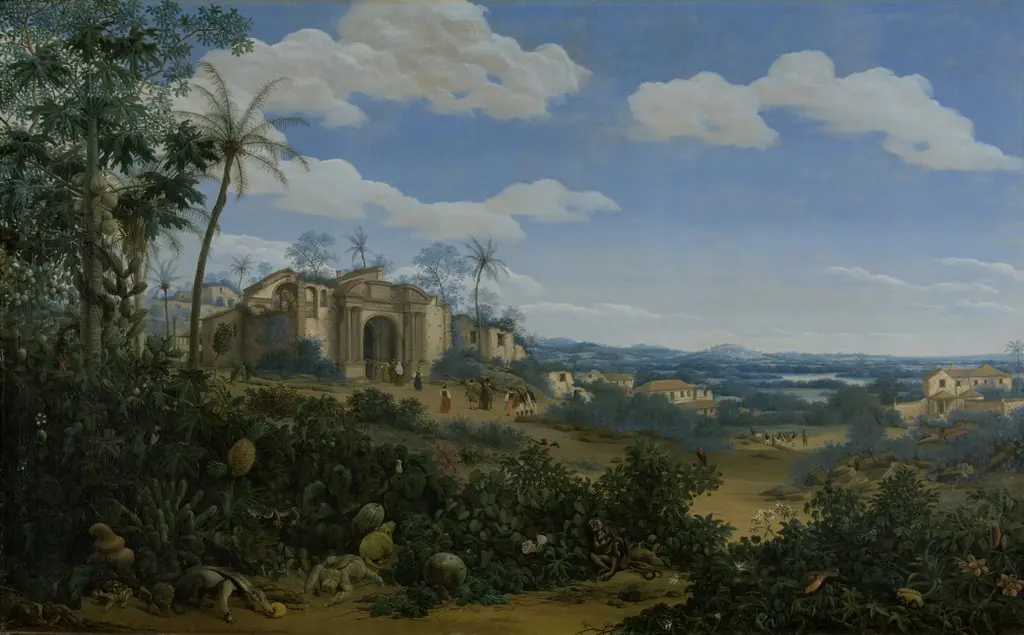
Frans Post’s 1659 oil on canvas presents a tranquil settlement on the banks of a river in Brazil. A modest church occupies the central left, flanked by low, thatched dwellings and a handful of figures attending to daily tasks. The surrounding foliage and a pale sky with soft clouds lend the scene a calm, almost timeless atmosphere.
Subject & Meaning
The composition depicts the village of Igaraçú, highlighting the modest church of Saints Cosmas and Damian as a focal point of communal life. The scattered inhabitants and livestock suggest a peaceful, agrarian routine, while the gentle lighting underscores an idealized vision of colonial settlement rather than a strict documentary record.
Context
The painting belongs to a series of landscapes produced by Post after his Brazilian sojourn, intended for a European audience fascinated by the New World. By portraying a serene, orderly settlement, the work reinforces contemporary narratives of Dutch colonial enterprise and the perceived harmony between settlers and the tropical environment.
Own this work as a print
Artist & collection
Artist
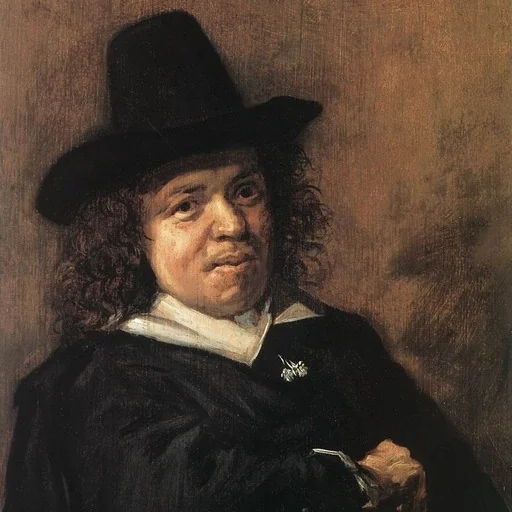
Frans Janszoon Post (17 November 1612 – 17 February 1680) was a painter during the Dutch Golden Age.