Artwork
St Matthew the Evangelist
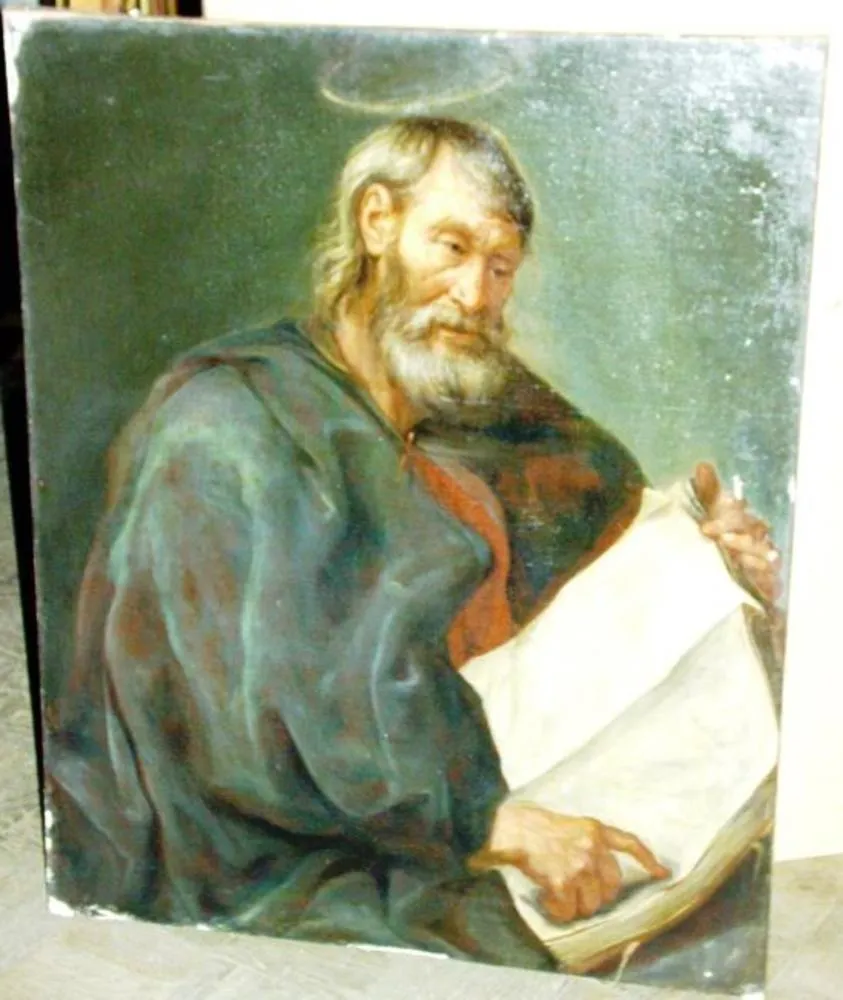
St Matthew the Evangelist is an oil painting by the Rococo painting artist Georg Gsell. It dates from 1729 and is held in the collection of the Hermitage Museum.
About this work
Overview
The painting portrays the apostle and evangelist Matthew, focusing on his role as the traditional author of the first gospel.
St Matthew the Evangelist is a religious painting created by the Swiss-born artist Georg Gsell in 1729. Executed in oil paint on canvas, the work was produced in Russia and is currently held in the Hermitage Museum. The painting portrays the apostle and evangelist Matthew, focusing on his role as the traditional author of the first gospel. It stands as a significant example of early eighteenth-century Russian ecclesiastical painting and reflects the Western European artistic traditions imported to the Russian court under Peter the Great.
Subject & Meaning
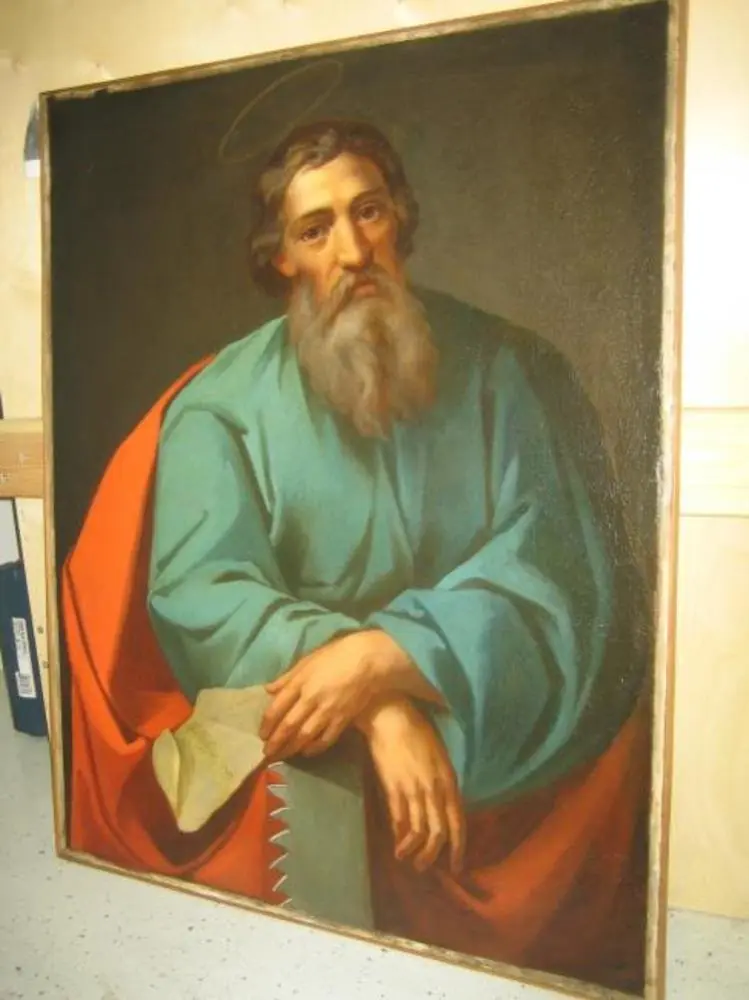
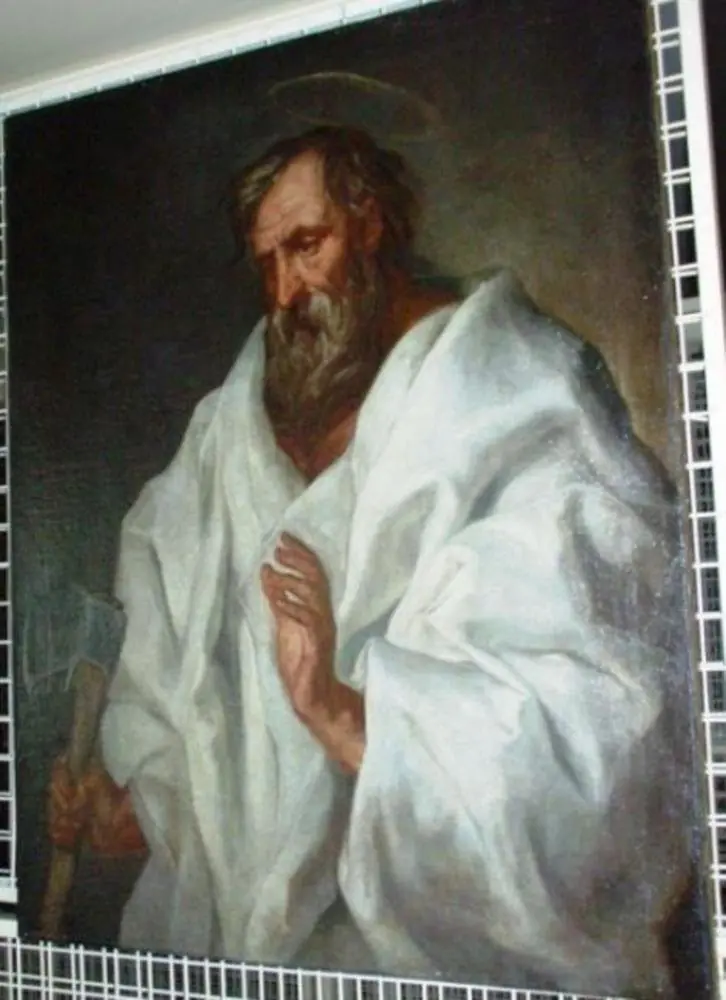
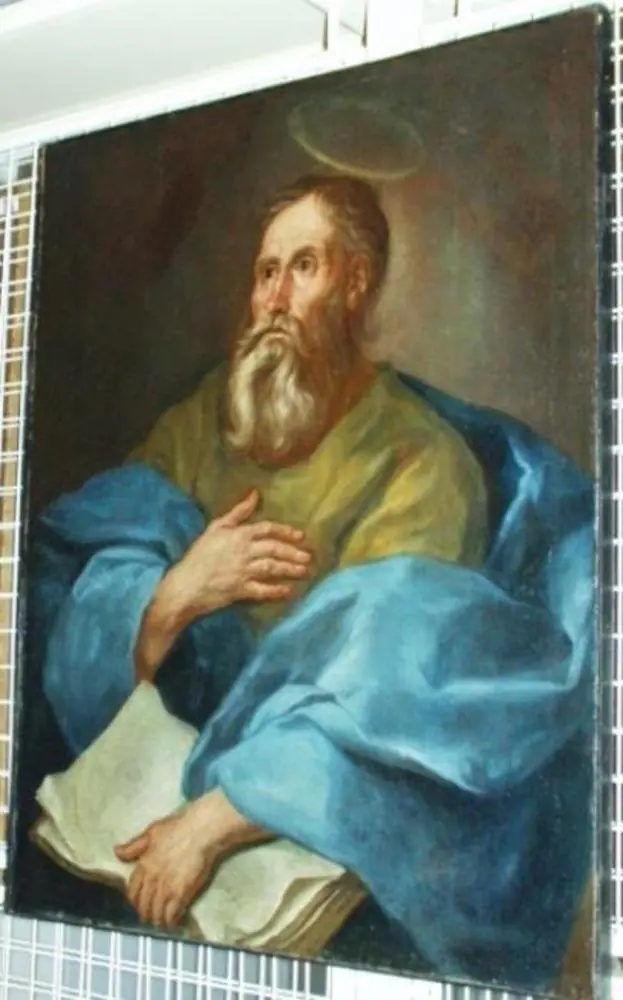
The artwork depicts the apostle Matthew, one of the twelve disciples of Jesus and the traditional author of the Gospel of Matthew. Christian iconography frequently associates Matthew with an angel, his specific symbol among the four evangelists, or with a book representing his gospel. In Gsell's interpretation, the angel is absent, and the emphasis rests entirely on the apostle's scholarly and divine inspiration. The bearded saint turns three quarters toward the right, his gaze directed downward toward an open codex held in his left hand, while his right hand points to the text. This gesture underscores his role as an evangelist and disseminator of Christian scripture, connecting the visual representation to his identity as a compiler of the Lord's words.
Technique & Style
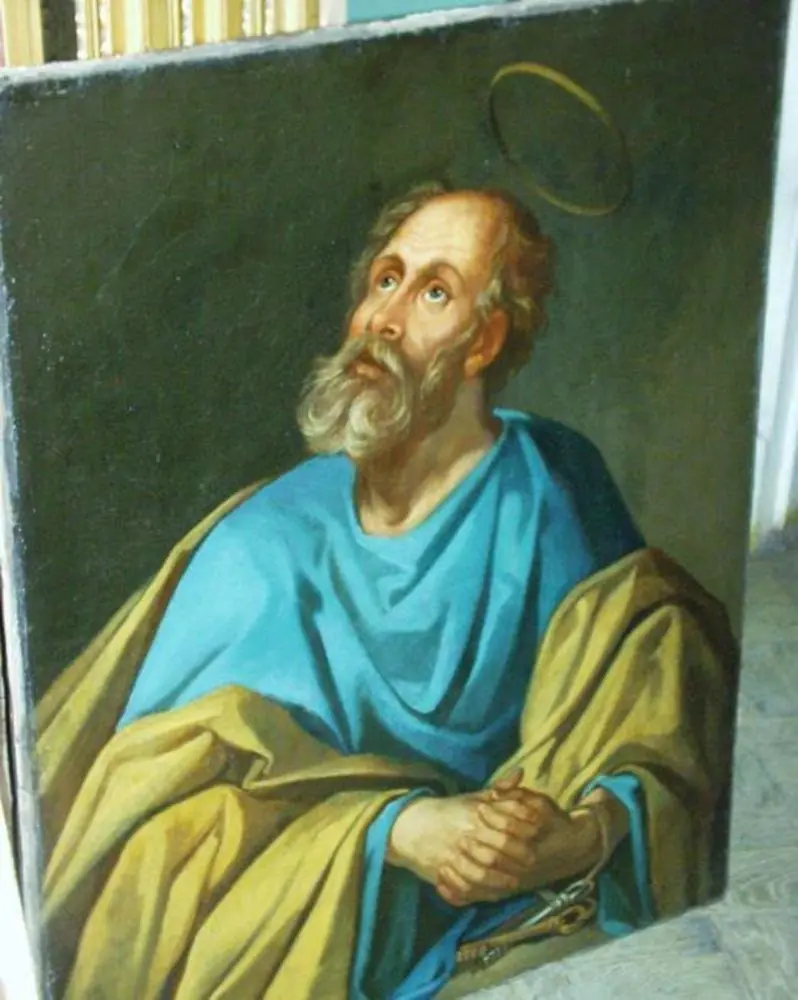
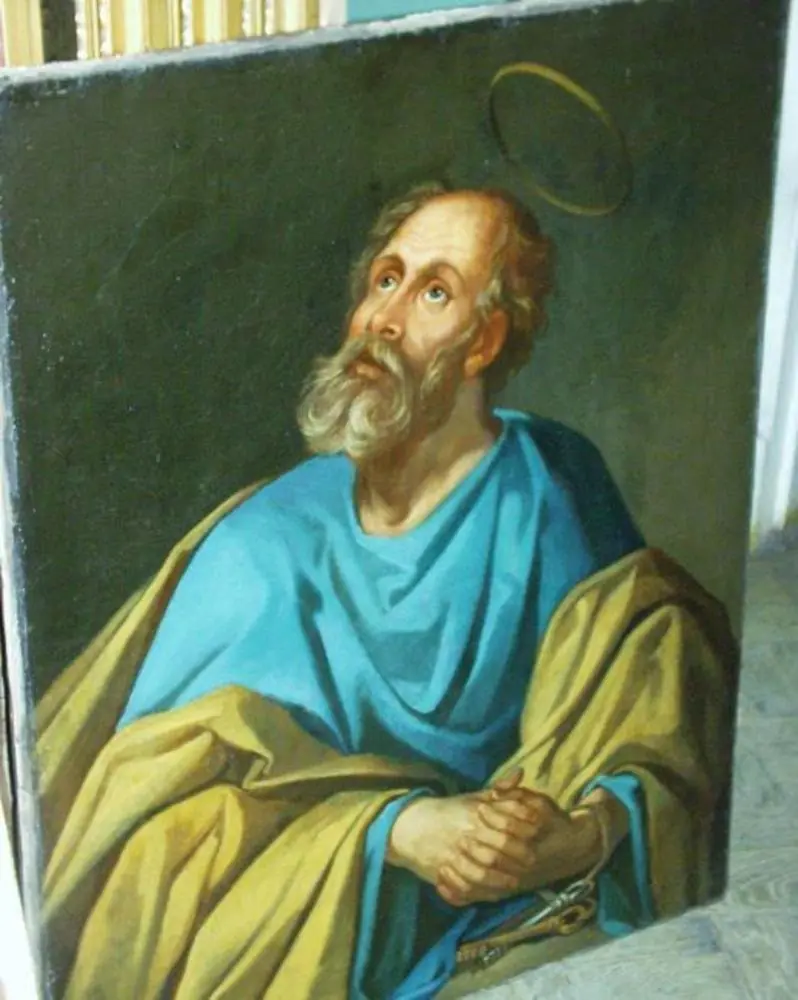
Gsell employed oil paint on canvas to render the figure with a polished finish and careful attention to anatomical detail. The composition is dominated by a restrained palette of deep blues, greens, and warm browns, with the stark white pages of the open book providing a sharp contrast. The saint wears a dark blue-green mantle over a reddish undergarment, and a thin golden halo hovers above his head. Light falls from the upper left, modeling the face, hands, and the folds of the drapery. The brushwork is smooth, allowing for soft transitions particularly visible in the flesh tones and fabric. The background consists of a flat, muted green with no discernible details, isolating the figure and emphasizing his contemplative state. The surface shows some wear and minor abrasions along the edges.
History & Provenance
Georg Gsell created the painting in 1729 during his tenure in Russia. This work was part of a commission of thirteen paintings for the Lutheran Church of Saint Peter on Nevsky Prospect in St. Petersburg, which included knee-high images of the apostles and gospel writers alongside a depiction of the Crucifixion. The painting eventually entered the imperial collections, and Gsell himself helped compile inventories of the painting collections at Peterhof Palaces, including the Hermitage, in 1738 and 1739. Today, the painting remains in the Hermitage Museum in St. Petersburg, Russia.
Context
Georg Gsell was a Swiss painter born in St. Gallen in 1673 who studied in Vienna under the Antwerp painter A. Schoonjans before moving to Amsterdam. In 1717, he relocated to Russia at the invitation of Peter the Great, whom he had met in the Netherlands. Gsell became a central figure in the early Russian Academy of Sciences, teaching drawing and painting there starting in 1726. His contributions to Russian art extended beyond easel paintings to include plafonds at the Summer Palace, icons and dome pictures for the Peter and Paul Cathedral, and decorative projects for the Kunstkamera and triumphal gates. His work on the Lutheran Church of Saint Peter, which included St Matthew the Evangelist, reflects the integration of Western European baroque and religious painting traditions into the Russian imperial capital during the early eighteenth century.
Legacy
The commission of thirteen works for the Lutheran Church of Saint Peter represents a specific phase in Gsell's output, bridging his secular court duties and his ecclesiastical commissions. While the broader cultural legacy of Matthew the Evangelist as a subject spans centuries of Christian art, from early Carolingian manuscripts to Renaissance masterpieces, Gsell's painting contributes to this tradition by adapting the iconography to the formal, polished aesthetics of eighteenth-century European painting practiced in the Russian court. The work remains a part of the Hermitage Museum's holdings, preserving the record of the Western artistic influence fostered by Peter the Great's cultural programs.
Artist & collection
Artist
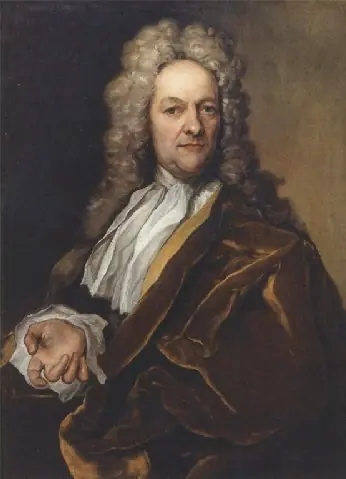
Georg Gsell (Russian: Георг Гзелль; 28 January 1673 – 22 November 1740) was a Swiss Baroque painter, art consultant and art dealer.