Artwork
Splinter Beach
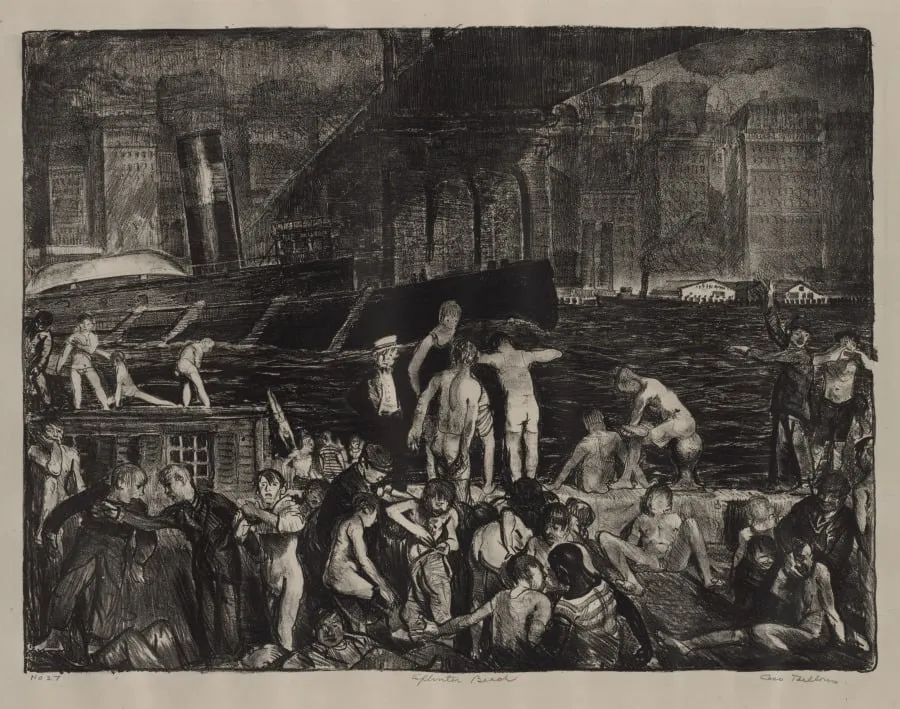
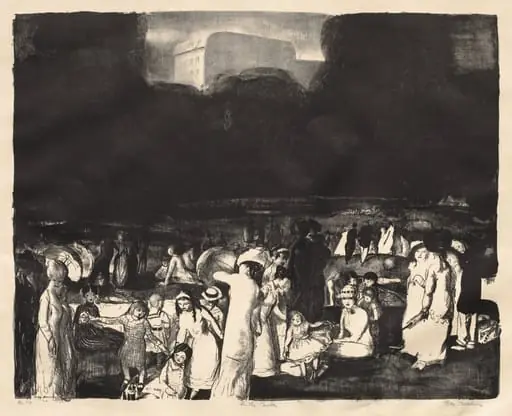
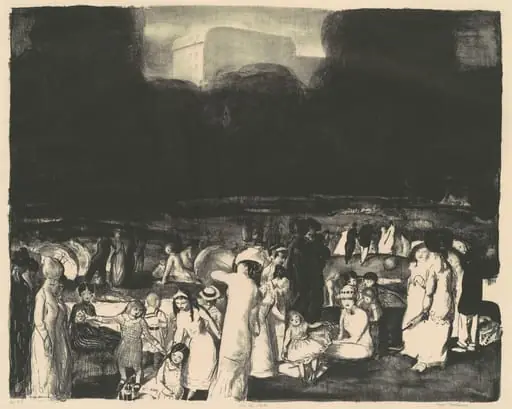
Splinter Beach is a print by George Bellows. It dates from 1916 and is held in the collection of the Cleveland Museum of Art.
- Accession no.
- 1936.582
- Credit line
- Gift of Leonard C. Hanna Jr.
About this work
Overview
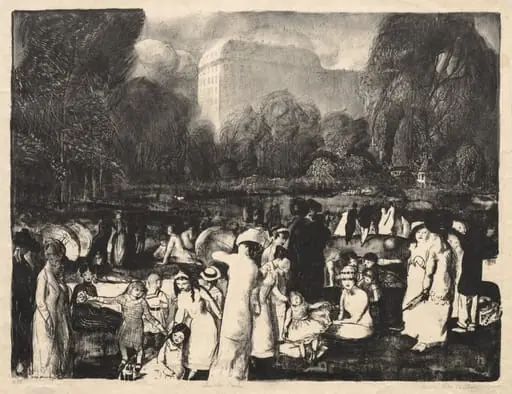
Splinter Beach is a print by George Bellows depicting children playing on a dilapidated dock along the East River in New York City.
Subject & Meaning
The work shows children from tenement districts recreating on a makeshift beach, their nakedness and the presence of fully clothed adults creating a complex scene that touches on themes of innocence and societal issues.
Technique & Style
Bellows's representation is characterized by a straightforward, unsentimental portrayal of urban life, focusing on the play of light on the scene rather than moralizing or idealizing it.
Context
The image is part of a series of works by Bellows that explore the lives of the urban poor in early 20th-century New York, reflecting contemporary social concerns and the gritty reality of city life.
Artist & collection

Artist
George Wesley Bellows (August 12 or August 19, 1882 – January 8, 1925) was an American realist painter, known for his bold depictions of urban life in New York City.