Artwork
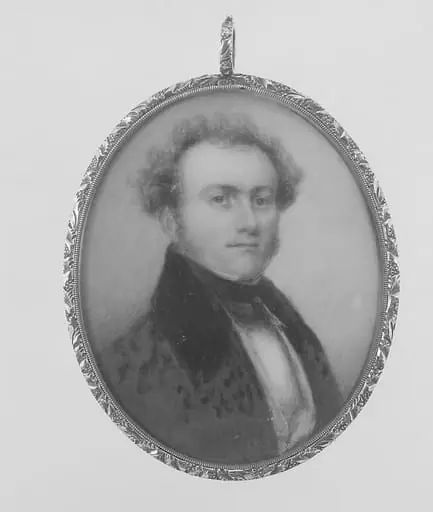
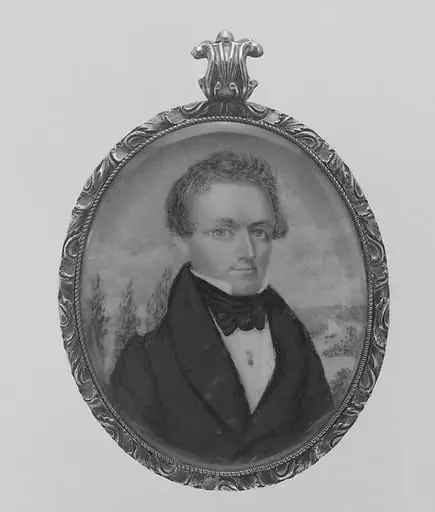
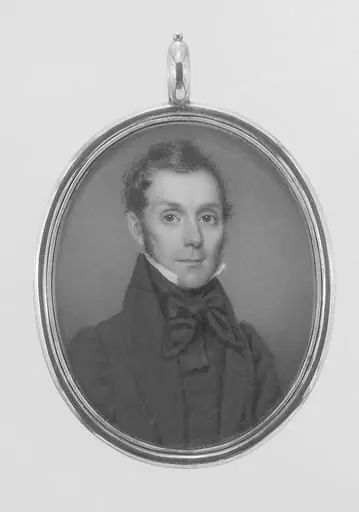
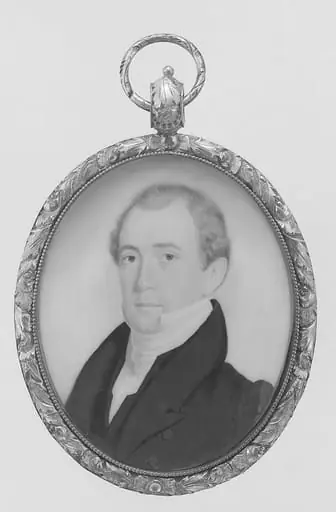
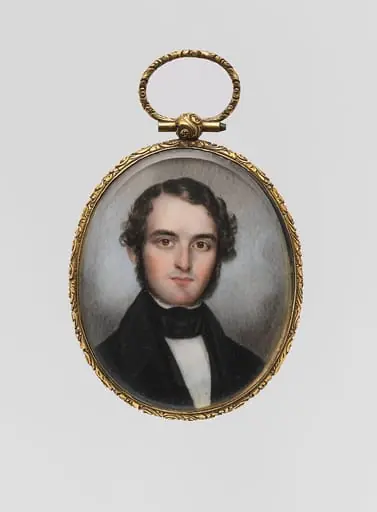
Portrait of a Gentleman
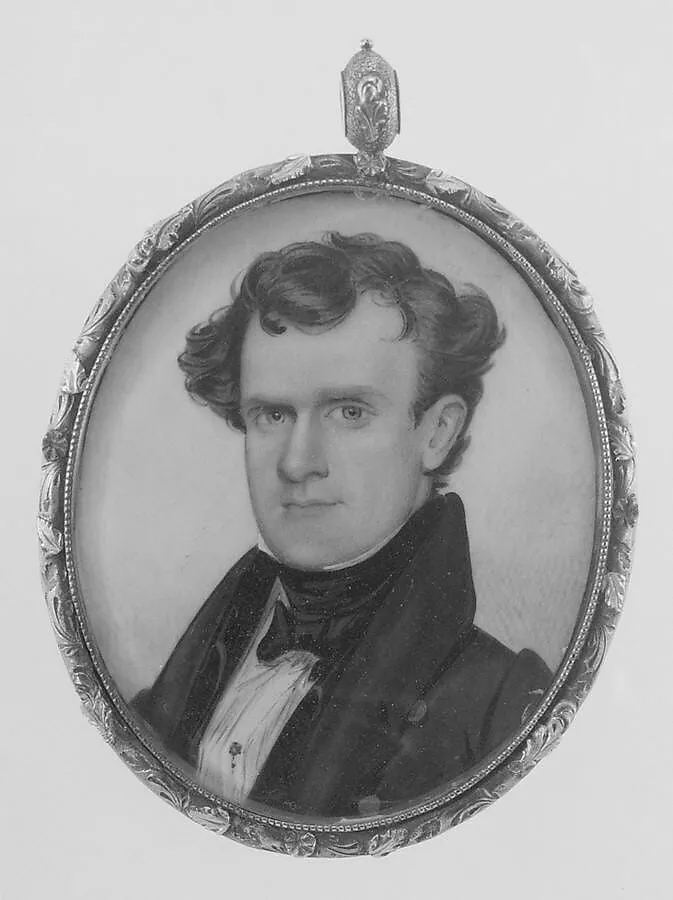
Portrait of a Gentleman is a watercolor painting by the American Folk Art artist George Catlin. It dates from 1835 and is held in the collection of the Metropolitan Museum of Art.
About this work
Technique & Style
The combination of ivory, watercolor, and hairwork reflects the standard material vocabulary of American and British miniature practice in the 1830s.
The work is executed in watercolor on ivory, a miniature format suited to its presentation within a gilded copper locket. The verso of the ivory support retains a hair reserve, a feature typical of early nineteenth-century keepsake portraiture in which a lock of the sitter's hair was incorporated into the reverse of the miniature as a sentimental memento. The small dimensions of the support, recorded at approximately 6.5 by 5.4 centimeters, dictated an extremely fine handling of the brush, with delicate watercolor washes laid over the smooth, luminous ivory ground to model the sitter's features.
The gilded copper locket functions as both protective housing and decorative frame, elevating the intimate portrait into a wearable object. The combination of ivory, watercolor, and hairwork reflects the standard material vocabulary of American and British miniature practice in the 1830s.
History & Provenance
George Catlin created this miniature portrait in 1835 in watercolor on ivory, set within a gilded copper locket with a hair reserve on the verso. Measuring approximately 6.5 by 5.4 cm, the work depicts a male sitter. It is held in the collection of the Metropolitan Museum of Art, New York, classified within The American Wing under accession number 2006.235.28, having been acquired in 2006. No earlier private ownership chain or commissioning patron is recorded in the available sources.
Overview
George Catlin, primarily recognized for his extensive documentation of Native American cultures in the American West during the 1830s, also produced more conventional portraiture. This miniature, titled Portrait of a Gentleman, was created around 1835. Rendered in watercolor on a small ivory support, it is housed within a gilded copper locket, reflecting a common form of personal art during the period. The reverse side contains a lock of hair, further emphasizing its intimate nature.
Subject & Meaning
Unlike the ethnographic portraits for which Catlin gained renown, this work depicts an unidentified man, presented in a dark coat with a softly illuminated face. The miniature format, combined with the inclusion of a hair reserve on the locket's reverse, suggests a deeply personal function. Such keepsakes were prevalent in the 19th century, offering a tangible connection to a loved one and imbuing the artwork with a private, memorial quality.
Context
While George Catlin is celebrated for his ambitious project to record the lives and likenesses of Indigenous peoples, this portrait demonstrates his engagement with other forms of artistic practice. Created during the same decade as his Western expeditions, Portrait of a Gentleman serves as a reminder that Catlin's output included commissions and personal works outside his major ethnographic endeavors, showcasing his versatility as a portraitist.
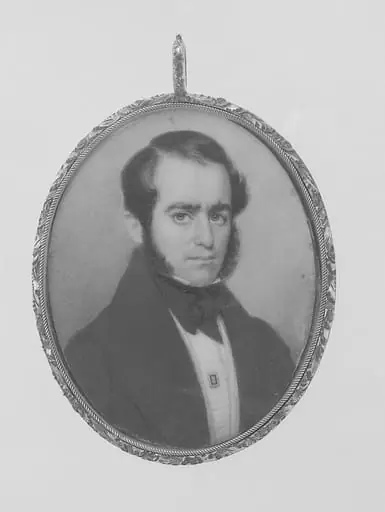
Artist & collection

Artist
George Catlin ( KAT-lin; July 26, 1796 – December 23, 1872) was an American lawyer, painter, author, and traveler, who specialized in portraits of Native Americans in the American frontier.

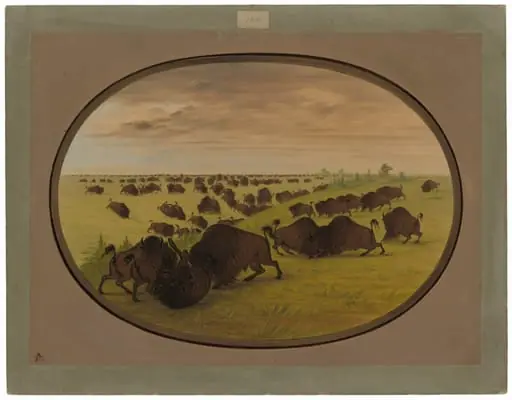 Bulls Fighting
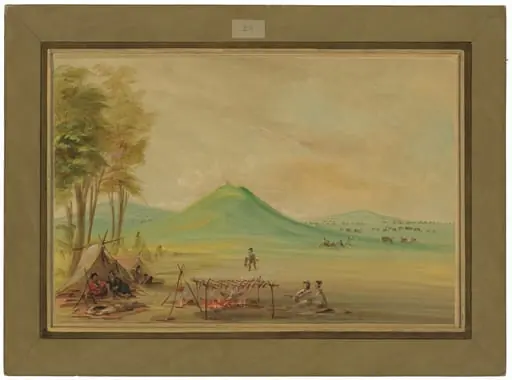 Expedition Encamped on a Texas Prairie. April 1686
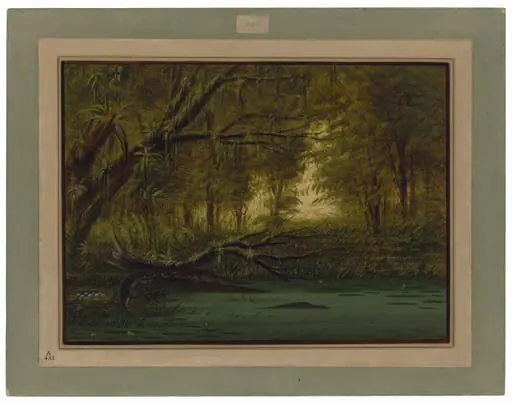 An Alligator's Nest
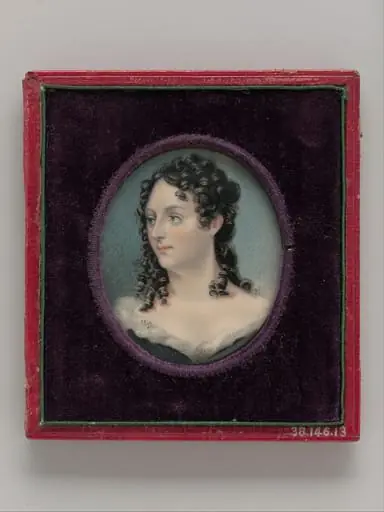 Mrs. George Catlin (Clara Bartlet Gregory)
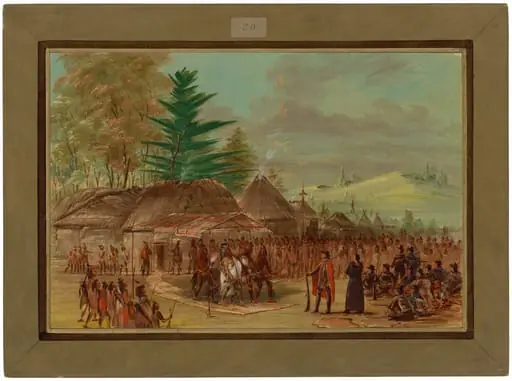 Chief of the Taensa Indians Receiving La Salle. March 20, 1682
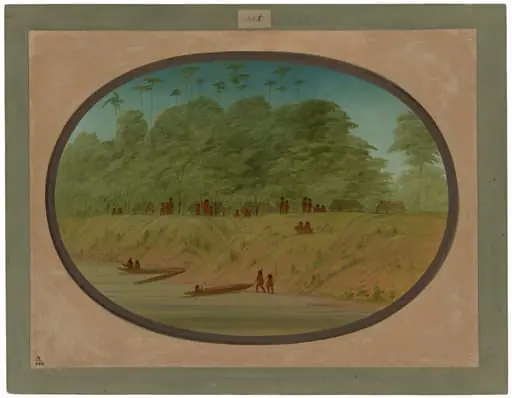 A Small Village - Payaguas Indians
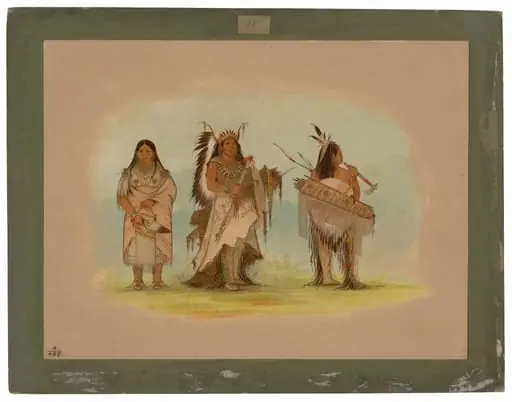 Omaha Chief, His Wife, and a Warrior
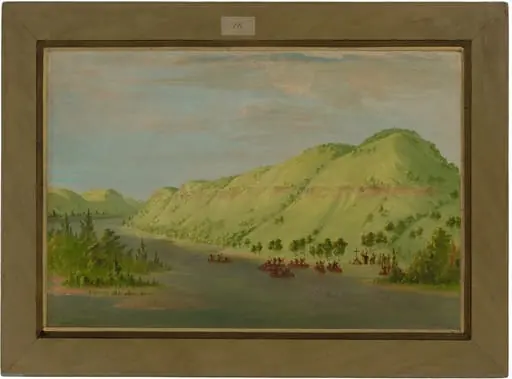 Father Hennepin Leaving the Mississippi to Join La Salle. May 8, 1680