Artwork
Durham, Connecticut
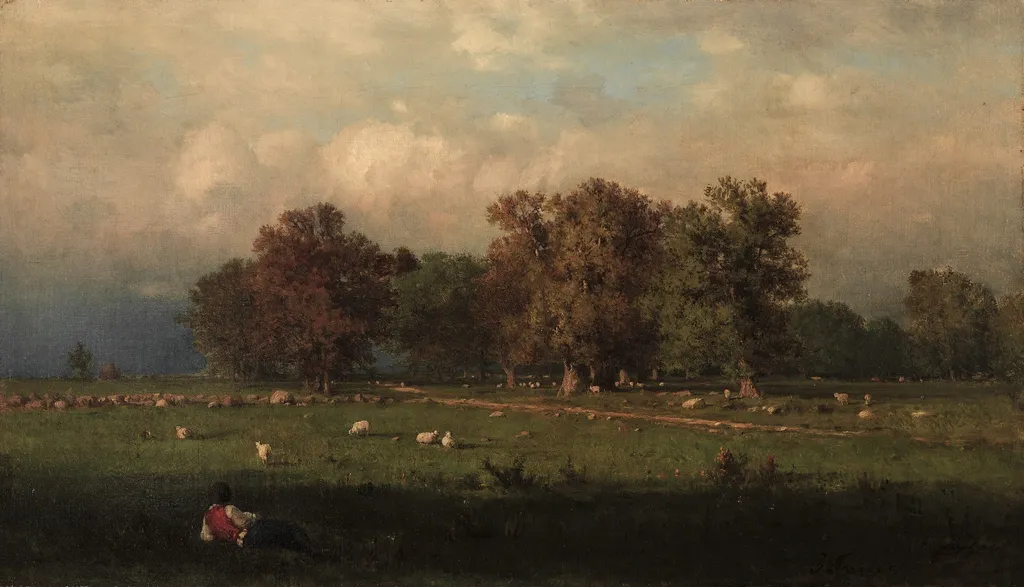
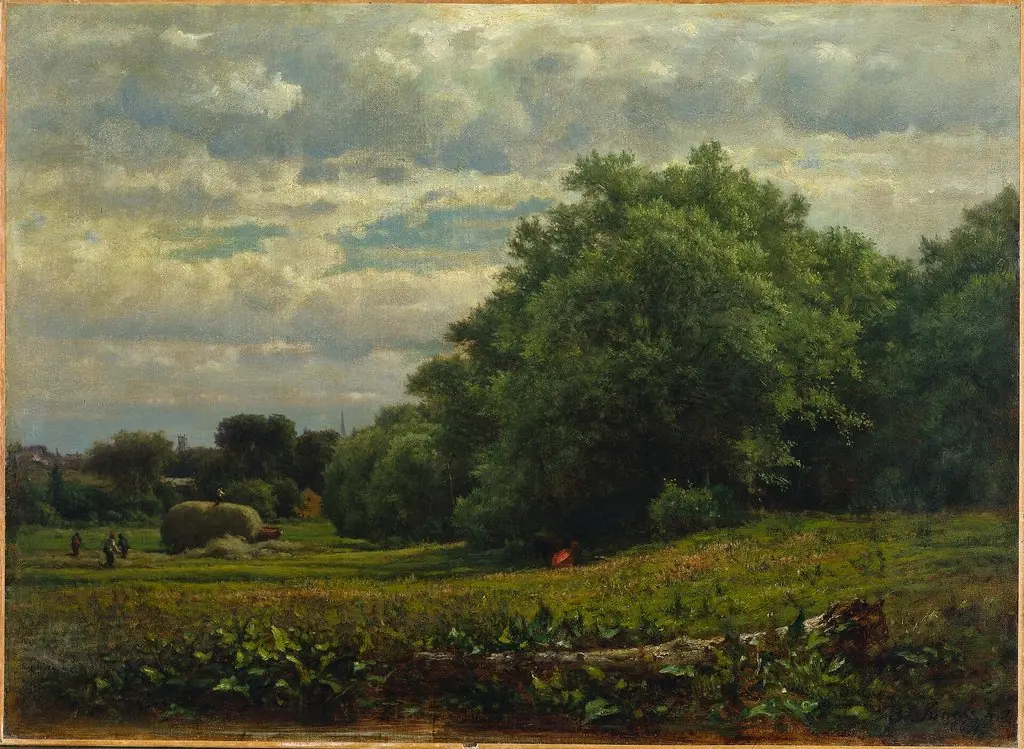
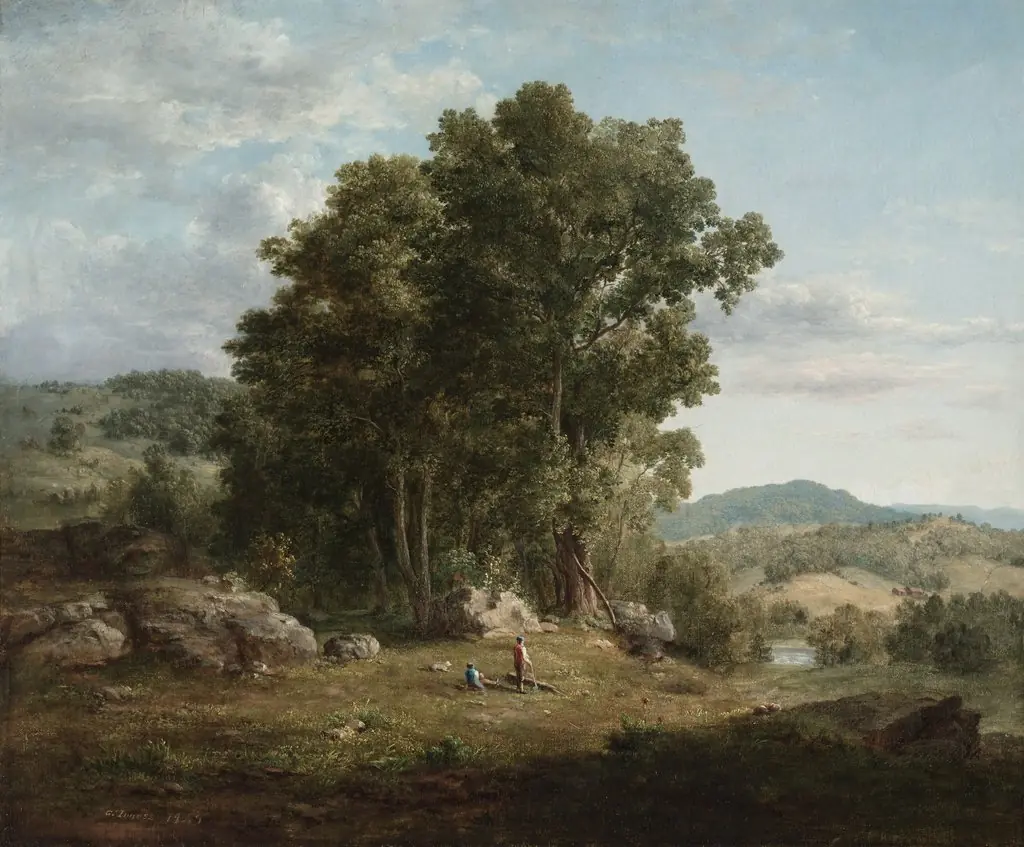
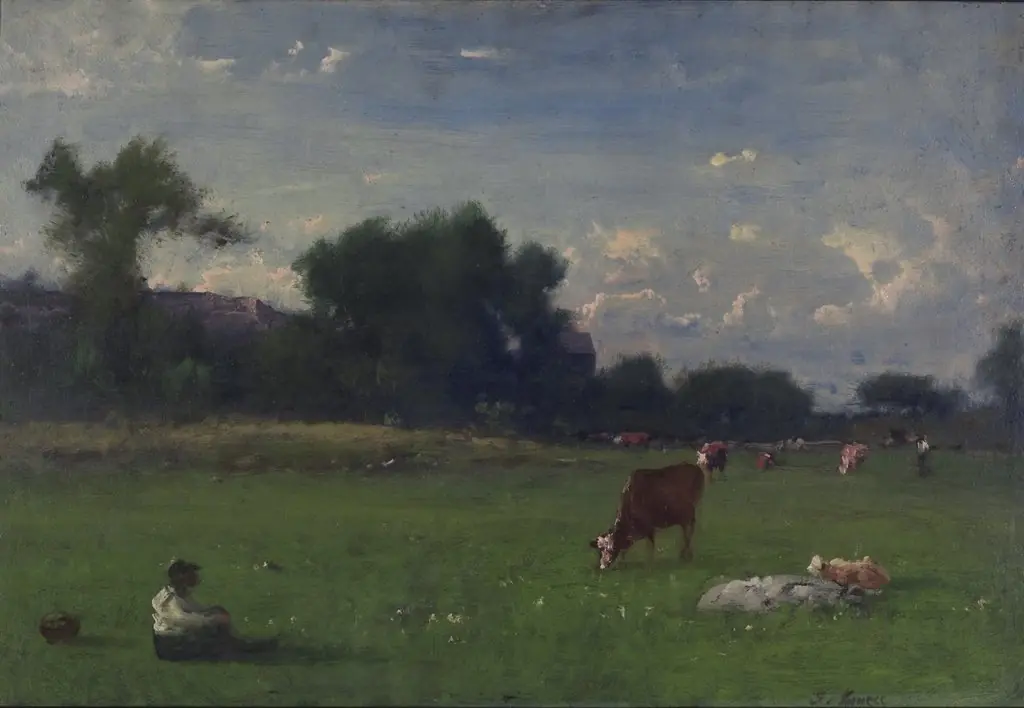
Durham, Connecticut is an oil painting by the Hudson River School artist George Inness. It dates from 1858 and is held in the collection of the Cleveland Museum of Art.
About this work
Technique & Style
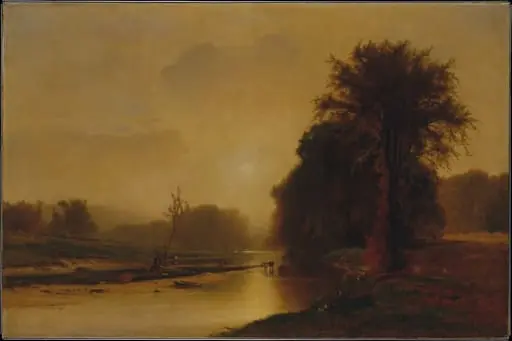
Executed in oil paint, the piece exemplifies the mid‑nineteenth‑century American landscape genre, featuring a solitary tree set within a modest terrain.
Durham, Connecticut is an oil painting on canvas created in 1858 by American artist George Inness. The work measures roughly 39.3 centimeters in height by 67.3 centimeters in width and was produced in the United States. Executed in oil paint, the piece exemplifies the mid‑nineteenth‑century American landscape genre, featuring a solitary tree set within a modest terrain.
Its formal composition balances atmospheric light with a restrained palette, reflecting Inness’s early style before his later tonal experiments. The painting is part of the Cleveland Museum of Art’s collection, where it is catalogued under its original title and date.
History & Provenance
The painting Durham, Connecticut by George Inness was created in 1858, as indicated by both the artist’s inscription and internal records.
It entered the collection of the Cleveland Museum of Art in 1927, accessioned as 1927.387. The museum’s records list the work’s medium as oil on canvas and its dimensions as 39.3 × 67.3 cm.
Overview
George Inness completed Durham, Connecticut in 1858, an oil painting that captures a tranquil natural scene. This work represents an early phase in the artist's career, showing his initial engagement with the detailed landscape tradition prevalent in mid-19th-century American art. The painting is part of the collection at The Cleveland Museum of Art.
Subject & Meaning
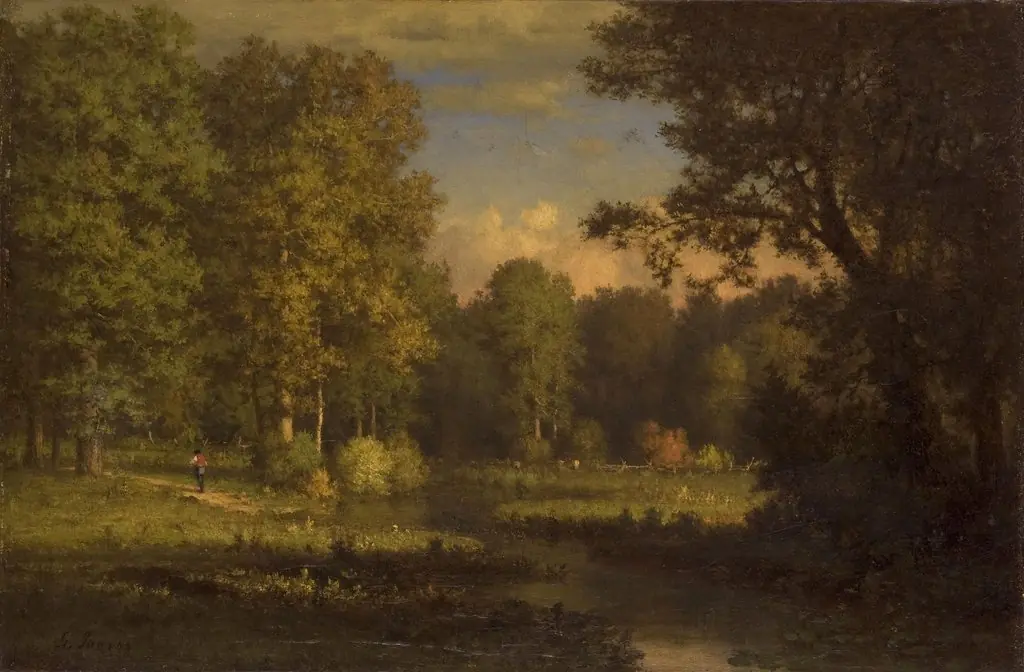
The composition centers on a prominent tree, flanked by smaller vegetation, creating a sense of depth within a serene landscape. In the foreground, a solitary figure, distinguished by a red vest and white shirt, sits on the grass. Above, a cloudy, gray sky is punctuated by glimpses of blue, contributing to the contemplative atmosphere of the scene.
Context
Created when George Inness was 33, Durham, Connecticut exemplifies his early artistic development. It aligns with the aesthetic principles of the Hudson River School, an American movement that emphasized meticulous renderings of the natural world. Inness, who was born in 1825, would later broaden his artistic scope, incorporating influences from European art and spiritual concepts into his landscape painting.
Artist & collection

Artist
George Inness (May 1, 1825 – August 3, 1894) was an American landscape painter. Now recognized as one of the most influential American artists of the nineteenth century, Inness was influenced by the Hudson River School…