Artwork
Geometrical still life I
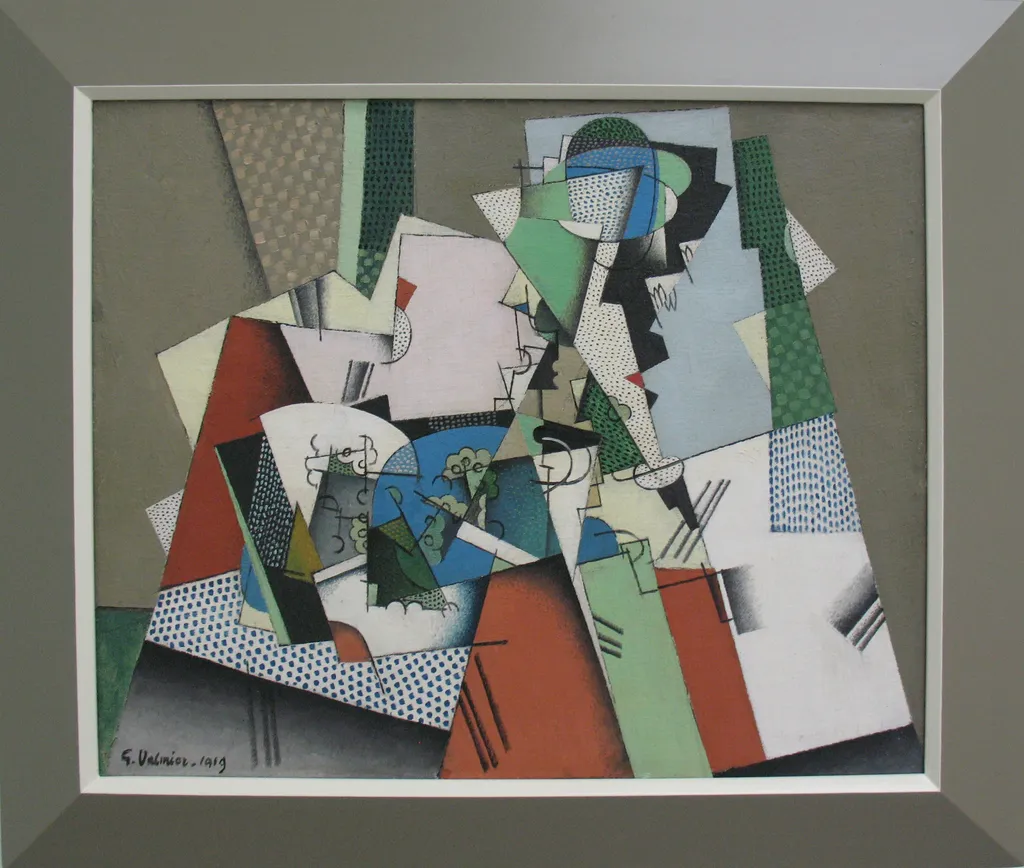
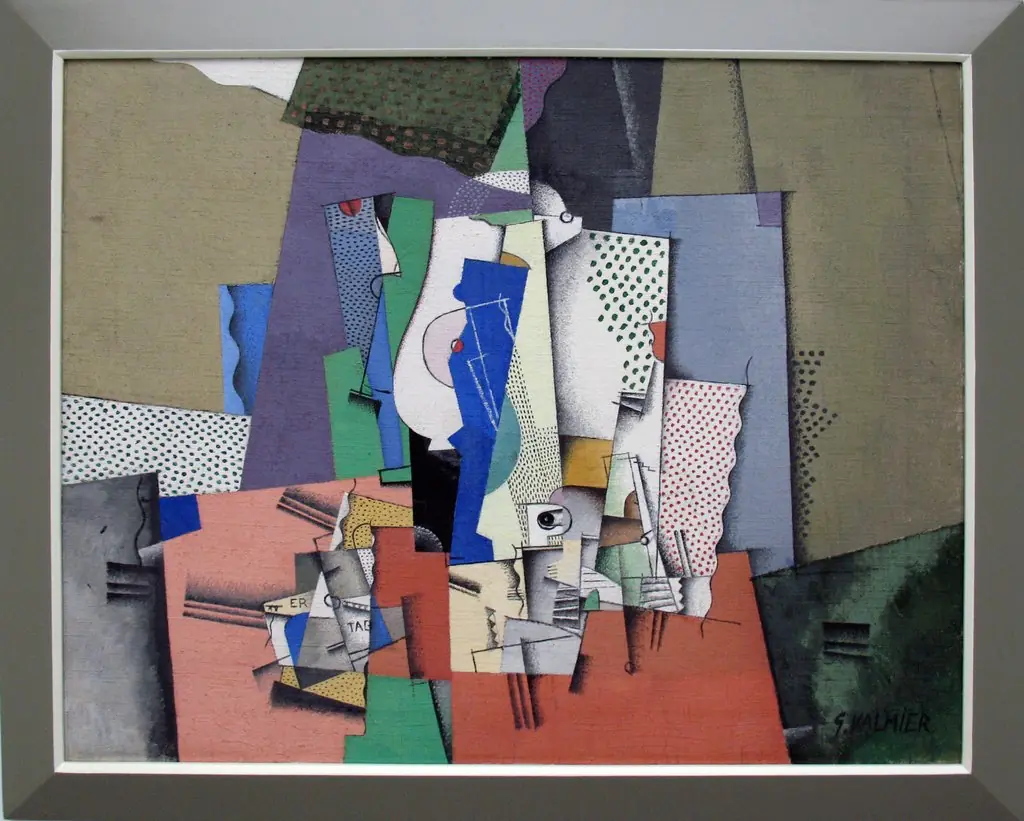
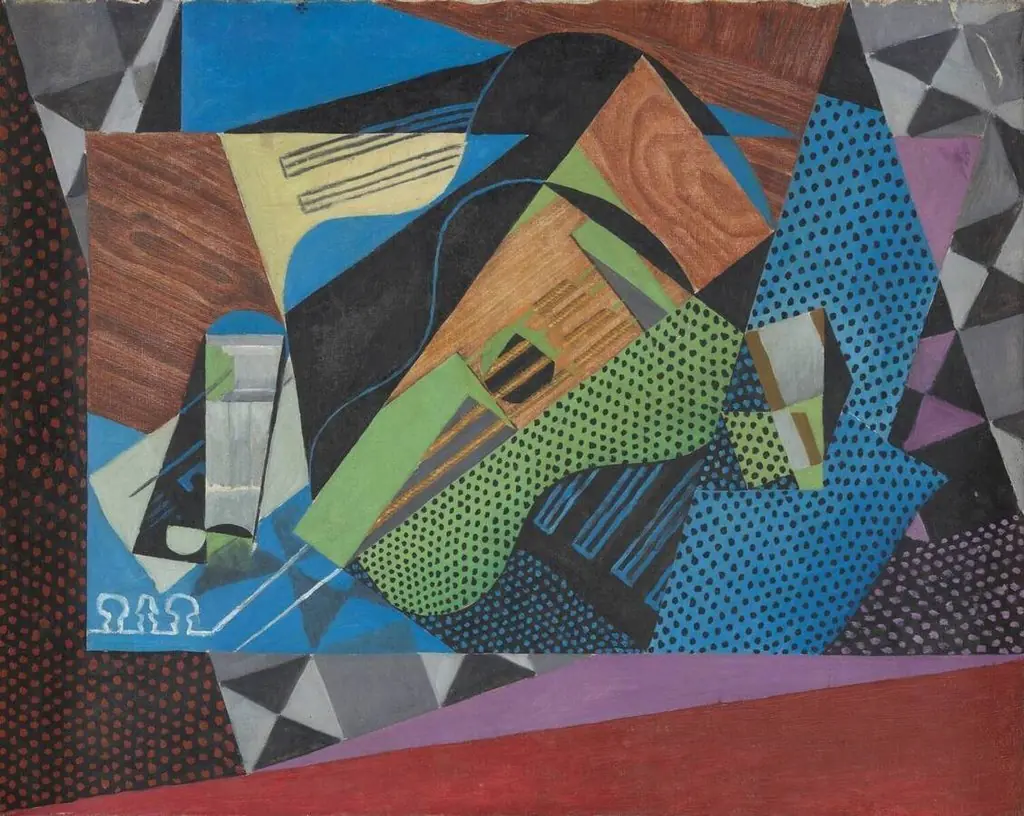
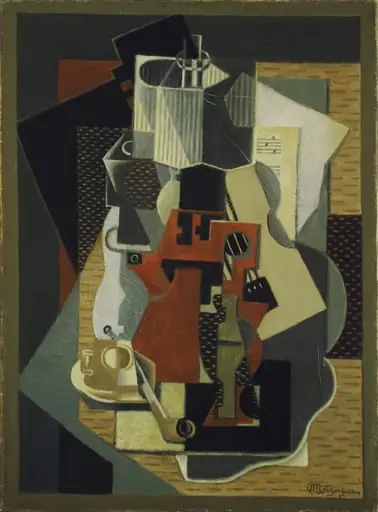
Geometrical still life I is an unspecified painting by the Cubism Synthetic artist Georges Valmier. It dates from 1919 and is held in the collection of the Kröller-Müller Museum.
About this work
Overview
Geometrical still life I is a 1919 painting by Georges Valmier, a French artist known for his work across multiple styles. The painting is part of the Kröller-Müller Museum's collection.
Subject & Meaning
The still life is composed of geometric shapes, including triangles, circles, and rectangles, arranged to convey a sense of movement and energy. Everyday objects are broken down into their constituent forms, reflecting Valmier's Cubist influences.
Technique & Style
The painting features a diverse color palette, with blues, greens, reds, and yellows used alongside patterned shapes. A muted gray-brown background provides contrast to the vibrant forms, showcasing Valmier's synthetic Cubist style.
History & Provenance
Valmier created Geometrical still life I during a period of experimentation with Cubism, which he adopted around 1910. The artist was also engaged in other creative pursuits, including theater and textile design, at this time.
Own this work as a print
Artist & collection
Artist
Georges Valmier (11 April 1885 – 25 March 1937) was a French painter. His work encompassed the great movements in the modern history of painting, starting with Impressionism in his early years, then Cubism which he…