Artwork
Stilleven in geometrische vormen II
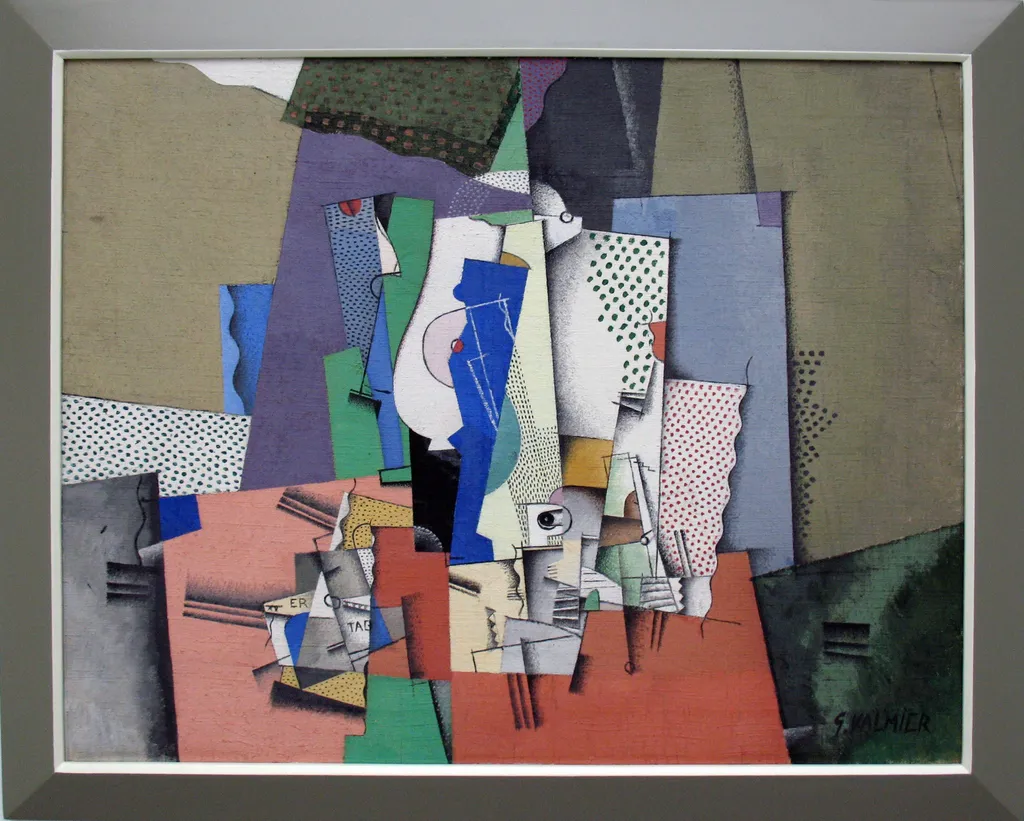
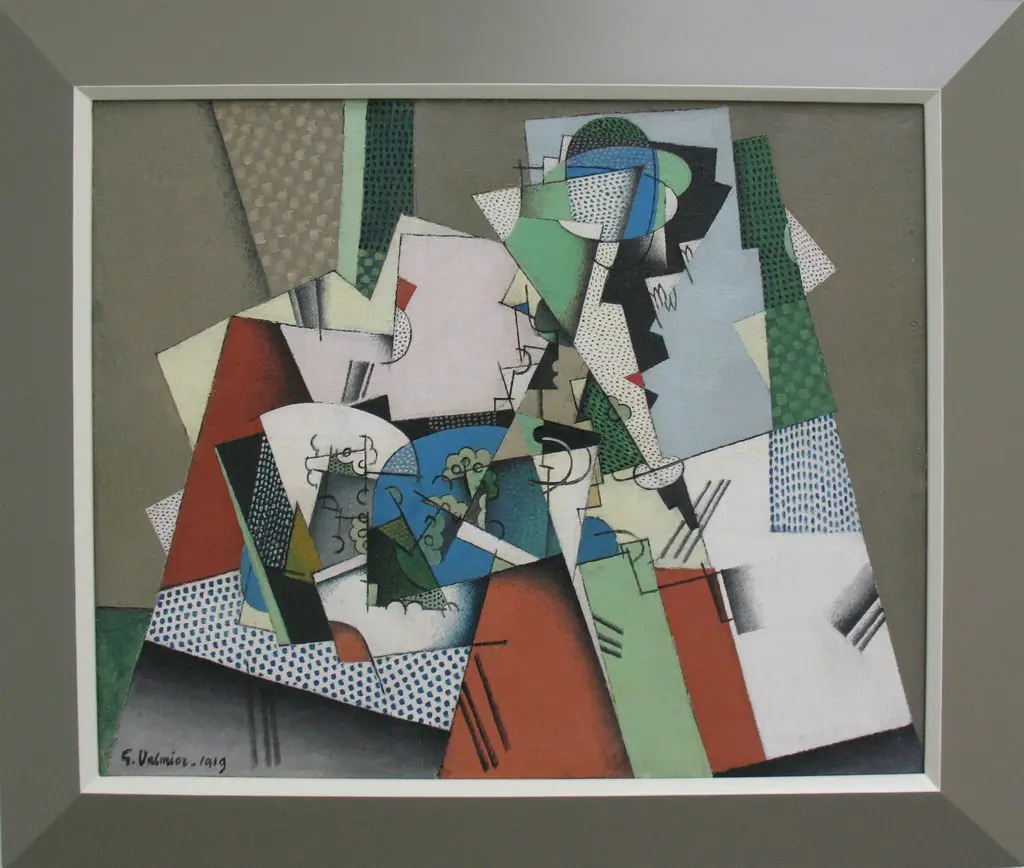
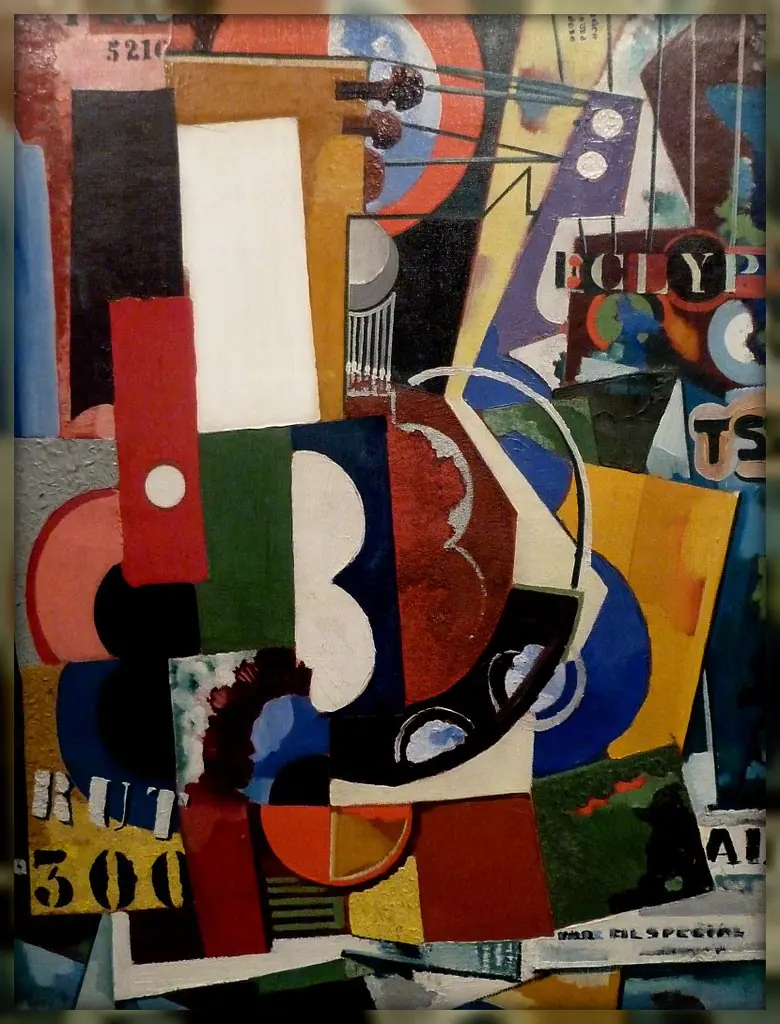
Stilleven in geometrische vormen II is an oil painting by the Cubism Synthetic artist Georges Valmier. It dates from 1920 and is held in the collection of the Kröller-Müller Museum.
About this work
Overview
Valmier, who turned to Cubism in his mid-twenties, produced a limited body of oil paintings, fewer than 300, before his death at 51.
Georges Valmier painted Stilleven in geometrische vormen II in 1920 using oil on canvas. The work is part of his engagement with Synthetic Cubism, a phase marked by flattened planes and structured compositions. Valmier, who turned to Cubism in his mid-twenties, produced a limited body of oil paintings, fewer than 300, before his death at 51. His approach combined rigorous planning with expressive color, reflecting broader modernist interests in abstraction and form.
Subject & Meaning
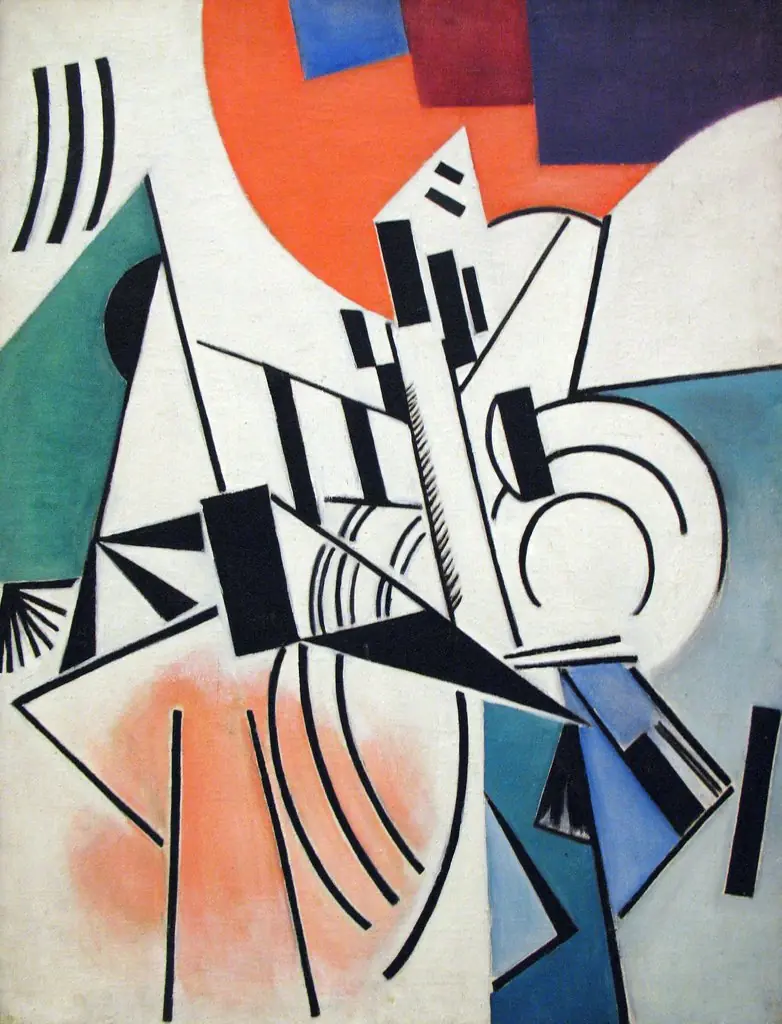
The painting presents a still life reimagined through abstract geometry rather than literal representation. Objects such as vessels, fruit, or tableware are reduced to interlocking shapes, circles, arcs, and angular fragments, suggesting their presence without depicting them realistically. The arrangement implies spatial depth through layering, yet resists traditional perspective. The subject becomes an exercise in visual rhythm and structural harmony, prioritizing formal relationships over narrative.
Technique & Style
Valmier employed bold, saturated hues, blue, green, red, against a muted brown background to create visual contrast. Shapes vary between straight-edged and curved, some adorned with fine lines or dotted textures that suggest surface detail or rhythmic variation. Layers of paint are applied with precision, revealing his habit of extensive preparatory sketches. The composition avoids symmetry, instead balancing dynamic elements through careful placement and color modulation.
History & Provenance
Created in 1920, the work emerged during Valmier’s most active period of abstraction, following his transition from Impressionism to Cubism. He was associated with Parisian avant-garde circles and exhibited with groups like Section d’Or. Though his output was modest, his work was recognized in early 20th-century exhibitions.
The painting’s provenance traces through private and institutional collections in France, reflecting its status within modernist circles rather than mainstream acclaim.
Context
Valmier’s work coincided with post-war European experimentation in art, where artists sought new modes of representation beyond realism. Synthetic Cubism, influenced by collage and decorative arts, allowed for greater color freedom and symbolic abstraction. Valmier’s involvement in theater design and applied arts informed his sense of pattern and composition, bridging fine art with functional aesthetics in a period eager to dissolve boundaries between disciplines.
Legacy
Though not widely known outside specialist circles, Valmier’s contributions to Cubist abstraction are acknowledged for their structural clarity and chromatic sensitivity. His disciplined method and interdisciplinary practice influenced later generations interested in the intersection of painting and design. Stilleven in geometrische vormen II remains a representative example of how Cubism evolved beyond its early analytical phase into a more decorative, yet still intellectually rigorous, language.
Own this work as a print
Artist & collection
Artist
Georges Valmier (11 April 1885 – 25 March 1937) was a French painter. His work encompassed the great movements in the modern history of painting, starting with Impressionism in his early years, then Cubism which he…