Artwork
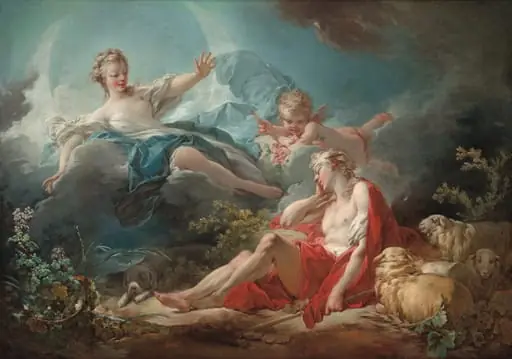
Selene and Endymion
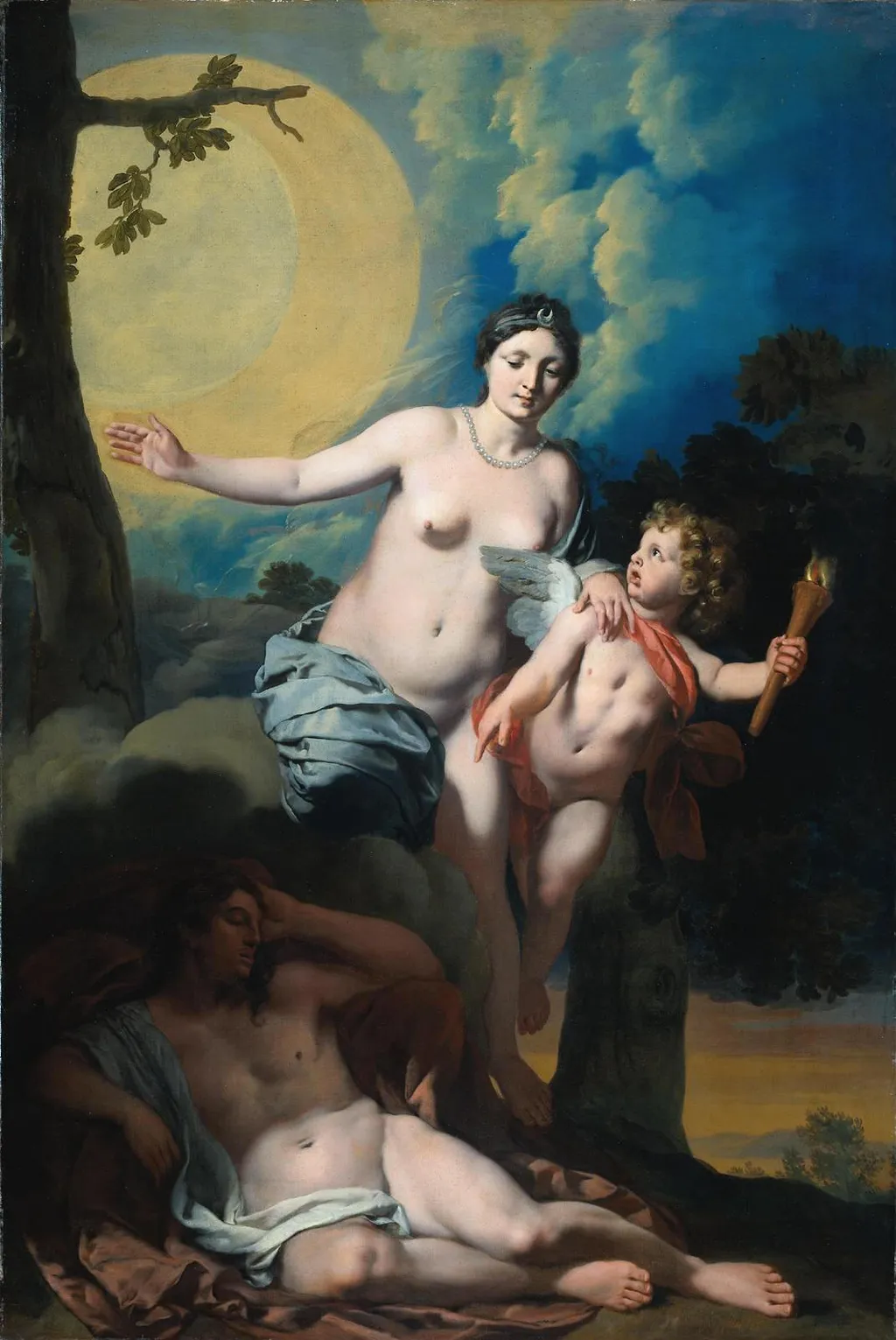
Selene and Endymion is an oil painting by the Flemish Baroque painting artist Gerard de Lairesse. It dates from 1690 and is held in the collection of the Rijksmuseum.
About this work
Subject & Meaning
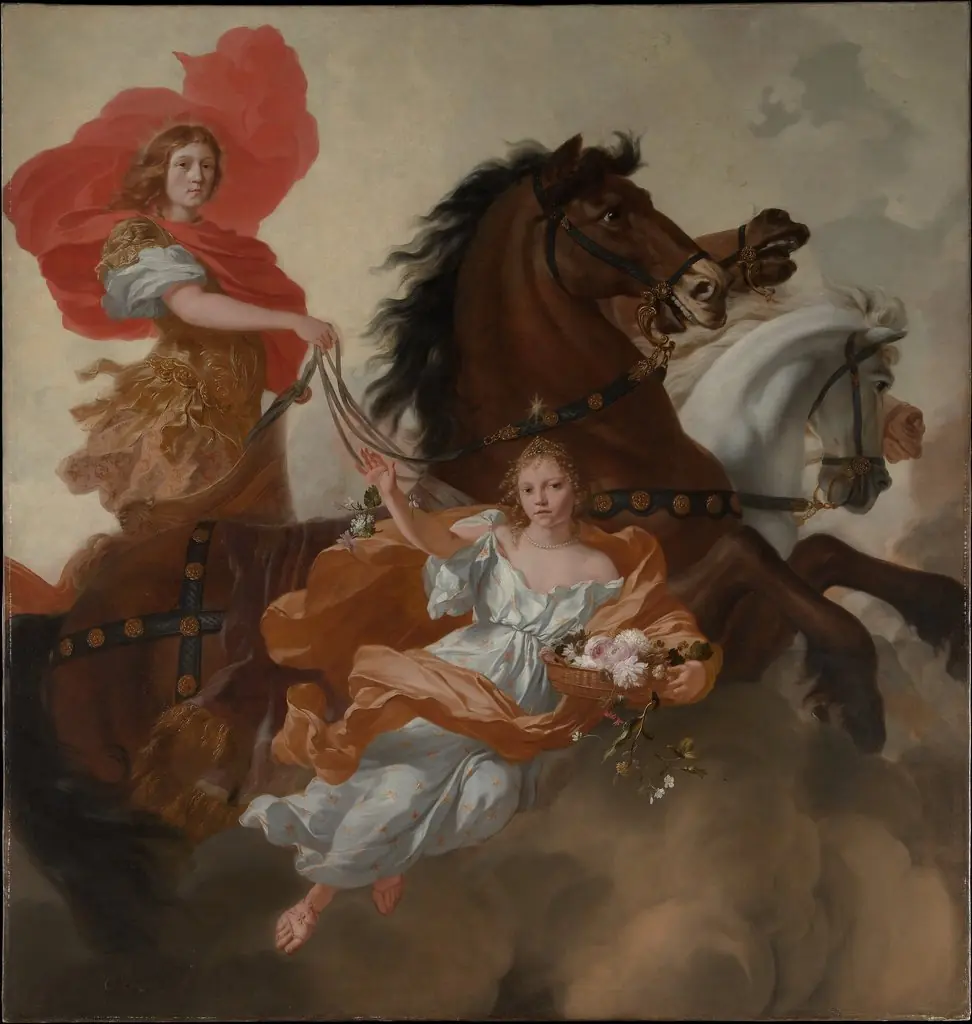
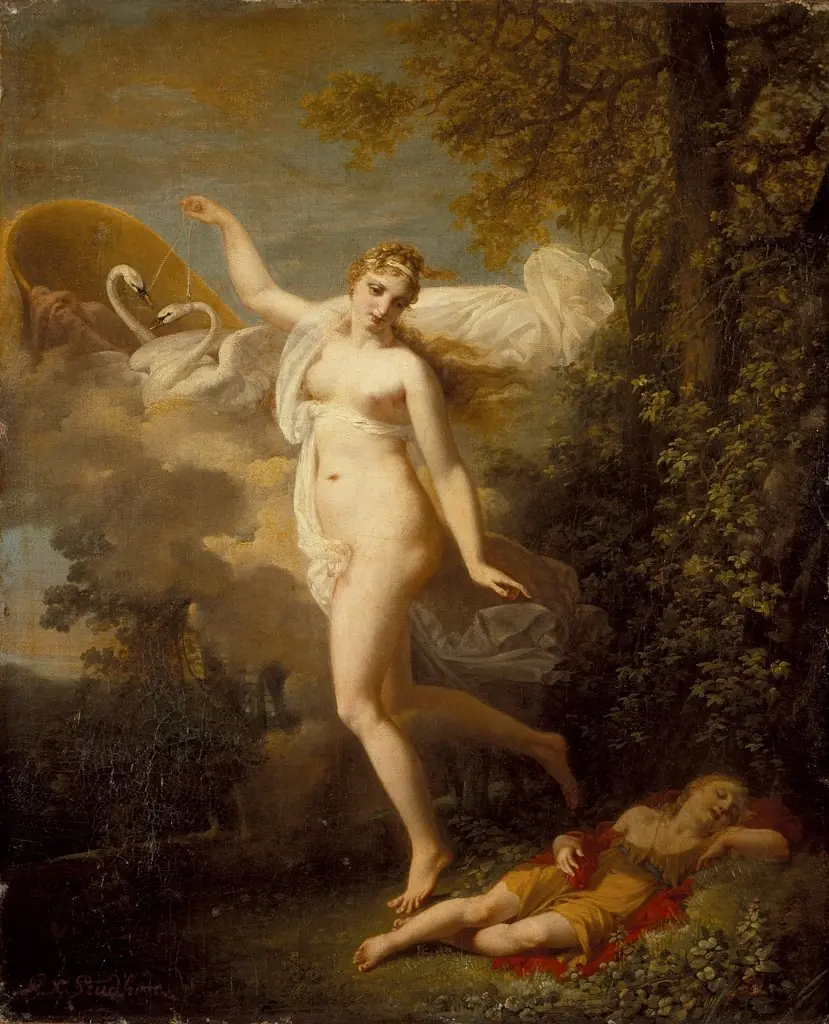
The composition depicts Eros, the god of love, guiding Selene under a full moon toward the slumbering shepherd, who is positioned in the lower left corner.
The painting illustrates the Greek myth of Selene, the moon goddess often associated with Artemis or Diana, and her love for the shepherd Endymion. Selene is visually identified by a crescent moon embedded in her diadem. Due to her chastity, she visits Endymion only at night while he sleeps.
The composition depicts Eros, the god of love, guiding Selene under a full moon toward the slumbering shepherd, who is positioned in the lower left corner.
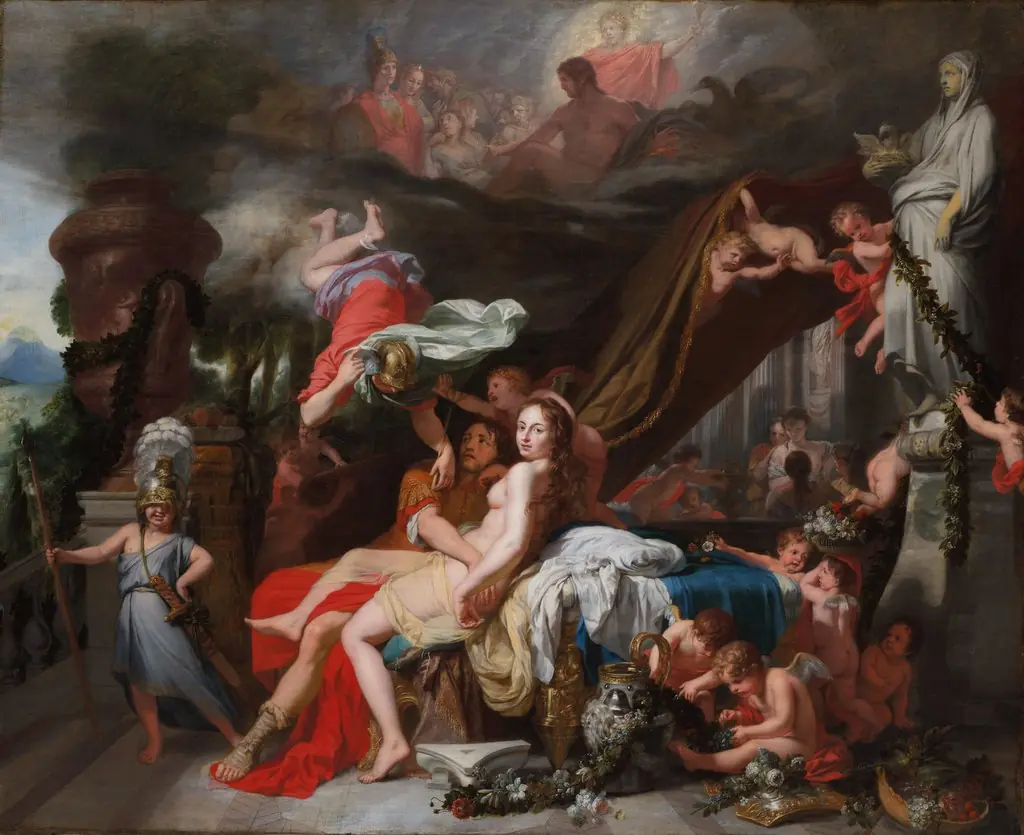
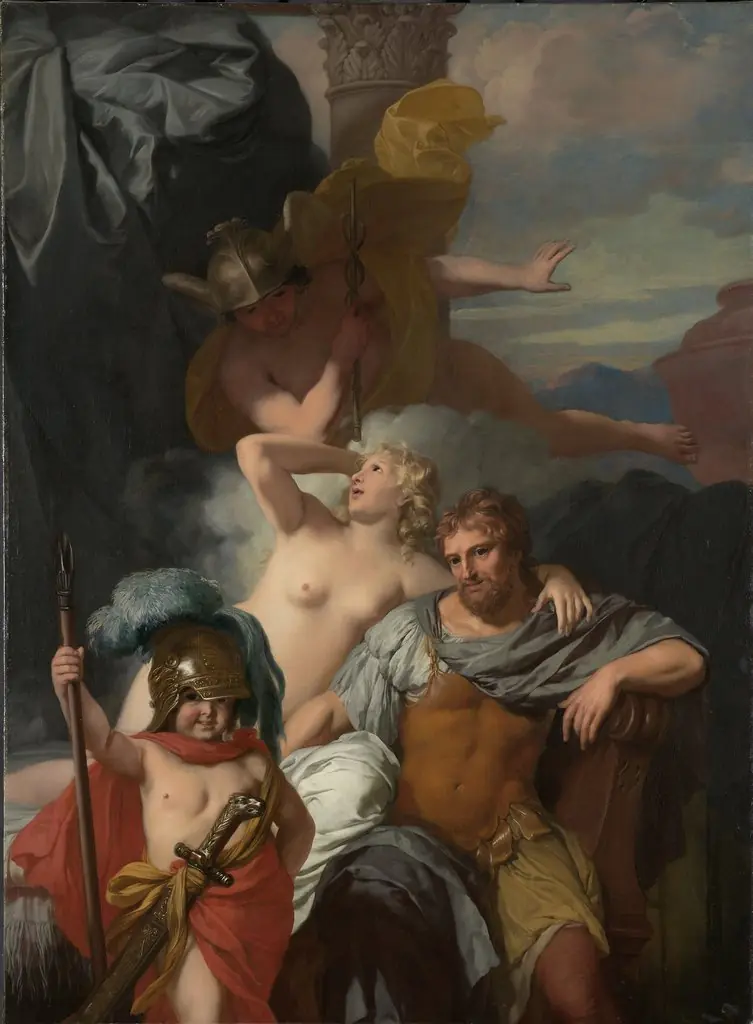
This work was originally created as part of a decorative scheme for the bedroom of Mary Stuart at Soestdijk Palace. It belongs to a thematic program focused on love, surviving alongside two other mythological scenes from the same commission: one depicting Venus and Mars as lovers, and another showing Mercury instructing Calypso to release Odysseus.
Technique & Style
The work is an oil painting executed on canvas. It depicts the mythological scene of Selene and Endymion, with Selene identifiable by the crescent moon in her diadem as she is guided by Eros beneath a full moon to the sleeping Endymion. The painting was created in 1680 by Gerard de Lairesse and is part of a decorative scheme for Mary Stuart's bedroom at Palace Soestdijk, later entering the collection of the Rijksmuseum through successive transfers in the late 18th and early 19th centuries.
The composition reflects Baroque stylistic traits, with dynamic movement and emotive chiaroscuro typical of Dutch Golden Age mythological painting. The use of oil on canvas allows for rich color modulation and fine detail in rendering drapery and facial expression, contributing to the dramatic interplay of light and shadow that defines the scene.
The work measures 177 cm in height and 118.5 cm in width, confirming its large-scale format suitable for a ceiling or wall installation within an interior decorative program.
History & Provenance
Gerard de Lairesse executed this mythological painting in 1680. The work was originally commissioned as part of a decorative scheme for the bedroom of Mary Stuart at what is now Soestdijk Palace. It survives as one of only three known pieces from this specific program, all centered on themes of love.
The painting was likely nationalized in 1795 and subsequently transferred between 1797 and 1799 to the National Art Gallery housed at Huis ten Bosch in The Hague. In 1808, the collection was moved to the Royal Museum in Amsterdam, the direct predecessor of the current Rijksmuseum, where the artwork remains.
The painting is held in the Rijksmuseum in Amsterdam under inventory number SK-A-2569. It was created as part of the decorative scheme for Mary Stuart's bedroom at Paleis Soestdijk, alongside two other mythological works: Venus and Mars as Lovers and Mercury ordering Calypso to release Odysseus. These pieces were likely nationalised between 1795 and transferred to the National Art Gallery in The Hague between 1797 and 1799, then moved to the Royal Museum in Amsterdam in 1808, the predecessor of the current Rijksmuseum.
The work has been part of the Rijksmuseum's collection since its establishment and has been displayed in exhibitions focusing on Dutch Golden Age decorative arts and mythological painting, though specific exhibition titles are not detailed in the provided sources.
Context
Selene and Endymion is a mythological painting by Gerard de Lairesse created in 1680. The work is part of the Rijksmuseum collection in Amsterdam and was originally painted as part of the decorative scheme for Mary Stuart's bedroom at Palace Soestdijk. It was later nationalised in 1795 and transferred to the National Art Gallery in The Hague before arriving at the Rijksmuseum in 1808.
The painting draws on the Greek myth in which the moon goddess Selene, often identified with Artemis or Diana, falls in love with the sleeping shepherd Endymion, visiting him only at night under the full moon. De Lairesse's depiction reflects the mythological themes popular in Dutch art of the period and situates the work within his broader oeuvre of mythological subjects. The composition exemplifies the stylistic characteristics of late 17th-century Dutch painting, particularly in its treatment of mythological narrative and use of allegorical symbolism.
The painting's provenance and subsequent transfer to the Rijksmuseum contribute to its significance in art historical discourse, illustrating the movement of Dutch artworks through institutional networks in the late 18th and early 19th centuries.
Overview
Gerard de Lairesse’s 1690 oil painting, titled Selene and Endymor, presents a nocturnal tableau drawn from classical mythology. A luminous moon hovers above a serene female figure, who cradles a small winged child bearing a torch, while a sleeping man lies beneath a draped cloth. The composition is set against a muted sky of blues and greens, with distant hills and trees.
Artist & collection
Artist
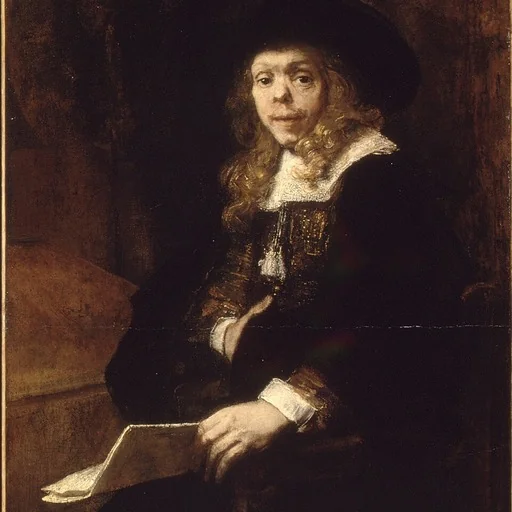
Gerard or Gérard (de) Lairesse (French pronunciation:; 11 September 1641 – June 1711) was a Dutch Golden Age painter and art theorist.