Artwork
Antiochus and Stratonice
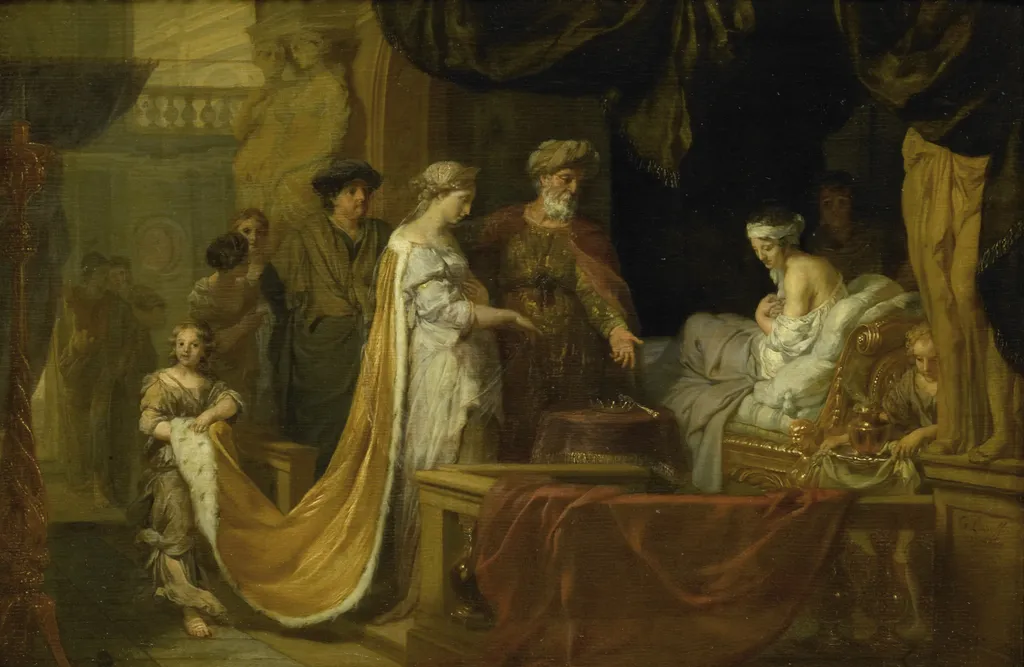
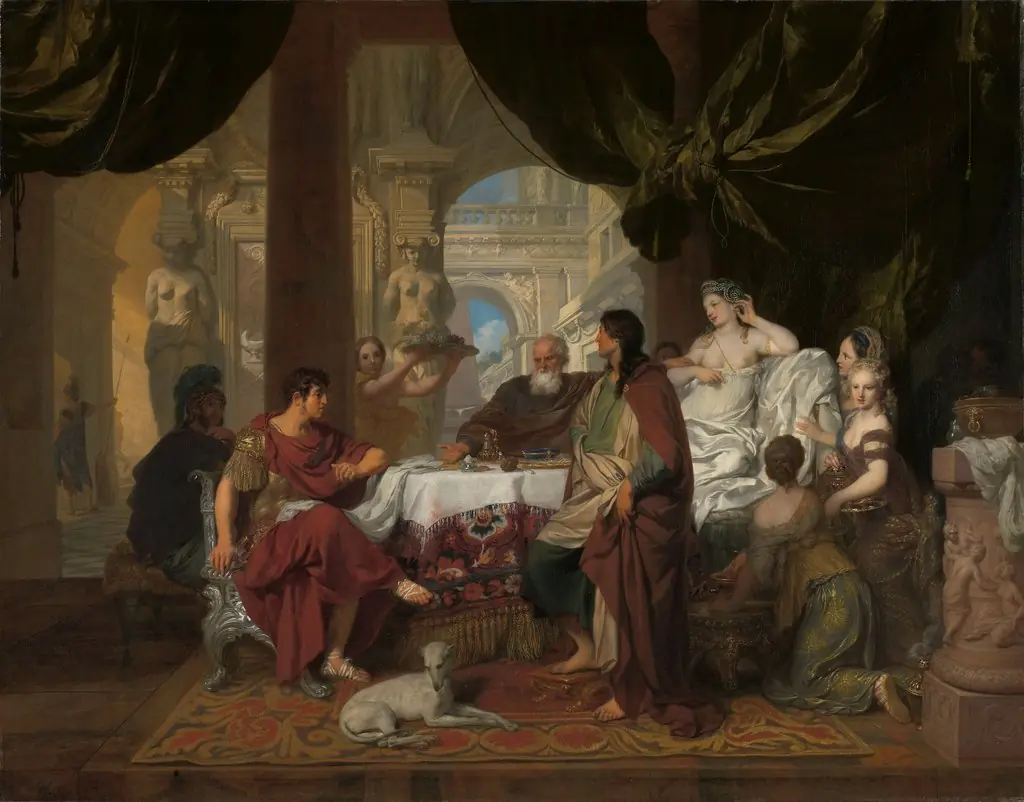
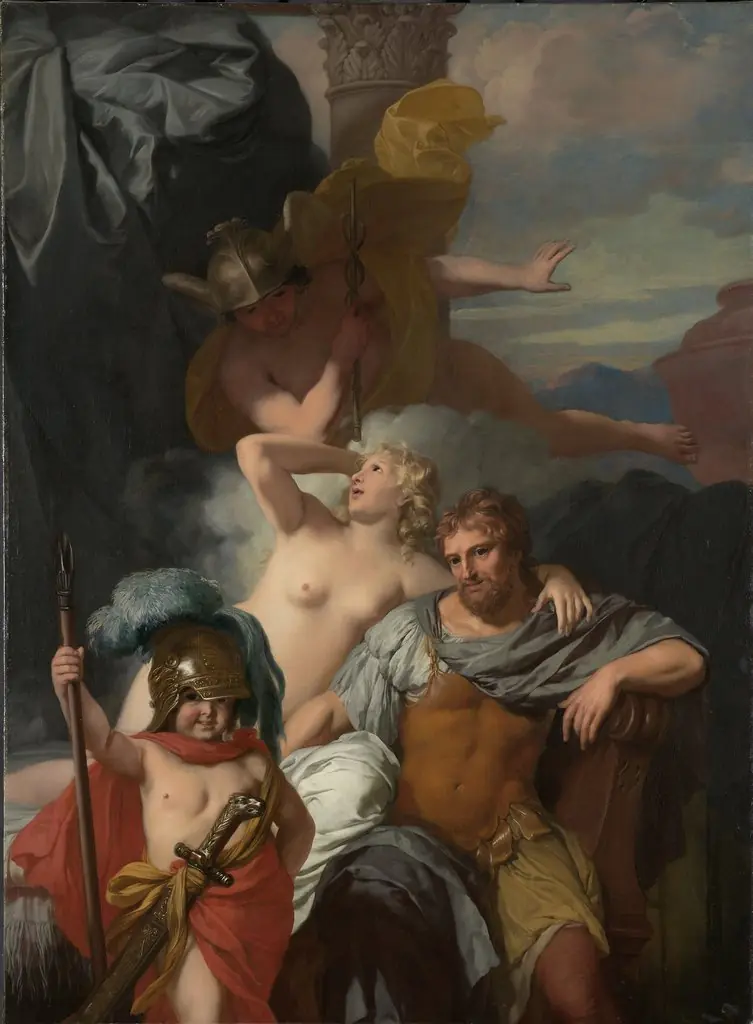
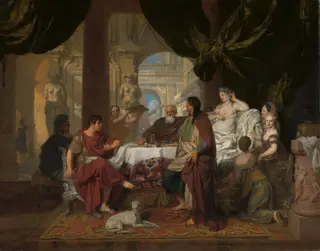
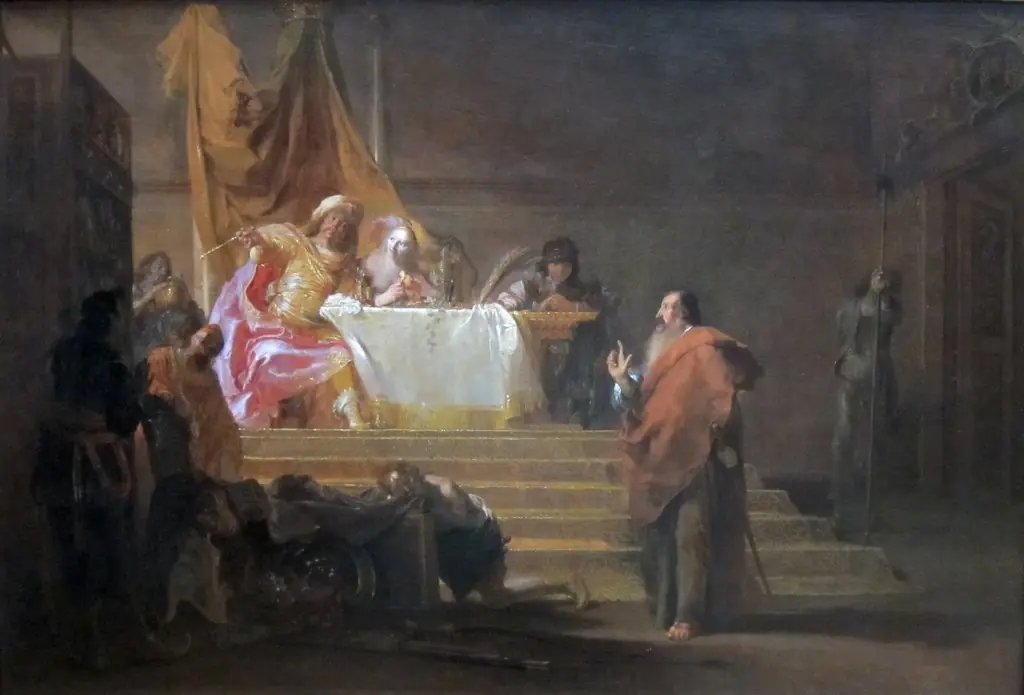
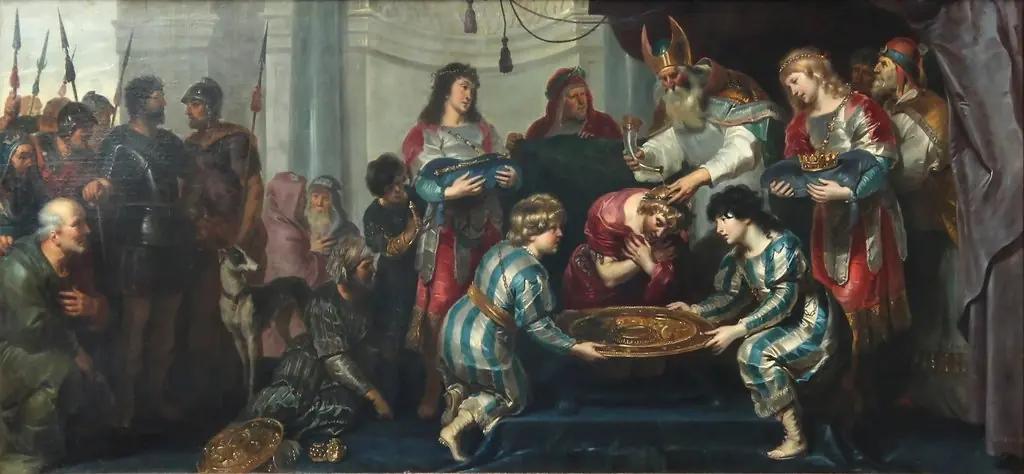
Antiochus and Stratonice is an oil painting by the Dutch Golden Age artist Gerard de Lairesse. It dates from 1671 and is held in the collection of the Rijksmuseum.
About this work
History & Provenance
The work is classified as a history painting and exemplifies the historical narrative genre characteristic of Lairesse's output during this period.
The painting was created in 1671 by Gerard de Lairesse as an oil on panel work depicting Antiochus I Soter and Stratonice of Syria. It was commissioned by Adriaan Leonard van Heteren Gevers, who held ownership of the piece. The artwork is part of the collection at Rijksmuseum Twenthe, where it remains today.
The provenance indicates a direct transfer to van Heteren Gevers, establishing his role as the initial patron and owner. The work is classified as a history painting and exemplifies the historical narrative genre characteristic of Lairesse's output during this period.
The painting is held at Rijksmuseum Twenthe in the Netherlands. It has been part of the collection of Adriaan Leonard van Heteren Gevers since its creation. The work was exhibited in the 1950s as part of a Dutch Golden Age exhibition at the Rijksmuseum Twenthe, though specific exhibition dates are not documented in the available sources.
Overview
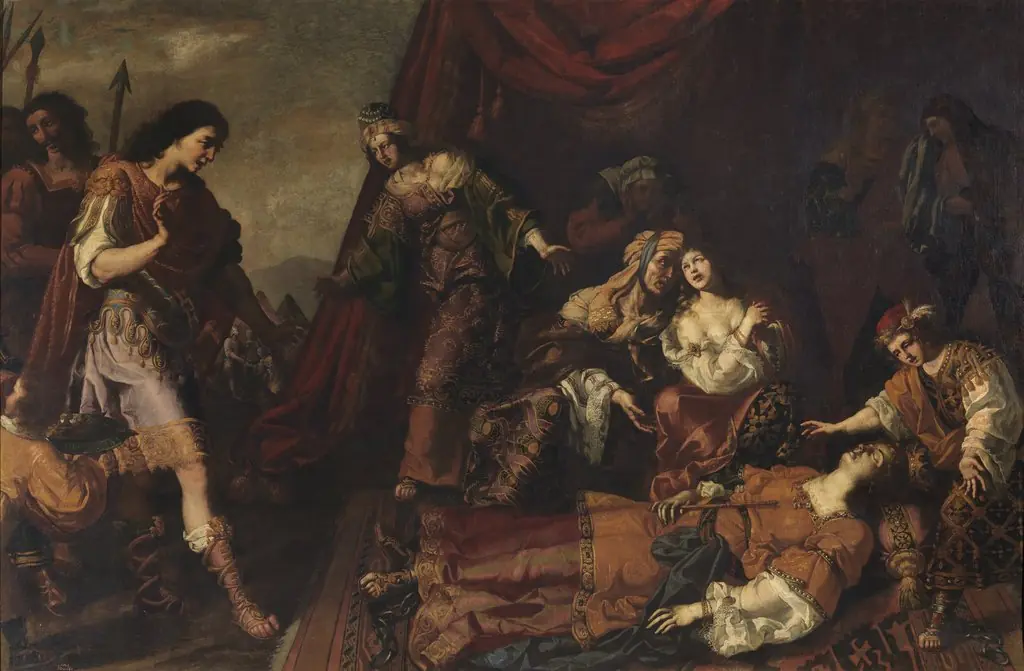
Gerard de Lairesse, a Dutch painter active in the latter half of the 17th century, completed the oil painting Antiochus and Stratonice in 1671. Classified as a history work, it portrays a moment from the ancient tale of Antiochus I Soter and his step‑mother Stratonice of Syria, a subject drawn from classical literature and popular in the period’s narrative art.
Subject & Meaning
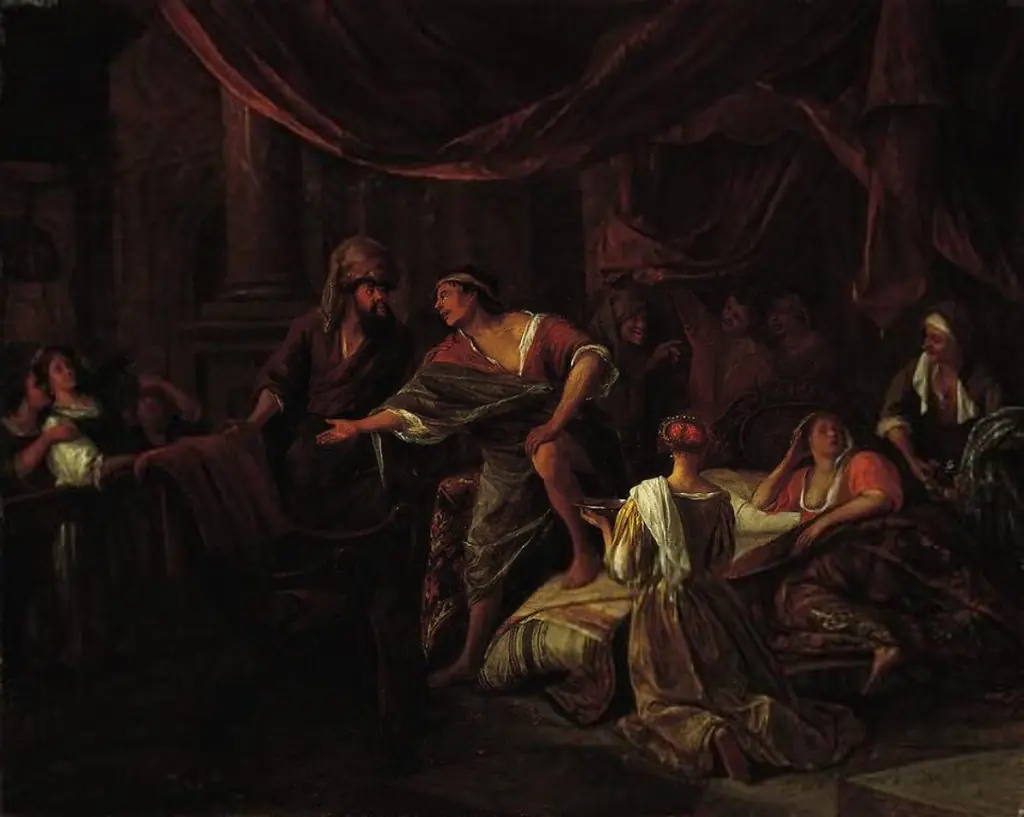
The composition captures the dramatic revelation of Antiochus’s forbidden love for Stratonice. A woman in a white gown stands beside a bed where another woman, partially covered, cradles a child, while a robed figure in a turban gestures toward the scene. The arrangement emphasizes the tension between duty, desire, and familial loyalty that underlies the legend.
Technique & Style
De Lairesse employs a chiaroscuro scheme, using strong contrasts of warm light and deep shadow to focus attention on the central figures. Rich fabrics, gilded details, and the careful rendering of textures reflect the influence of French classicism, particularly the teachings of Charles Le Brun, while maintaining the narrative clarity characteristic of Dutch Golden Age painting.
Context
The painting aligns with the broader 17th‑century fascination with antiquity, a trend reinforced by the iconographic guidelines of Cesare Ripa. By integrating French classicist aesthetics with Dutch narrative emphasis, de Lairesse bridges national styles, illustrating how Northern artists engaged with pan‑European artistic currents while catering to local tastes for moralizing historical scenes.
Own this work as a print
Artist & collection
Artist
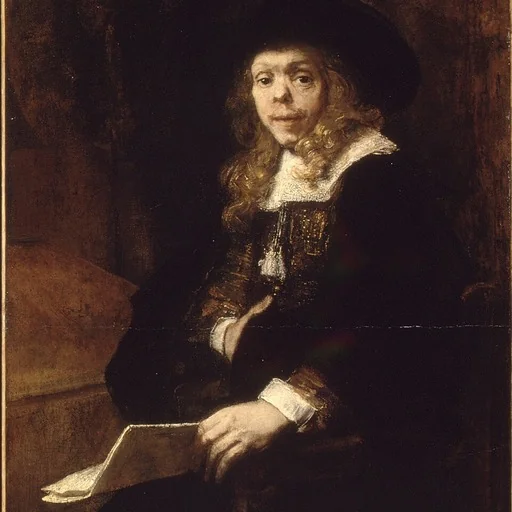
Gerard or Gérard (de) Lairesse (French pronunciation:; 11 September 1641 – June 1711) was a Dutch Golden Age painter and art theorist.