Artwork
The Knife-Grinder's Family
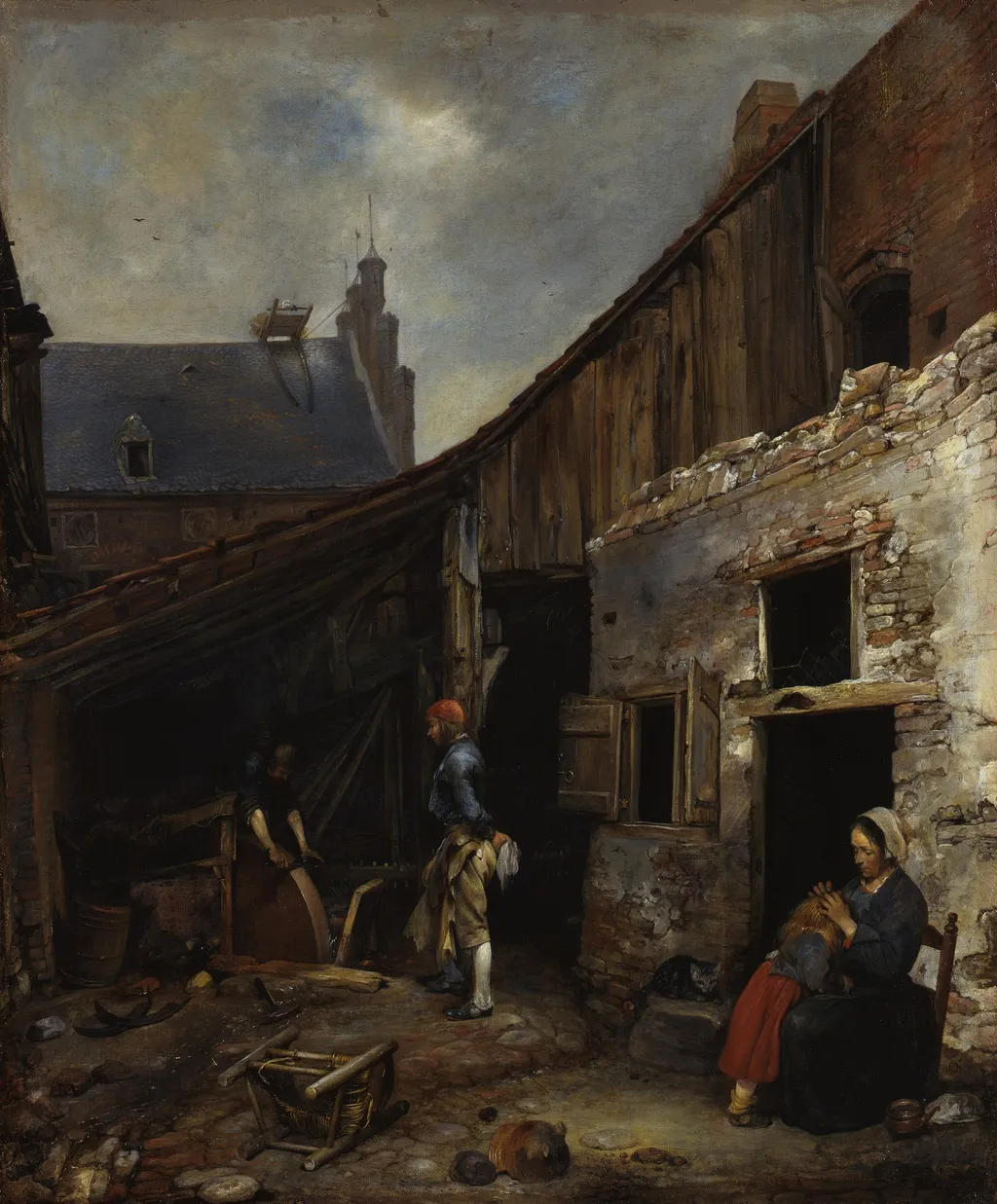
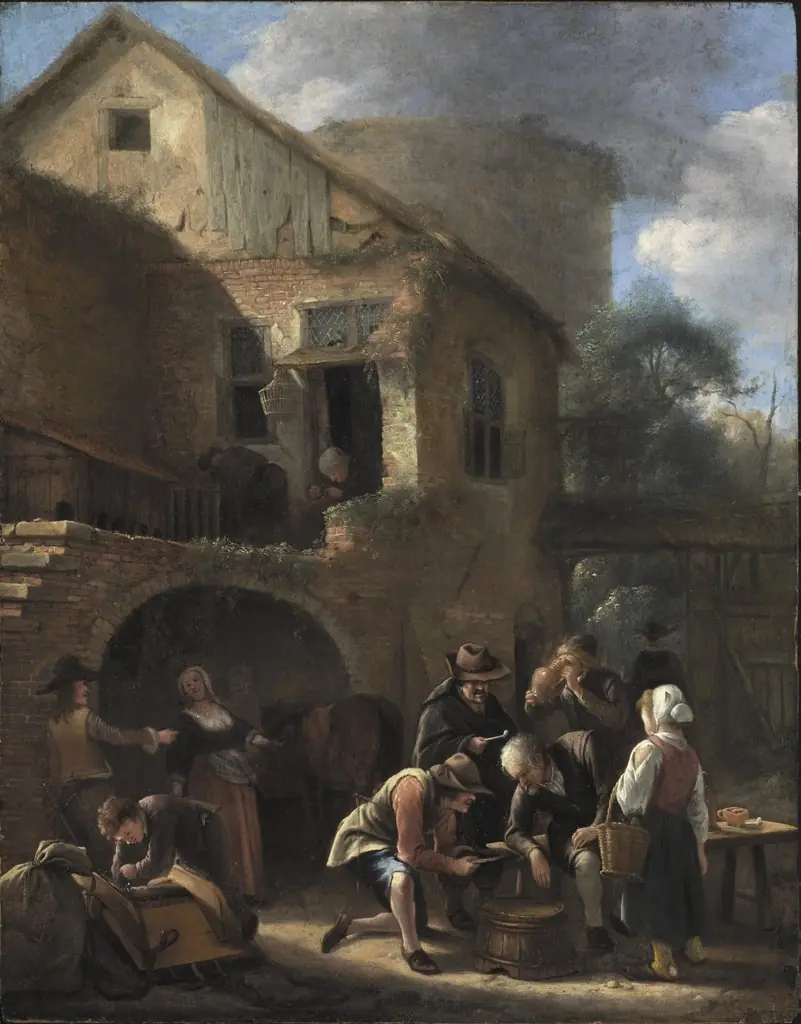
The Knife-Grinder's Family is an oil painting by the Dutch Golden Age artist Gerard ter Borch. It dates from 1653 and is held in the collection of the Gemäldegalerie Berlin.
About this work
Subject & Meaning
The work represents the intersection of occupational duty and private family life, capturing a moment of routine maintenance for both tools and the human body.
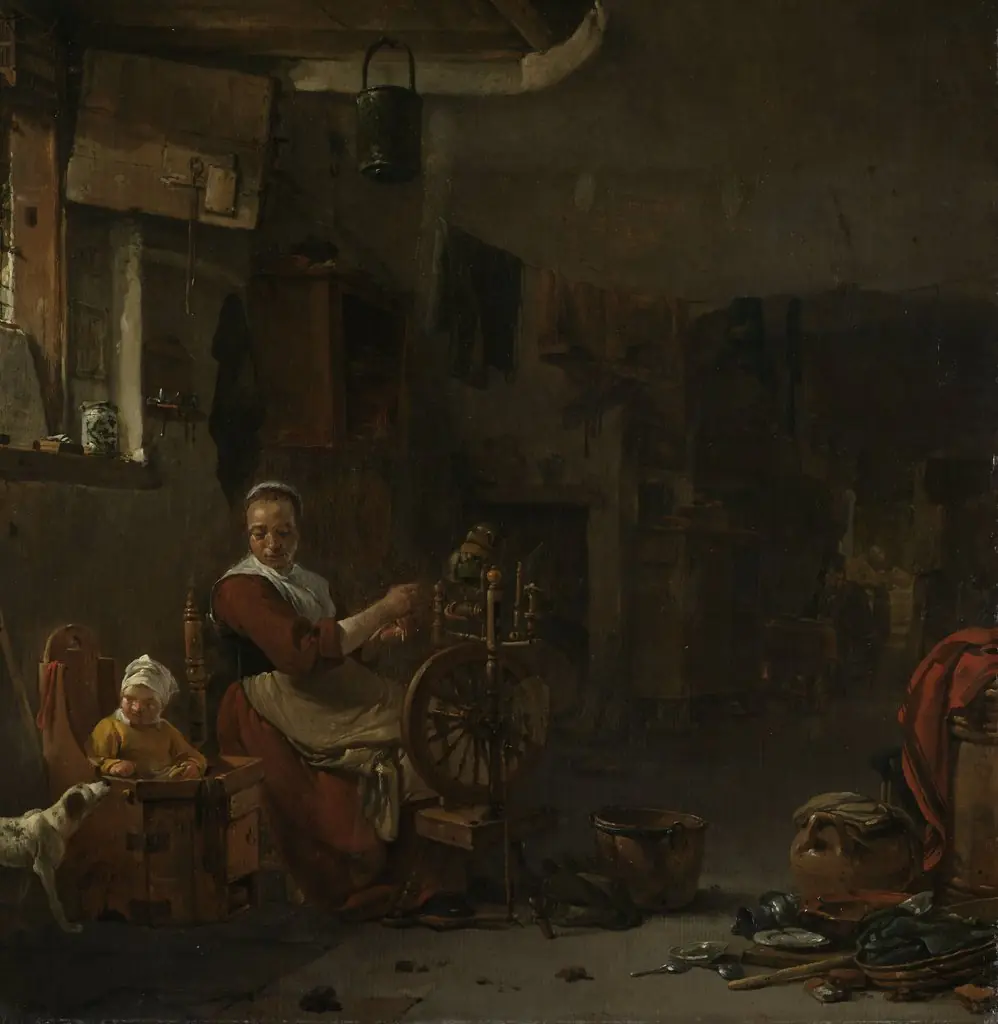
Gerard ter Borch's 1653 oil painting presents a domestic genre scene centered on a knife-grinder and his family within a humble interior. The composition explicitly depicts the act of sharpening tools, featuring a grinding stone and a scythe, which anchor the work in the reality of itinerant labor. Beyond the depiction of manual work, the scene includes the intimate and unidealized detail of a family member treating human head lice.
This inclusion shifts the iconography from a simple representation of a trade to a broader commentary on the daily struggles and hygiene of the lower classes. The work represents the intersection of occupational duty and private family life, capturing a moment of routine maintenance for both tools and the human body.
Technique & Style
The work is executed in oil paint on canvas, measuring 73.5 cm by 60.5 cm. It depicts a domestic scene featuring a man, his family, and domestic implements such as a grinding stone and scythe, reflecting genre themes of household activity and the treatment of human head lice. The composition demonstrates careful handling of light and detail characteristic of Dutch painting of the period.
History & Provenance
The painting titled The Knife-Grinder's Family was created by Gerard ter Borch in 1653 using oil on canvas. It entered the collection of Étienne François, duc de Choiseul, and subsequently passed through the ownership of Louis François, Prince of Conti, François-Antoine Robit, Charles Ferdinand, Duke of Berry, Princess Maria Carolina, and Duchess of Berry before being acquired by the Gemäldegalerie Berlin, where it remains on display in the Cabinet de Monseigneur le duc de Choiseul. The work measures 73.5 cm in height and 60.5 cm in width.
The painting is held in the Gemäldegalerie, Berlin, inventoried as 73.5 × 60.5 cm oil on canvas.
It entered the museum’s holdings after passing through several notable collections. By 1754 it belonged to Étienne François, duc de Choiseul. By 1772 it was with Louis François, Prince of Conti.
It later passed to François-Antoine Robit, then entered the collection of Charles Ferdinand, Duke of Berry. It was subsequently owned by Princess Maria Carolina, Duchess of Berry before joining the Berlin museum.
Overview
Gerard ter Borch painted The Knife‑Grinder’s Family in 1653, a genre work typical of the Dutch Golden Age. Executed in oil, the composition presents a modest interior where members of a working family are absorbed in the act of sharpening tools. The painting is part of the collection of the Gemäldegalerie in Berlin.
Context
The work belongs to a period when Dutch painters frequently depicted everyday occupations, emphasizing the dignity of ordinary life. Ter Borch’s focus on intimate, interior moments parallels the concerns of contemporaries such as Johannes Vermeer, who also explored the quiet psychology of domestic scenes.
Own this work as a print
Artist & collection

Artist
Gerard ter Borch (Dutch:; December 1617 – 8 December 1681), also known as Gerard Terburg (Dutch: ), was a Dutch Golden Age painter mainly of genre subjects.