Artwork
Adoration of the Child
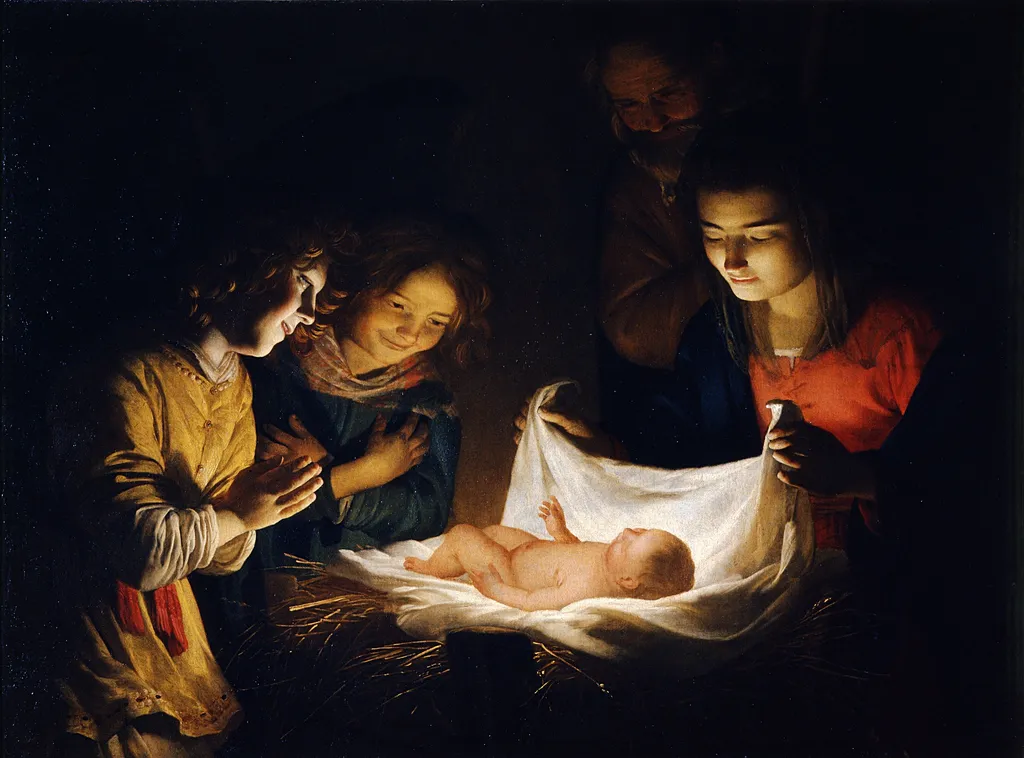
Adoration of the Child is an oil painting by the Dutch Golden Age artist Gerard van Honthorst. It dates from 1620 and is held in the collection of the Uffizi Gallery.
About this work
It's a significant work because it's part of the collection at the Uffizi Gallery, which suggests it has historical importance.
This painting is called Adoration of the Child by Gerard van Honthorst. It was made around 1620. The artist used oil paint to create it.
The painting shows a scene from the Nativity. It's a significant work because it's part of the collection at the Uffizi Gallery, which suggests it has historical importance. You can learn more about this style of painting by looking into the Dutch Golden Age artist, Gerard van Honthorst.
Overview
Adoration of the Child is an oil on canvas painting by the Dutch Golden Age artist Gerard van Honthorst, created circa 1619 to 1620. Measuring 95.5 by 131 centimeters, the work depicts the Nativity of Jesus and is distinguished by its dramatic use of tenebrism, a technique that earned the artist the Italian nickname Gherardo delle Notti, or Gerard of the Nights. The painting is one of five works by Honthorst in the Medici collections and is currently housed in the Uffizi Gallery in Florence. It stands as a significant example of cross-cultural exchange in the early seventeenth century, merging Caravaggesque lighting effects with Northern European naturalism.
Subject & Meaning
The painting portrays the Virgin Mary laying the Christ Child in swaddling clothes on a white cloth spread over straw, while Saint Joseph looks on from behind her shoulder, leaning on a cane. Two youthful angels bend over the manger in gestures of reverence, their hands pressed to their chests. The iconography relies heavily on light as a metaphor for divinity. The newborn Christ serves as the sole source of illumination, radiating a divine light that softens the features of the surrounding figures, particularly the Virgin, and visually references the opening of the Gospel of John, where the light shines in the darkness. Traditional symbols are embedded in the scene: the white linen foretells the shroud of the crucified Christ, and the straw beneath the infant presages the Eucharist. Joseph is rendered as an aged, weary figure with a grizzled beard and wrinkles, emphasizing his advanced age and the fatigue of his craft, which contrasts with the serene youth of the Virgin and the childlike angels.
Technique & Style
Executed in oil on canvas, the painting demonstrates Honthorst's mastery of tenebrism and chiaroscuro, characterized by stark contrasts between deep shadow and focused light. The palette is dominated by deep browns and blacks, with warm highlights on the skin, the yellow tunic of one angel, and the white cloth. The brushwork appears smooth and blended, enhancing the dramatic, intimate atmosphere. The strong, focused light cutting through the surrounding darkness eliminates any background details, pushing the five figures into intimate close-up. The Christ Child as the light source reflects the influence of Caravaggio, whom Honthorst encountered in Rome. This artificial, nocturnal lighting heightens the emotional realism of the sacred scene, while the naturalism of the figures, such as the blushed cheeks and soft curls of the angels, likely modeled after real-life apprentices, grounds the religious narrative in everyday observation.
History & Provenance
Honthorst painted the work during his formative stay in Italy, where he lived from roughly 1610 to 1620. While in Rome, he met Grand Duke Cosimo II de' Medici, who purchased some of the artist's works around 1620, likely including this painting. An alternative account suggests the work was purchased in 1628 by Ferdinando II de' Medici, who had just returned from a trip to Northern Europe and sent an intermediary to Rome to inquire about six paintings for sale. The work was documented in the inventory of Villa Poggio a Caiano in 1784 and was transferred to the Uffizi Gallery by 1796, where it remains today.
Context
Honthorst created this painting at the height of his Italian period, a time when he absorbed the dramatic tenebrism of Caravaggio and his followers. The composition is deeply indebted to earlier Netherlandish traditions as well, specifically recalling Geertgen tot Sint Jans's Nativity at Night from circa 1490. The concept of the Christ Child as a physical light source was also developed from themes present in sixteenth-century Italian painting, such as Correggio's Night. Honthorst's particular handling of nocturnal lighting made him highly successful in Rome, earning him the moniker Gherardo delle Notti, though surviving pre-1656 Italian documents primarily referred to him as Gherardo Fiammingo or Gherardo Hollandese, with the famous nickname gaining widespread use only in the eighteenth century. The painting exemplifies the broader trend of the Utrecht Caravaggisti, who propagated Caravaggesque techniques in the Netherlands following their return from Italy.
Legacy
The Adoration of the Child had a direct impact on Honthorst's own subsequent work. The year after completing this canvas, he painted another version of the same subject, further exaggerating the Child as light source effect, which is now held in the Wallraf-Richartz Museum in Cologne. More broadly, the painting and others like it played a crucial role in popularizing Caravaggesque styles in the Dutch Republic. By blending religious devotion with naturalistic portraiture drawn from everyday models, Honthorst helped disseminate tenebrist techniques and influenced subsequent generations of artists in religious genre painting, securing his reputation as a pivotal figure in the cross-pollination of Italian Baroque and Northern European art.
Own this work as a print
Artist & collection
Artist
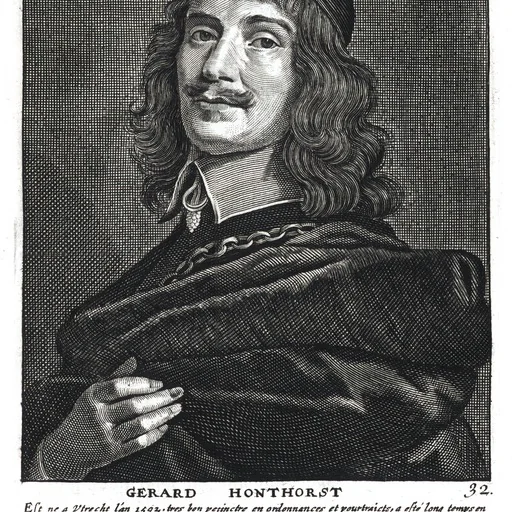
Gerard "Gerrit" van Honthorst (4 November 1592 – 27 April 1656) was a Dutch Golden Age painter who became known for his depiction of artificially lit scenes, eventually receiving the Italian nickname Gherardo delle Notti ("Gerard of the…

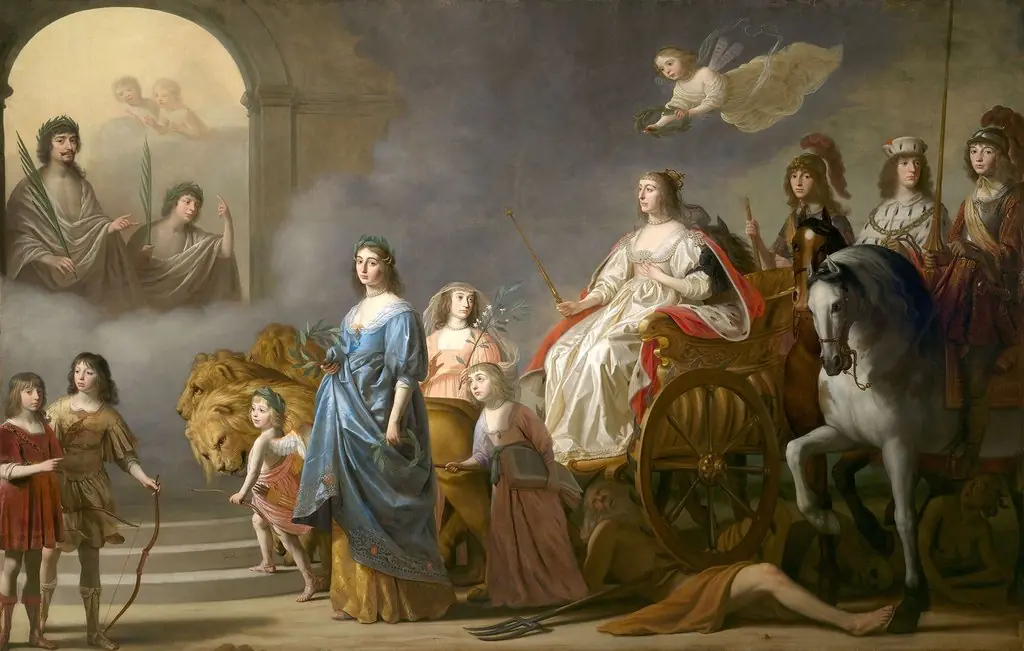 The Triumph of the Winter Queen: Allegory of the Just
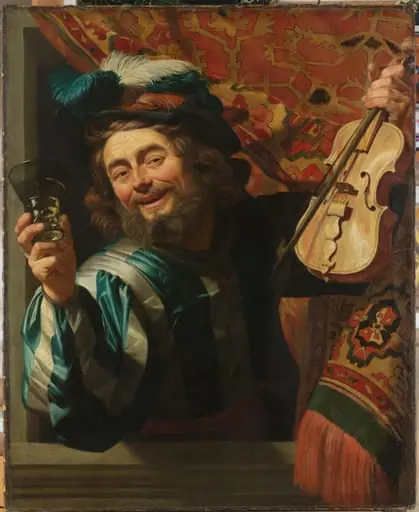 Een vrolijke vioolspeler
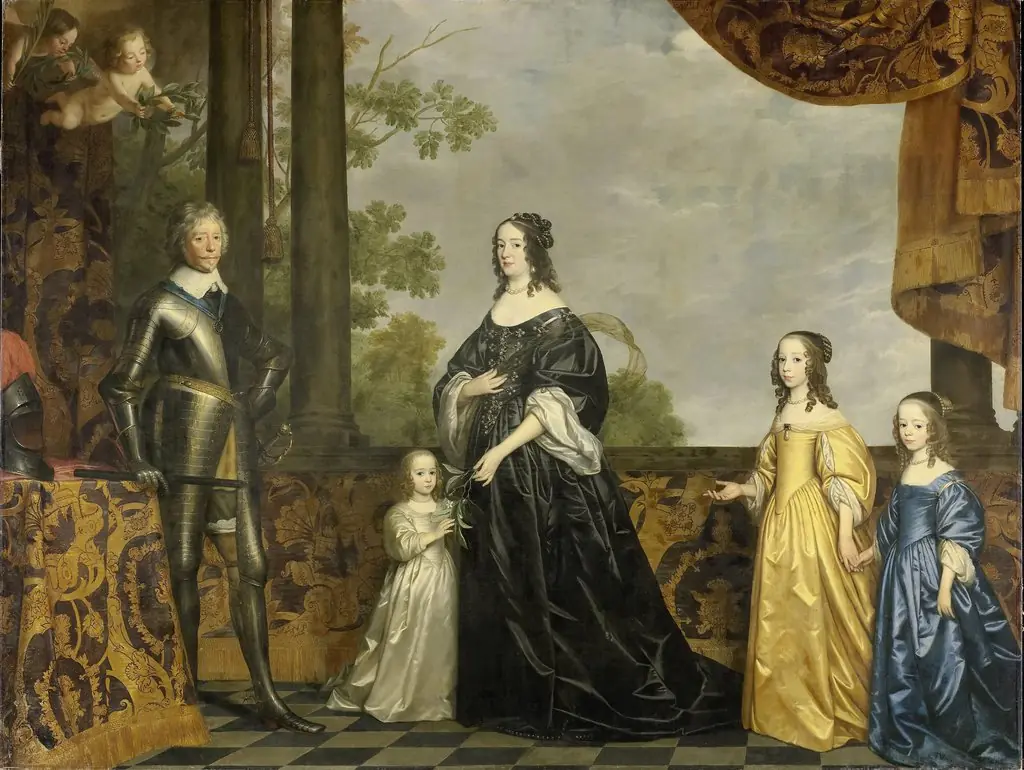 Frederik Hendrik (1584-1647), Prince of Orange, his wife Amalia van Solms (1602-75) and their three youngest daughters, Albertina Agnes (1634-96), Henrietta Catharina (1637-1708) and Maria (1642-88)
 The Concert
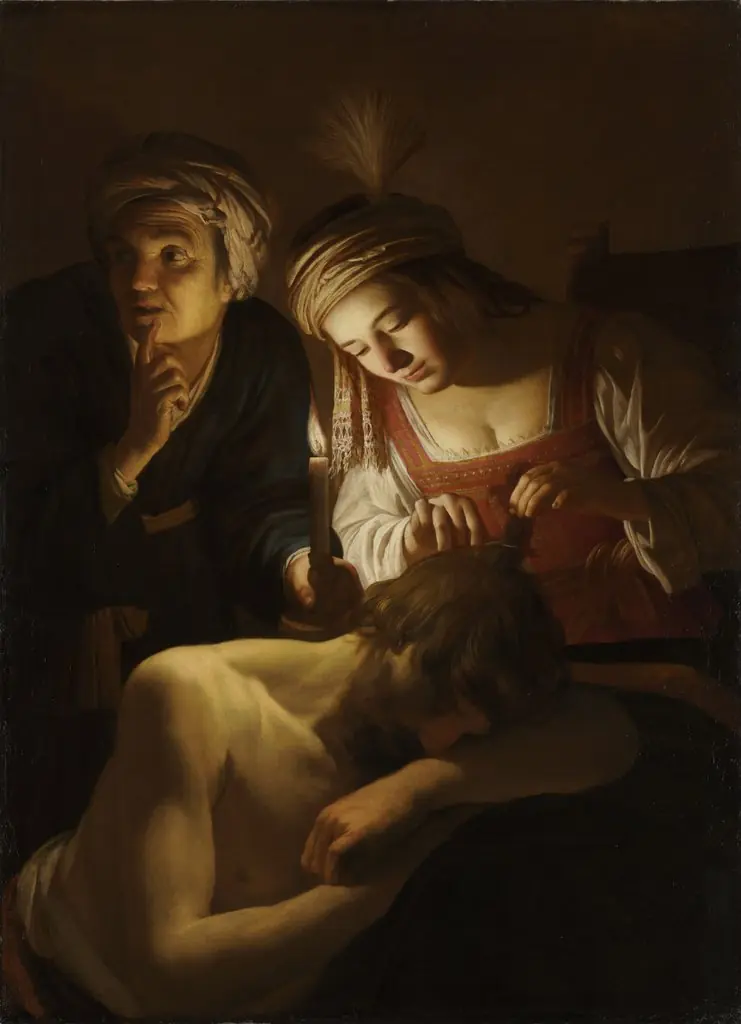 Samson and Delilah
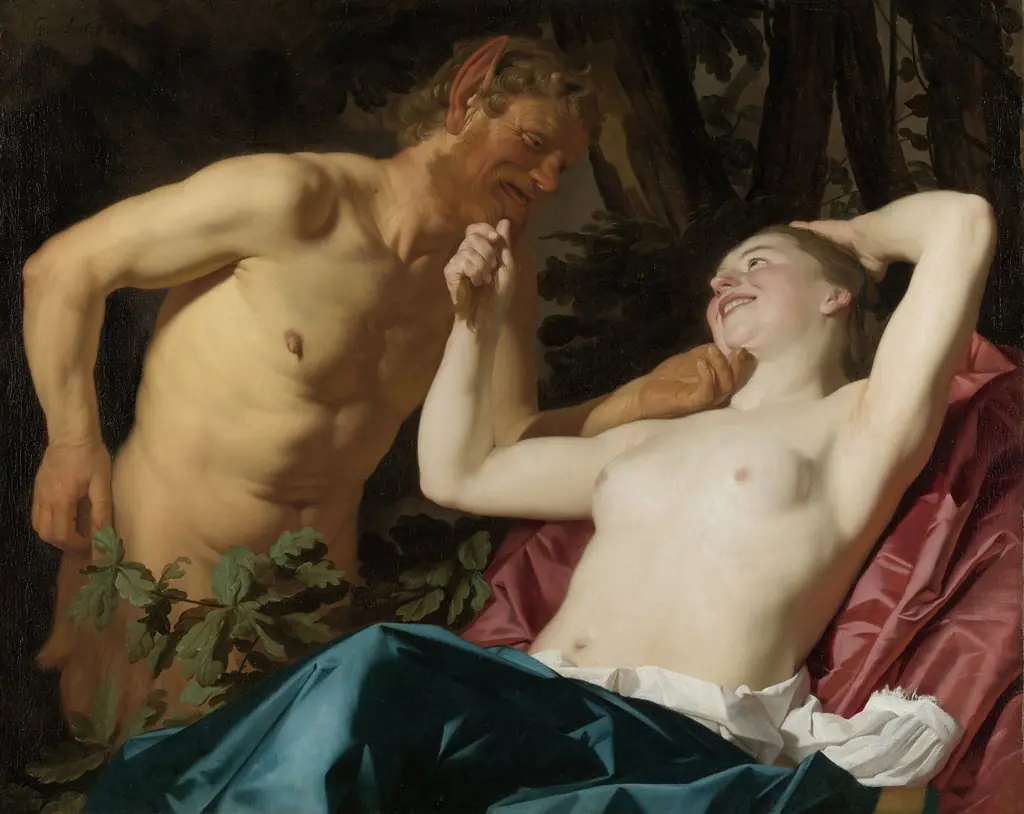 Satyr and Nymph
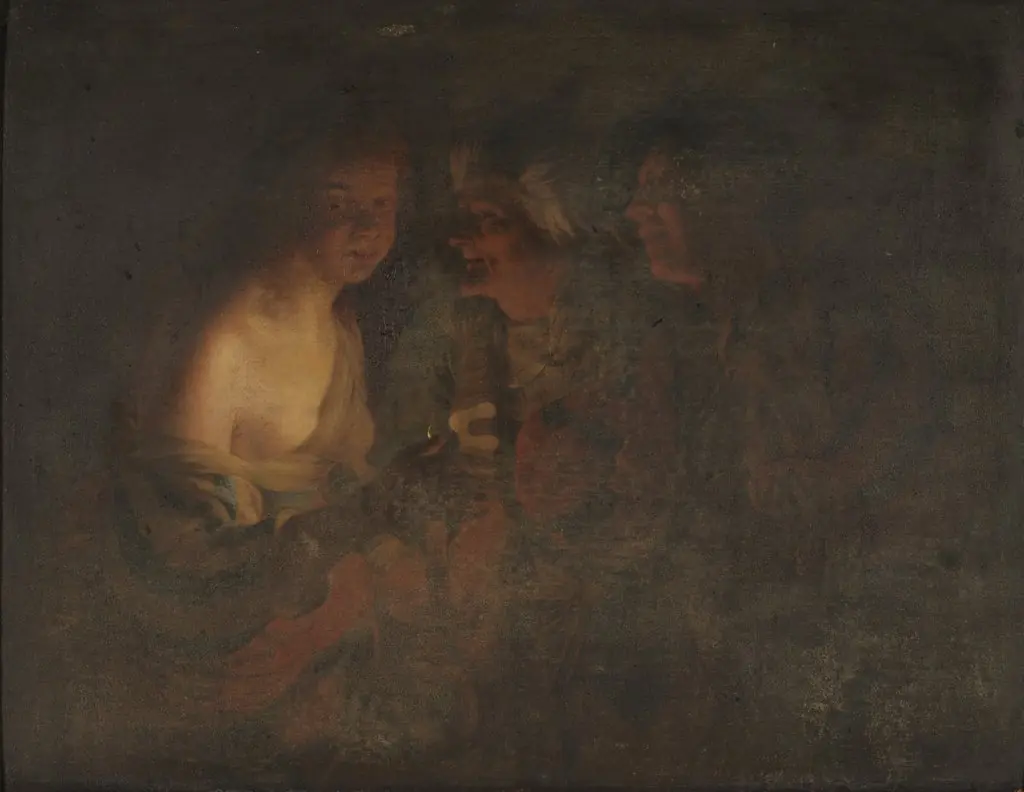 Young Woman with a Candlestick, Old Woman and a Violin Player
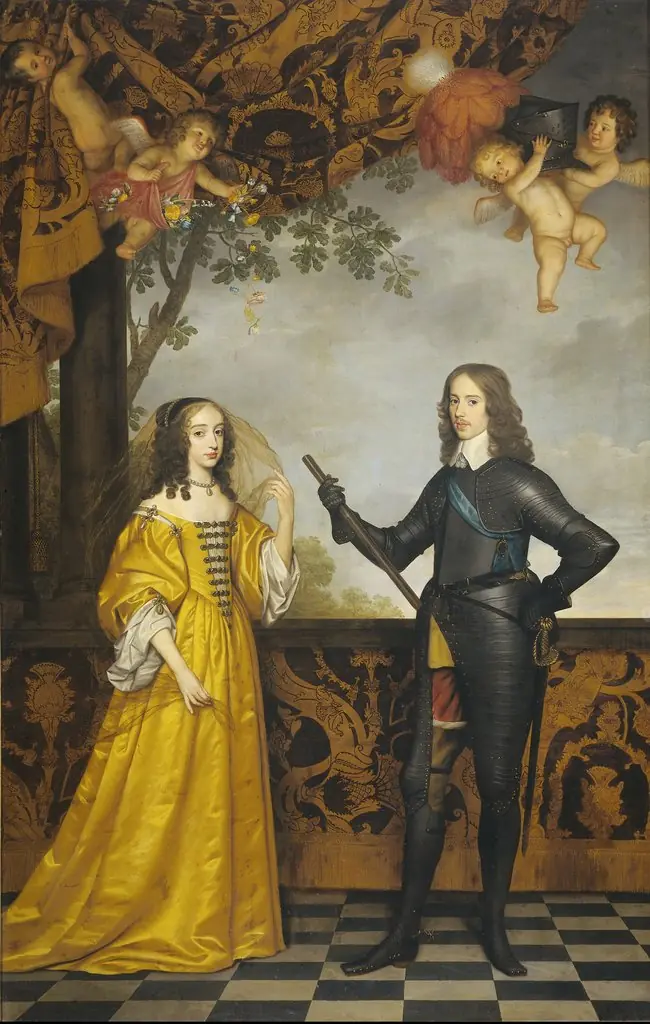 Willem II (1626-50), Prince of Orange, and his wife Maria Stuart (1631-60)
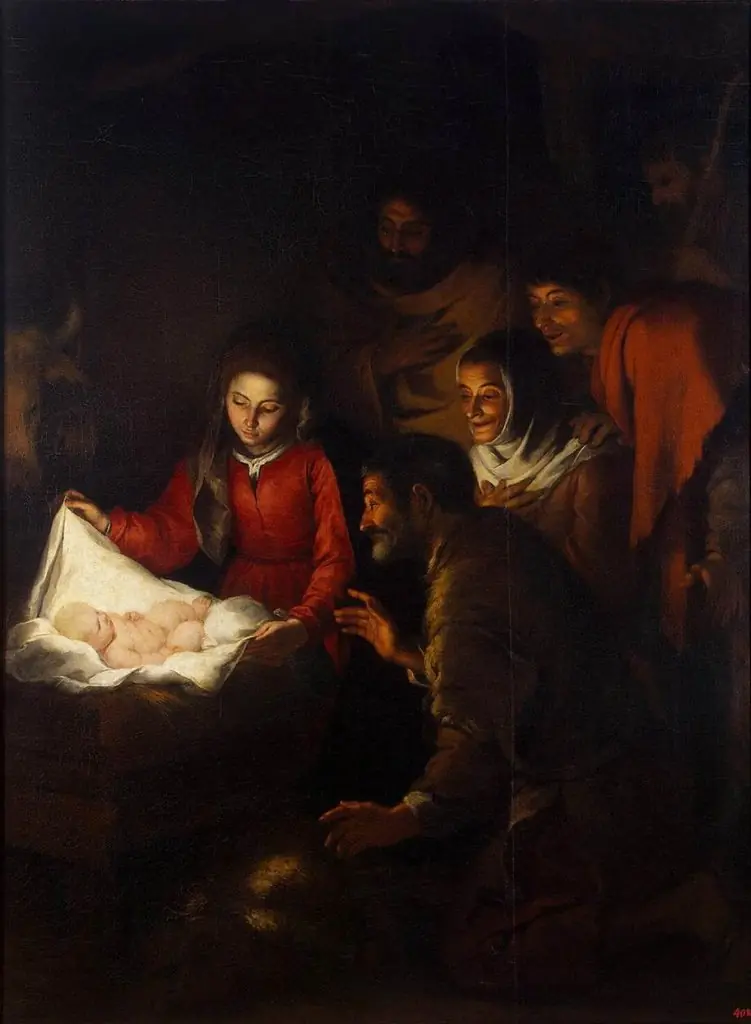
- Adoration of the Shepherds
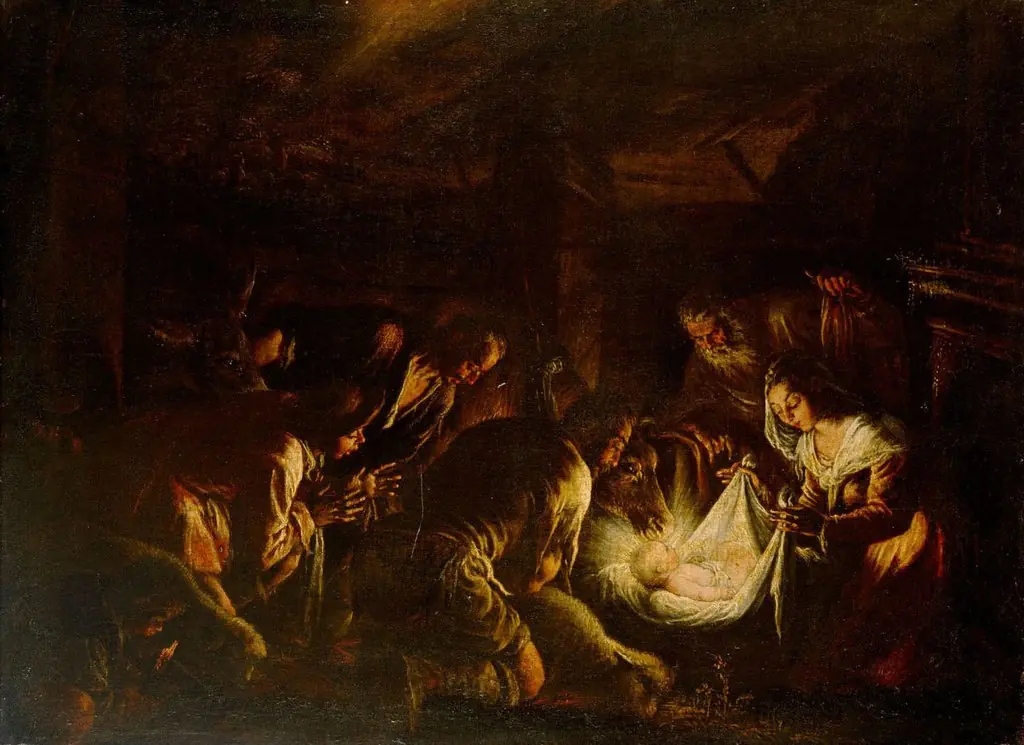 Adoration of the Shepherds
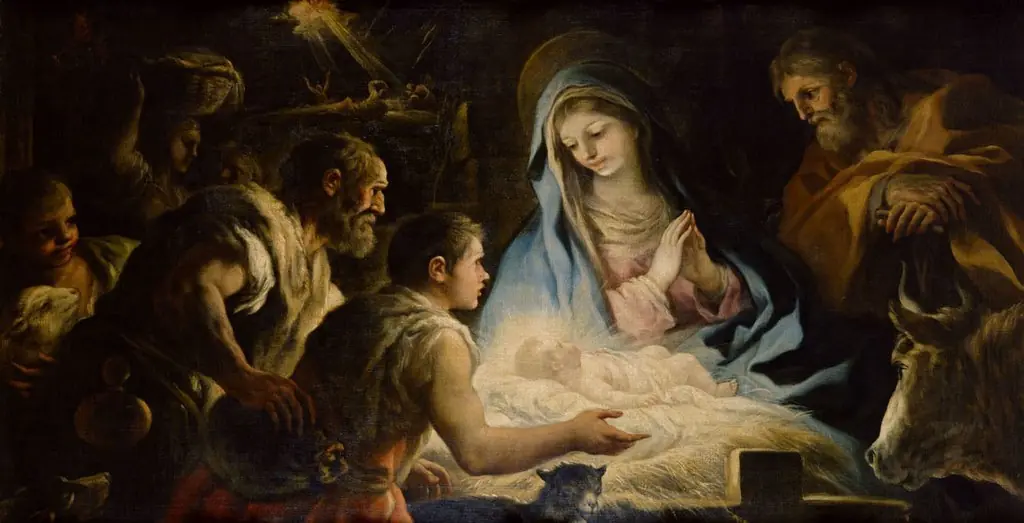 Adoration of the Shepherds (1696)
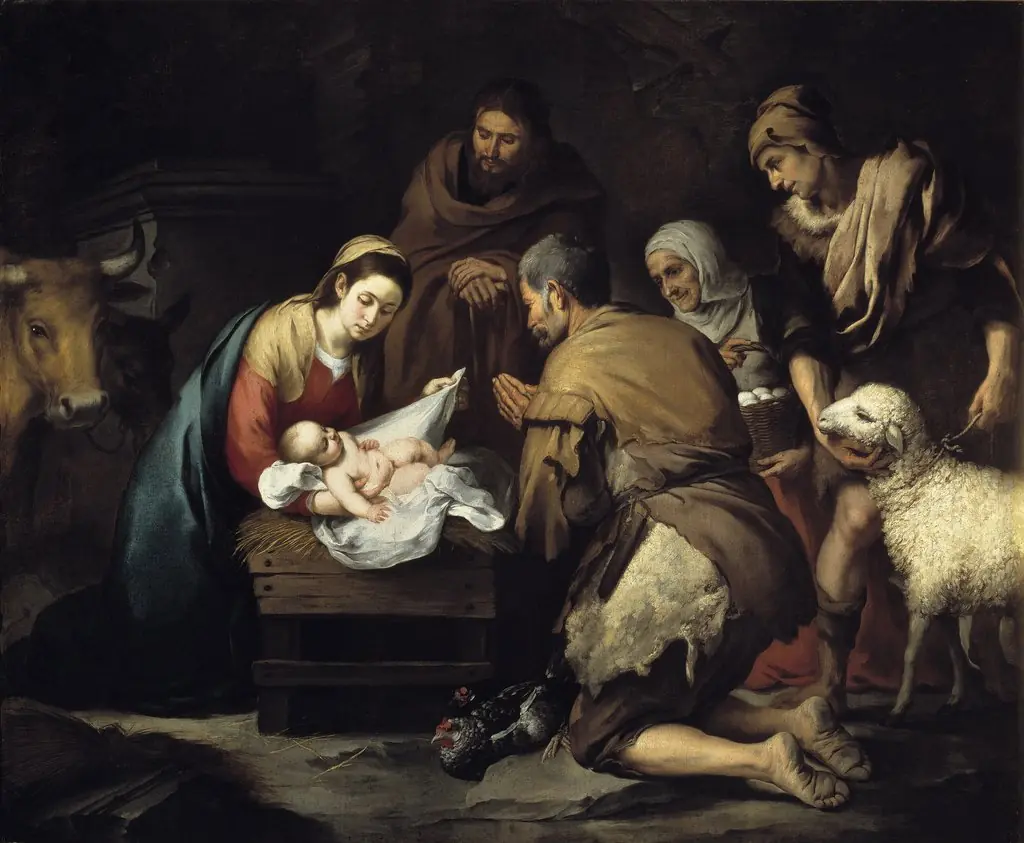 Adoration of the Shepherds
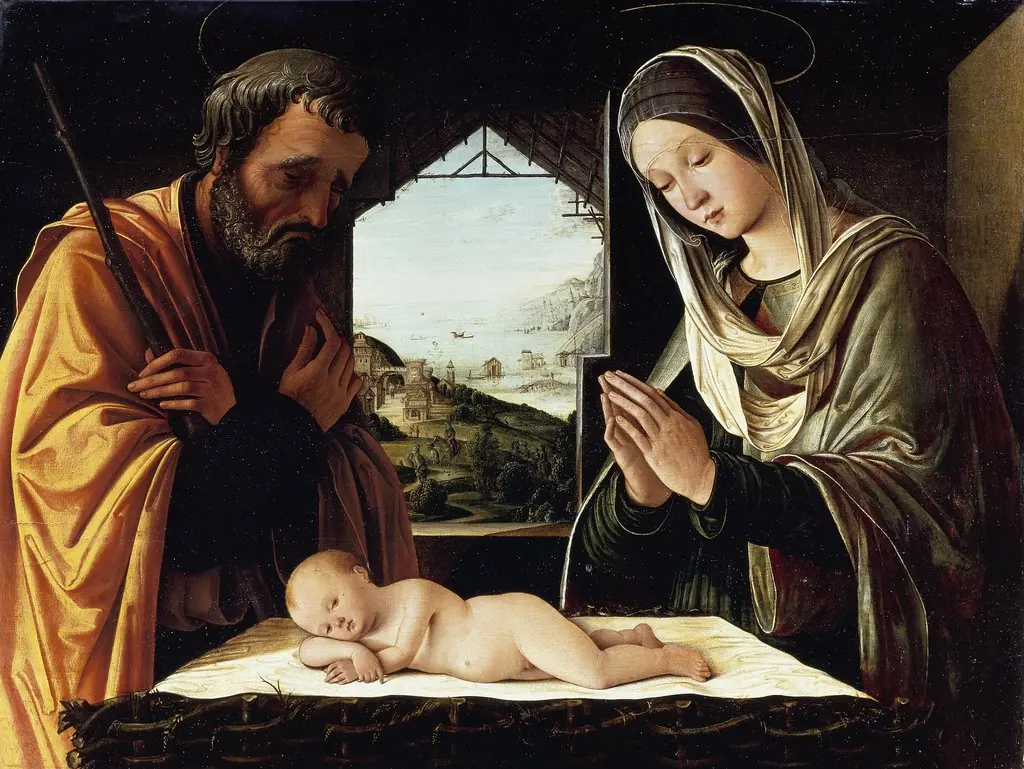 Holy Family (Nativity)
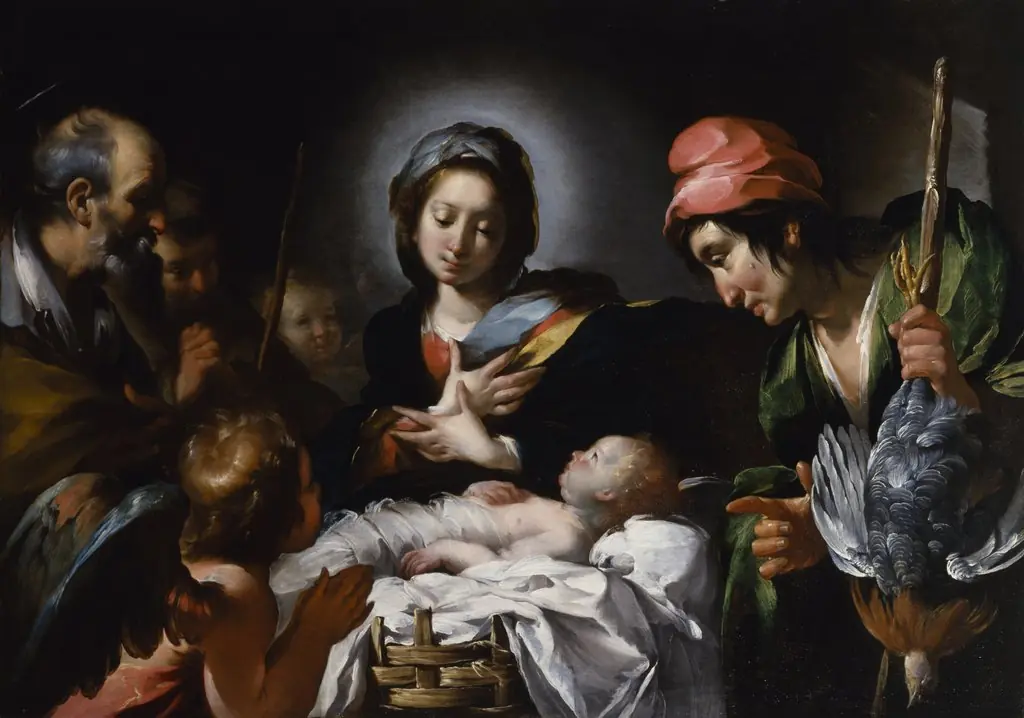 The Adoration of the Shepherds
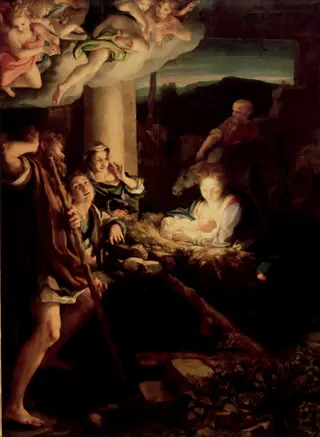 Nativity
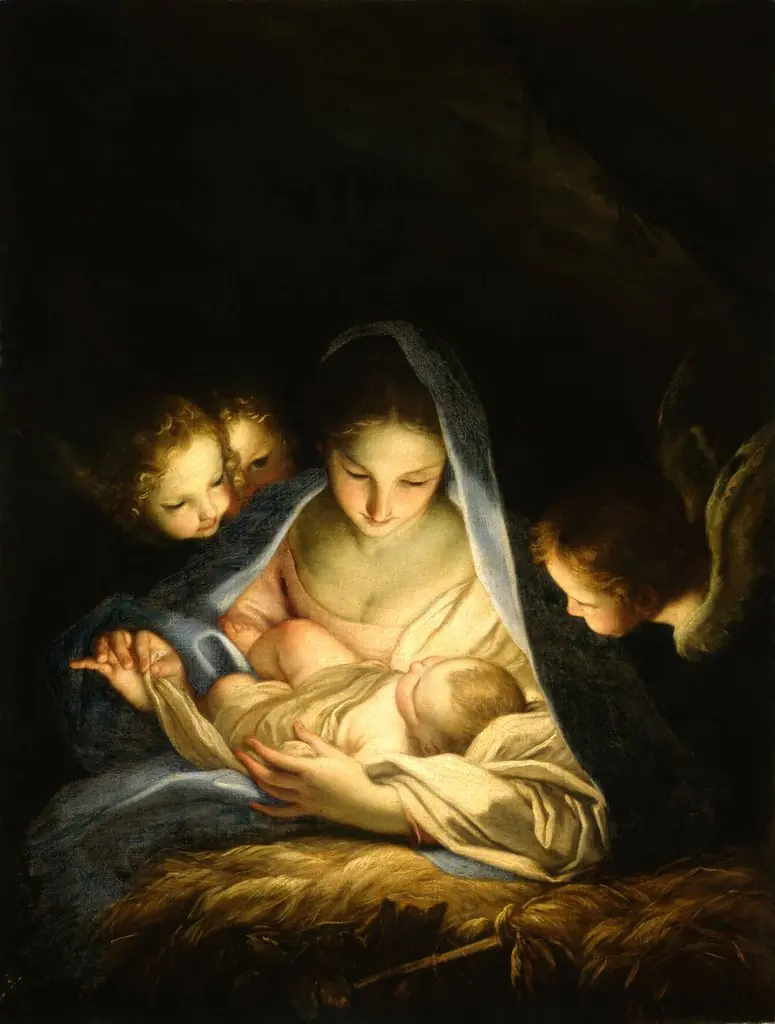 The Holy Night (The Nativity)
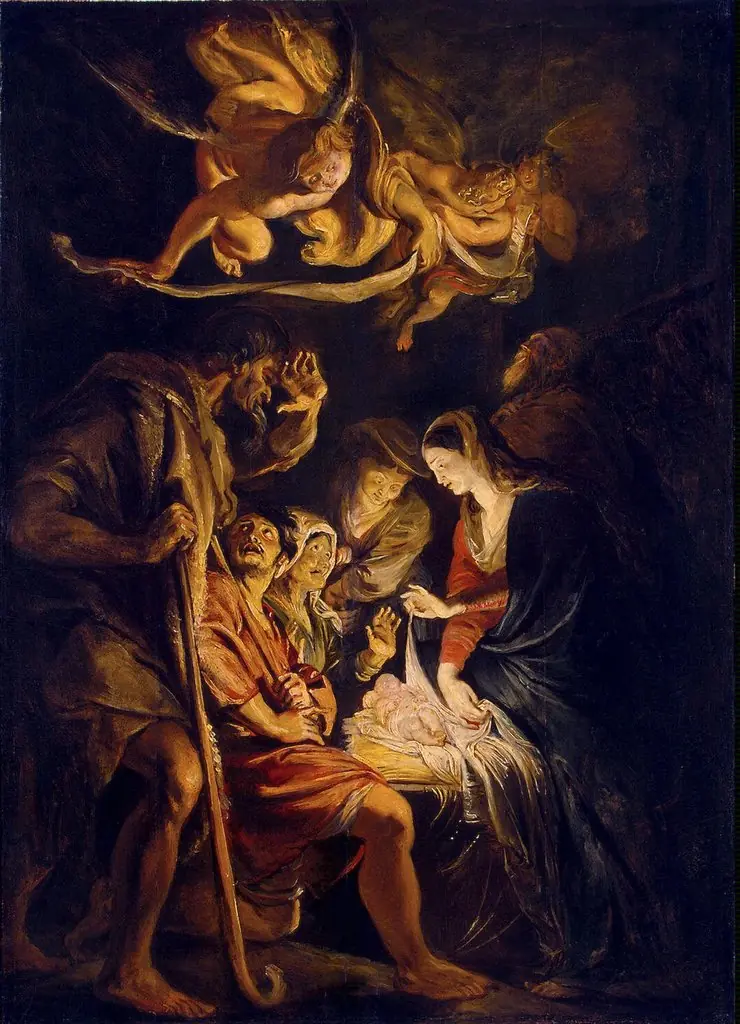 Adoration of the Shepherds (Hermitage)
 Profesorul Vasile Filip
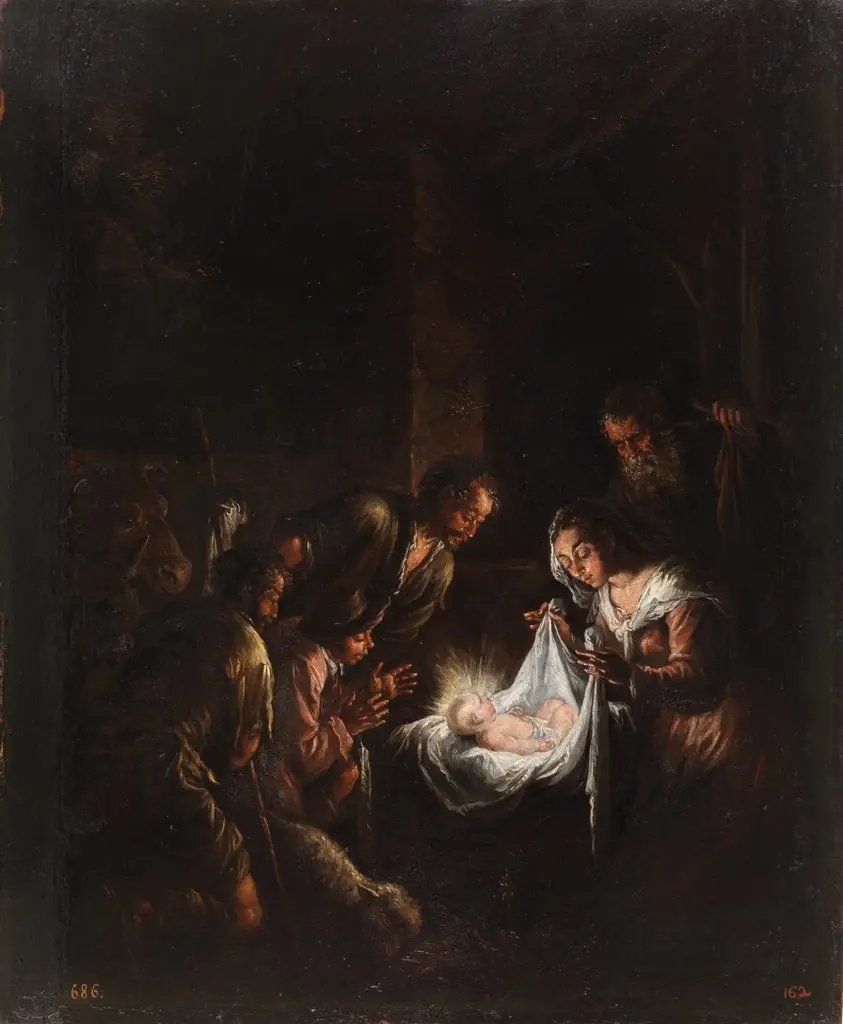 Adoration of the Shepherds
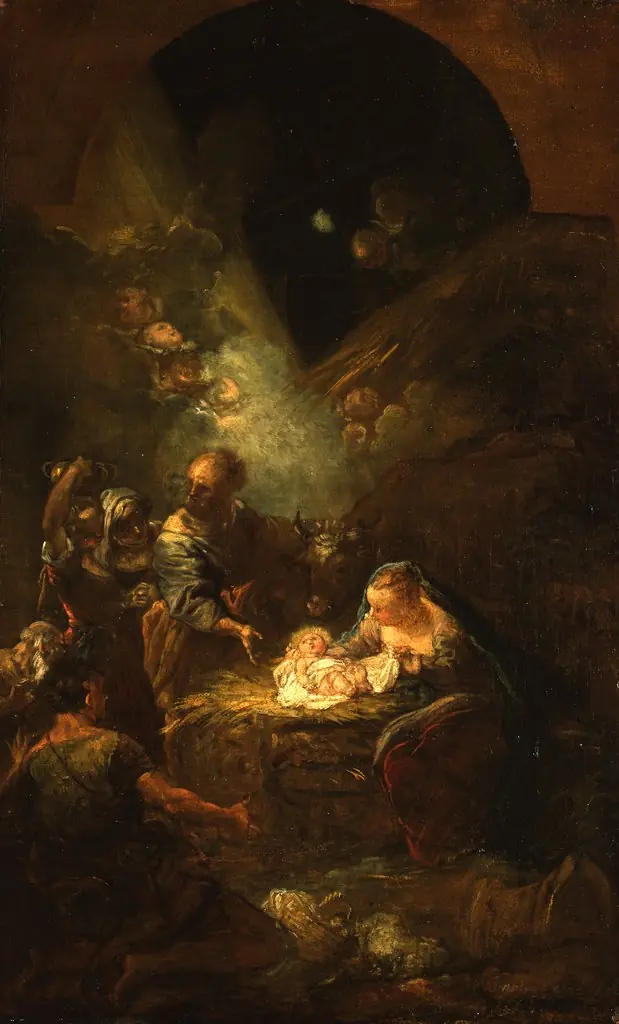 Adoration of the Sheperds