Artwork
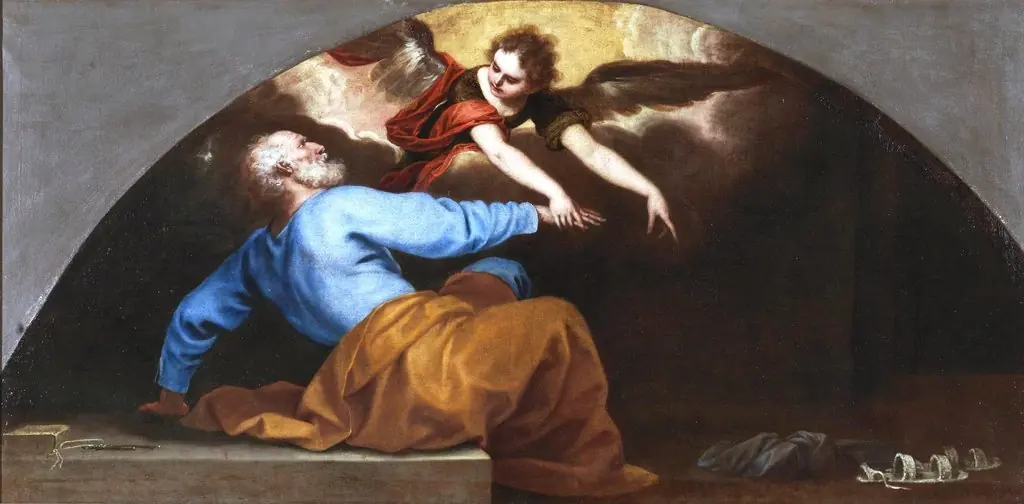
St. Peter's release from prison by the angel
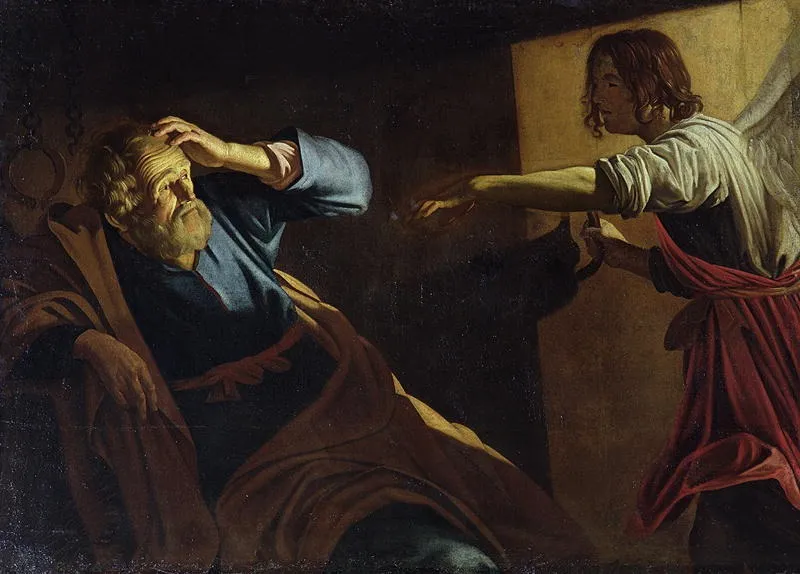
St. Peter's release from prison by the angel is an oil painting by the Early Baroque Italian artist Gerard van Honthorst. It dates from 1617 and is held in the collection of the Gemäldegalerie Berlin. St.
About this work
Subject & Meaning
The scene captures the instant the angel, having opened the cell door, urges the surprised apostle to rise and leave his confinement.
The painting depicts a specific narrative from Acts 12:6–7, illustrating the moment an angel frees Saint Peter from prison. The scene captures the instant the angel, having opened the cell door, urges the surprised apostle to rise and leave his confinement. Symbolically, the work emphasizes divine intervention through the dramatic contrast between the dark prison and the brilliant light emanating from the angel, which illuminates Peter's face.
This illumination serves as a visual metaphor for spiritual awakening and liberation. The composition focuses intensely on the interaction between the two figures, highlighting the urgency of the command and the apostle's sudden realization of his deliverance.
Technique & Style
The painting was executed in oil on canvas, a standard support for 17th‑century Dutch religious works. Gerard van Honthorst applied oil paint in thin, layered strokes to achieve a strong chiaroscuro effect that emphasizes the dramatic illumination entering the prison through the opened door. The composition relies on a focused light source, creating stark contrasts between shadow and brightness, while the figures display a sculptural, almost theatrical pose that conveys movement and emotional tension.
The canvas measures 179 cm in width and 129 cm in height, reflecting a large format typical of altarpiece‑scale religious paintings of the period.
History & Provenance
The painting was commissioned by Marchese Vincenzo Giustiniani, a knowledgeable collector who promoted Caravaggism, and was created by Gerard van Honthorst in Rome between 1616 and 1618, with an inception date of 1617. It depicts the liberation of Saint Peter from prison as described in Acts 12:6–7. The work was produced during Honthorst's Roman period, when the style of Caravaggio had reached its peak and the artist was overcoming the Mannerism of his homeland.
The painting entered the holdings of what is now the Gemäldegalerie Berlin in 1815, transferred from the Giustiniani collection. It has been recognized as a masterpiece and copied multiple times; the Dresden Kupferstichkabinett holds a drawing originally considered an autonomous preparatory study by Honthorst but now attributed to Abraham Bloemaert.
St. Peter's release from prison by the angel is held in the Gemäldegalerie Berlin, where it has been part of the collection since 1815. The work entered the royal Prussian gallery from the collection of Marchese Vincenzo Giustiniani in 1815. It is displayed in the gallery rooms of the Berlin Kulturforum. The painting measures 129 cm by 179 cm and was created in 1617.
Context
Painted during Gerard van Honthorst's Roman period, when the style of Caravaggio had reached its peak and the artist was moving beyond the Mannerism of his Dutch training, St. Peter's Release from Prison by the Angel was commissioned by the Marchese Vincenzo Giustiniani, a discerning patron who actively promoted Caravaggism. The work was produced in Rome between 1616 and 1618 and entered the royal Prussian collection in 1815 from the Giustiniani holdings, where it remains in the Gemäldegalerie Berlin.
The painting has been recognized as a masterpiece distinguished by its virtuoso handling of light and the intense body language of its two figures, with Honthorst distilling the scene to the angel's command. Its significance is further attested by multiple copies, including a preparatory drawing once attributed to Honthorst himself but now reassigned to Abraham Bloemaert, held by the Kupferstichkabinett in Dresden.
Legacy
The painting quickly became a touchstone of Utrecht Caravaggism after Honthorst returned from Rome, where its concentrated nocturnal lighting and sharply modeled figures were widely praised and emulated.
Its reputation as a masterpiece led to numerous copies and a drawn variant in Dresden, initially thought to be an autograph study but now attributed to Abraham Bloemaert.
Acquired in 1815 for the royal Prussian collection, the work entered the Berlin Gemäldegalerie, where it has remained a central example of early seventeenth-century religious painting.
Overview
St. Peter's release from prison by the angel is a 1617 painting by Gerard van Honthorst, a Dutch artist influenced by Italian Baroque style.
Artist & collection
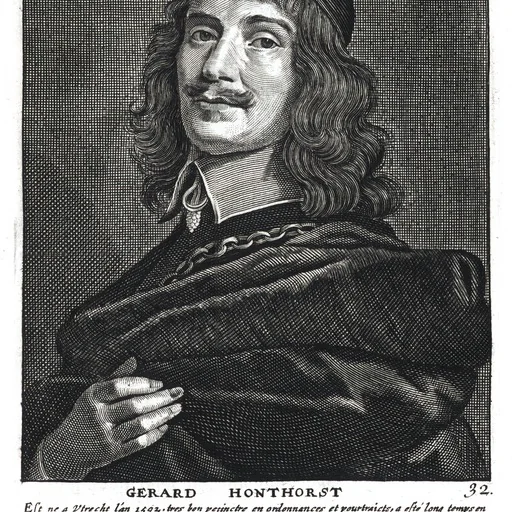
Artist
Gerard "Gerrit" van Honthorst (4 November 1592 – 27 April 1656) was a Dutch Golden Age painter who became known for his depiction of artificially lit scenes, eventually receiving the Italian nickname Gherardo delle Notti ("Gerard of the…

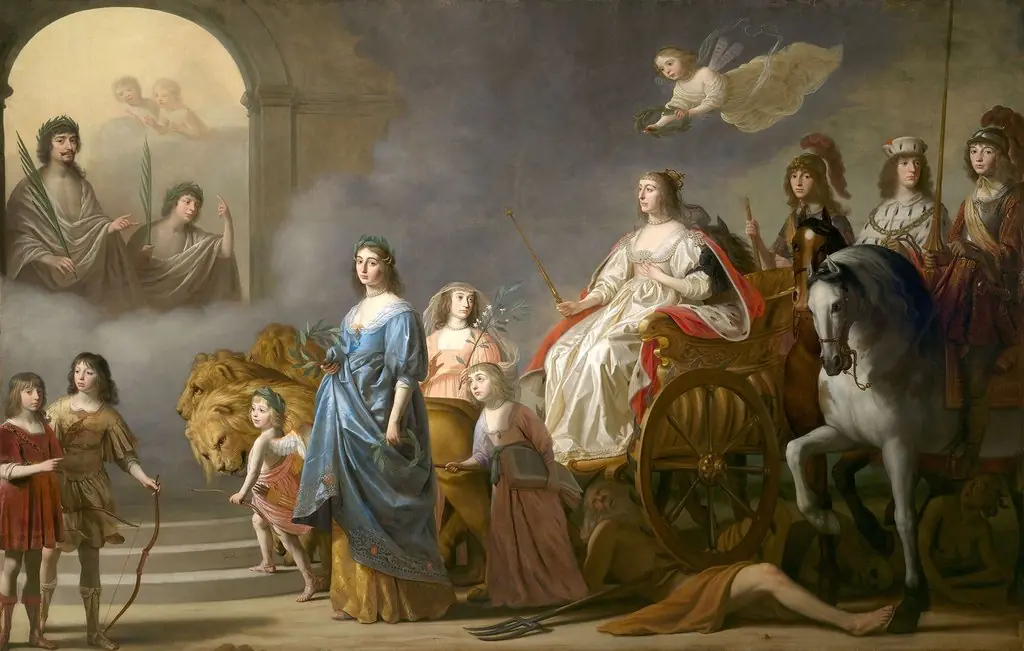 The Triumph of the Winter Queen: Allegory of the Just
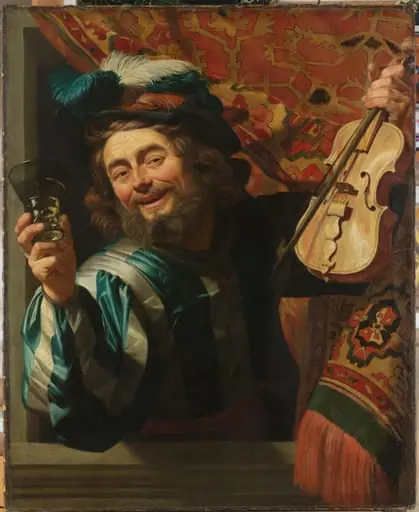 Een vrolijke vioolspeler
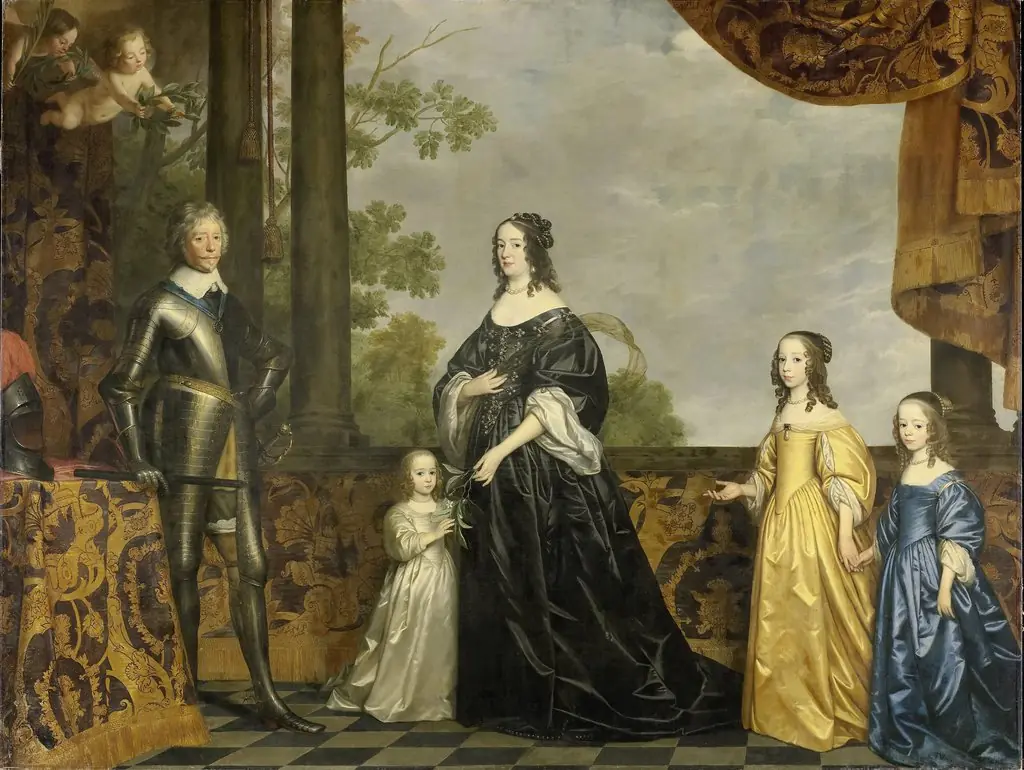 Frederik Hendrik (1584-1647), Prince of Orange, his wife Amalia van Solms (1602-75) and their three youngest daughters, Albertina Agnes (1634-96), Henrietta Catharina (1637-1708) and Maria (1642-88)
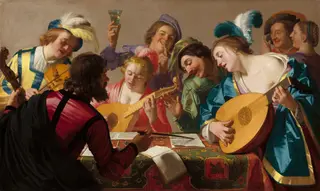 The Concert
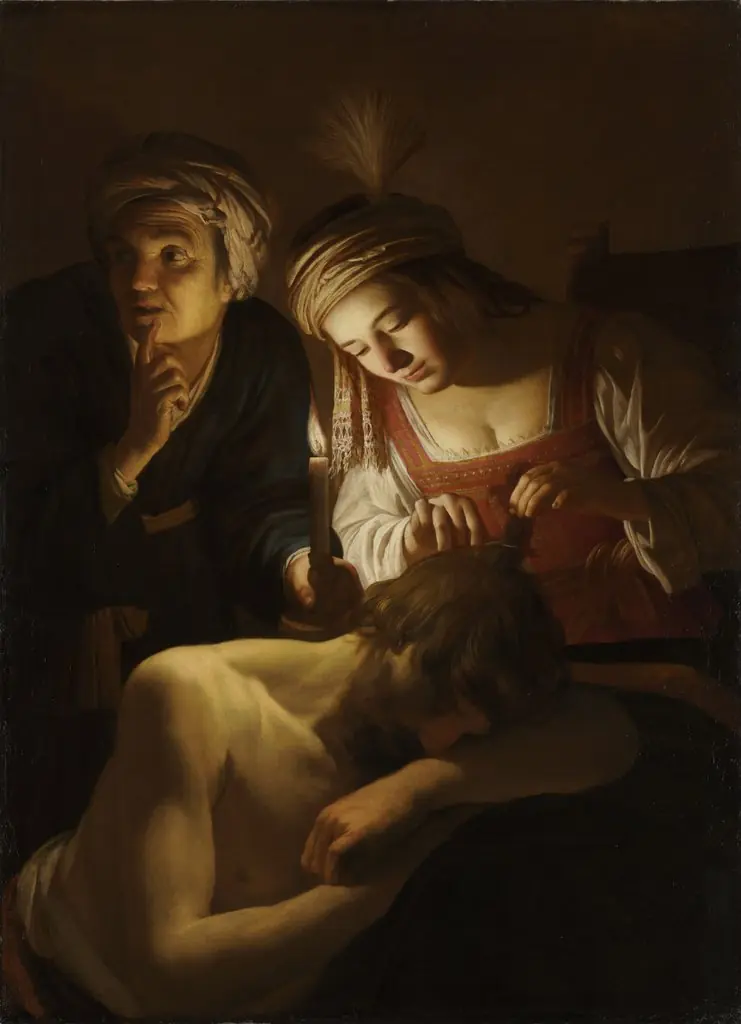 Samson and Delilah
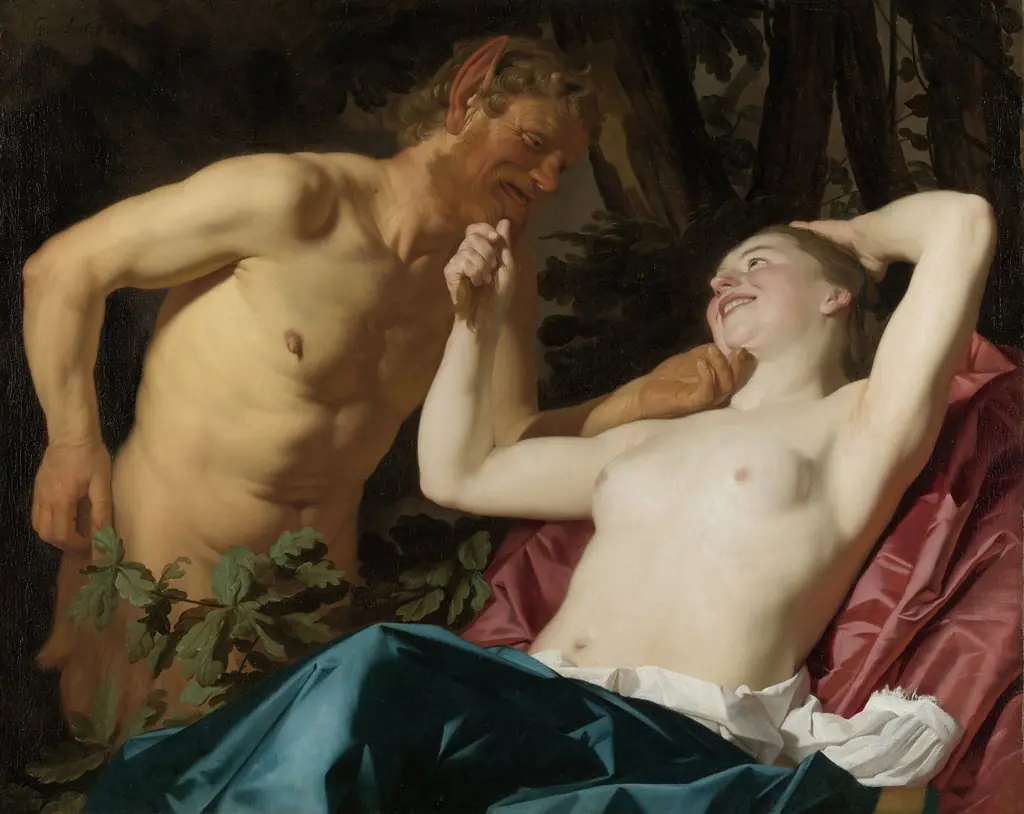 Satyr and Nymph
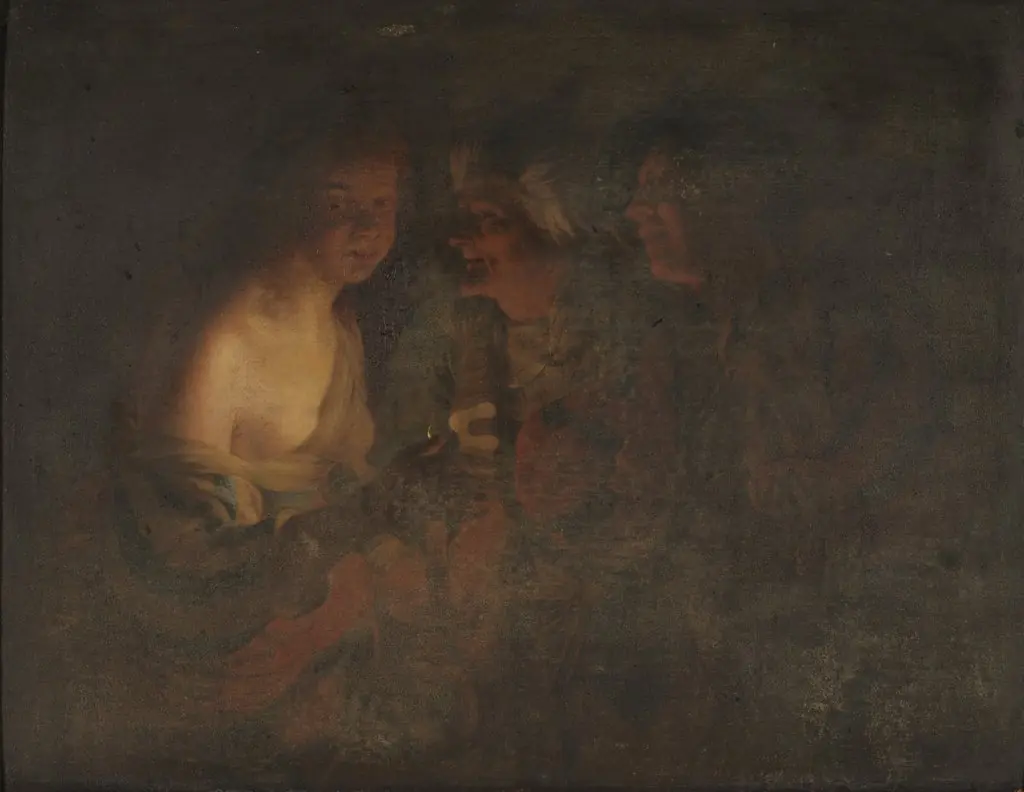 Young Woman with a Candlestick, Old Woman and a Violin Player
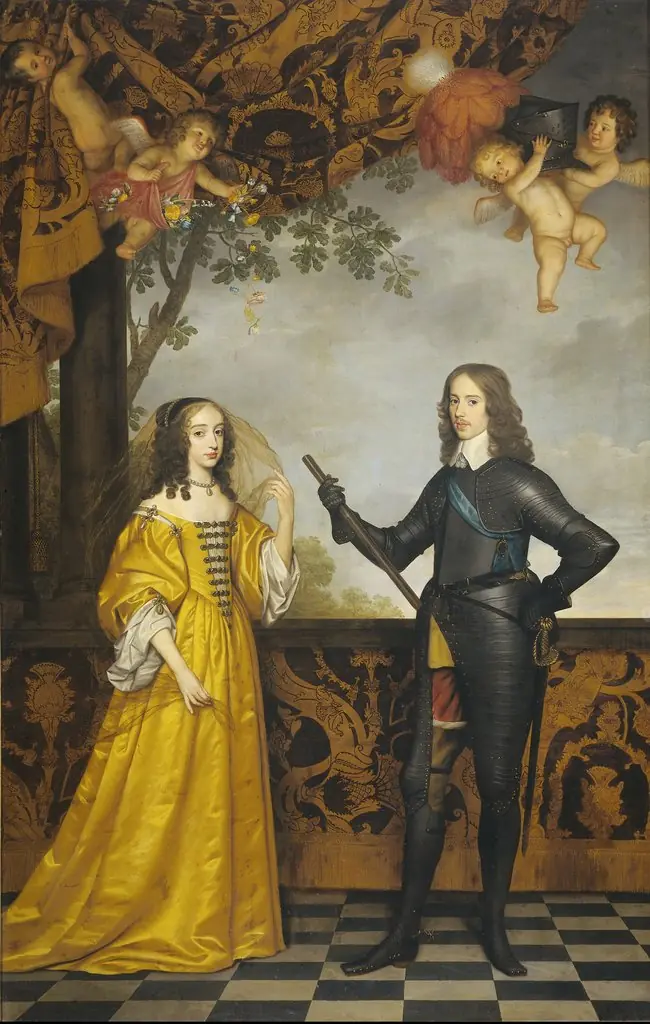 Willem II (1626-50), Prince of Orange, and his wife Maria Stuart (1631-60)