Artwork
Christ giving his Blood
Christ giving his Blood is an unspecified painting by the Mannerist artist Lorenzo Lotto. It dates from 1540 and is held in the collection of the Kunsthistorisches Museum.
About this work
Subject & Meaning
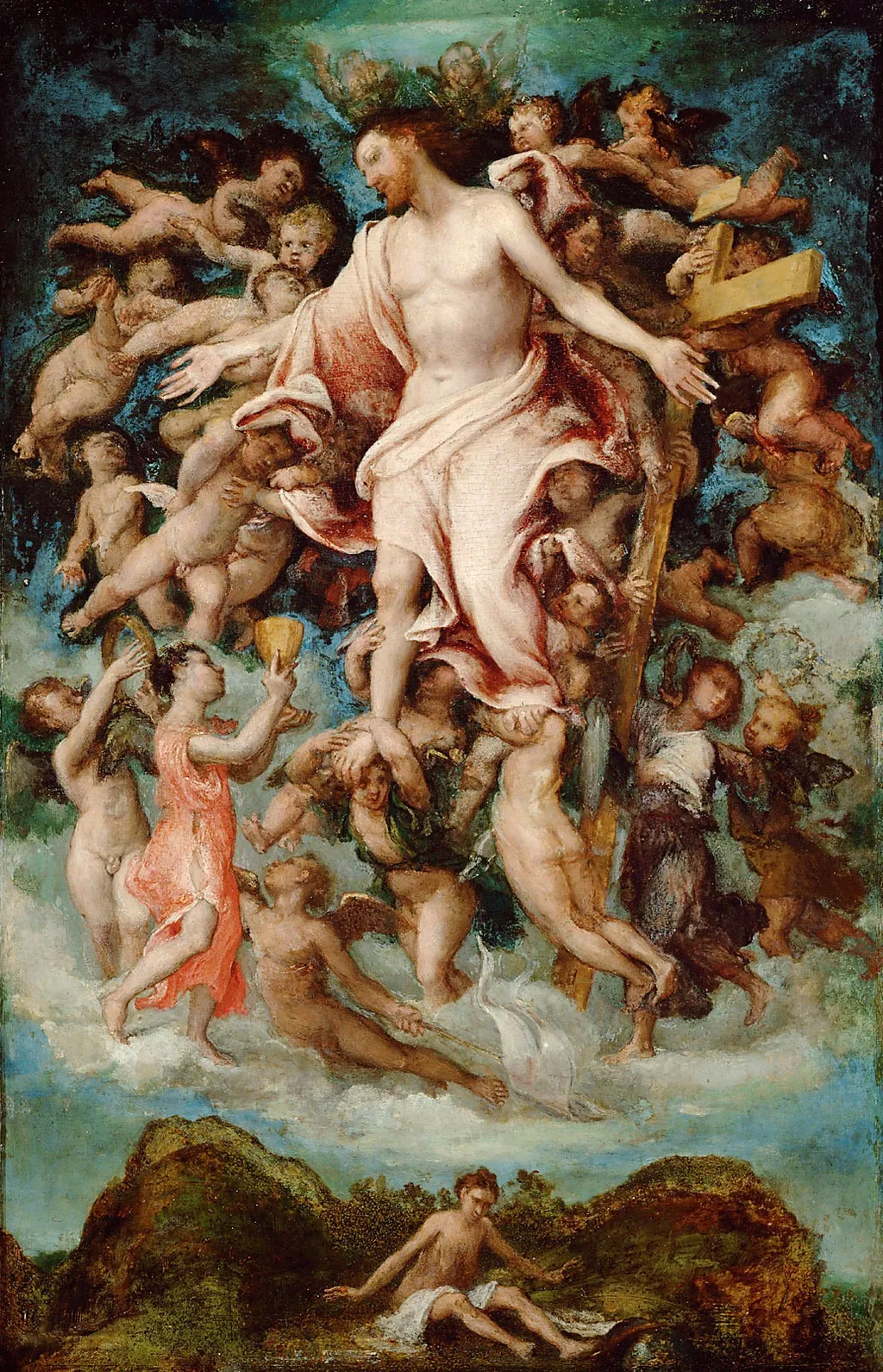
Christ is portrayed with open arms echoing his crucifixion, accompanied by instruments of the Passion including the True Cross, nails, and the crown of thrones.
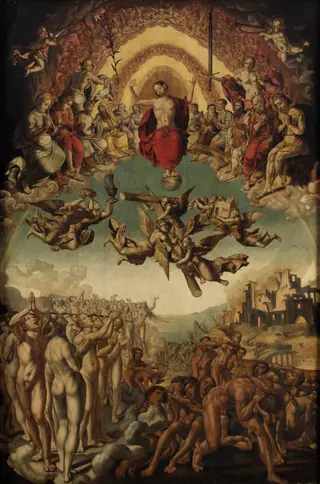
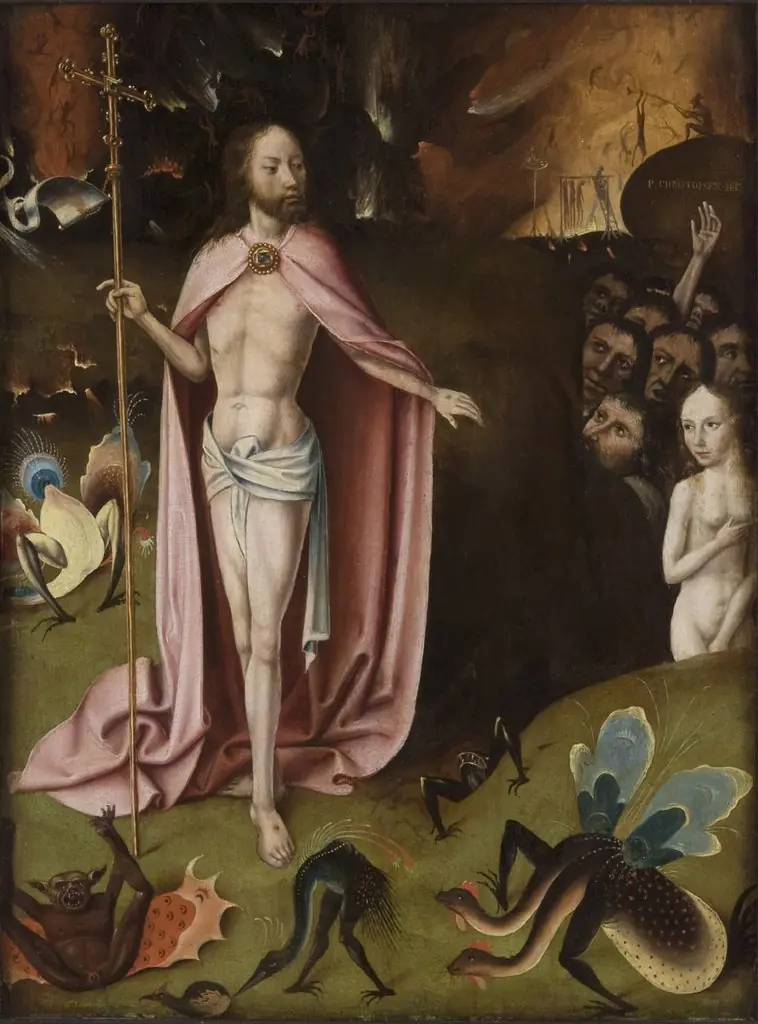
The painting depicts Christ in glory, resurrected and surrounded by angels, presenting a Eucharistic image where blood flows from his side wound into a golden chalice held by an angel. Christ is portrayed with open arms echoing his crucifixion, accompanied by instruments of the Passion including the True Cross, nails, and the crown of thrones.
At the base, a nude female figure holding a mirror stands on a patch of earth, interpreted variously as an allegory of heresy, Mary Magdalene, or Eve representing sinful humanity. This lower figure contrasts with the divine triumph above, symbolizing the human condition in need of redemption. While some scholars have suggested heterodox undertones linking the work to Reformation ideas, others argue the composition serves as a staunch defense of orthodox Christian doctrine, emphasizing Christ's victory over sin and death through merciful love.
Technique & Style
Executed in oil on canvas, this work measures 50 by 32 centimeters. The composition features a central figure of Christ in glory surrounded by angels against a sky transitioning from light blue to intense hues at the upper register. Christ is depicted with open arms echoing the Crucifixion, bleeding from his side into a golden chalice held by an angel in a red tunic.
Additional angels display instruments of the Passion, including nails and the crown of thorns, while a cross stands to the left. The lower section presents a nude female figure on a patch of earth holding a mirror, interpreted variously as an allegory of heresy, Eve, or Mary Magdalene. The painting combines humanized figuration with vibrant coloration to convey theological themes of redemption and triumph over sin.
History & Provenance
The painting was commissioned from Lorenzo Lotto by Federico Priuli, a prominent Venetian patrician, during the artist's stay in Treviso in 1543. It is an oil on canvas dated to approximately 1540–1545. The work came into being during one of the most difficult periods of Lotto's life, when he was aging, unsettled, and poorly received in Venice, where Titian's dominance overshadowed other artists.
Priuli was dissatisfied with the result, describing it as a "quadretto piccolo" showing the Saviour shedding his blood in the sacrament surrounded by many little angels. Because of this reaction, Lotto was subsequently required to return to Priuli an additional small painting on panel, "un'altra tavoletta simile a quella ch'el me havea data a dipinzere." The painting is now held in Vienna at the Kunsthistorisches Museum.
The painting is held in Vienna at the Kunsthistorisches Museum, inventoried as GG_138.
It was commissioned from Lotto by the Venetian patrician Federico Priuli in Treviso in 1543 and delivered after minor adjustments prompted by the patron’s dissatisfaction with the first version.
The work has been exhibited periodically within the museum’s holdings; it was also shown in the 1955 exhibition “Lorenzo Lotto” in Venice and in the 1999–2000 exhibition “Lorenzo Lotto: Rediscovered Master of the Renaissance” in Bergamo and Madrid.
Context
The critical reception of Lorenzo Lotto’s Christ giving his Blood (c. 1540–45) has long centered on its theological and stylistic ambiguities. Scholars such as Francesca Cortesi Bosco argue the work reaffirms orthodox doctrine, aligning with Lotto’s later religious commissions like the Polyptych of Ponteranica. Others, including Bernard Berenson, interpret the lower figure, a nude woman with a mirror, as an unsettling symbol of human sin or heresy, reflecting the era’s religious tensions.
The painting was commissioned by Federico Priuli, a Venetian patrician with suspected heterodox ties, during Lotto’s difficult late period in Treviso, when the artist faced marginalization in Venice under Titian’s dominance.
Its iconography, Christ in glory amid cherubs, blood spilling into a chalice, and Passion symbols, has been read as both a defense of Catholic Eucharistic doctrine and, controversially, as subtly sympathetic to Reformist critiques. The unresolved debates around the mirror-bearing figure underscore the work’s contested place in art history, situated between Counter-Reformation orthodoxy and the lingering shadows of Protestant challenges.
Overview
Lorenzo Lotto’s Christ Giving His Blood is an oil painting executed in 1540. The work belongs to the later phase of the Venetian school and reflects the transitional Mannerist style that followed the High Renaissance. It is part of the permanent collection of the Kunsthistorisches Museum in Vienna and exemplifies Lotto’s focus on devotional subjects for ecclesiastical commissions.
Artist & collection
Artist
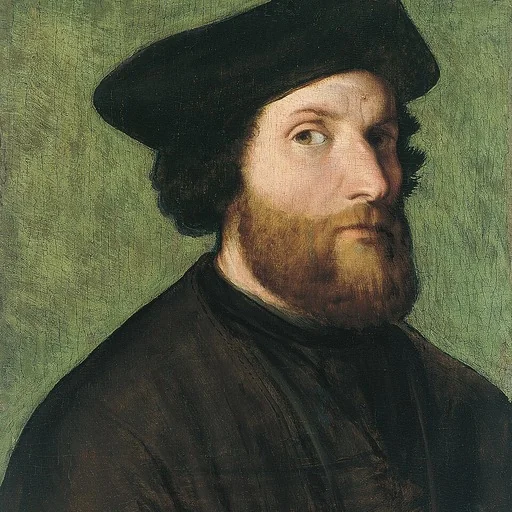
Lorenzo Lotto (c. 1480 – 1556/57) was an Italian Renaissance painter, draughtsman, and illustrator, traditionally placed in the Venetian school, though much of his career was spent in other north Italian cities. He…