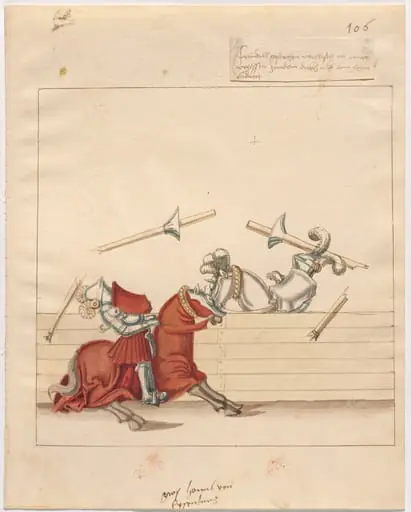
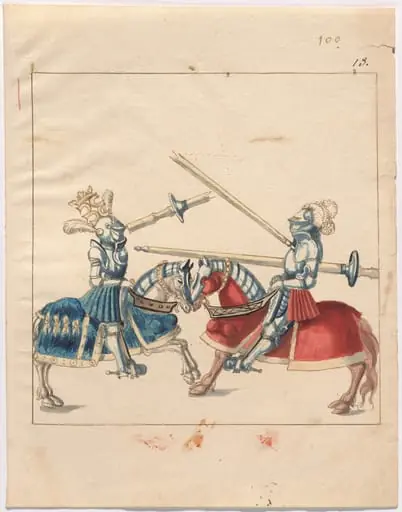
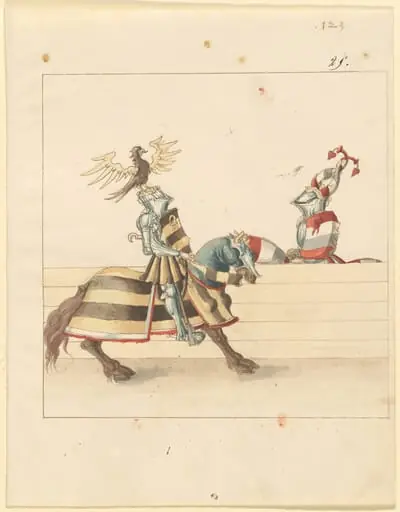
Artwork
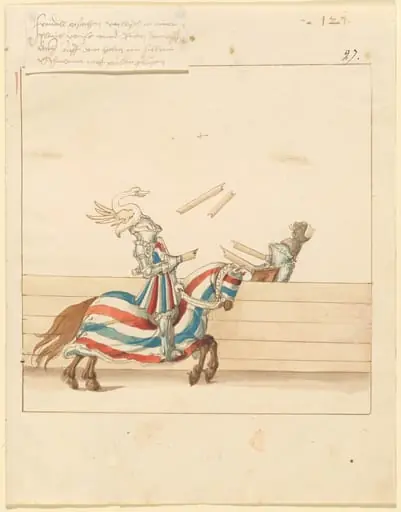
Italian Joust of Peace
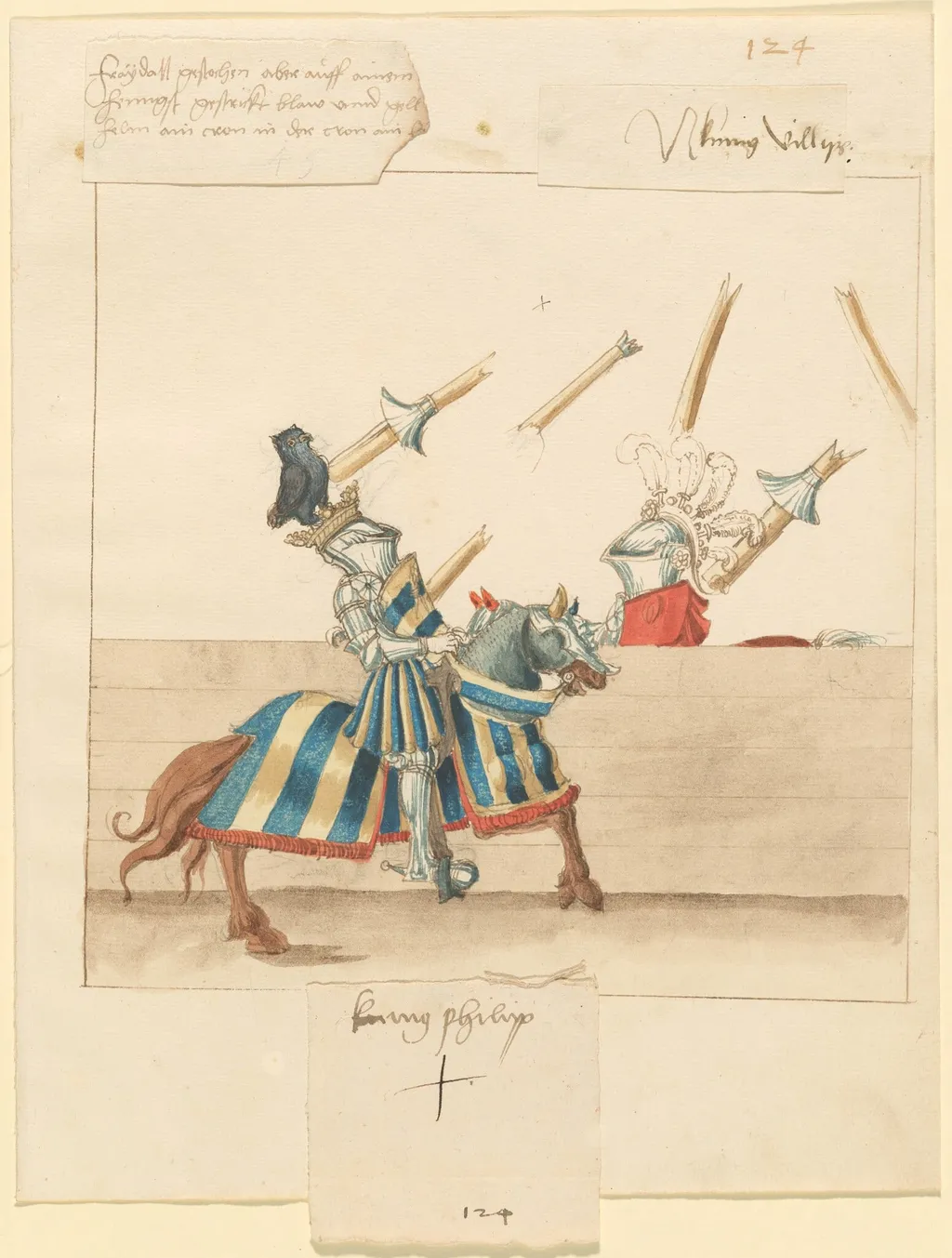
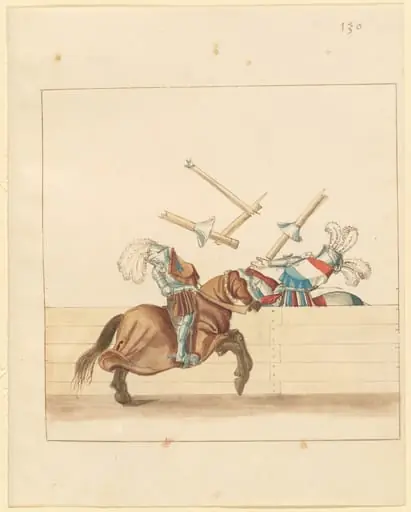
Italian Joust of Peace is an ink drawing by the Renaissance artist German 16th Century. It dates from 1514 and is held in the collection of the National Gallery of Art.
- Inscription
- Inscribed:upper left by unknown hand in brown ink, on separate paper pasted down: Fraydall gestochen aber auff ainem henngst gestrickt blaw und gell, helm ain cron, in der cron ain k[... the rest torn off and lost]; upper right by unknown hand in brown ink: 124; upper right by unknown hand in brown ink on separate paper laid down: N kunig Vilipps; bottom center by unknown hand in brown ink on separate paper laid down: Kunig Philipp / 124; lower left on mount in black ink: 124; lower right on mount in black ink: A 237
About this work
Overview
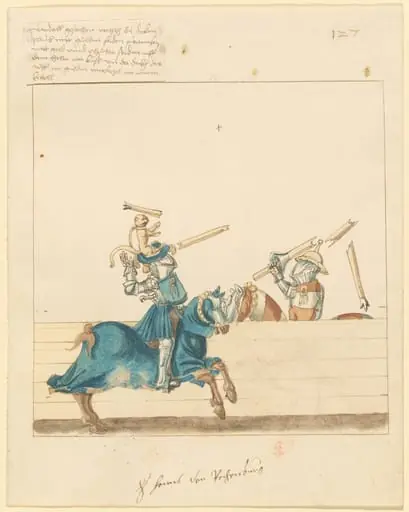
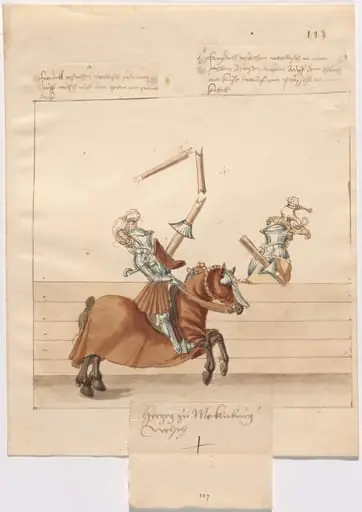
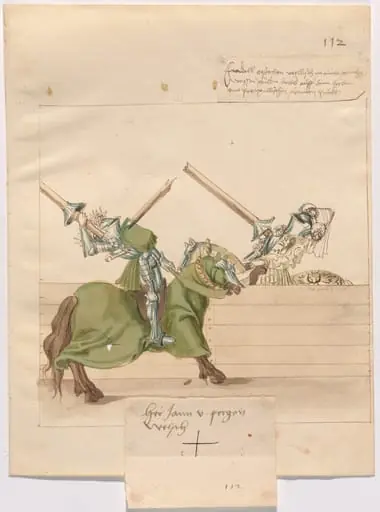
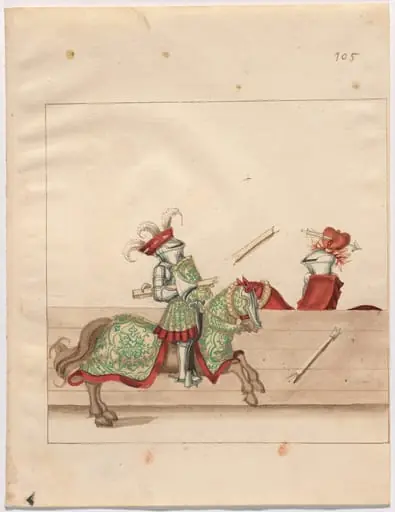
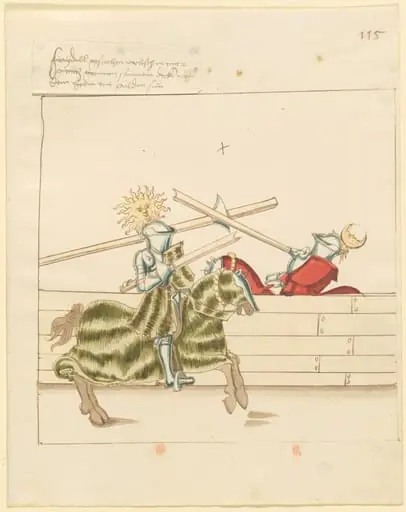
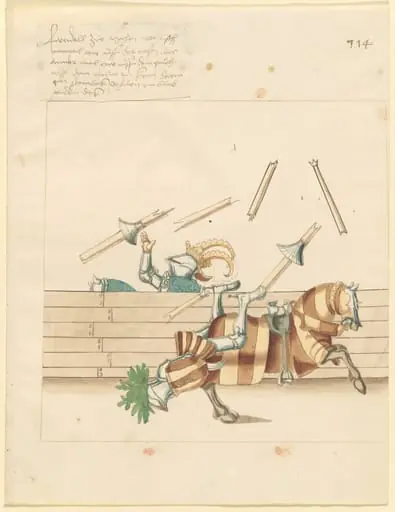
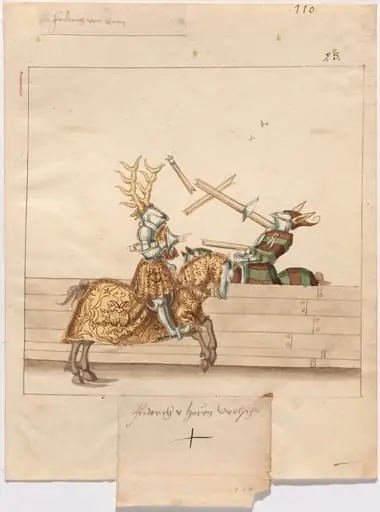
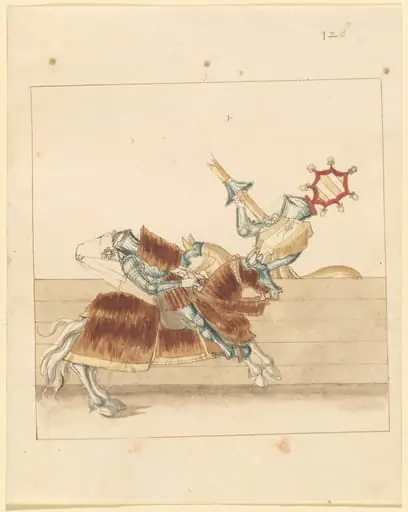
Italian Joust of Peace is a 16th‑century drawing executed in pen and brown ink, enhanced with watercolor applied over black chalk and leadpoint on laid paper. The work portrays a dramatic jousting encounter between two heavily armoured riders, their lances meeting in mid‑air. It is part of the collection of the National Gallery of Art.
Subject & Meaning
The composition captures a moment of conflict and spectacle: two knights on horseback collide lance‑to‑breastplate, one of the weapons splintering upon impact. The detailed, gilded armor and the surrounding onlookers, confined behind wooden railings, emphasize the ceremonial nature of the tournament and the social hierarchy of the audience.
Technique & Style
The artist combined several media, beginning with a foundation of black chalk and leadpoint to define form, then overlaying pen work in brown ink. Transparent washes of watercolor were glazed in successive layers, creating a luminous sheen on the metallic surfaces. This method allows the armor to appear reflective while retaining the drawing’s linear precision.
History & Provenance
Created by an unidentified German artist active in the 1500s, the drawing entered the National Gallery of Art’s holdings through acquisition in the 20th century. Its provenance prior to that period is not fully documented, but the work reflects the period’s interest in chivalric sport and the exchange of artistic ideas across northern Europe.
Context
Jousting scenes were popular motifs in Renaissance art, serving both as records of elite sport and as allegorical references to peace and conflict. The title ‘Joust of Peace’ suggests an intended moral reading, positioning the controlled violence of the tournament as a means of maintaining social order.
Artist & collection

Artist
A German artist of the late 1500s drew knights clashing in parades and mock battles, filling sheets with detailed ink colored lightly in watercolor: soldiers mid-joust, shields flying, foot soldiers sparring with spears.

![Abraham Entertaining the Angels [verso], by German 16th Century](https://artifactworldgallery.com/img/german-16th-century--abraham-entertaining-the-angels-verso--69d1b25f4eba0a53-w320.webp)