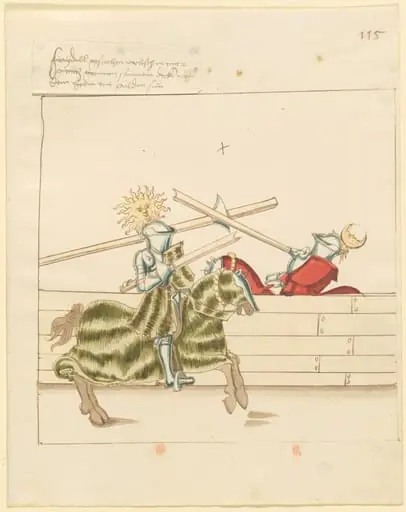
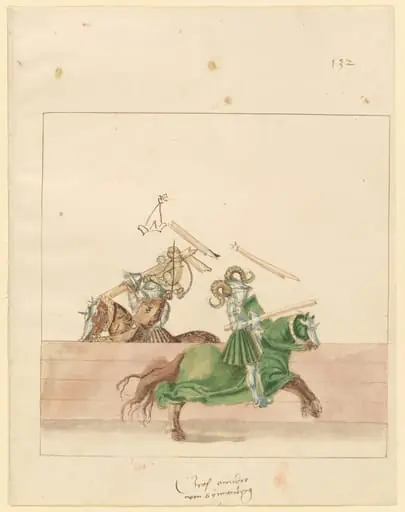
Artwork
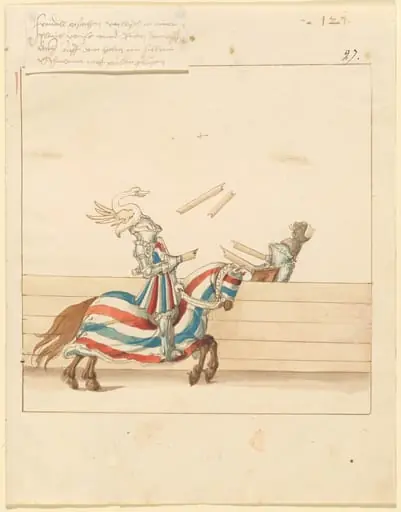
Italian Joust of Peace
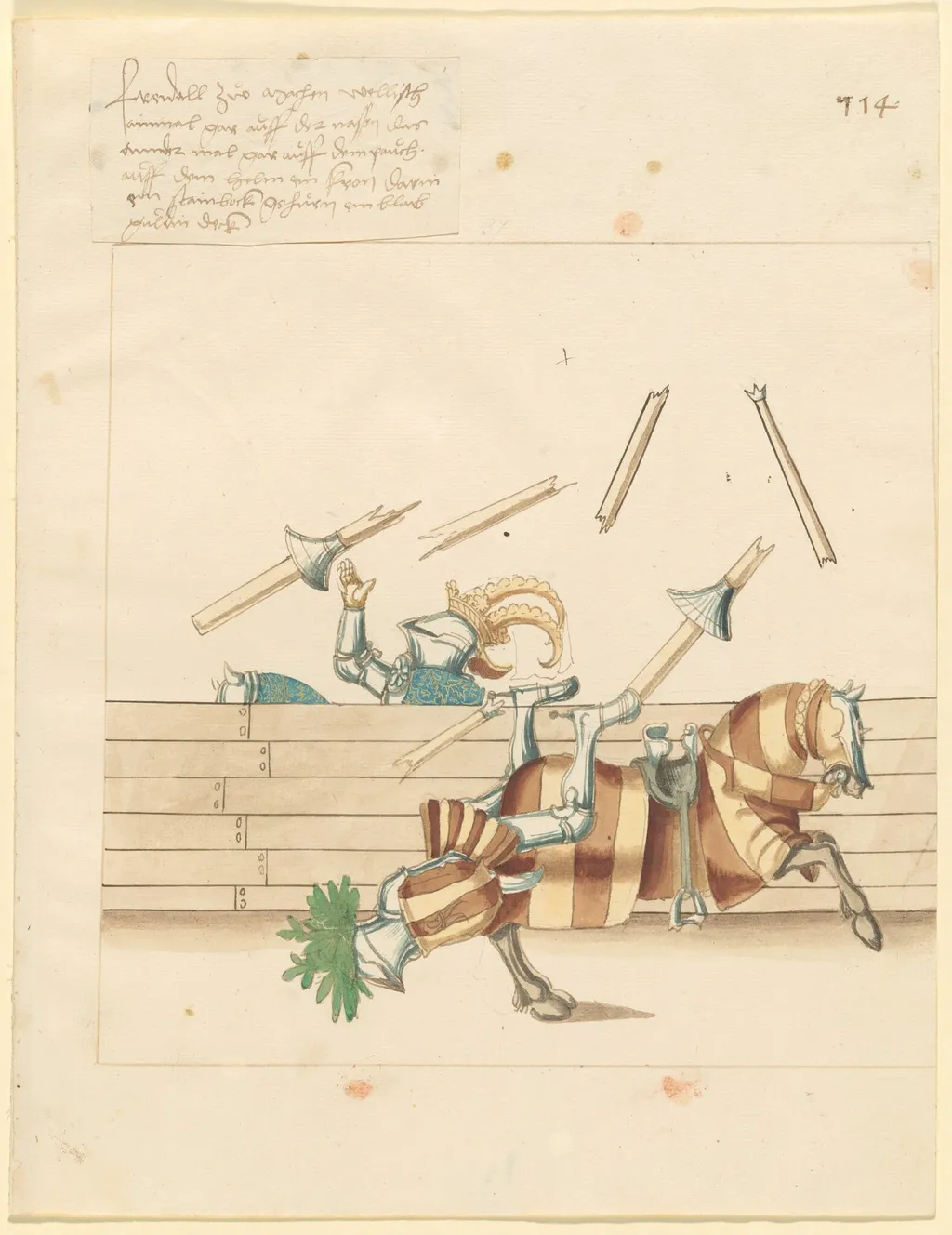
Italian Joust of Peace is an ink drawing by the Renaissance artist German 16th Century. It dates from 1514 and is held in the collection of the National Gallery of Art.
- Inscription
- Inscribed:upper left by unknown hand in brown ink, on separate paper pasted down: Freidall zw machen wellisch, ainmal gar auff der nassen, das annder mal gar auff dem pauch, auff dem helm ein kron, darin ein stainbockgehurn, ein blab guildin deck; upper right by unknown hand in brown ink: 117; center by unknown hand in graphite: [37/34?]; lower left on mount in black ink: 114; lower right on mount in black ink: A 118
About this work
Overview
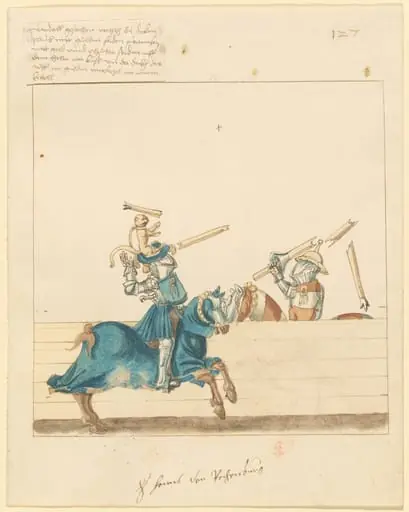
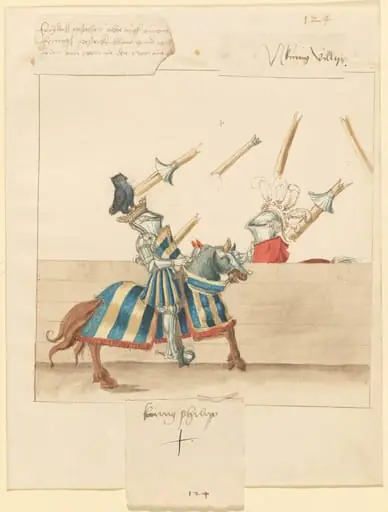
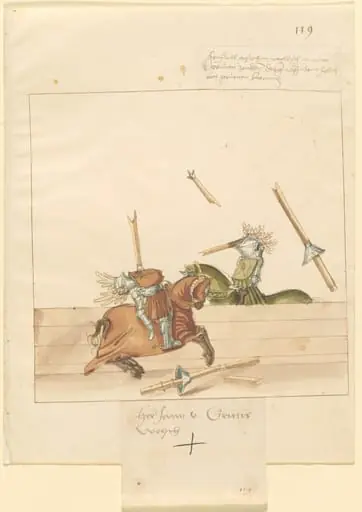
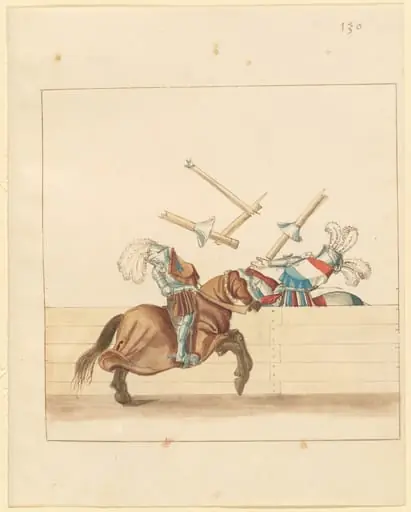
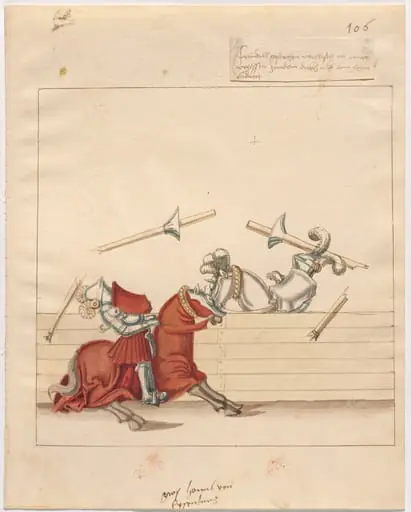
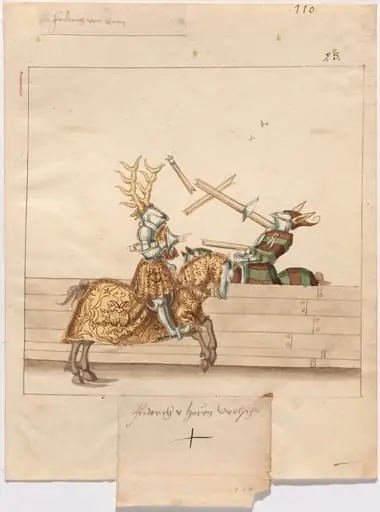
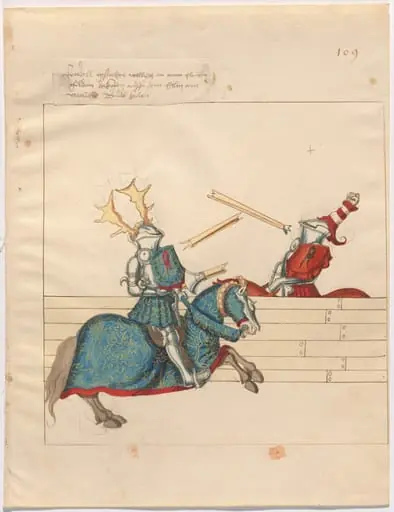
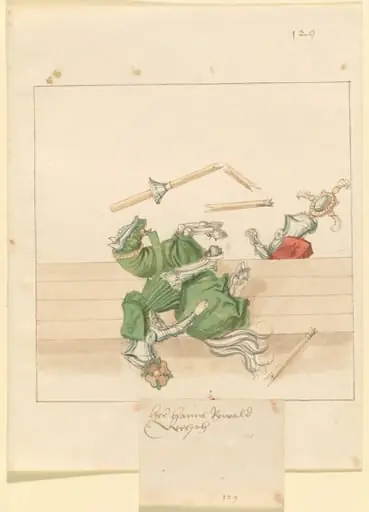
Italian Joust of Peace is a 16th‑century German drawing executed with pen and brown ink, overlaid with watercolor applied in thin glazes on lead‑pointed laid paper. The work portrays a dramatic jousting encounter between two heavily ornamented knights on horseback, captured at the moment their lances collide. It is part of the collection of the National Gallery of Art in Washington, D.C.
Subject & Meaning
The composition centers on two mounted combatants whose elaborately gilded armor and brightly colored surcoats draw the eye to the violent contact of their lances, one of which fractures against the opponent’s breastplate. A multitude of diminutive figures line the background, suggesting a spectator crowd and emphasizing the public spectacle of chivalric contest.
Technique & Style
The artist employed a lead‑point drawing as a precise underdrawing, then built up color with watercolor glazing to convey the reflective quality of metal and the tension of musculature beneath the horses’ tack. The use of brown ink outlines and subtle washes creates a sense of depth while preserving the delicate texture of the aged laid paper.
History & Provenance
Created in the German lands during the early 1500s, the drawing entered the National Gallery of Art’s holdings in the 20th century, though the exact acquisition path remains undocumented in public records. Its survival on paper attests to careful preservation, allowing the original pigments and ink work to remain vivid.
Context
The work reflects the Renaissance fascination with tournament culture and the ideal of peaceful competition, a theme often illustrated in contemporary manuscripts and prints. By depicting an Italian‑styled joust through a German hand, the drawing underscores the trans‑regional exchange of chivalric imagery during the period.
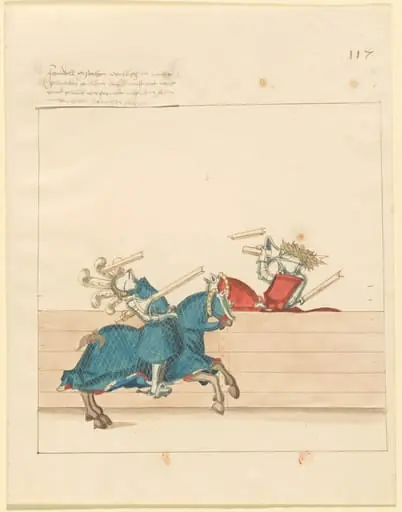
Artist & collection

Artist
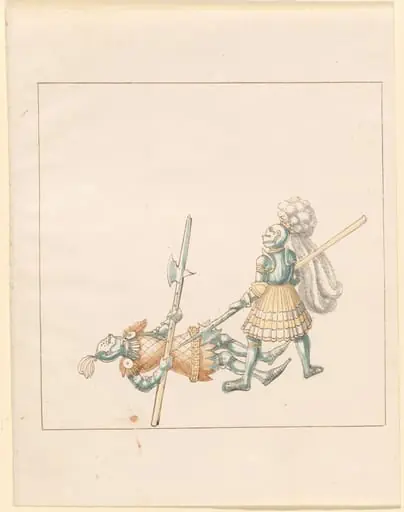
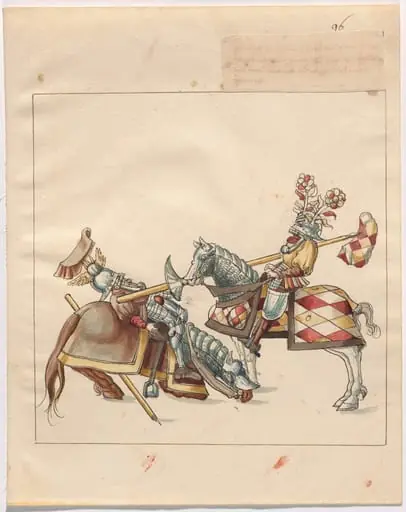
A German artist of the late 1500s drew knights clashing in parades and mock battles, filling sheets with detailed ink colored lightly in watercolor: soldiers mid-joust, shields flying, foot soldiers sparring with spears.

![Abraham Entertaining the Angels [verso], by German 16th Century](https://artifactworldgallery.com/img/german-16th-century--abraham-entertaining-the-angels-verso--69d1b25f4eba0a53-w320.webp)