Artwork
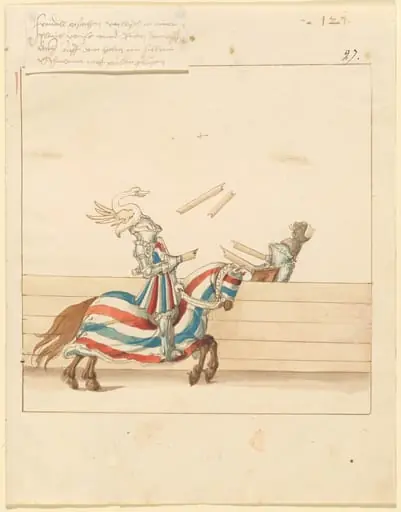
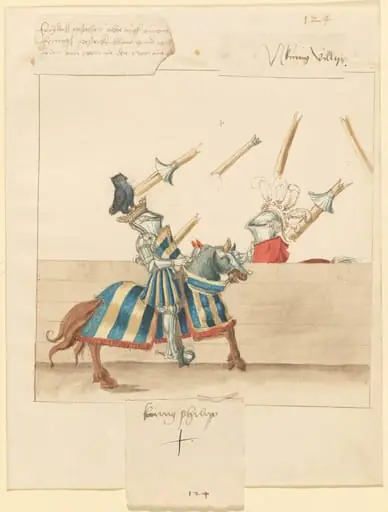
Italian Joust of Peace
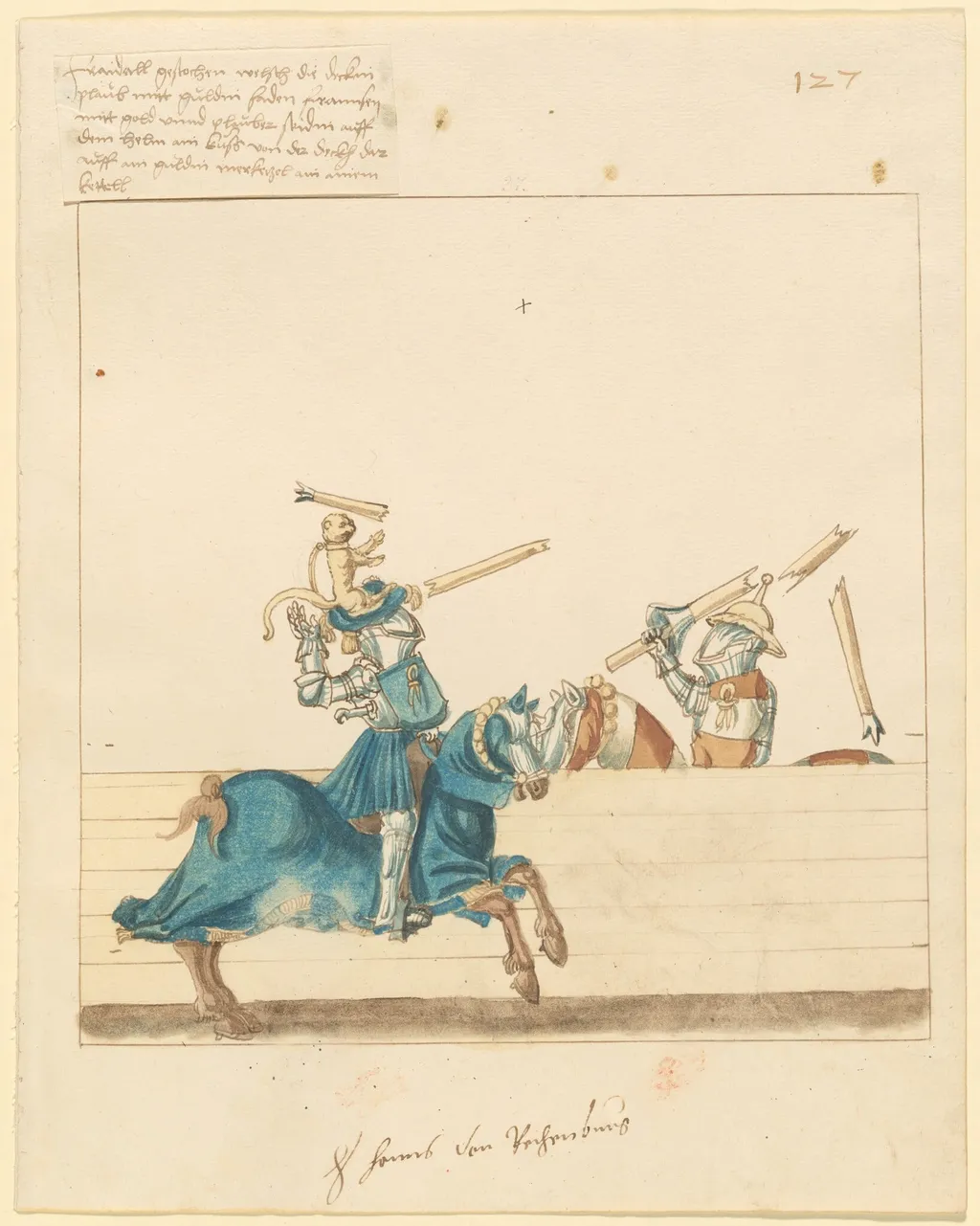
Italian Joust of Peace is an ink drawing by the Renaissance artist German 16th Century. It dates from 1514 and is held in the collection of the National Gallery of Art.
- Inscription
- Inscribed:upper left by unknown hand in brown ink, on separate paper pasted down: Fraidall gestochen welsch, die deckin plaub mitt guldin faden frannsen mitt gold unnd plauber seidin, auff dem helm ain kuss von der deckh, darauff ain guldin merketzel ain ainem kettell; upper right by unknown hand in brown ink: 127; lower center by unknown hand in brown ink: Herr Hanns von Reihenburg; lower left on mount in black ink: 127; lower right on mount in black ink: A 185
About this work
Overview
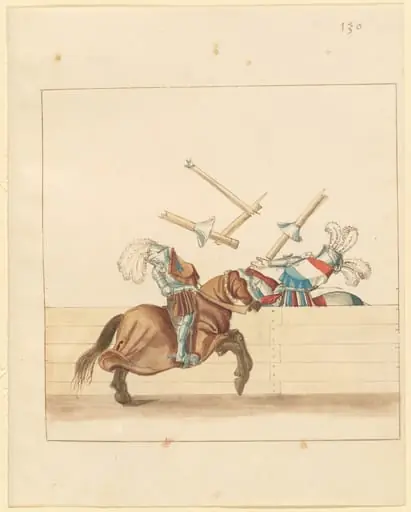
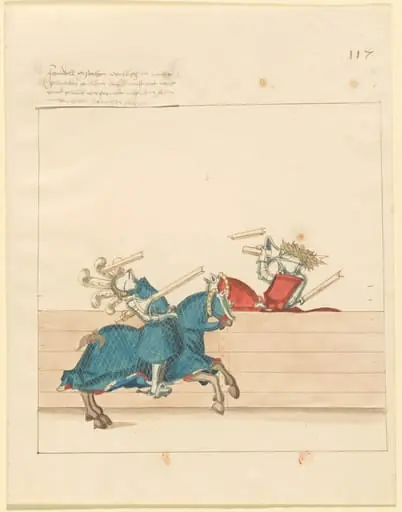
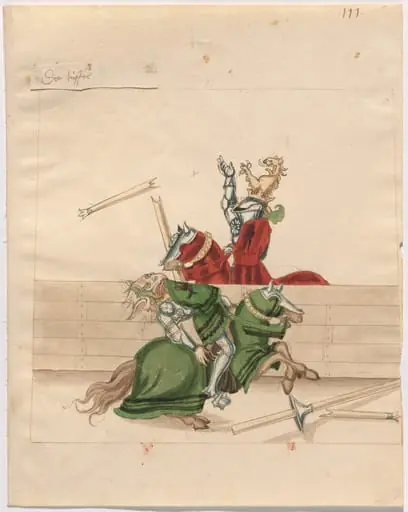
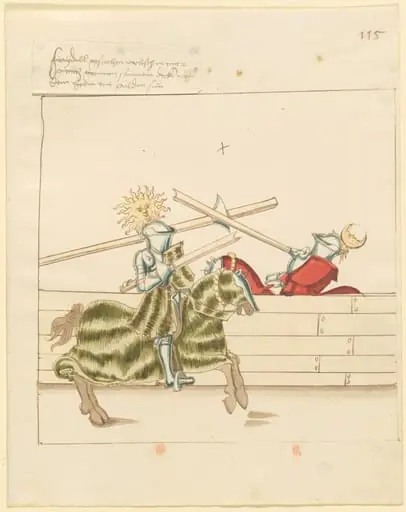
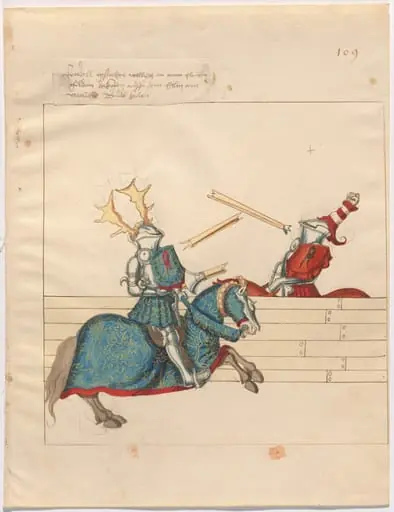
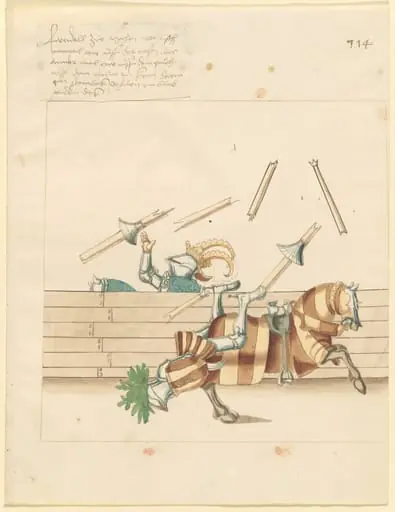
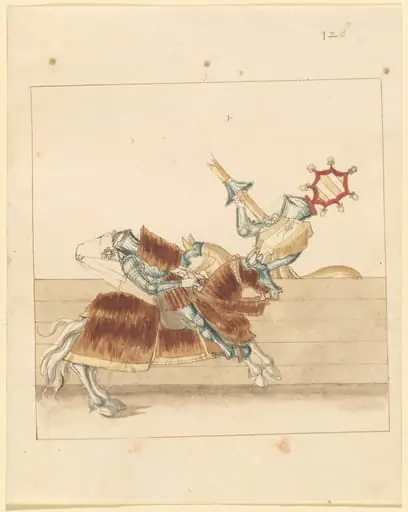
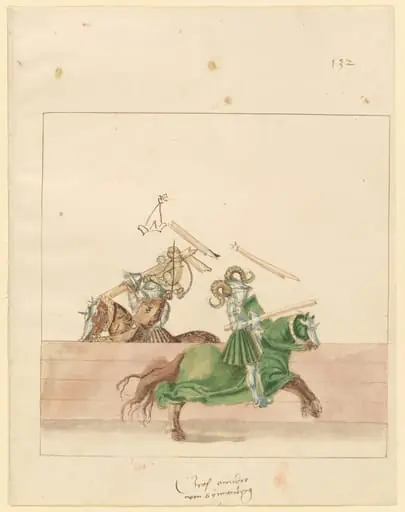
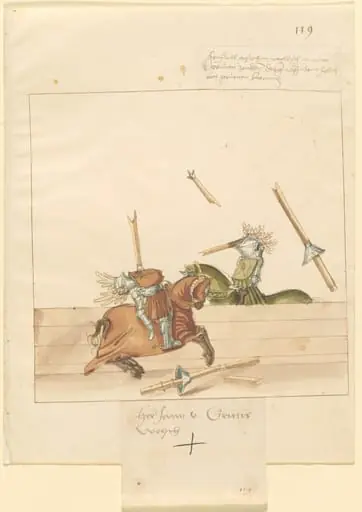
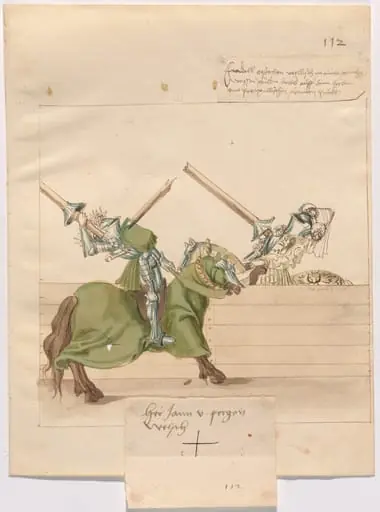
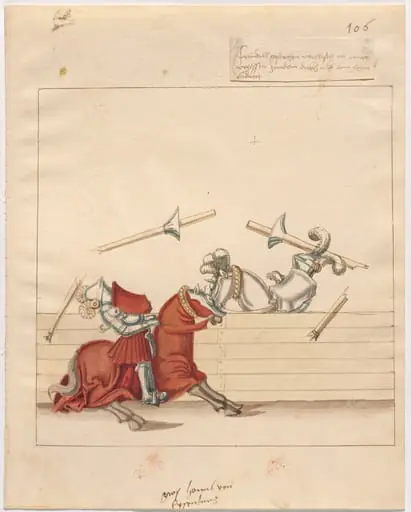
The work, titled Italian Joust of Peace, is a pen and brown‑ink drawing enhanced with watercolor applied over a leadpoint underdrawing on laid paper. It portrays a staged medieval tournament in which two mounted knights, clad in ornate armor, meet head‑on with their lances, one of which fragments against the opponent’s polished breastplate.
Subject & Meaning
The scene is not a record of combat but a representation of a choreographed joust, a courtly spectacle designed to display martial skill and noble pageantry. By emphasizing the decorative elements of armor and tack, the artist underscores the ceremonial rather than violent nature of such events.
Technique & Style
The artist began with a precise leadpoint sketch, then laid down fine brown ink lines to define figures and equipment. Transparent watercolor washes add vivid hues, particularly to the gilded horse trappings, creating a contrast between the drawing’s linear precision and the luminous color fields.
History & Provenance
Created by a German artist active in the 16th century, the drawing entered the collection of the National Gallery of Art in Washington, D.C., where it is currently conserved and displayed. Its provenance prior to acquisition by the museum is not extensively documented.
Context
During the Renaissance, tournaments served as social rituals among the aristocracy, often staged to celebrate peace or diplomatic alliances. The depiction reflects contemporary interests in heraldic display and the visual culture of chivalric performance.
Artist & collection

Artist
A German artist of the late 1500s drew knights clashing in parades and mock battles, filling sheets with detailed ink colored lightly in watercolor: soldiers mid-joust, shields flying, foot soldiers sparring with spears.

![Abraham Entertaining the Angels [verso], by German 16th Century](https://artifactworldgallery.com/img/german-16th-century--abraham-entertaining-the-angels-verso--69d1b25f4eba0a53-w320.webp)