Artwork
Mock Joust of War in Reinforced Field Armor
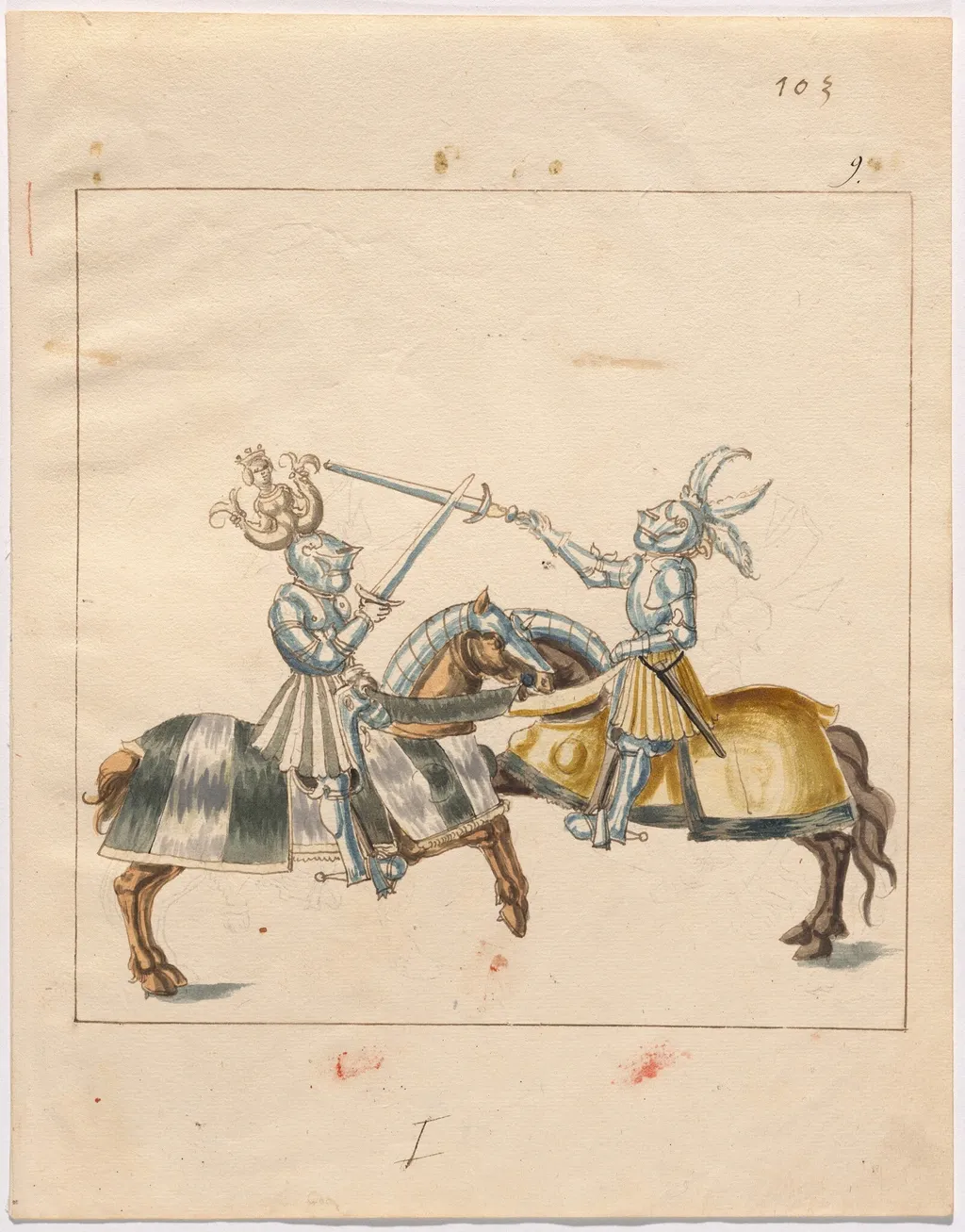
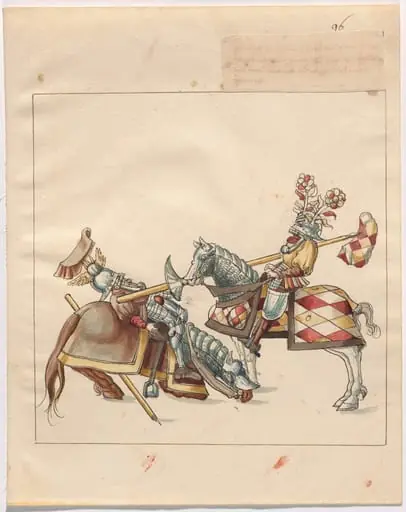
Mock Joust of War in Reinforced Field Armor is an ink drawing by the Renaissance artist German 16th Century. It dates from 1514 and is held in the collection of the National Gallery of Art. This 16th‑century German drawing portrays a staged joust between two heavily armored riders.
- Inscription
- Inscribed:upper right by unknown hand in brown ink: 103; upper right by unknown hand in black ink: 9.; lower left on mount in black ink: 103; lower right on mount in black ink: A 149
About this work
The artist drew this scene with pen, ink, and watercolor on paper, which was a common way to create art back then.
You see two knights on horseback, jousting in a field. They're wearing heavy armor, which looks very detailed. The artist drew this scene with pen, ink, and watercolor on paper, which was a common way to create art back then.
The knights' armor is interesting because it shows how people protected themselves in battles. The artist likely drew this scene to show off their skill at drawing details like armor and horses.
Check out the work of the artist German 16th Century to see more drawings like this one.
Overview
This 16th‑century German drawing portrays a staged joust between two heavily armored riders. Executed with pen, brown ink and watercolor on laid paper, the composition captures the dynamic encounter in a field setting, emphasizing the intricacy of the combatants’ protection and the vigor of their horses.
Subject & Meaning
The work illustrates a mock tournament, a ritualized combat that allowed knights to display martial prowess without lethal risk. By focusing on the elaborate armor, the artist highlights contemporary defensive technology and the cultural importance of chivalric display in early modern Germany.
Technique & Style
The drawing combines fine pen lines with brown ink washes, while selective watercolor adds tonal depth to the figures and terrain. The use of leadpoint and black chalk underdrawing, typical of German workshop practices, provides a precise structural framework that the ink and pigment later enhance.
History & Provenance
Created in the 1500s, the piece belongs to a broader corpus of German martial illustrations produced for training manuals and aristocratic collections. Though specific ownership records are scarce, similar works have circulated among noble families and military academies throughout the Holy Roman Empire.
Context
The image reflects a period when the evolution of plate armor was central to battlefield strategy, and visual manuals served both instructional and decorative purposes. Its detailed rendering of armor contributed to the visual vocabulary that later artists and historians used to understand early modern warfare.
Artist & collection

Artist
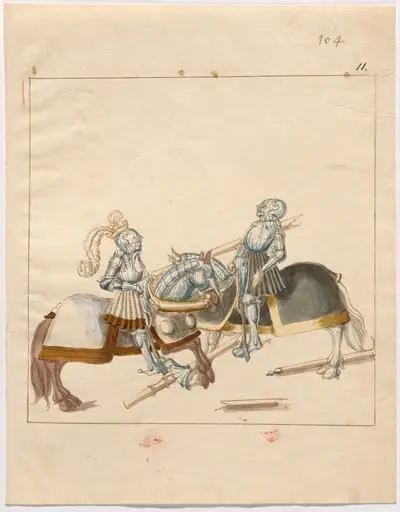
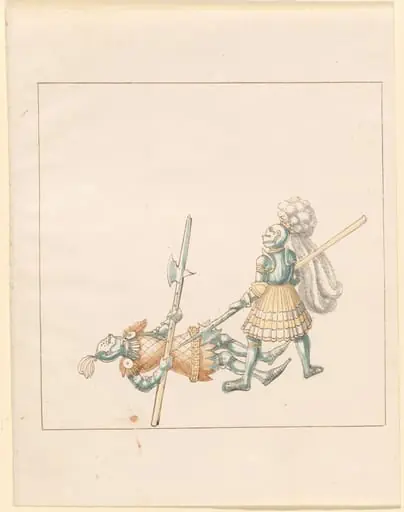
A German artist of the late 1500s drew knights clashing in parades and mock battles, filling sheets with detailed ink colored lightly in watercolor: soldiers mid-joust, shields flying, foot soldiers sparring with spears.

![Abraham Entertaining the Angels [verso], by German 16th Century](https://artifactworldgallery.com/img/german-16th-century--abraham-entertaining-the-angels-verso--69d1b25f4eba0a53-w320.webp)
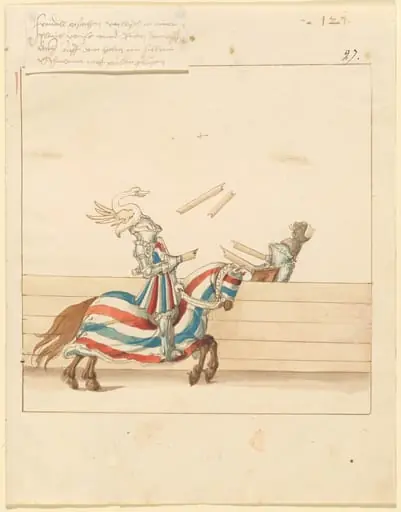
- Mock Joust of War in Reinforced Field Armor
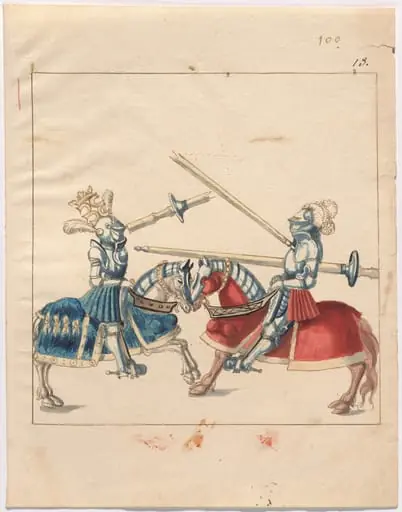 Mock Joust of War in Reinforced Field Armor
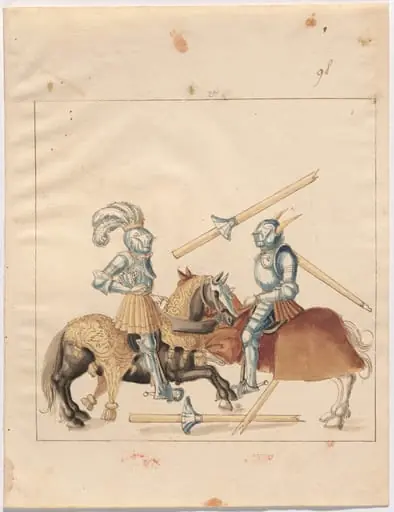 Mock Joust of War in Reinforced Field Armor
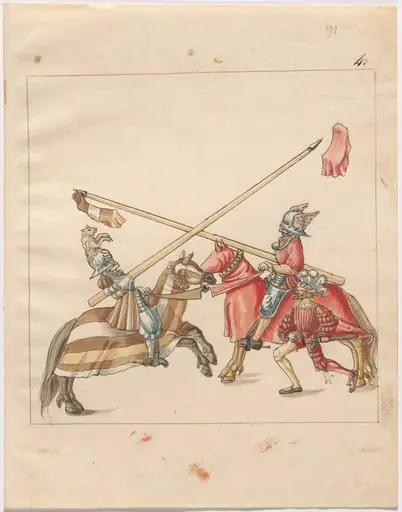 Mock Joust of War with Flying Shields and Without Bevors
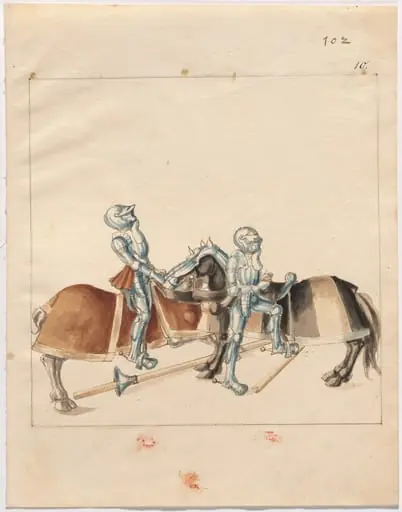 Mock Joust of War in Reinforced Field Armor
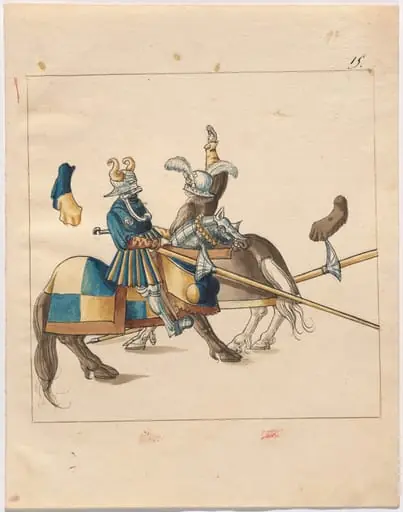 Mock Joust of War with Flying Shields and Without Bevors
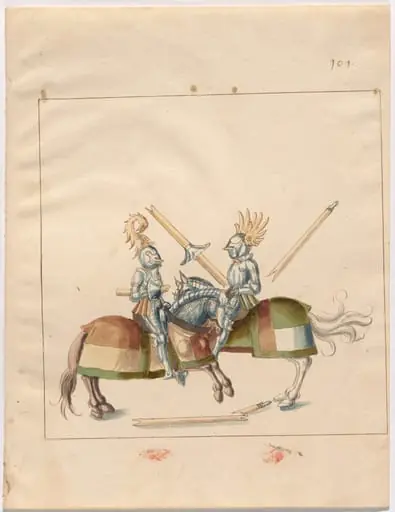 Mock Joust of War in Reinforced Field Armor
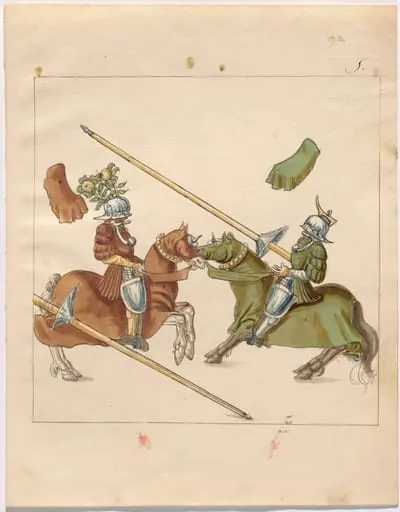 Mock Joust of War with Flying Shields and Without Bevors
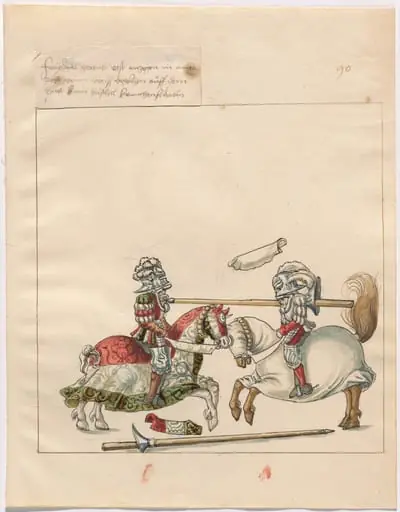 Mock Joust of War with Flying Shields and Without Bevors
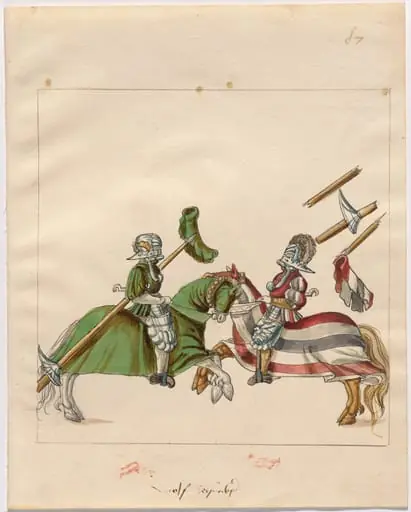 Mock Joust of War with Flying Shields and Without Bevors
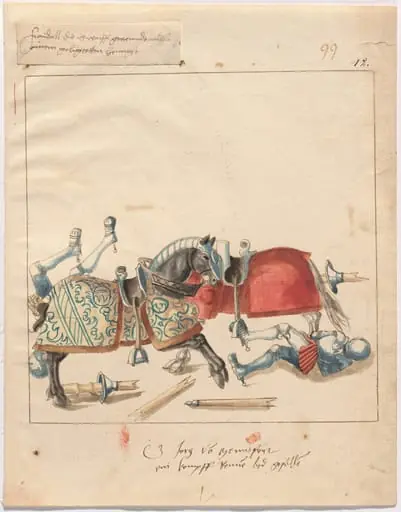 Mock Joust of War in Reinforced Field Armor