Artwork
A Fisherman's Wife
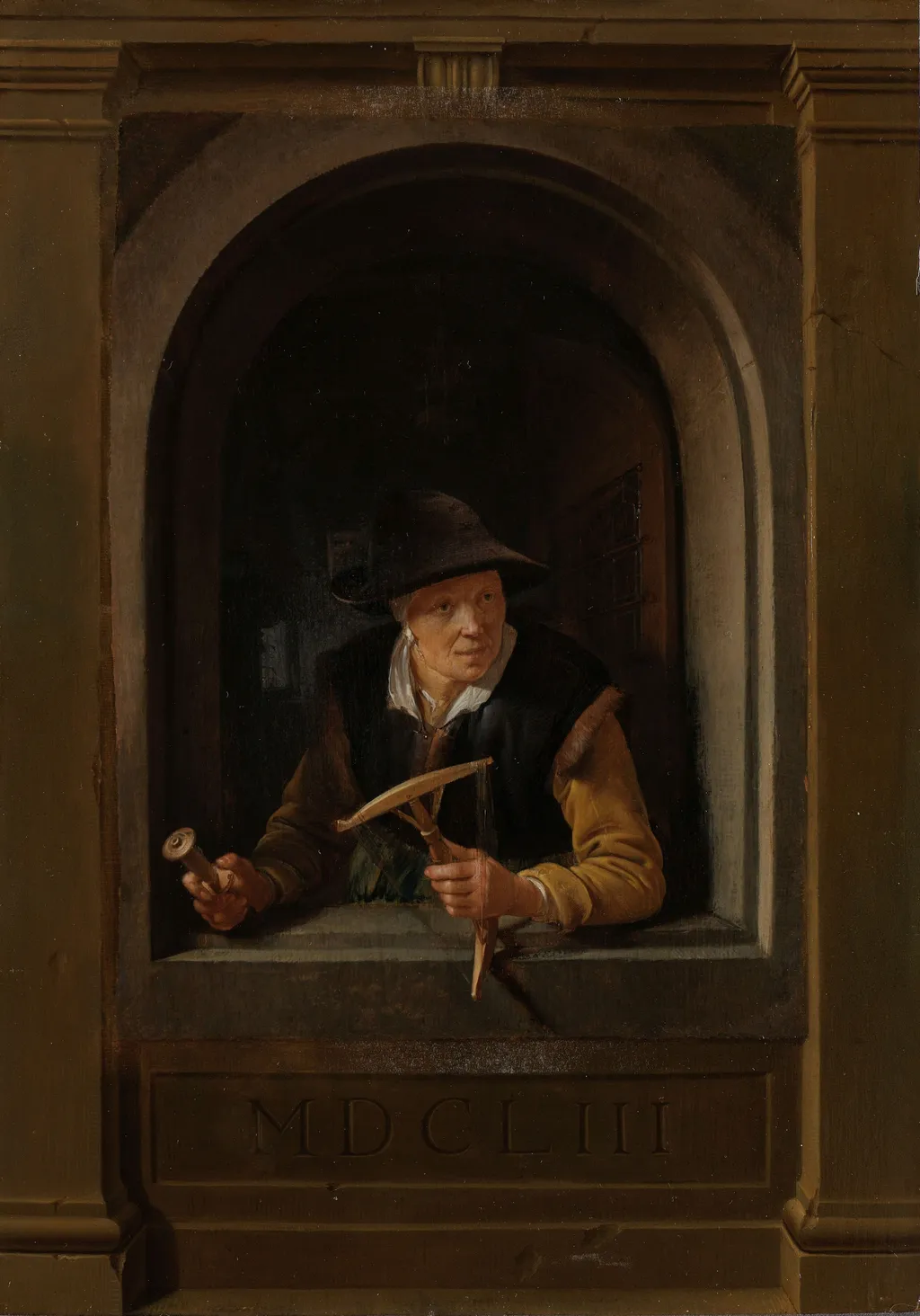
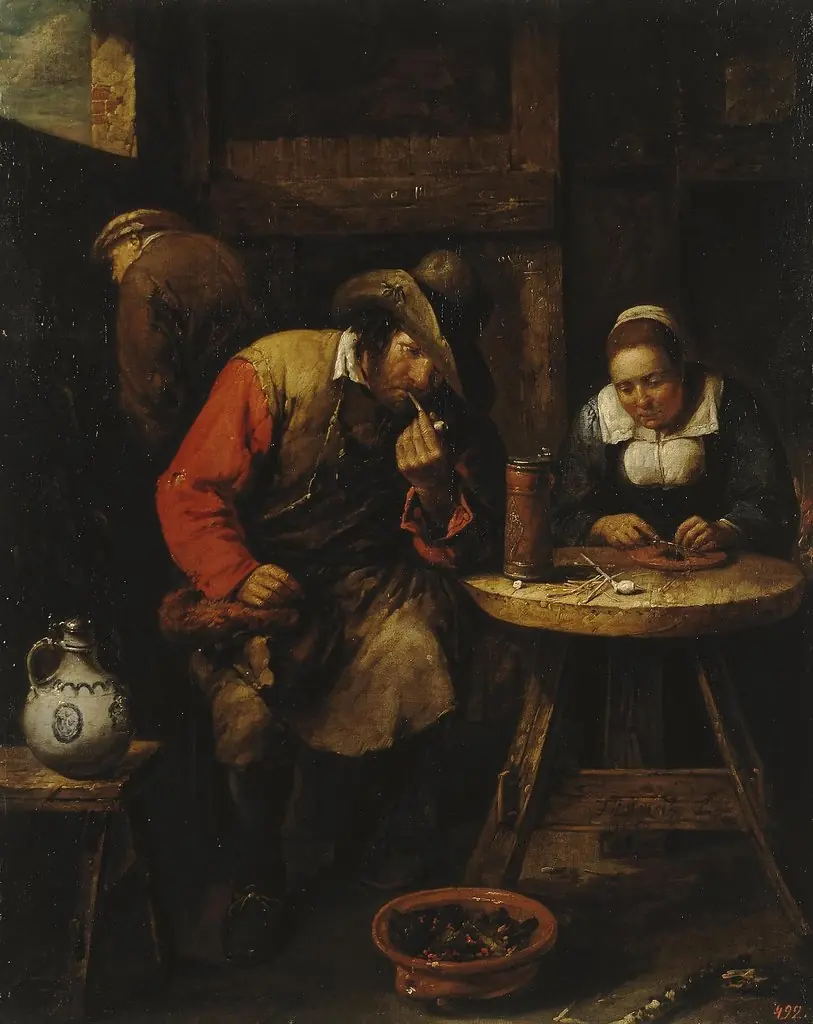
A Fisherman's Wife is an oil painting by the Dutch Golden Age artist Gerrit Dou. It dates from 1653 and is held in the collection of the Rijksmuseum.
About this work
Technique & Style
Executed in oil paint on a vertically grained oak panel, the work measures 32.
Executed in oil paint on a vertically grained oak panel, the work measures 32.5 cm in height and 22.8 cm in width.
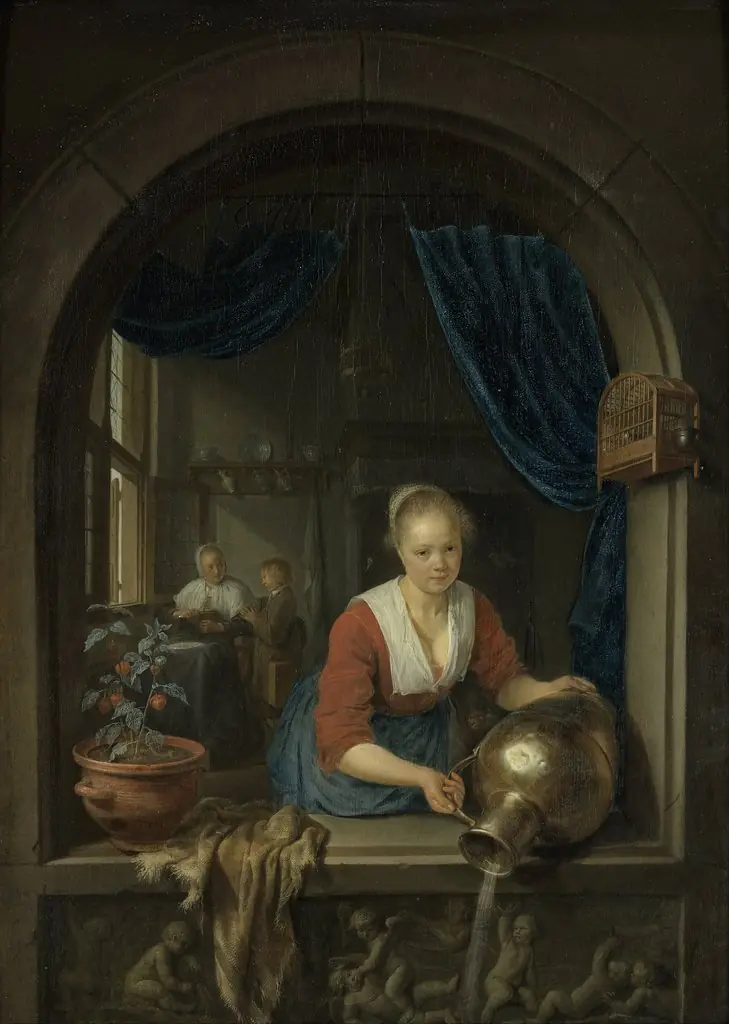
The handling is meticulous and fine, characteristic of Dou’s fijnschilder practice, with sharply focused detail across the woman’s costume, the basket, and the net. The light is cool and directional, picking out the highlights on the basket’s rim and the fisherman’s wife’s raised hand, while the background recedes into a neutral shadow that isolates the figure and still life elements.
The composition balances a quiet narrative moment with a studied stillness, aligning the woman’s gaze and gesture with the basket’s form to create a stable, triangular structure.
History & Provenance
The painting was created in 1653 by Gerrit Dou, as indicated by the documented inception date on the work.
By the mid-19th century, it formed part of the collection of Adriaan van der Hoop in Amsterdam, from which it entered the holdings of the Rijksmuseum. The museum’s acquisition records trace the painting’s ownership to Van der Hoop before its transfer to the Rijksmuseum, where it has remained as part of the Dutch Golden Age holdings.
The painting A Fisherman's Wife by Gerrit Dou is currently held in the collection of the Rijksmuseum in Amsterdam. It forms part of the Adriaan van der Hoop collection, which is associated with the Amsterdam Museum. The work was created in 1653 and is executed in oil paint on panel.
While specific inventory or accession numbers are not provided in the available sources, the artwork's provenance is linked to the Adriaan van der Hoop collection. No exhibition history is detailed in the provided documentation.
Overview
Gerrit Dou’s oil painting A Fisherman’s Wife was executed in 1653. The work belongs to the Dutch Golden Age and exemplifies the intimate, finely rendered genre scenes for which Dou is celebrated. It is part of the Rijksmuseum’s collection, where it is displayed among other 17th‑century Dutch paintings.
Subject & Meaning
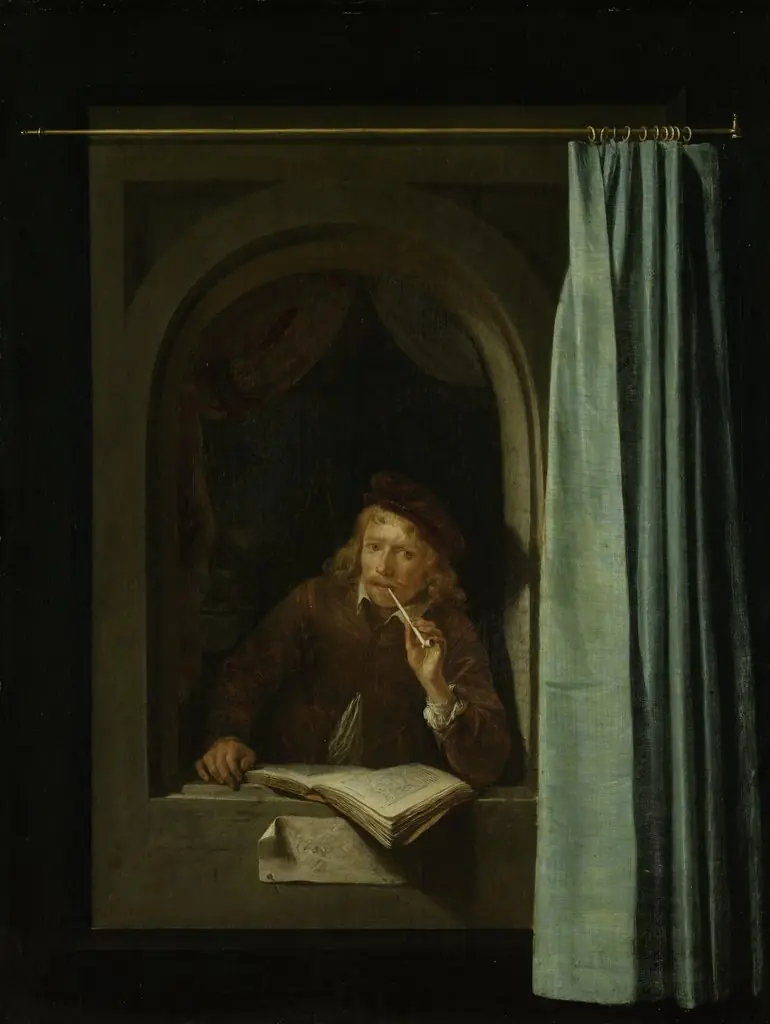
The composition presents a woman seated within a modest window opening, gazing outward while holding a fishing rod and a small implement. Her attire, a dark hat, brown coat and white collar, suggests the everyday attire of a fisherwoman’s spouse. The scene offers a quiet glimpse into domestic life tied to the maritime economy of the period.
Own this work as a print
Artist & collection

Artist
Gerrit Dou (pronounced; 7 April 1613 – 9 February 1675), also known as Gerard Douw or Dow, was a Dutch Golden Age painter, whose small, highly polished paintings are typical of the Leiden fijnschilders.