Artwork
Peasant Musicians and Dancers
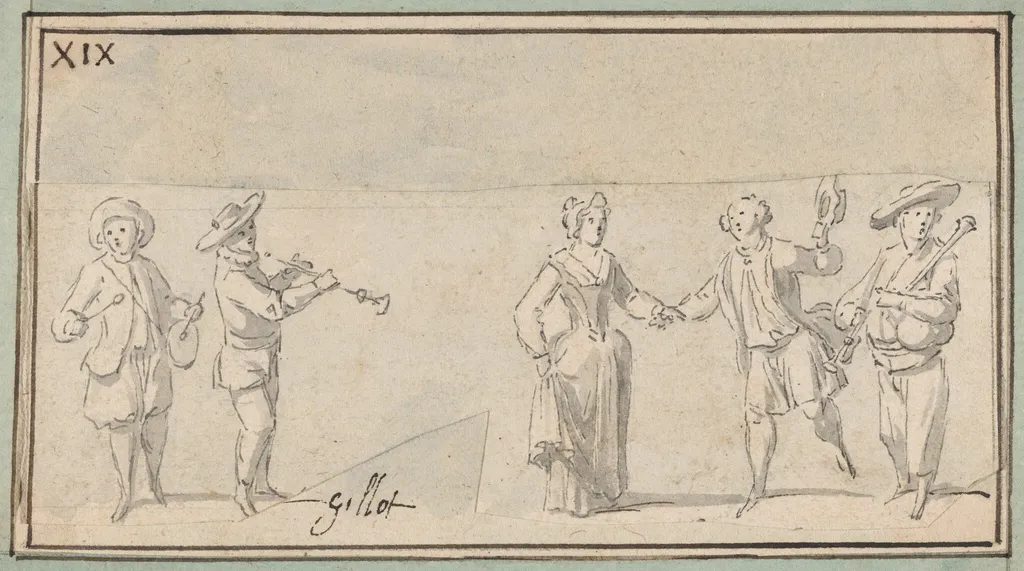
Peasant Musicians and Dancers is a watercolor drawing by the Baroque artist Claude Gillot. It dates from 1711 and is held in the collection of the National Gallery of Art.
- Inscription
- Inscribed:upper left in pen and black ink: XIX; by later hand, pen and brown ink: Gillot
About this work
Overview
Peasant Musicians and Dancers is a drawing created by French artist Claude Gillot in 1711. Executed in pen and black ink with gray wash over graphite on laid paper, the work captures a lively rural scene.
Subject & Meaning
The drawing depicts a group of five peasants engaged in music and dance, conveying a sense of communal joy and rustic entertainment. The scene reflects the 18th-century French artistic fascination with theatrical and rural themes.
Technique & Style
Gillot employed fine linework and subtle gray wash shading to achieve a dynamic, energetic composition. The simple yet expressive lines imbue the figures with a sense of movement, characteristic of the period's artistic approaches.
History & Provenance
Created in 1711, the drawing's provenance includes being partially incised for transfer and later laid down on an old album sheet with faded blue watercolor accents. Its history intersects with Gillot's influence on notable artists such as Watteau and Lancret.
Context
Peasant Musicians and Dancers situates itself within the broader Baroque movement, emphasizing drama and emotional expression through its vivid depiction of everyday rural life and leisure.
Artist & collection
Artist
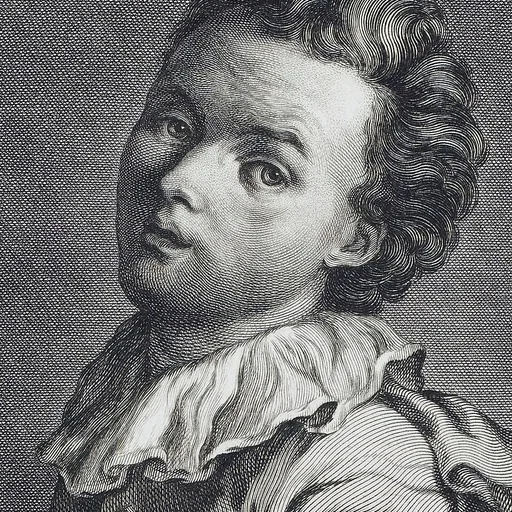
Claude Gillot (April 27, 1673 – May 4, 1722) was a French painter, printmaker, and illustrator, best known as the master of Watteau and Lancret.

 The Triumph of Marriage
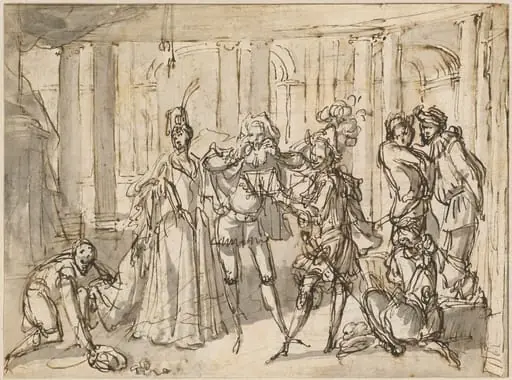 A Performance by the Commedia dell'Arte
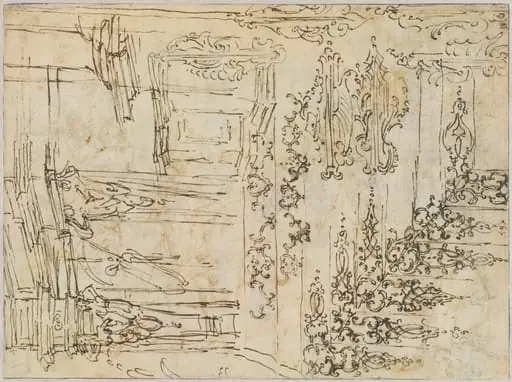 Studies of Ornament and Architecture
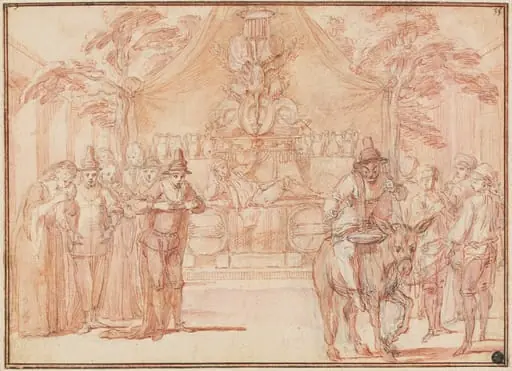 Scene from "The Tomb of Master André"
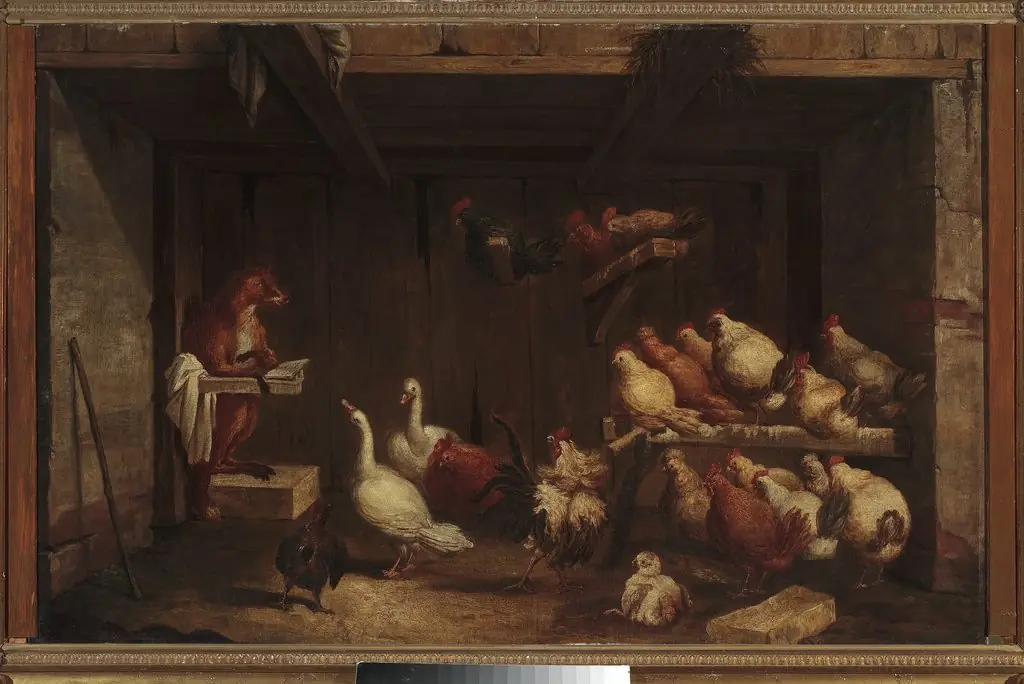 Fox preaching to birds
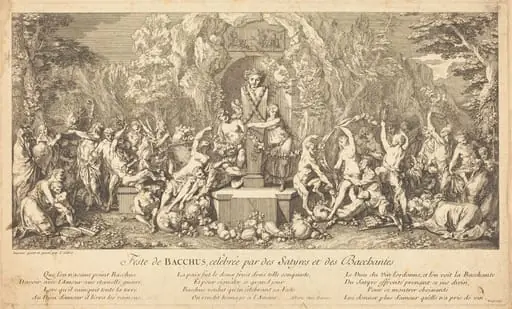 Feste de Bacchus, celebree par des Satyres et des Bacchantes (Feast of Bacchus Celeb rated by Satyrs and Bacchanales)
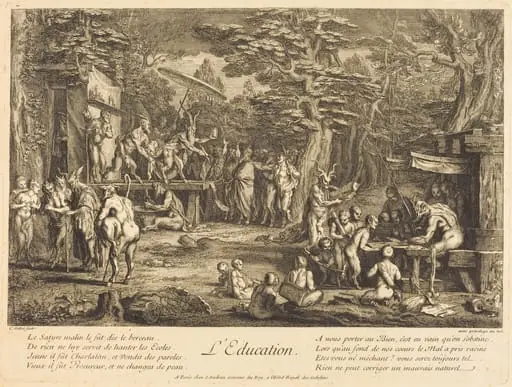 L'Education (Education)
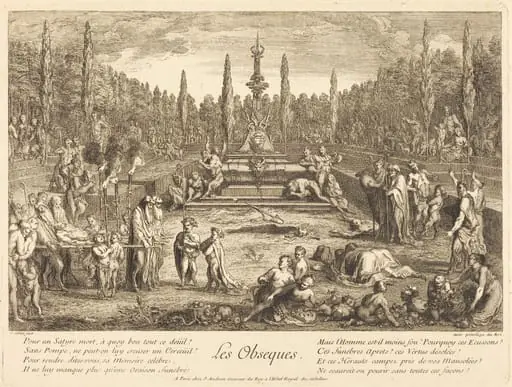 Les Obseques (The Funeral Rites)
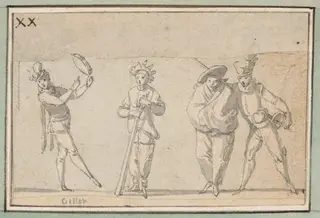 Four Singing Commedia Dell'Arte Characters
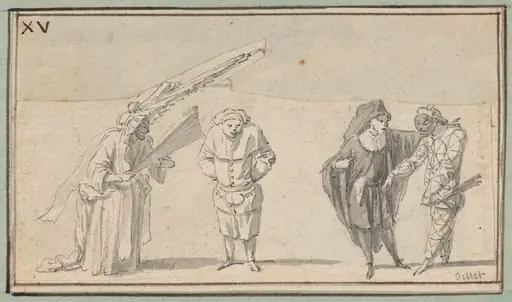 Four Commedia dell'Arte Figures: Harlequin "en femme," Mezzetin(?), Scaramouche, and Harlequin
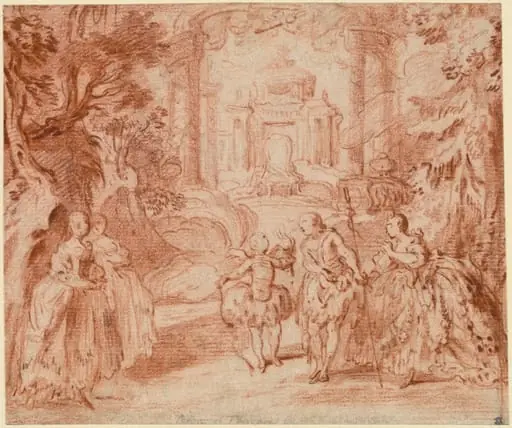 The Divertissement from Voltaire's "La princesse de Navarre"
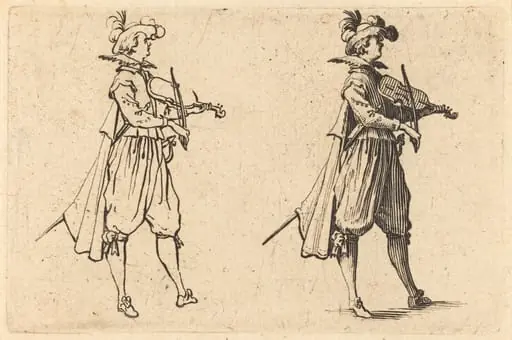 Violinist
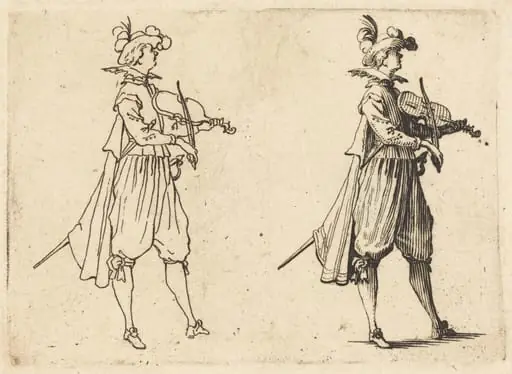 Violinist
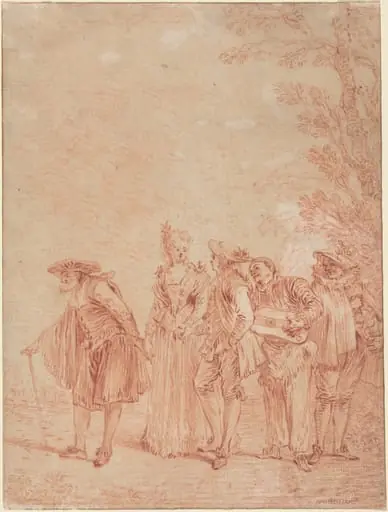 The Wedding Procession
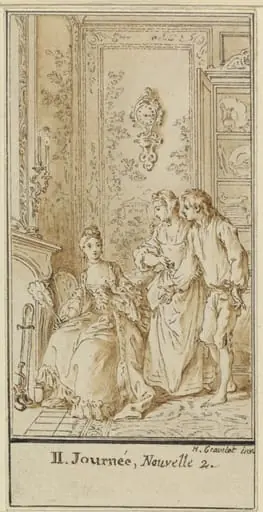 Second Day, Second Story: Rinaldo d'Asti and the Widow
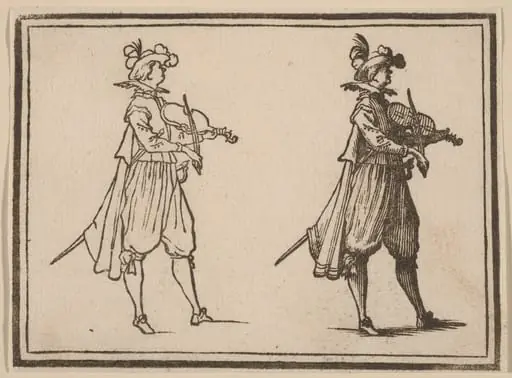 Violinist
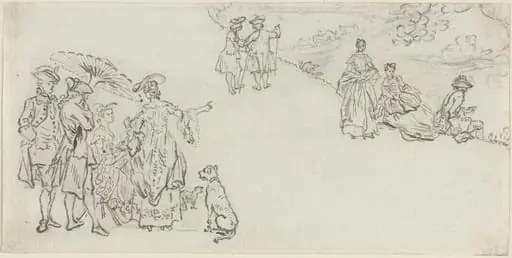 Ladies and Gentlemen in a Country Park
 Lingerie Boutique and Conversation (verso)
- Six Studies of Commedia dell'Arte Actors: Polchinelle, Columbine, Pierrot, a Captain, Harlequin "en femme," and Scaramouche