Artwork
The Apotheosis of the Spanish Monarchy
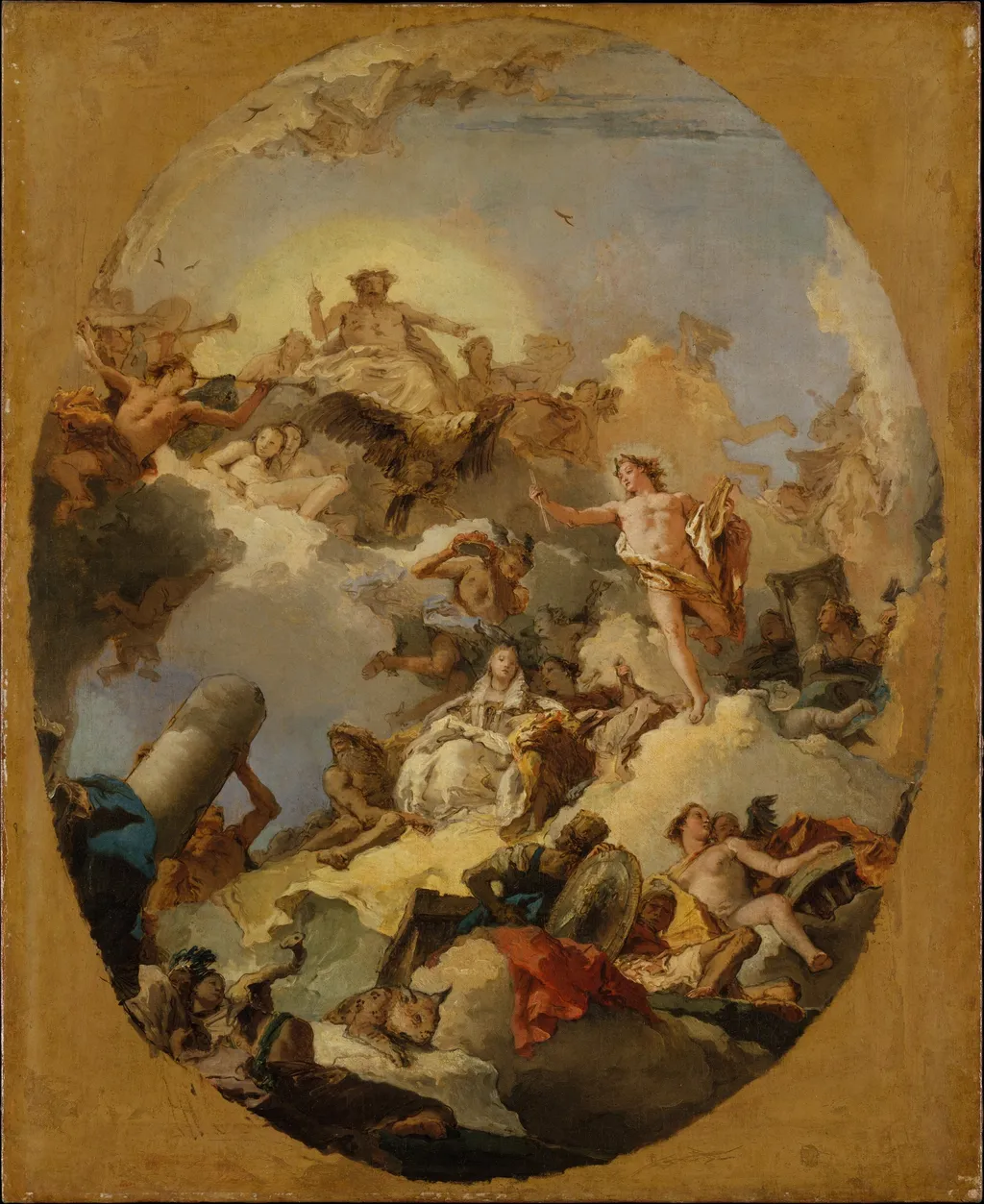
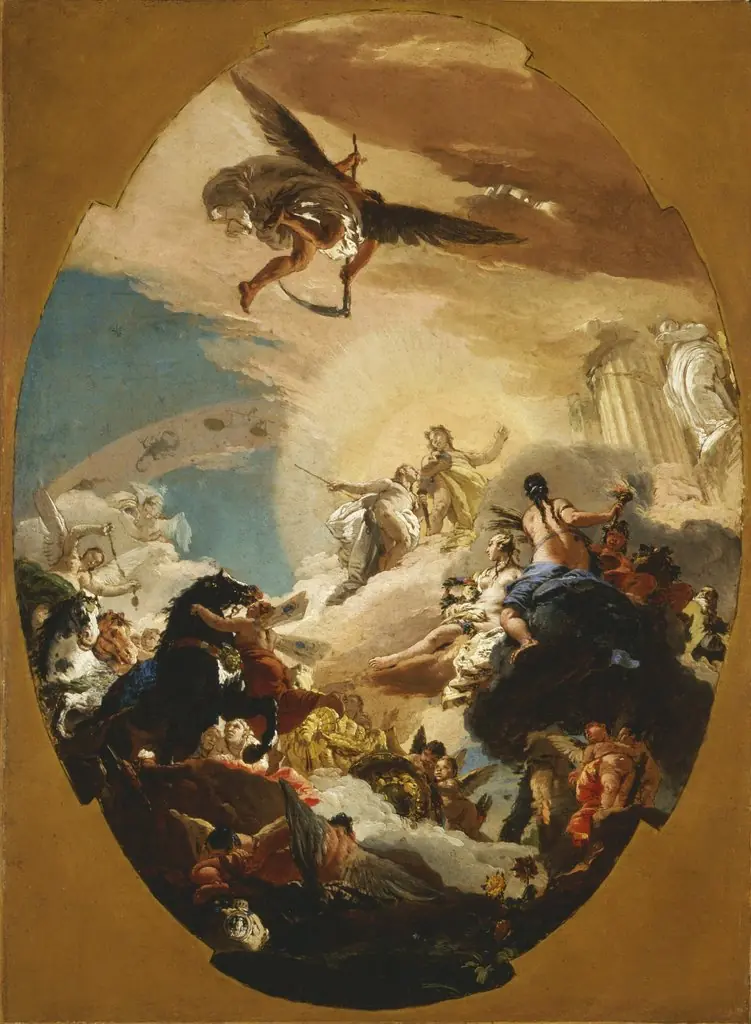
The Apotheosis of the Spanish Monarchy is an oil painting by the Academic Art artist Giovanni Battista Tiepolo. It dates from 1764 and is held in the collection of the Metropolitan Museum of Art.
About this work
Subject & Meaning
The gathering of these specific entities underscores the political narrative of absolute power derived from celestial endorsement.
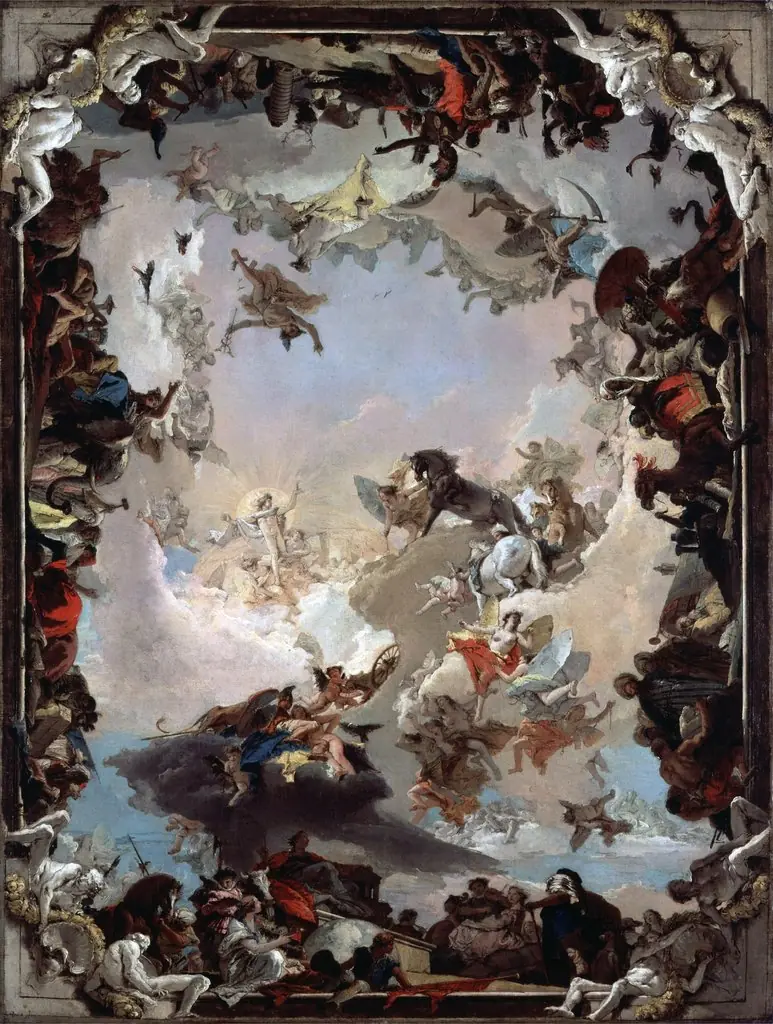
Executed in 1764, this oil painting by Giovanni Battista Tiepolo visually articulates the divine elevation of the Spanish monarchy through a specific Rococo iconographic program. The composition features the presence of Jupiter and Apollo, major deities from the classical pantheon, whose inclusion signals divine favor and enlightenment bestowed upon the ruling house. An eagle is also prominently depicted, serving as a potent symbol of imperial power and authority.
By integrating these mythological figures with regal emblems, the work functions as an allegory of apotheosis, representing the monarch's transcendence from earthly rule to a status sanctioned by the gods. The gathering of these specific entities underscores the political narrative of absolute power derived from celestial endorsement.
Technique & Style
The Apotheosis of the Spanish Monarchy is an oil‑on‑canvas painting executed in 1764 by Giovanni Battista Tiepolo. The work is classified as a Rococo‑style academic composition, employing the luminous palette and dramatic chiaroscuro typical of Tiepolo’s decorative schemes. The canvas support was prepared for large‑scale execution, allowing the artist to render the allegorical figures of eagle, Apollo and Jupiter with fluid brushwork and richly layered pigments.
The painting’s formal qualities reflect the Rococo emphasis on ornamental movement and dramatic spatial depth, while its academic grounding is evident in the balanced composition and adherence to classical subject matter.
History & Provenance
The Apotheosis of the Spanish Monarchy was executed in 1764 by Giovanni Battista Tiepolo using oil on canvas. The composition, characteristic of Rococo and academic art, features an eagle, Apollo and Jupiter. Measuring 84.1 cm by 68.9 cm, the work was part of the Spanish monarchy’s patronage and later entered the collection of the Metropolitan Museum of Art, where it is catalogued under accession 1980.363 and remains on view in New York. Its provenance thus traces from the artist’s studio to the museum’s holdings.
Overview
Giovanni Battista Tiepolo's oil painting, The Apotheosis of the Spanish Monarchy, completed in 1764, presents a grand celestial vision. This work, characteristic of the Rococo movement, celebrates the elevation of the Spanish royal family to a divine status. It is currently housed at The Metropolitan Museum of Art, offering a significant example of 18th-century European ceiling painting designed to convey opulence and power.
Context
As a prominent example of the Rococo style, The Apotheosis of the Spanish Monarchy embodies the era's preference for elaborate ornamentation, graceful forms, and lighter themes compared to the preceding Baroque. Rococo art often featured mythological or allegorical subjects, frequently commissioned for aristocratic residences or royal courts, where they served to impress and reinforce social hierarchies through opulent display and sophisticated artistry.
Own this work as a print
Artist & collection

Artist
Giovanni Battista Tiepolo, also known as Giambattista Tiepolo, was an Italian painter and printmaker from the Republic of Venice who painted in the Rococo style, considered an important member of the 18th-century Venetian school.



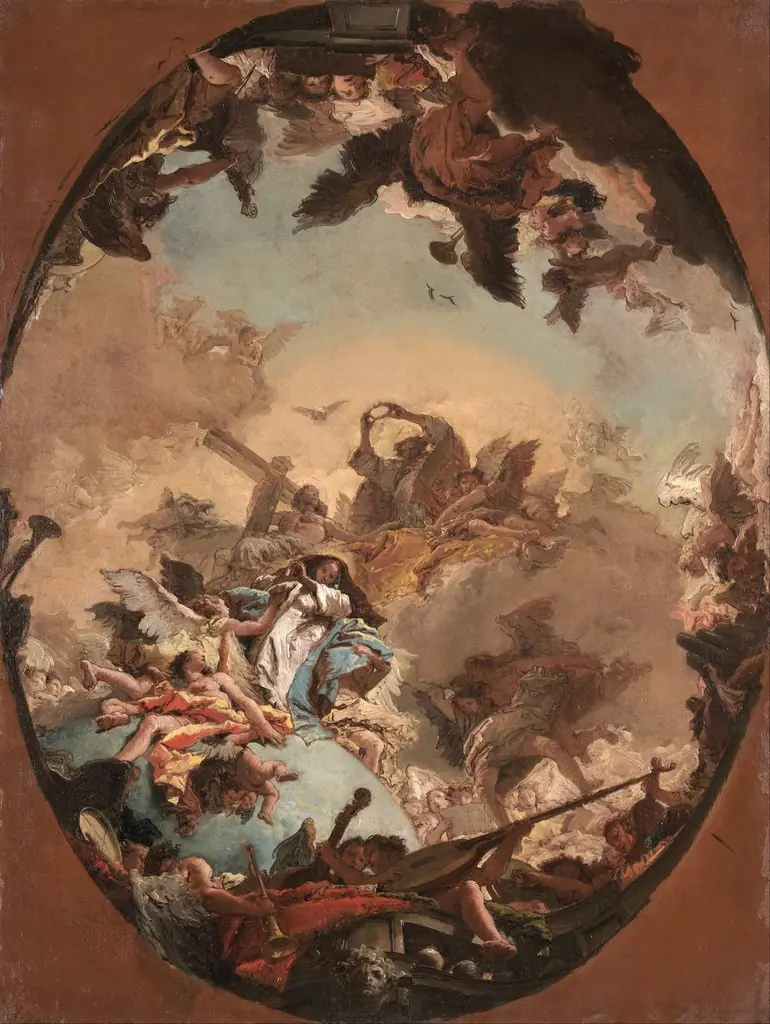 The Coronation of the Virgin
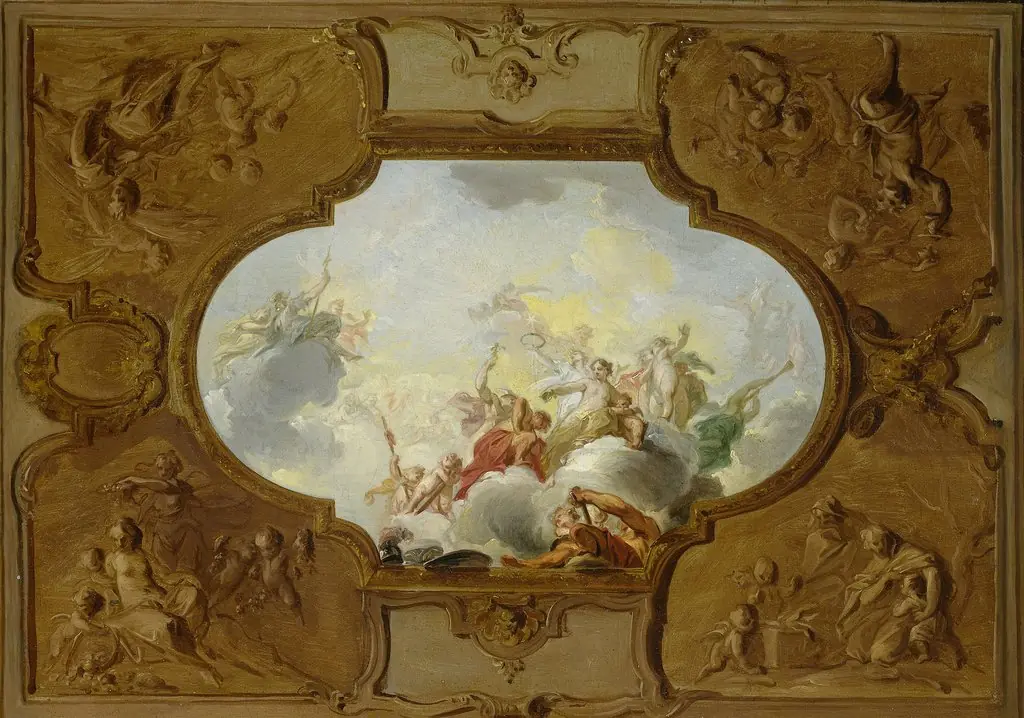 Design for a ceiling piece with Aeneas and the four seasons in the corners
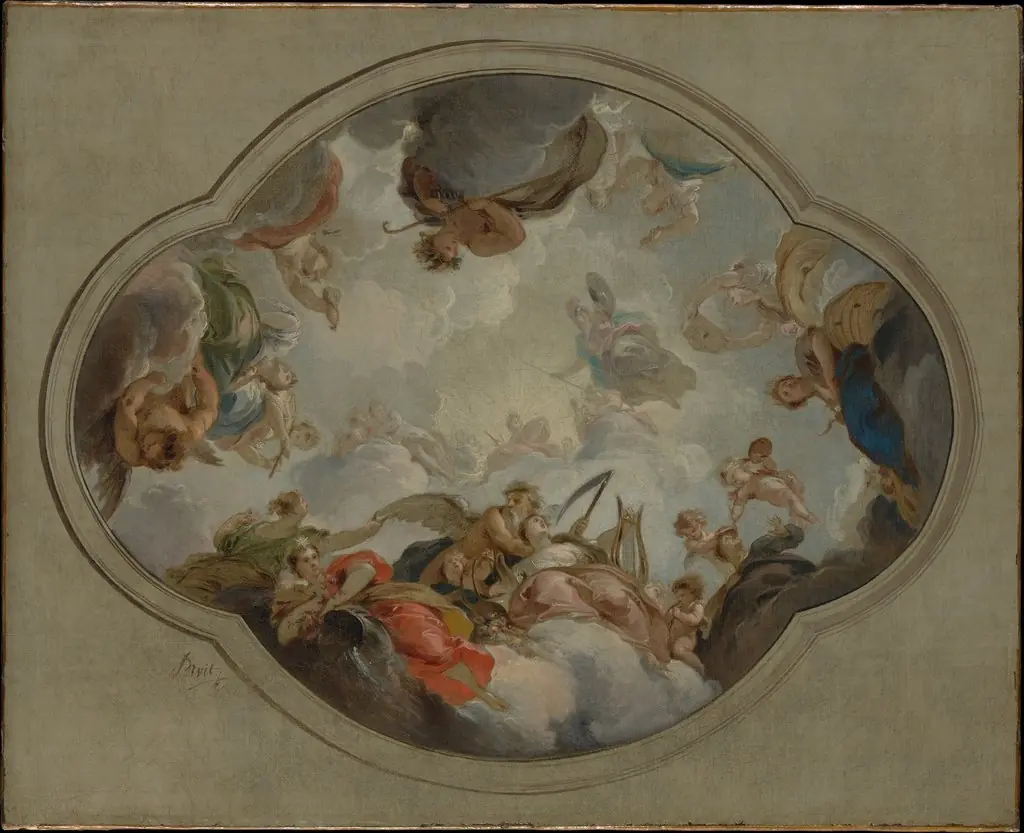 Allegory of the Arts
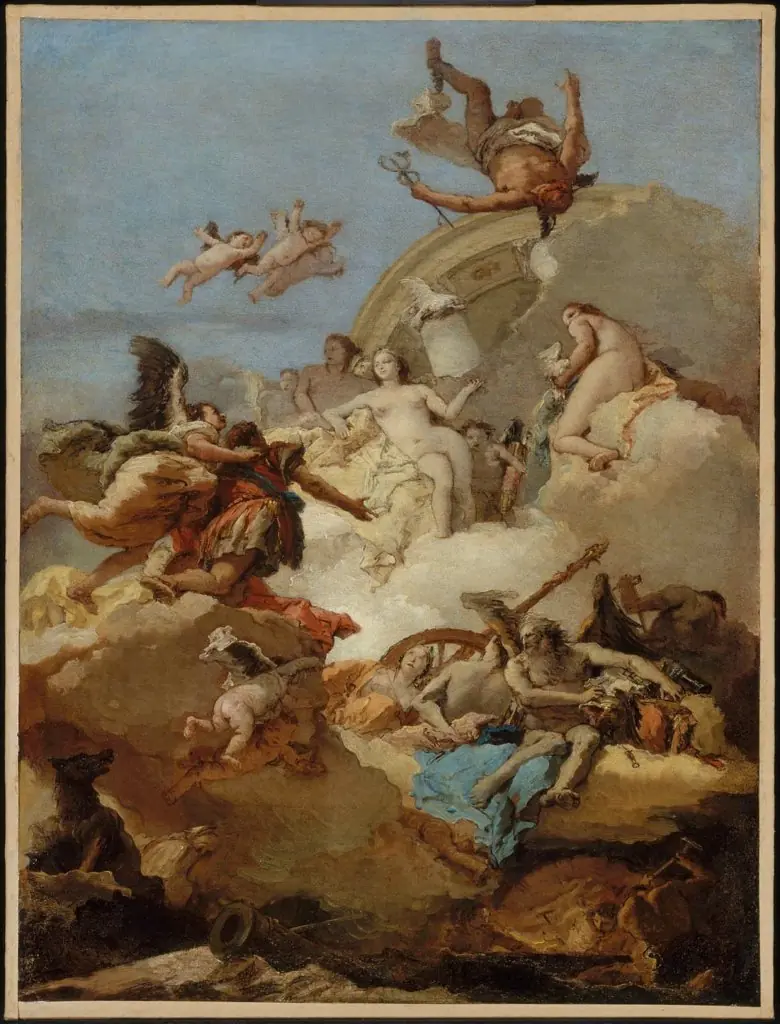 Apotheosis of Aeneas
 Apollo and Phaëthon
 Sketch for a Ceiling Fresco
 Bacchus and Ceres
 Allegory of dawn
 William and Mary Presenting the Cap of Liberty to Europe (sketch for the painted ceiling of the Great Hall, Greenwich Hospital)