Artwork
The Infant Bacchus
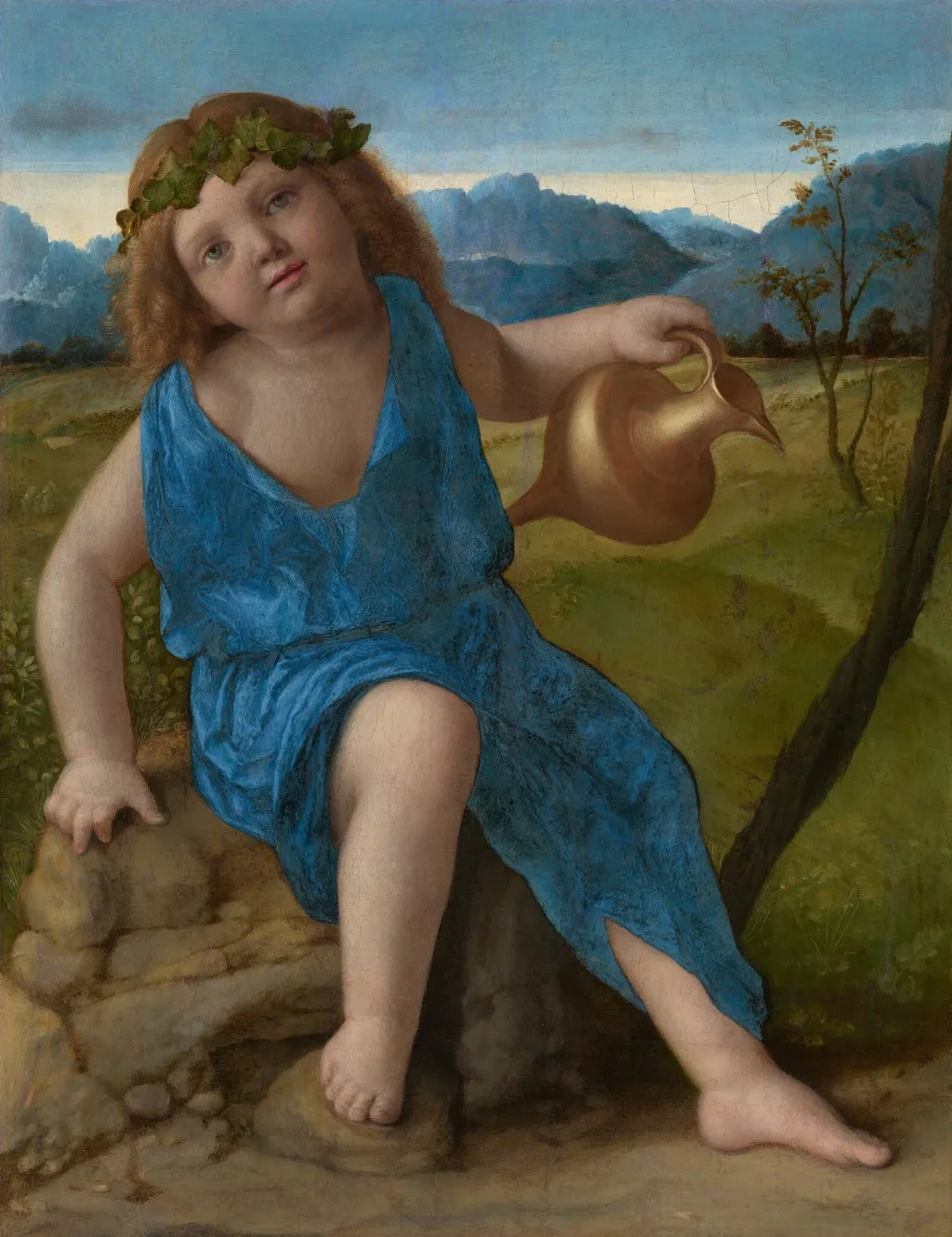
The Infant Bacchus is an oil painting by the Early Baroque Italian artist Giovanni Bellini. It dates from 1508 and is held in the collection of the National Gallery of Art.
About this work
Subject & Meaning
Scholars interpret the image as a metaphor for the winter solstice, linking the youthful god to the seasonal cycle described by Macrobius.
The Infant Bacchus depicts the Roman god of wine as a youthful figure holding a metal vessel, a conventional attribute of Bacchus. He is crowned with a garland of vine leaves, emphasizing his role as patron of revelry. The composition places the boyish deity in a landscape, seated on a rock with a relaxed pose that reflects the tonal innovations of Giorgione adopted by an aging Bellini.
Scholars interpret the image as a metaphor for the winter solstice, linking the youthful god to the seasonal cycle described by Macrobius. The work, painted circa 1505–1510 on panel and later transferred to canvas, combines mythological subject, symbolic attributes, and a thematic meditation on time.
Technique & Style
Executed in oil paint, the work was originally created on a panel support before being transferred to canvas. Measuring 50 by 39 centimeters, the painting depicts the young Bacchus seated on a rock within an outdoor landscape. The figure wears a blue tunic and a vine-leaf wreath while holding a metal jug, with a soft, seemingly disordered pose intended to suggest the effects of wine.
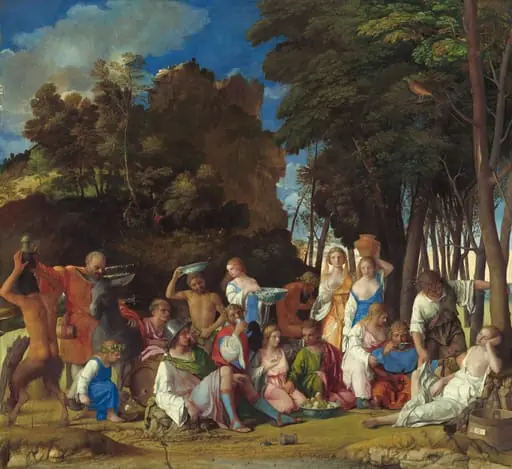
Stylistically, the piece reflects the artist's late-period adoption of tonalism, a technique associated with Giorgione and Titian, marking a surprising openness to these innovations and a rare profane subject for the octogenarian master. The handling demonstrates a close relationship to the figure of Bacchus in The Feast of the Gods, suggesting the works were likely derived from similar studies within a short timeframe.
History & Provenance
Dated variously to circa 1505–1510, this work originated in Giovanni Bellini's late period. It is frequently identified as the 'young Bacchus holding a vase' recorded by Carlo Ridolfi in 1648 within the Venice collection of Bortolo Dafino, though then misattributed to Giorgione. By the nineteenth century, the painting resided in London under Frederick Richards Leyland, where it was attributed to Marco Basaiti.
Following Leyland's 1892 estate sale, Charles Fairfax Murray facilitated its acquisition by Robert Henry and Evelyn Benson. The Bensons sold the piece in 1927 to the Duveen Brothers, who transferred it to the United States. In 1949, Duveen sold the work to the Samuel H. Kress Foundation, which subsequently gifted it to the National Gallery of Art in Washington, D.C., in 1961.
Context
Scholarship identifies this work as a product of Bellini's final creative phase, marking a surprising openness to the tonalism of Giorgione and Titian despite the artist's advanced age. The subject's identification as Bacchus was established by Gronau in 1930, likely correlating with Carlo Ridolfi's 1648 description of a Giorgione painting in the Dafino collection. Previously misattributed to Marco Basaiti during its nineteenth-century tenure in Frederick Richards Leyland's collection, the piece is now recognized for its rare profane theme within Bellini's oeuvre.
Shapley (1979) interpreted the figure as a metaphor for the winter solstice based on Macrobius's Saturnalia, noting the conceptual link between the aging god and the calendar year. The composition shares significant similarities with the Bacchus in The Feast of the Gods, suggesting both works emerged from the same studies within a brief chronological window.
Legacy
The Infant Bacchus became a touchstone for Bellini's late output after its 1927 sale to Duveen Brothers and 1949 acquisition by Samuel H. Kress. Early 17th-century scholar Carlo Ridolfi identified the figure as a 'young Bacchus holding a vase', a reference that shaped later connoisseurship and the eventual reattribution from Marco Basaiti to Bellini. Academic discourse, notably Shapley's 1979 solstice metaphor, has linked the figure to seasonal symbolism, reinforcing its scholarly reputation.
Its inclusion in the National Gallery of Art illustrates sustained public awareness, while analyses of its tonal innovations underscore its legacy in studies of Bellini's final period.
Overview
The Infant Bacchus, painted by Giovanni Bellini around 1505–1510, depicts the Roman deity of wine and revelry in an unusual youthful form. Rendered in oil, the work was originally executed on wood panel before undergoing a transfer to a new panel support. This composition offers a rare portrayal of Bacchus as a child, seated amidst grapes and foliage, characteristic of the Venetian master's late period.
Own this work as a print
Artist & collection

Artist
Giovanni Bellini (Italian: ; Venetian: Zuane Belin; c. 1430 – 29 December 1516) was an Italian Renaissance painter, probably the best known of the Bellini family of Venetian painters. He was raised in the household of…


- The Rest on the Flight into Egypt
 Daphnis
 Madonna and Child Seated in a Landscape with Saint John the Baptist
 Madonna del Prato
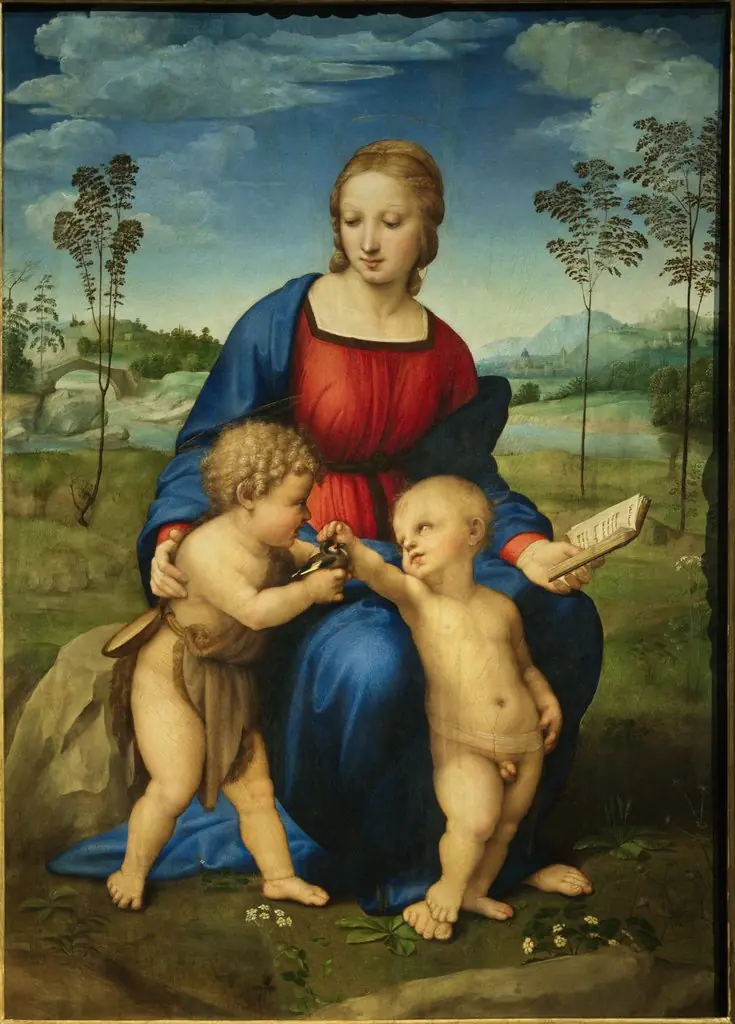 Madonna of the Goldfinch
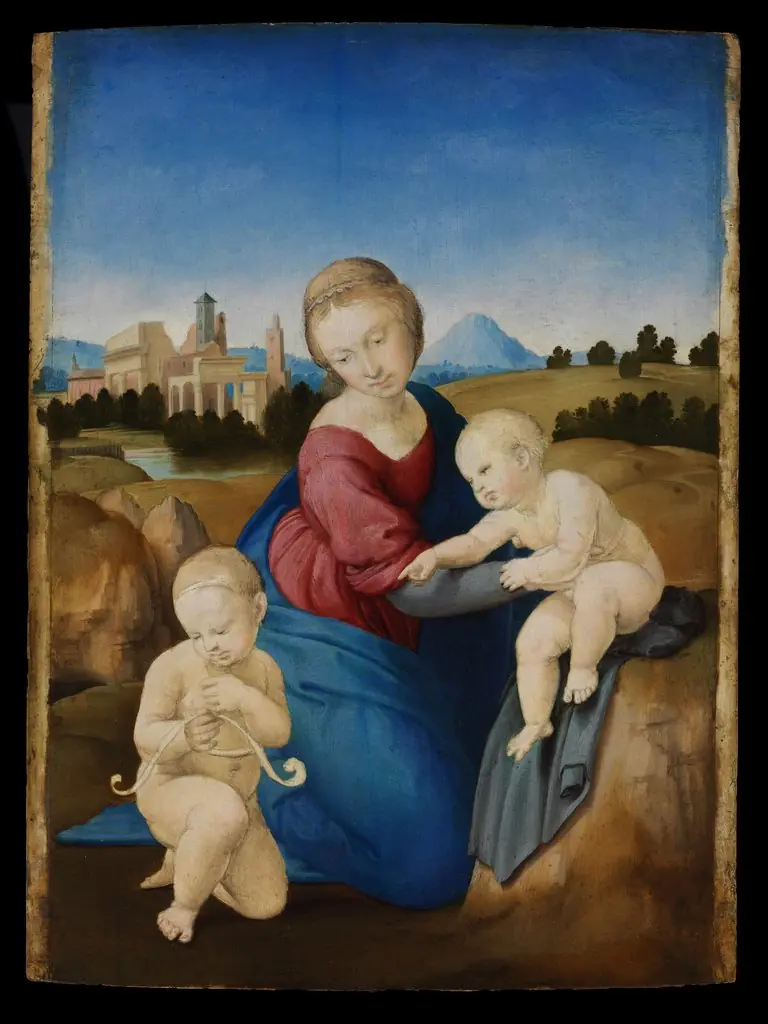 Esterhazy Madonna
 Madonna del Cardellino, kopio Rafaelin (Raffaello Sanzio) mukaan
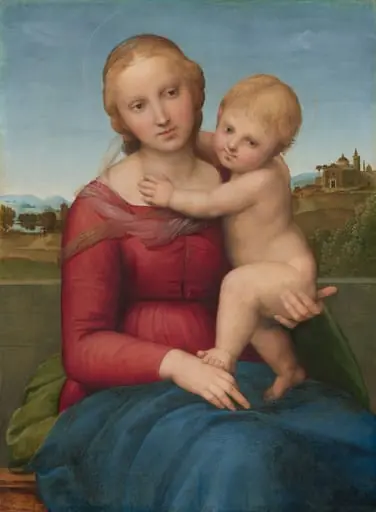 The Small Cowper Madonna
 Madonna of the Yarnwinder
 Madonna and Child
 Madonna and Child
 Mary and Child