Artwork
Ayusi Sweeping Bandits with a Lance
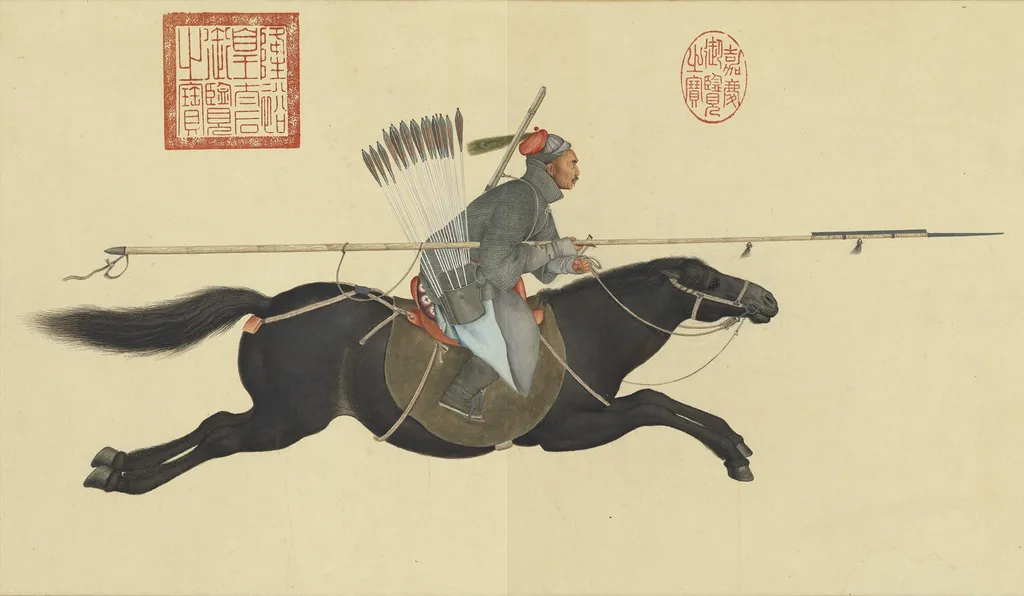
Ayusi Sweeping Bandits with a Lance is an unspecified painting by the Rococo painting artist Giuseppe Castiglione. It dates from 1755 and is held in the collection of the National Palace Museum.
About this work
Overview
This work serves as a historical record of the officer's valor and reflects the Qing court's interest in documenting military successes through art.
Ayusi Sweeping Bandits with a Lance, painted by the Jesuit missionary Giuseppe Castiglione in 1755, depicts the Dzungar officer Ayusi in a dynamic equestrian pose. The work portrays Ayusi mounted on a black horse, galloping forward with its front legs extended and hind legs bent, conveying rapid movement. The figure is armed with a lance and carries a quiver of arrows, dressed in a long coat and hat appropriate to the period's military attire.
Castiglione, known for blending European techniques of perspective and chiaroscuro with traditional Chinese brushwork, created this piece during his tenure as a court painter for the Qianlong Emperor. The painting commemorates Ayusi's military contributions against the Dzungar Khanate, which were instrumental in the Qing dynasty's pacification of northern Xinjiang. This work serves as a historical record of the officer's valor and reflects the Qing court's interest in documenting military successes through art.
It stands as a significant example of Castiglione's ability to merge Western realism with Chinese narrative traditions to serve imperial propaganda.
Subject & Meaning
The work depicts Ayusi, a historic figure celebrated for his martial prowess in suppressing banditry. By emphasizing the lance’s forward thrust and the rider’s determined posture, Castiglione underscores themes of loyalty, bravery, and the triumph of order over chaos, aligning the image with Qing‑era narratives of imperial authority and military virtue.
Technique & Style
Castiglione blends European oil techniques with Chinese compositional conventions. The rendering of the horse’s musculature and the sheen of the rider’s coat reveal a mastery of light and texture, while the flat background and calligraphic characters reflect traditional Chinese painting aesthetics. This synthesis creates a vivid, cross‑cultural visual language.
History & Provenance
Created in 1755 during Castiglione’s service at the Qing court, the painting entered the collection of the National Palace Museum in Taipei, where it remains on display. Its provenance traces the artist’s role as a cultural intermediary, documenting the exchange of artistic practices between Europe and China in the eighteenth century.
Artist & collection



- Warrior mounted on a Horse
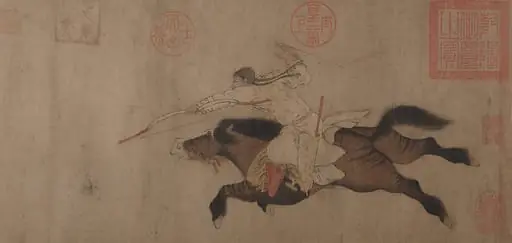 北宋/金 傳黃宗道 舊傳李贊華 獵鹿圖 卷|Stag Hunt
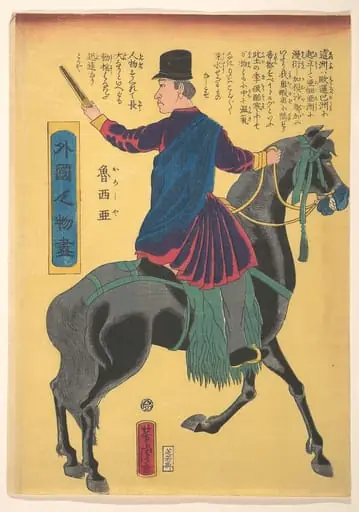 Orosia|Mounted Russian
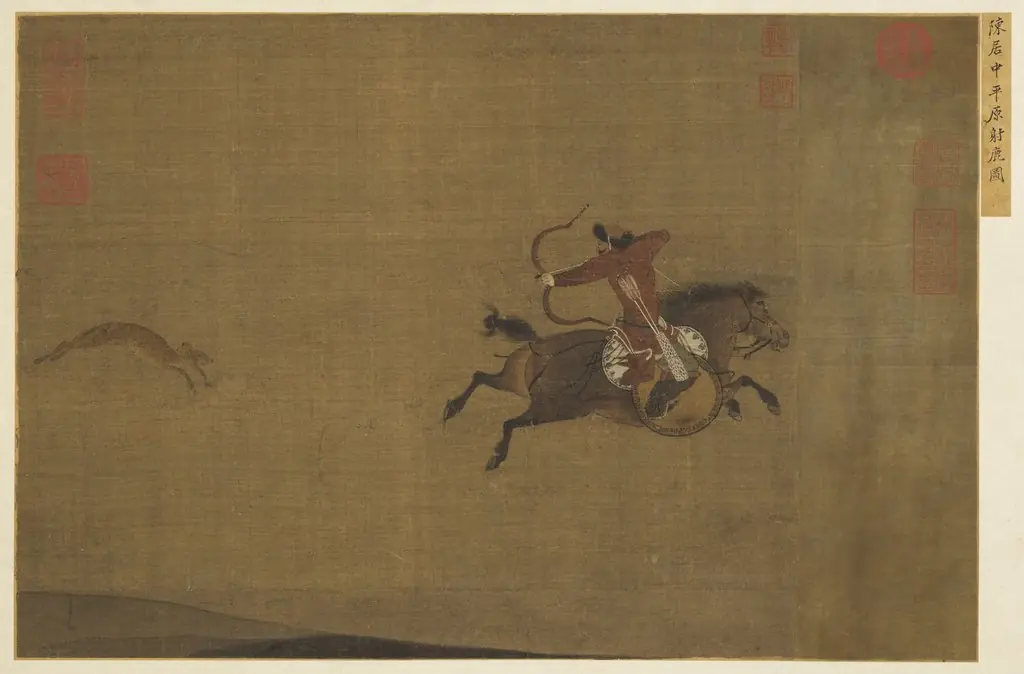 名繪集珍 冊 宋陳居中平原射鹿圖
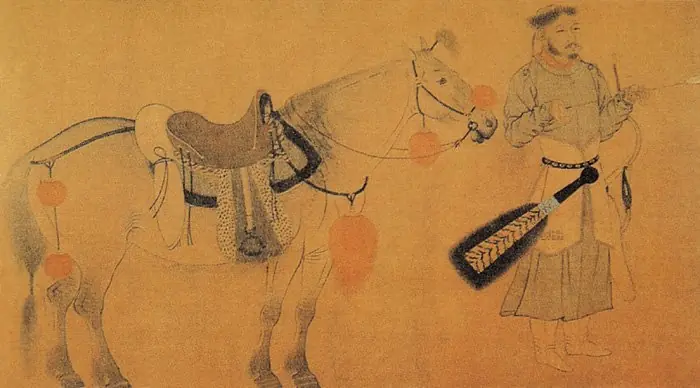 Archer and Horse
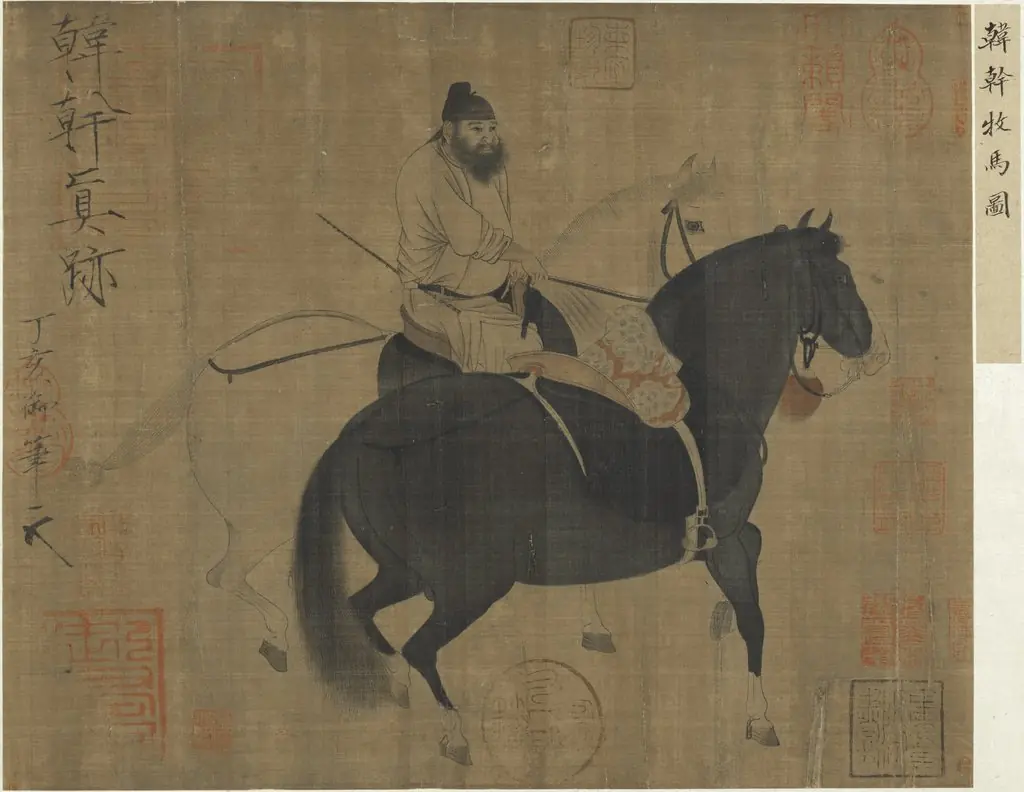 Man Herding Horses
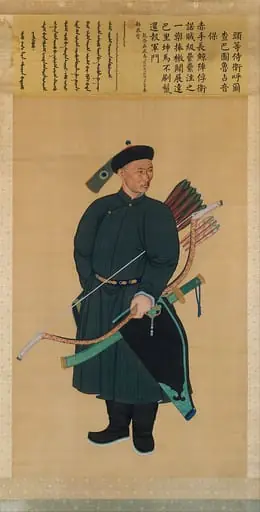 清 佚名 乾隆頭等侍衛占音保像 軸|Portrait of the Imperial Bodyguard Zhanyinbao
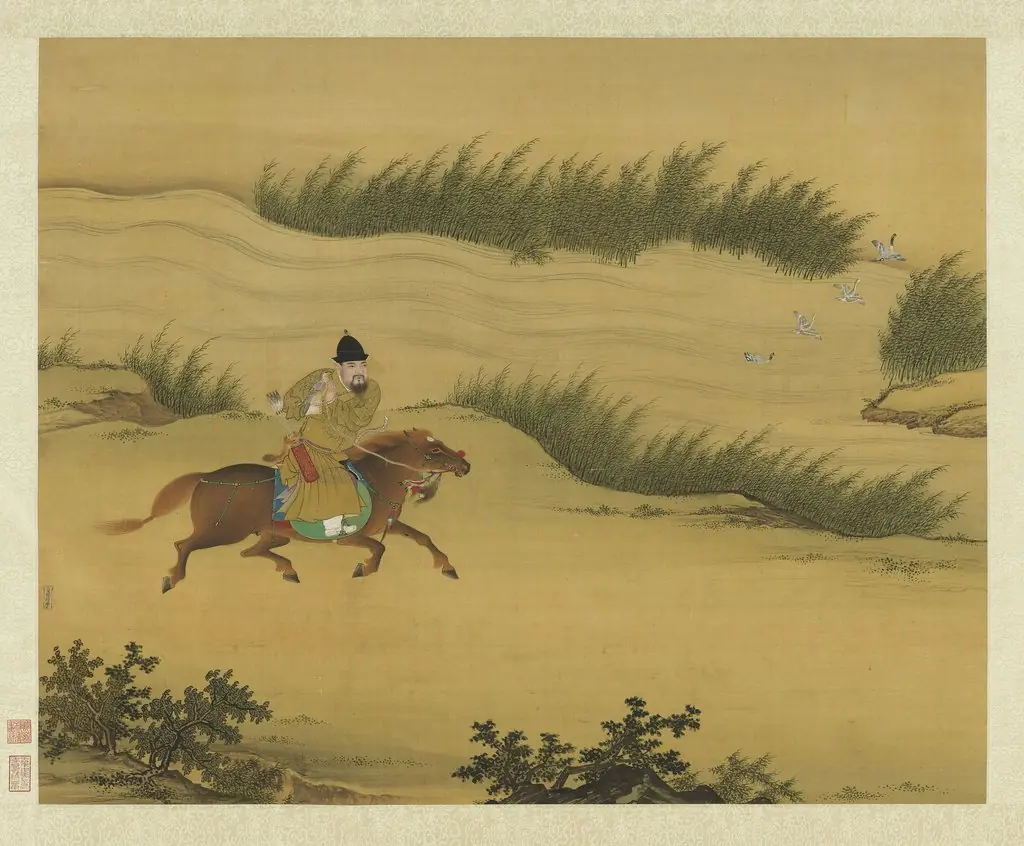 Emperor Xuanzong of the Ming on Horseback
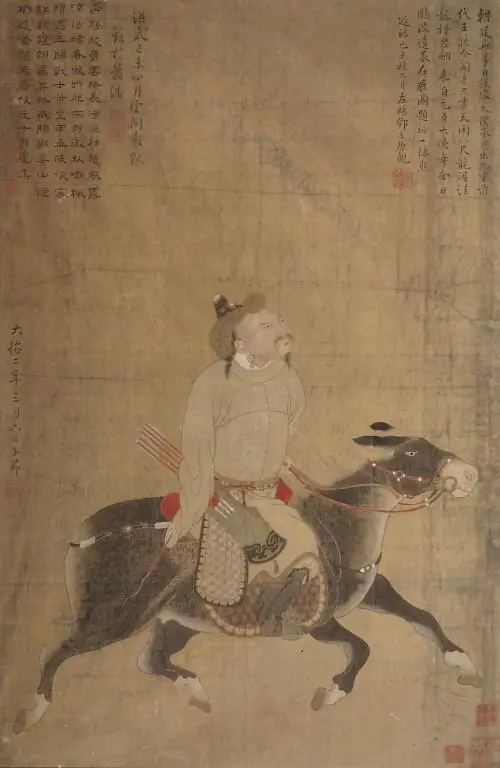 Portrait of Gengis Khan
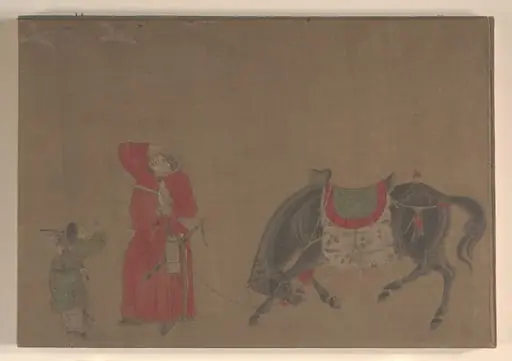 Untitled
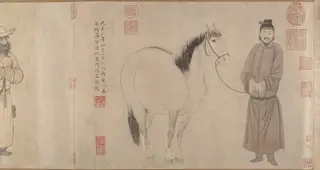 元 趙孟頫 趙雍 趙麟 吳興趙氏三世人馬圖 卷|Grooms and horses
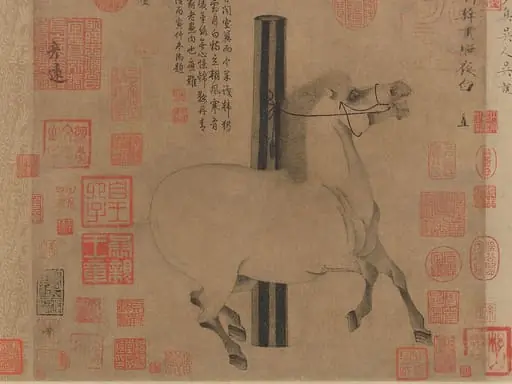 唐 韓幹 照夜白圖 卷|Night-Shining White